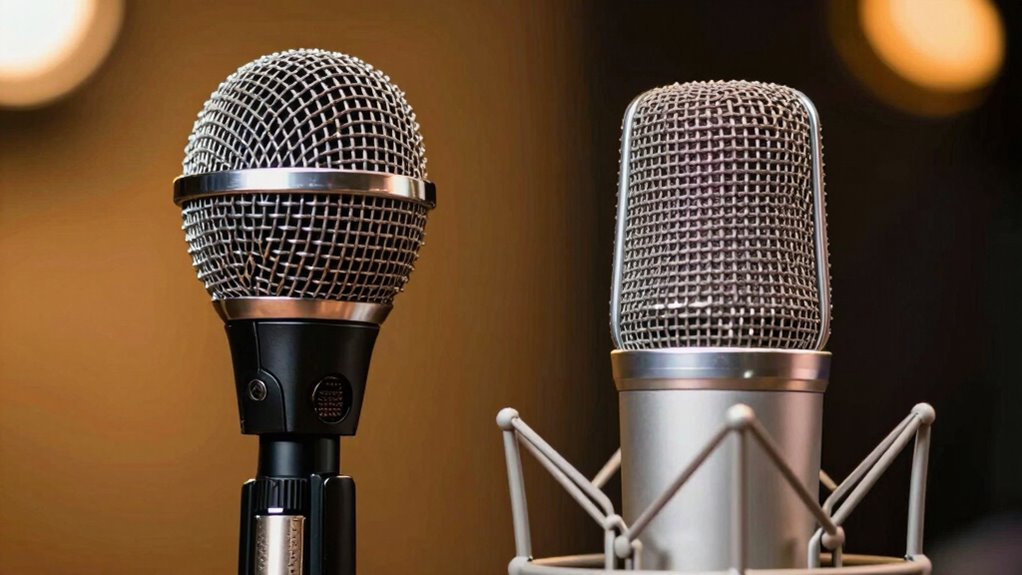

Choosing between dynamic and condenser microphones depends on your needs. If you’re performing live or require durability, a dynamic mic is tough, handles high sound levels, and resists feedback. For studio recording with subtle details and clarity, a condenser is ideal but more delicate and costly. Your environment and budget influence the best option. To get the perfect sound, you need to understand their differences—and there’s much more to discover if you keep exploring.
Key Takeaways
- Dynamic microphones are durable, ideal for live performances and high sound pressure levels, while condensers excel in studio settings for capturing detailed sound.
- Condenser mics provide better off-axis rejection and higher sensitivity, making them suitable for capturing subtle nuances in controlled environments.
- Dynamic microphones are more resistant to feedback and environmental noise, perfect for challenging or noisy recording conditions.
- Condenser microphones are generally more expensive and delicate, requiring careful handling and maintenance, unlike rugged dynamic mics.
- Choosing between the two depends on your specific sound goals, environment, and application needs—performance, detail, durability, or budget.

Shure SM58-LC Dynamic Vocal Microphone – Professional Handheld Cardioid XLR Mic for Singing, Live Performance, Studio Recording, Podcast & Broadcast, Black
LEGENDARY VOCAL CLARITY: A finely tuned frequency response with subtle midrange lift delivers warm, articulate vocals that cut…
As an affiliate, we earn on qualifying purchases.
As an affiliate, we earn on qualifying purchases.
What Are Dynamic and Condenser Microphones?
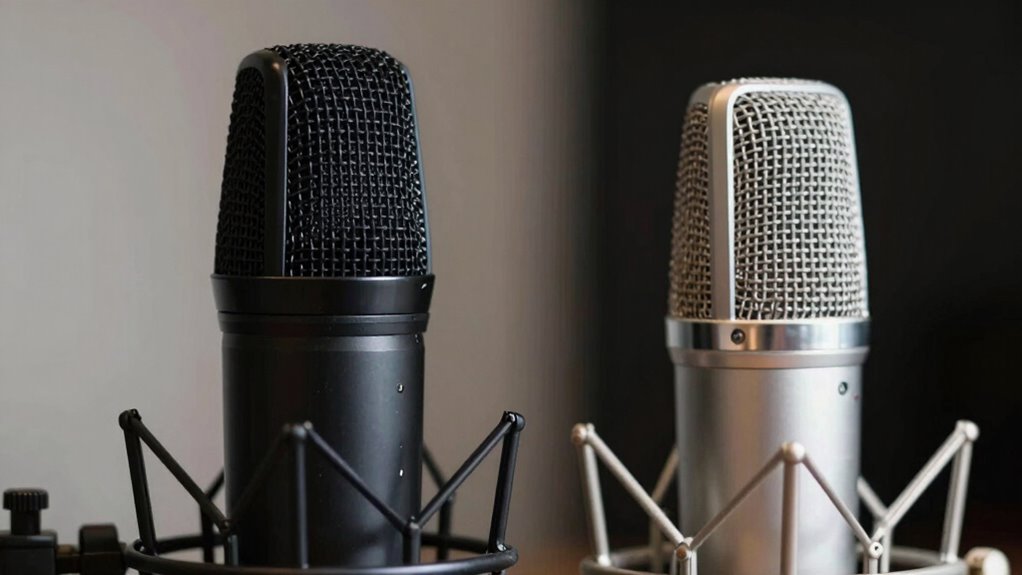
When it comes to microphones, understanding the difference between dynamic and condenser types is vital. Dynamic microphones are rugged and handle high sound pressure levels, making them ideal for live performances. They excel in various acoustic environments where microphone positioning might be challenging, as they are less sensitive and less affected by background noise. Condenser microphones, on the other hand, are more sensitive and capture detail with greater accuracy. They perform well in controlled acoustic environments like studios, where proper microphone positioning is essential to achieve the best sound quality. Knowing these differences helps you choose the right microphone for your setting, ensuring clear, professional results whether you’re recording or performing.

FIFINE Studio Condenser USB Microphone Computer PC Microphone Kit with Adjustable Boom Arm Stand Shock Mount for Instruments Voice Overs Recording Podcasting YouTube Vocal Gaming Streaming-T669
[USB Output] Enables simple setup. USB studio recording microphone kit provides a direct convenient plug-and-play connection to pc…
As an affiliate, we earn on qualifying purchases.
As an affiliate, we earn on qualifying purchases.
How Do Dynamic and Condenser Microphones Capture Sound?
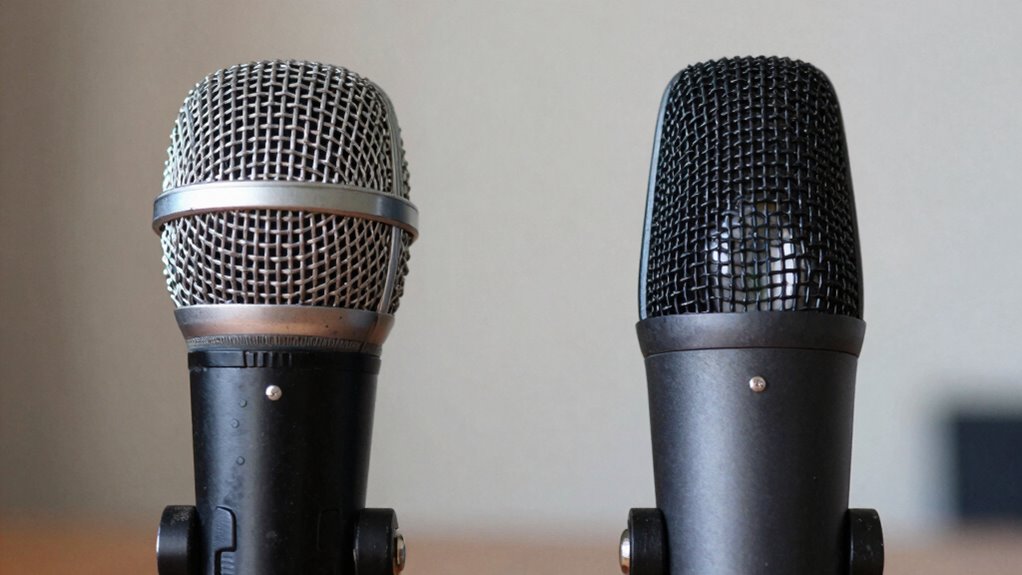
Ever wonder how dynamic and condenser microphones actually capture sound? It all comes down to their design and how they convert sound waves into electrical signals. Dynamic mics use a moving coil and diaphragm; sound vibrations cause the coil to move within a magnetic field, producing an electrical current. Condenser mics rely on a charged capacitor; sound waves change the distance between two plates, altering the capacitance and generating an signal. Your microphone placement and the acoustic environment greatly influence capture quality. For example, dynamic mics excel in loud settings, while condensers are better for capturing subtle details in controlled spaces. Here’s a closer look:
| Microphone Type | Sound Capture Method | Ideal Environment |
|---|---|---|
| Dynamic | Moving coil in magnetic field | Loud, live performances |
| Condenser | Capacitor plates | Studio, quiet settings |
| Both | Convert sound waves to signals | Varies based on setup |
| Placement | Critical for clarity | Depends on environment |
| Environment | Affects frequency response | Acoustic conditions matter |

Shure SM58S Dynamic Vocal Microphone with On/Off Switch, Cardioid Pattern, Built-in Pop Filter, for Live & Studio Performance Mic for Singers, Speakers & Stage Use, Black
ICONIC VOCAL SOUND: Designed specifically for vocals, the SM58S delivers clear, warm, and present sound with a tuned…
As an affiliate, we earn on qualifying purchases.
As an affiliate, we earn on qualifying purchases.
Which Microphone Is Best for Live Performances?

When choosing a microphone for live performances, durability and build quality matter because you’ll be moving around a lot. Clear sound reproduction guarantees your vocals or instruments come through without unwanted noise. Consider handling and mobility to find a mic that’s comfortable to use on stage and can withstand the rigors of a live setting. Additionally, considering features like weather resistance can be beneficial for outdoor performances where environmental factors may come into play. For optimal performance, selecting a microphone with good construction quality can help prevent damage during frequent handling and transportation. Understanding sound wave principles can also aid in choosing a mic that accurately captures your sound, especially when considering how different technologies like dynamic and condenser microphones affect sound reproduction. Recognizing the role of polar patterns can further enhance your ability to select the right mic for specific live scenarios.
Durability and Build Quality
Durability and build quality are essential factors to take into account when choosing a microphone for live performances, as they must endure the rigors of frequent use and transport. Material durability is key—look for sturdy metal bodies or impact-resistant materials that resist drops, bumps, and moisture. Compact, well-constructed microphones tend to last longer and perform reliably over time. Connectivity options also play a role; secure, rugged connectors like XLR or durable USB ports ensure stable connections even during active stage setups. Avoid fragile or cheaply made microphones that may fail unexpectedly. A well-built mic not only survives the physical demands of live shows but also maintains consistent performance, giving you confidence on stage and reducing the need for frequent replacements. Additionally, paying attention to impact resistance can help ensure your microphone withstands accidental drops and bumps during performances. Selecting a microphone with robust construction can significantly extend its lifespan and reliability in demanding environments. It’s also beneficial to consider material quality, as higher-grade materials typically provide better long-term durability and resistance to environmental factors.
Sound Reproduction Clarity
Choosing the right microphone for live performances hinges considerably on sound reproduction clarity. Your goal is clear, natural sound that captures every nuance. To achieve this, consider these factors:
- Microphone polarization: Condenser mics often have an active polar pattern, offering better off-axis rejection, which reduces background noise. Dynamic mics typically have a simpler polarization, making them more resistant to feedback.
- Frequency response: Look for microphones with a flat or tailored frequency response suited to your instrument or voice. Condenser mics usually excel in capturing high frequencies, ensuring clarity, while dynamics provide robust midrange reproduction.
- Application needs: Decide based on your venue size, sound system, and the sound profile you desire. Clear sound reproduction depends heavily on matching microphone characteristics to your performance environment. Application considerations can greatly influence your choice.
- Testing accuracy: When selecting microphones, it’s essential to consider how accurately they reproduce sound, which can be influenced by their design and construction, ensuring your live sound remains true to the source testing accuracy.
Handling and Mobility
Handling and mobility often determine how well a microphone performs during live shows. You need a mic that’s easy to move and adjust without sacrificing sound quality. Dynamic mics are typically rugged and less sensitive, making them ideal for handheld use and quick microphone placement changes. Their durability allows you to handle them confidently without worrying about damage. Condenser mics, on the other hand, are more delicate but excel at noise cancellation, capturing subtle details. For live performances, consider how much you’ll need to move around. If mobility is essential, a dynamic mic offers better handling, while a condenser might restrict movement due to its sensitivity and the need for stable microphone placement. Choose based on your performance style and environment.
FIFINE Studio Condenser USB Microphone Computer PC Microphone Kit with Adjustable Boom Arm Stand Shock Mount for Instruments Voice Overs Recording Podcasting YouTube Vocal Gaming Streaming-T669
[USB Output] Enables simple setup. USB studio recording microphone kit provides a direct convenient plug-and-play connection to pc…
As an affiliate, we earn on qualifying purchases.
As an affiliate, we earn on qualifying purchases.
Why Do Studio Vocalists Prefer Condenser Microphones?
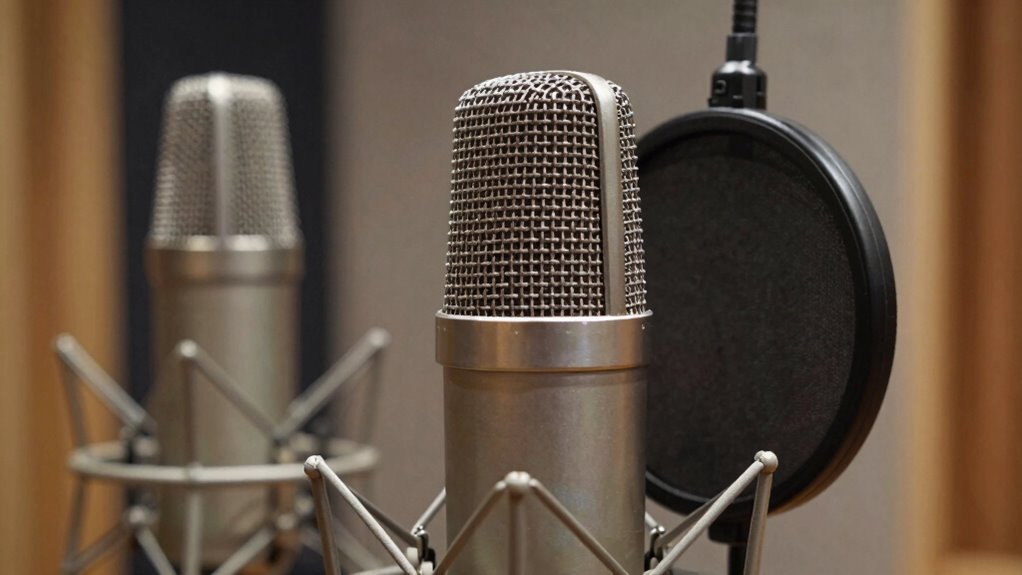
Studio vocalists prefer condenser microphones because they capture a broader range of frequencies with remarkable accuracy, allowing their performances to sound more natural and detailed. This advanced microphone technology makes vocal recording clearer and more expressive. You’ll notice that condenser mics excel at revealing subtle nuances and delicate tones, which dynamic microphones often miss. Additionally, the high sensitivity of condenser mics makes them ideal for capturing the intricate details of a singer’s voice. Since condenser microphones are also more susceptible to environmental noise, they are often used in controlled studio settings to maximize their benefits. Proper safety measures are essential when handling sensitive condenser microphones to prevent damage from environmental factors. Understanding outdoor conditions can also help in maintaining the quality of recordings in less controlled environments. Moreover, the microphone design plays a crucial role in how well these instruments perform across various recording scenarios. This combination of sensitivity and accuracy is why condenser microphones are essential tools for professional vocalists seeking authentic, high-quality recordings.
Cost and Maintenance Differences Between Dynamic and Condenser Mics

When comparing dynamic and condenser mics, you’ll notice differences in initial costs, with condensers often being pricier. Maintenance needs also vary, as condensers require more delicate care and occasional repairs, while dynamics are generally more durable. Over time, these factors influence your total expenses and the overall value of each microphone type. Additionally, understanding risk management strategies can help protect your investment in either type of microphone. Proper filtering and pump protection can be beneficial in ensuring the longevity of your equipment, similar to how it safeguards spray guns in painting applications. Incorporating environmental considerations into your maintenance routine can further extend the lifespan of your microphones, especially for condenser types that are more sensitive to external conditions. Recognizing sensitivity to environmental factors is crucial for maintaining optimal performance and preventing damage caused by humidity or temperature fluctuations, ensuring reliable performance over time. Being aware of storage conditions can also help prevent damage caused by humidity or temperature fluctuations, ensuring reliable performance over time.
Initial Purchase Cost
Dynamic microphones typically cost less upfront compared to condenser microphones, making them a popular choice for those on a tighter budget. Their lower price is often due to simpler construction and less sensitive components. When considering initial costs, keep these points in mind:
- Microphone placement: Dynamic mics are more forgiving in various environments, reducing the need for specialized accessories.
- Brand reputation: Established brands may charge more but often provide better quality and durability, impacting long-term value.
- Budget considerations: Condenser microphones tend to be pricier initially, especially for models with advanced features or higher sensitivity.
Your choice depends on your priorities—whether you want affordability or premium features—while keeping in mind that brand reputation influences the overall investment.
Maintenance Requirements
Because condenser microphones are more sensitive and have more delicate internal components, they generally require more maintenance to keep them functioning at their best. Proper microphone placement is vital to avoid damage from accidental bumps or environmental factors, especially in varied acoustic environments. You’ll need to regularly clean the microphone and its grille to prevent dust and debris buildup that can affect sound quality. Additionally, condenser mics often require phantom power, so checking and maintaining your equipment’s power supply is necessary. Unlike dynamic mics, they’re more vulnerable to humidity and temperature fluctuations, which can impact performance. Overall, maintaining a condenser mic involves more attention to detail and careful handling, especially when adjusting microphone placement in different acoustic environments to guarantee ideal sound quality. It’s also important to understand the maintenance requirements associated with sensitive equipment to ensure longevity and optimal performance.
Long-Term Expenses
While condenser microphones often demand more ongoing attention and careful handling, they also tend to incur higher costs over time compared to dynamic mics. Microphone technology and durability influence long-term expenses, especially across different acoustic environments.
- Initial Cost: Condensers generally cost more upfront due to advanced microphone technology, making them a pricier investment from the start.
- Maintenance: Condenser mics require regular cleaning and occasional replacement of parts like capsules or diaphragms, increasing upkeep costs.
- Durability: Dynamic mics are more rugged, making them more suitable for rough environments and reducing repair or replacement expenses over time.
Understanding these factors helps you evaluate whether the higher initial or ongoing costs align with your recording needs and acoustic environments.
Factors to Consider When Choosing the Right Microphone
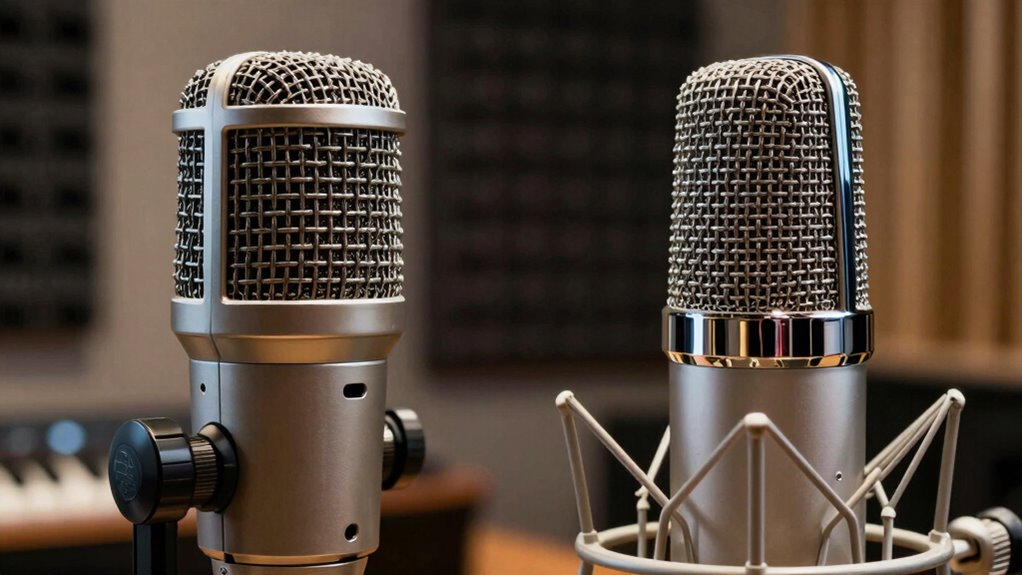
Choosing the right microphone depends on understanding your specific needs and the environment you’ll be recording or performing in. Consider how microphone placement affects sound quality; some mics pick up more ambient noise, while others focus on your voice or instrument. If you’re aiming for strong vocal performance, a condenser mic might be ideal due to its sensitivity and detail. Conversely, a dynamic mic is more durable and better suited for loud environments or on-stage use. Think about whether you need a versatile option or a specialized tool. Your choice should align with your recording space, sound goals, and comfort with handling the equipment. By evaluating these factors, you’ll select a microphone that enhances your sound and fits your style. Additionally, understanding sound quality principles can help create a more comfortable and welcoming environment for your recordings.
Common Mistakes When Deciding Between Dynamic and Condenser Microphones
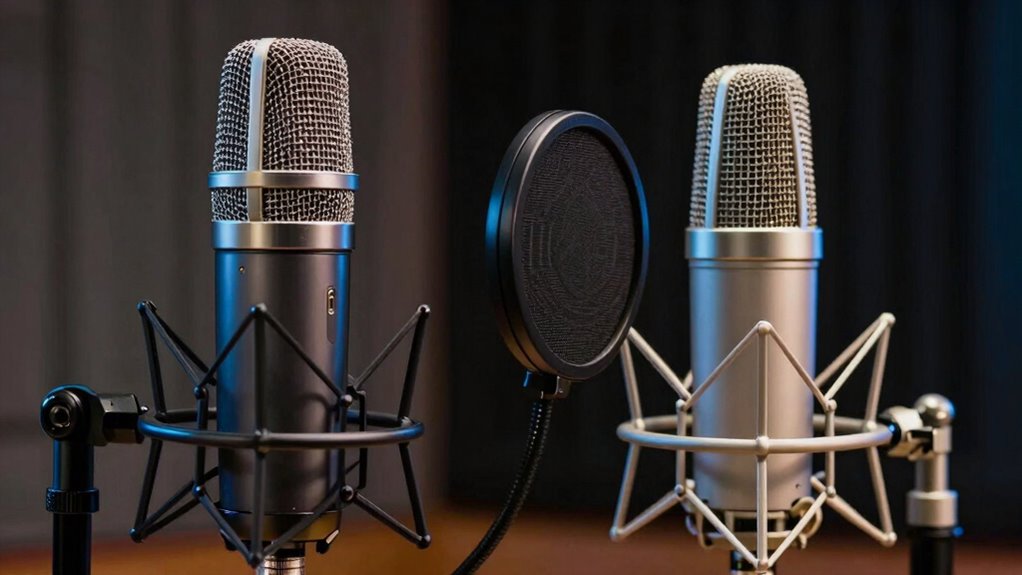
Many newcomers make common mistakes when deciding between dynamic and condenser microphones, which can lead to subpar sound quality or equipment issues. One mistake is ignoring brand reputation, risking unreliable performance. Second, overlooking the importance of compatible microphone accessories can limit your setup’s potential. Ultimately, some assume price equals quality, but a cheaper mic from a reputable brand may outperform a costly one. Be cautious of choosing based solely on brand names without researching their reliability and customer feedback. Also, avoid neglecting accessory needs like proper stands or pop filters, which can affect sound quality. By understanding these common pitfalls, you guarantee your choice enhances your setup rather than complicates it. Remember, an informed decision saves time, money, and frustration.
How to Test and Pick the Right Microphone for Your Needs
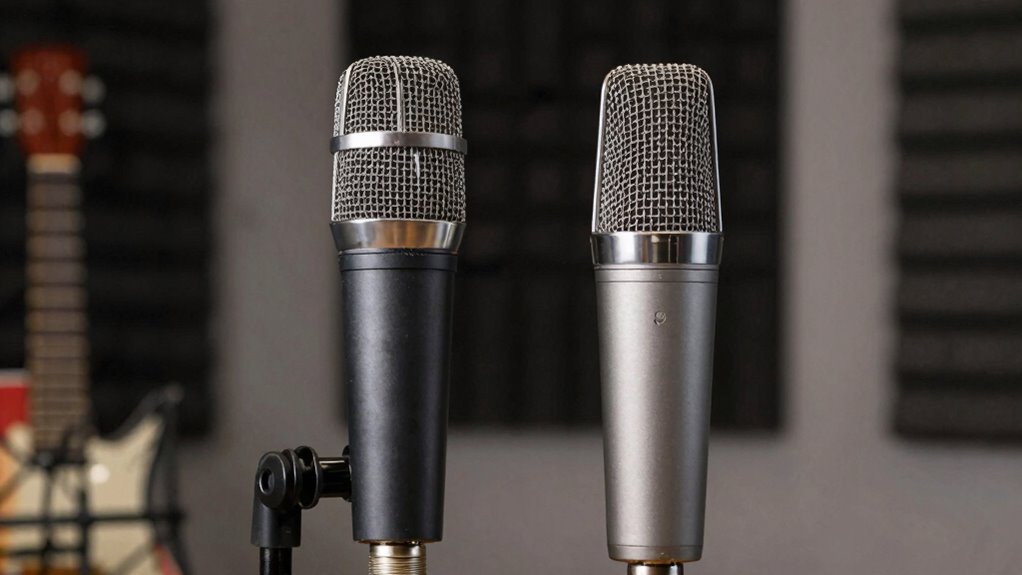
Selecting the right microphone starts with understanding your specific needs and testing options firsthand. To do this effectively, focus on microphone placement to capture sound accurately and assess sound isolation to minimize background noise. Test different microphones in your typical environment, noting how they handle your intended sound source. Pay attention to how each mic responds to proximity and positioning, which can considerably affect quality. Use the table below to compare key factors:
| Factor | Consideration |
|---|---|
| Microphone placement | How close or far from source? |
| Sound isolation | How well it reduces ambient noise? |
This hands-on approach ensures you choose a microphone that complements your setup, delivering clear, professional sound tailored to your needs.
Frequently Asked Questions
Can a Microphone Be Both Dynamic and Condenser?
A microphone can’t be both dynamic and condenser at the same time because they use different internal mechanisms. Dynamic mics typically have a rugged construction with a moving coil, while condenser mics use a capacitor for capturing sound, offering a broader frequency response and more detailed sound. When choosing, consider the polar pattern and frequency response you need—dynamic mics excel in high SPL situations, and condensers excel in capturing nuanced sound.
How Do Environmental Conditions Affect Microphone Choice?
Environmental conditions greatly influence your microphone choice. If you record outdoors or in noisy settings, opt for a dynamic mic with a cardioid polar pattern, which isolates sound and resists background noise. For studio environments, a condenser mic with a wide frequency response captures detailed nuances and nuances. Consider polar patterns and frequency response to match the environment—cardioid for focused sound, omnidirectional for ambient capture—ensuring clear, high-quality recordings.
Are There Hybrid Microphones Combining Both Technologies?
Think of hybrid microphones as the Swiss Army knives of audio gear. They blend dynamic and condenser elements, offering versatile frequency response and adaptable polar patterns. These mics let you switch modes to suit different environments, capturing rich sound without sacrificing detail. Their combined technology makes them ideal for varied applications, providing flexibility and clarity, especially when environmental conditions change unexpectedly. This innovation truly changes how you approach recording and live sound.
What Accessories Improve Microphone Performance?
You can boost your microphone’s performance with accessories like a high-quality pop filter, which improves pop filter efficiency by reducing unwanted plosive sounds. Wireless connectivity accessories, such as reliable transmitters or receivers, enhance mobility and ease of use. Additionally, shock mounts and windshields protect against handling noise and environmental interference, ensuring clear, professional sound quality. These accessories make your microphone more versatile and effective in various recording or live situations.
How Does Microphone Placement Impact Sound Quality?
You improve sound quality by carefully placing your microphone, considering room acoustics and sound isolation. Position it close to your source to capture clear sound while minimizing background noise. Avoid placing it near reflective surfaces to reduce echo and unwanted reverb. Experiment with angles and distances to find the sweet spot. Good room acoustics and sound isolation help your microphone pick up the intended sound, ensuring a professional, crisp recording or live performance.
Conclusion
Choosing between dynamic and condenser microphones ultimately depends on your specific needs and environment. Don’t let cost or complexity scare you—both types have their place. Remember, a higher price doesn’t always guarantee better sound; it’s about matching the mic to your purpose. With a little research and testing, you’ll find the perfect microphone that elevates your recordings or performances without unnecessary hassle. Trust your ears—you’ll know when you’ve found the right one.