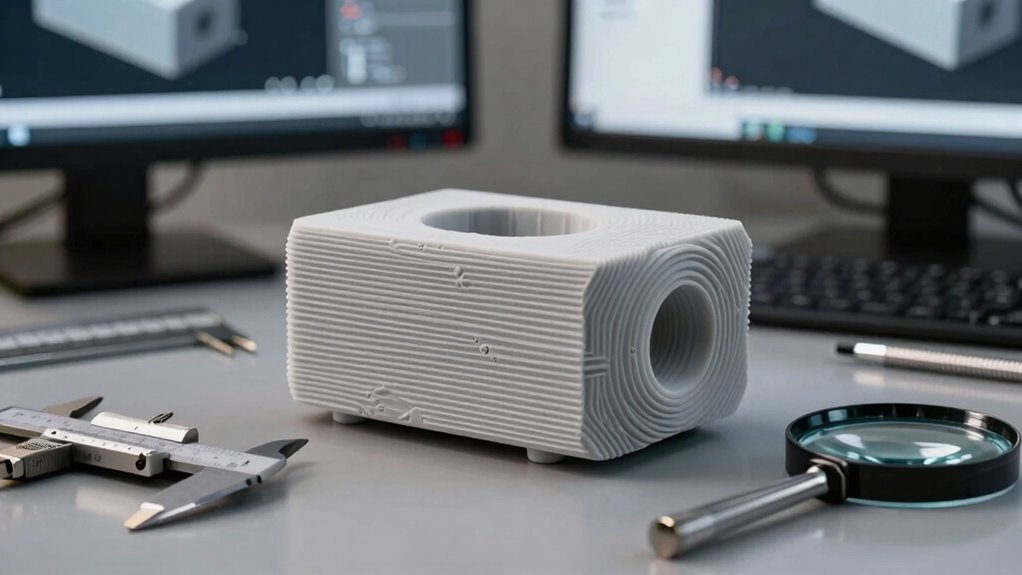

To validate your 3D printed product idea before scaling, focus on creating detailed prototypes using the right materials that mimic your final product’s properties. Test these prototypes under real-world conditions to identify flaws, check durability, and gather user feedback. Optimize your design for simplicity and efficiency, then refine based on test results. Continuing will reveal how to guarantee your final product performs perfectly and saves resources in the long run.
Key Takeaways
- Create prototypes using suitable materials that mimic final product properties for accurate testing.
- Conduct thorough stress, wear, and usability tests to identify potential flaws early.
- Gather feedback from target users or stakeholders to assess functionality and appeal.
- Optimize design through iterative adjustments based on testing results and feedback.
- Validate manufacturing processes to ensure quality, durability, and cost-effectiveness before scaling.
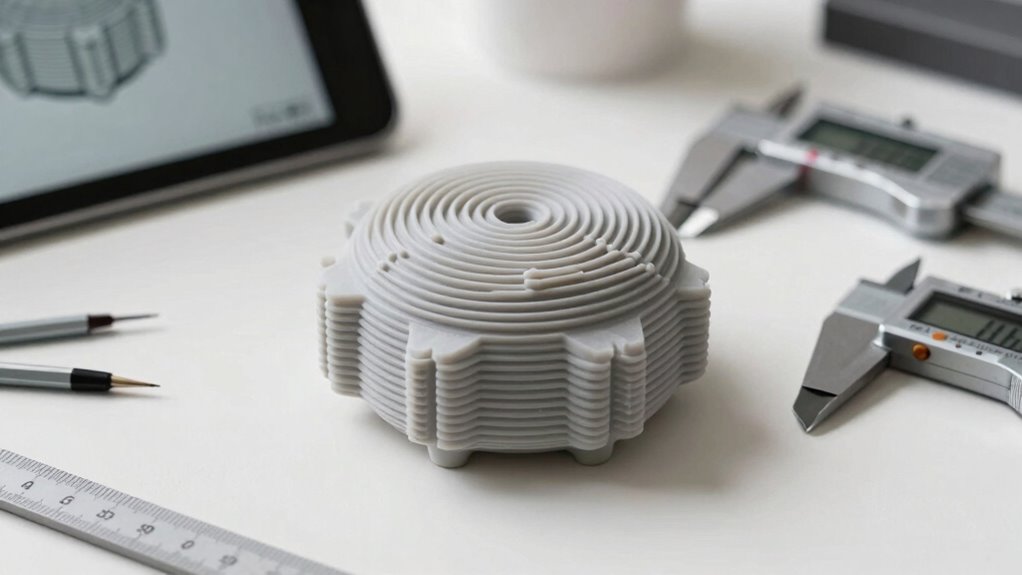
Before committing significant resources to mass production, validating your 3D printed product idea is crucial. This initial step helps you identify potential flaws, refine your design, and guarantee the final product meets your expectations. To do this effectively, focus on two critical aspects: material selection and design optimization. Your choice of material plays a huge role in how your prototype performs, feels, and withstands real-world conditions. Picking the right material allows you to mimic the properties of the final product and identify any issues related to durability, flexibility, or appearance early on. For example, if your product needs to endure stress, selecting a strong, impact-resistant filament like ABS or PETG can give you more accurate insights into its performance.
Design optimization is equally essential. You want to create a prototype that accurately reflects your intended product but also allows room for testing and adjustments. Optimizing your design involves streamlining complex features, reducing unnecessary material, and improving structural integrity. It’s about making your prototype as close to the final version as possible while maintaining ease of modification. When you optimize your design, you can better assess how the product functions, fits, and feels. You might discover that certain features don’t work as planned or that some areas need reinforcement, saving you time and money before moving to large-scale production. Additionally, understanding material properties helps you choose the best filament for your specific needs and ensures your prototype aligns with real-world usage. Incorporating testing and evaluation early in the process is essential to identifying potential issues and making informed adjustments. Conducting material testing can reveal how different filaments behave under various conditions, further supporting your decision-making process.
Once you’ve selected suitable materials and refined your design, it’s time to produce your prototype. Use your 3D printer to create a tangible version of your product, keeping in mind that the quality of your print depends on your material choice and print settings. Carefully evaluate the prototype’s performance, paying close attention to how it handles stress, wear, and user interaction. Gather feedback from potential users or stakeholders, and note any areas where the design can be improved. This iterative process helps you make informed decisions about necessary adjustments, whether that’s changing material types, modifying design features, or both.
As an affiliate, we earn on qualifying purchases.
Frequently Asked Questions
How Much Does Initial 3D Printing Validation Typically Cost?
Initial 3D printing validation typically costs between $50 and $500, depending on material costs and prototype complexity. You’ll need to take into account the material used, as more durable materials cost more, and the number of prototypes required for testing durability. Smaller, simple prototypes are cheaper, while complex or multiple iterations increase costs. Budget accordingly to make sure you get accurate feedback without overspending on initial validation.
What Are Common Pitfalls During Early Validation Stages?
Did you know that 70% of product failures occur due to overlooked design flaws? During early validation, common pitfalls include poor material selection, which can compromise durability, and inadequate design iteration, leading to missed user needs. To avoid these, test multiple materials and refine your design based on feedback. This proactive approach helps you catch issues early, saving time and resources before scaling your 3D printed product.
How Long Does the Validation Process Usually Take?
The validation process typically takes a few weeks to a couple of months, depending on your product complexity and feedback loops. You’ll want to conduct market research early and gather user feedback continuously to refine your idea. Engaging potential customers quickly helps you identify issues and validate demand faster, ensuring you don’t waste time scaling a product that isn’t ready. Stay flexible and adapt based on the insights you collect.
Can Validation Methods Vary by Product Type?
Yes, validation methods can vary by product type because material compatibility and design flexibility matter. For example, if you’re creating a functional prototype, you’ll test different materials for durability and performance. If you’re designing a cosmetic item, focus on aesthetics and user feedback. Adjust validation techniques based on the specific material properties and design requirements, ensuring your product meets its intended purpose before scaling up.
What Metrics Are Most Important for Successful Validation?
You need to focus on the most critical metrics: user feedback and material suitability. User feedback reveals if your product truly solves a problem and resonates with your audience—it’s the ultimate judge. Material suitability ensures your design performs well under real-world conditions. If these metrics shine, your validation is successful. Neglect them, and your product risks failure before scaling. Prioritize these factors to confidently move forward.
As an affiliate, we earn on qualifying purchases.
Conclusion
By validating your 3D printed product idea early on, you save yourself from pouring time and resources into a sinking ship. Testing and refining your concept guarantees you’re not just chasing shadows but building something truly valuable. Remember, it’s better to nip problems in the bud than to let them grow into bigger issues. Trust this approach—it’s the smart move that can turn your vision into a thriving success.
impact-resistant 3D printing filament
As an affiliate, we earn on qualifying purchases.
As an affiliate, we earn on qualifying purchases.
As an affiliate, we earn on qualifying purchases.