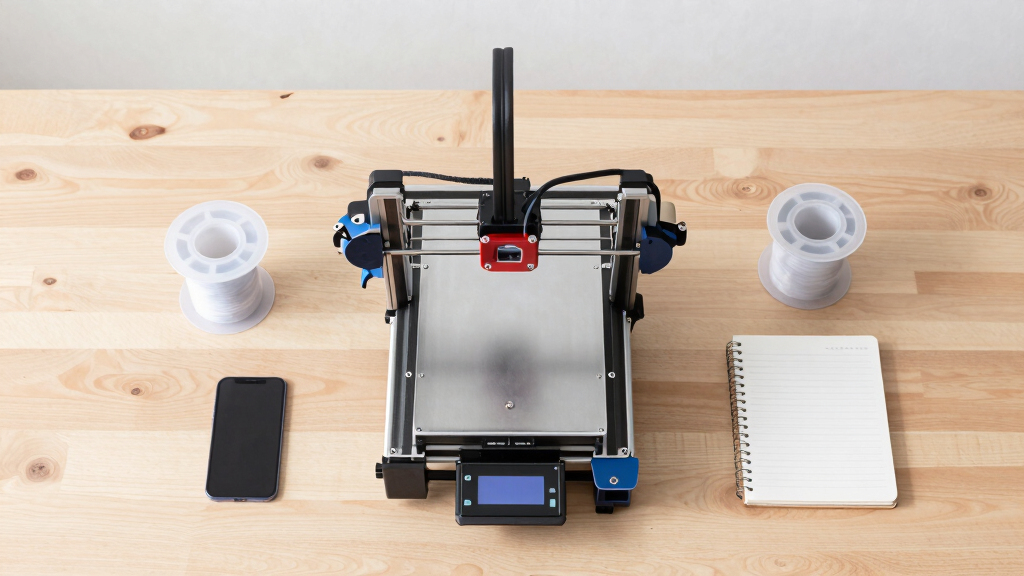
Choosing the best 3D printer for a small product business involves balancing speed, precision, and ease of operation. The ANYCUBIC Kobra X Fast stands out for its multi-color capabilities and large build volume, perfect for production runs. The Bambu Lab A1 offers high-speed, multi-color printing with automatic calibration, ideal for efficiency-focused shops. However, tradeoffs like higher costs or complexity can make some models less suited for beginners or small-scale operations. Continue reading for a detailed breakdown of the top options and what makes each one unique.

Get smart everyday buys delivered free with Prime
- Fast, free delivery on millions of items
- Prime Video, Amazon Music and more included
- Member-only deals all year
Key Takeaways
- Multi-color and high-speed capabilities are common among the top picks, supporting diverse small product needs.
- Auto calibration and user-friendly features are key for reducing setup time and minimizing errors in small batch production.
- Build volume varies, with larger options favored by businesses producing bigger items or multiple parts simultaneously.
- Price range is broad, but investing in more reliable, feature-rich models can pay off in reduced downtime and higher quality outputs.
- Ease of use and maintenance are critical factors that differentiate beginner-friendly models from more advanced, labor-intensive options.




More Details on Our Top Picks
ANYCUBIC Kobra X Fast 3D Printer, Native 4-Color & 19-Color Maximum with 4 ACE 2 Pro, High Speed Large Build Volume FDM 3D Printer with Auto Leveling for Print Farm Bulk Production Model Sellers
This model excels at handling complex, high-value orders with its native 4-color and expandable 19-color capabilities, making it ideal for print farms or businesses requiring vibrant, multi-material prototypes. Compared to the AOSEED 3D Printer for Kids, which is designed for educational and hobbyist use, the Kobra X prioritizes high efficiency, minimal waste, and fleet management, with automatic bed leveling and AI camera control that streamline large batch production. Its space-efficient top-mount design allows multiple units to fit into tight workshops, but the tradeoff is a steeper learning curve and higher initial investment. The Kobra X’s filament waste reduction and auto-leveling ensure consistent quality at high speeds, essential for scaling, though maintenance and setup are more complex than simpler desktop models. This pick makes the most sense for small businesses aiming to expand their output while maintaining flexibility in color and material options.
Pros:- Supports native 4-color and up to 19 colors with expansion, ideal for complex designs
- Significantly reduces filament purge waste by 81.25%, lowering material costs
- Space-efficient top-mount design maximizes workshop real estate
- Advanced auto-leveling with LeviQ 3.0 ensures flawless first layers
Cons:- Higher price point and more complex operation may require technical expertise
- Larger footprint and maintenance demand more dedicated workspace and skills
Best for: Small product businesses focused on high-volume, multi-color, or custom batch manufacturing with scalable needs
Not ideal for: Startups or hobbyists seeking a low-cost, easy-to-use printer for occasional or small-scale projects
- Build Volume:17.93 x 17.53 x 18.16 inches
- Auto Leveling:LeviQ 3.0 with 49-point mesh
- Color Support:Native 4-color, expandable to 19
- Filament Waste Reduction:81.25%
- Connectivity:Anycubic App with AI camera
- Weight:28.8 pounds
Bottom line: This printer is best for small businesses that need scalable, multi-color batch production with professional control and efficiency.
Bambu Lab A1 3D Printer, Support Multi-Color 3D Printing, High Speed & Precision, Full-Auto Calibration & Active Flow Rate Compensation, ≤48 dB Quiet FDM 3D Printers 256 * 256 * 256mm³ Build Volume
The Bambu Lab A1 stands out for its incredible speed—up to 500mm/s—and high precision, making it perfect for quick prototyping and multi-color parts, especially when paired with the AMS lite multi-material system. Unlike the ANYCUBIC Kobra X, which emphasizes multi-color with expansion, the A1 prioritizes speed with active flow rate compensation for flawless extrusion, reducing post-processing time. Full-auto calibration simplifies setup, allowing small businesses to produce detailed, multi-color prototypes rapidly without extensive manual adjustments. Its quiet operation and user-friendly touchscreen complement fast-paced environments, though the 256x256x256mm build size may limit larger projects. This printer is ideal for businesses that need rapid, detailed multi-color output without sacrificing speed or ease of use.
Pros:- Blazing-fast print speeds up to 500mm/s with high accuracy
- Automatic calibration with full auto bed leveling and Z-offset
- Active flow rate compensation ensures consistent extrusion quality
- Quiet operation at ≤48 dB enhances workflow environment
Cons:- Limited build volume (256x256x256mm) may restrict larger parts
- Requires AMS lite for multi-color printing, adding extra cost
Best for: Small businesses prioritizing fast turnaround, multi-color prototyping, and high-precision miniatures or parts
Not ideal for: Large-scale manufacturing requiring bigger build volumes or complex multi-material setups without AMS lite
- Build Volume:256 x 256 x 256 mm
- Max Speed:500 mm/s
- Auto Calibration:Yes
- Flow Rate Compensation:Active
- Noise Level:≤48 dB
- Filament Compatibility:Multi-material with AMS lite
Bottom line: This printer is best for small businesses that need rapid, precise multi-color prototypes with minimal manual setup.
AOSEED 3D Printer for Kids, AI-Powered Fully Assembled 3D Printer with Up to 400mm/s Speed, Auto Leveling, 1500+ Models & 17+ Modules, Includes 8 PLA Filaments for Home and School Use, X-MAKER JOY AI+
The AOSEED X-MAKER JOY AI+ is designed for families and educational environments, offering AI-powered model creation via voice, text, or images—perfect for kids’ engagement. Compared to the ANYCUBIC Kobra X, which caters to small businesses with high-volume needs, this model emphasizes ease of use, safety, and creative learning with a fully enclosed, auto-leveling platform and a library of over 1,500 digital models. Its high-speed capabilities (up to 400mm/s peaks) and quick filament changes keep kids involved and projects moving fast. The built-in camera and time-lapse features enable parents and teachers to share progress easily. However, its smaller print volume and focus on simplicity mean it’s less suitable for professional manufacturing or detailed multi-color production. It’s best for children, educators, and hobbyists exploring 3D printing fundamentals and creativity.
Pros:- AI-powered design with voice, text, and image prompts for easy model creation
- Fast print speeds up to 400mm/s with minimal setup
- Fully enclosed, safe design with auto leveling and automatic filament detection
- Includes extensive digital model library and DIY modules
Cons:- Limited build volume (roughly 4 inches each dimension) not suitable for larger projects
- Primarily designed for educational and hobby use, not professional manufacturing
Best for: Educational settings, families, and beginners wanting a safe, fast, and engaging 3D printing experience for kids
Not ideal for: Small businesses or hobbyists needing large or highly detailed multi-color batch production
- Build Volume:1500+ models & modules
- Speed:Up to 400mm/s
- Auto Leveling:Yes
- Filament Included:8 PLA rolls
- Camera:Built-in for monitoring
- Connectivity:WiFi, App, USB
Bottom line: This printer is ideal for educational environments and families seeking a simple, fast, and safe way to introduce kids to 3D printing.
ELEGOO Centauri Carbon 3D Printer, CoreXY 500mm/s High Speed Printing with Auto Calibration, 320°C Nozzle and Built-in Camera, Ready to Print Out of the Box, 256x256x256mm Printing Size
The ELEGOO Centauri Carbon is tailored for users needing rapid, high-quality parts, featuring a fully assembled setup with auto bed leveling and a robust CoreXY structure. Compared to the Entina TINA2S, which targets beginners and DIYers, the Centauri Carbon is optimized for speed and precision, with a 500mm/s maximum and a durable, vibration-minimizing die-cast aluminum frame. Its 320°C hotend supports advanced filaments like carbon fiber, making it suitable for drone parts, automotive components, or heat-resistant prototypes. The built-in camera and pre-calibrated system enable quick, reliable printing from the start, but the small build size (256x256x256mm) limits volume for larger projects. This model makes the most sense for small-scale professional or industrial applications where speed and material versatility are priorities.
Pros:- High-speed printing up to 500mm/s with rapid auto calibration
- Supports high-temp materials up to 320°C, including carbon fiber filaments
- Built-in camera for real-time monitoring and time-lapse videos
- Rigid die-cast aluminum frame for stability at high speeds
Cons:- Limited build volume restricts larger prototypes
- Premium price point and advanced features may be overkill for casual users
Best for: Small businesses and professionals needing rapid, high-strength, detailed parts with minimal setup
Not ideal for: Hobbyists or educational environments requiring larger build sizes or beginner-friendly features
- Build Volume:256 x 256 x 256 mm
- Max Speed:500 mm/s
- Hotend Temperature:320°C
- Auto Calibration:Yes
- Frame:Die-cast aluminum
- Camera:Built-in
Bottom line: This printer is best suited for small-scale, high-speed production of durable, detailed parts for professional use.
Entina TINA2S 3D Printers with WiFi Cloud Printing, Fully Assembled with Auto Leveling, Huge Library, DIY Mini 3D Printer for Beginners and Kids, High Precision 3D Printer for Home, Office & School
The Entina TINA2S offers a compact, fully assembled design with WiFi cloud connectivity, making it accessible for beginners, kids, and educational environments. Unlike the ANYCUBIC Kobra X, which is geared toward high-volume production, the TINA2S emphasizes ease of use, automatic leveling, and a library of over 1,500 models, ideal for STEM projects and family fun. Its dual Z-axis structure enhances stability for small-scale, detailed prints, with a 3.9×4.7×3.9 inch print size suitable for miniatures and learning projects. The low-noise motherboard and enclosed design ensure safe, quiet operation at home or school. However, its small build volume and limited advanced features make it less suitable for professional manufacturing or large prototypes. It’s best for those new to 3D printing or educational settings seeking a reliable, hassle-free machine.
Pros:- Fully assembled, plug-and-play with WiFi cloud printing
- Auto bed leveling and dual Z-axis for stable, accurate prints
- Supports offline printing via TF card and app
- Includes a large model library and STEM modules
Cons:- Limited build size restricts larger or multiple objects
- Basic features compared to higher-end professional printers
Best for: Beginners, schools, and families looking for a simple, reliable, and portable 3D printer for small projects
Not ideal for: Small businesses or hobbyists needing larger volume or detailed multi-color production
- Build Volume:3.9 x 4.7 x 3.9 inches
- Connectivity:WiFi, App, TF card
- Auto Leveling:Yes
- Speed:Up to 200mm/s
- Precision:0.04mm
- Filament:PLA
Bottom line: This printer is best for beginners, educational use, and small creative projects needing simplicity and portability.
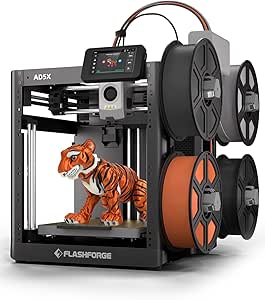
FLASHFORGE AD5X Multi-Color 3D Printer, CoreXY 600mm/s High-Speed, 1-Click Auto Leveling, 300°C Direct Drive Extruder, 220x220x220mm Build Volume, Ideal for Precision and Efficiency
This model stands out for its exceptional multi-color capabilities, supporting up to four colors simultaneously, which surpasses the single-color focus of the Geeetech Mini. Its CoreXY structure enables ultra-fast speeds up to 600mm/s, making it ideal for rapid prototyping and batch runs, though this high speed can lead to increased noise and filament purging waste. The ease of 1-Click Auto Leveling combined with a 300°C direct-drive extruder ensures consistent, high-quality prints across diverse materials. Compared to the Creality Ender 3, it offers much more advanced multi-color and speed features but comes at a higher complexity and cost. The large build volume and versatile nozzles provide creative freedom, though setup requires some familiarity with advanced features. This printer makes the most sense for small businesses needing efficient, multi-color production, but less so for absolute beginners or those with tight budgets.
Pros:- Supports up to 4-color simultaneous printing for complex designs
- CoreXY design enables speeds up to 600mm/s, greatly reducing production time
- 1-Click auto leveling ensures reliable first layers and easy setup
- Supports multiple nozzle sizes for detailed or fast printing
Cons:- Higher noise levels during high-speed operation
- Filament purging waste can be significant, requiring cleanup or reuse
- Steeper learning curve compared to basic models like Ender 3
Best for: Small product businesses needing multi-color, high-speed, and versatile prototyping or batch production
Not ideal for: Beginners or hobbyists seeking simple, low-cost printers with minimal setup
- Build Volume:220x220x220mm
- Max Speed:600mm/s
- Extruder Temperature:300°C
- Nozzle Options:0.25mm to 0.8mm
- Auto Leveling:Yes
- Supports Multi-Color:Yes
Bottom line: Ideal for small businesses that prioritize multi-color, high-speed output with advanced features, but less suited for absolute newcomers.
FLASHFORGE Adventurer 5M 3D Printer,600mm/s Max High-Speed FDM 3D Printers with Fully Auto Leveling, 280°C Direct Extruder with Quick Detachable Nozzle, Effective Cooling, Core XY Structure
This pick makes the most sense for businesses focused on rapid turnaround, with its 600mm/s maximum speed and auto leveling making it highly efficient compared to slower, more manual options like the Creality Ender 3. Its Core XY structure and quick-change nozzle system support fast, reliable printing with less downtime, although the high speed can generate more noise and filament waste. The 280°C direct extruder broadens material compatibility, enabling use with ABS, PETG, and more demanding filaments. Its built-in vibration compensation reduces resonance, improving print quality at high speeds. Remote management via the Flash Maker app provides convenience but requires a camera kit (sold separately). While the printer is straightforward to operate, its advanced features may be overkill for hobbyists or those with limited space, but it’s perfect for businesses needing quick, consistent output.
Pros:- Maximum printing speed of 600mm/s for quick production
- Fully automatic bed leveling simplifies setup
- Detachable quick-change nozzle speeds maintenance and material changes
- Supports multiple filament types including ABS and PETG
Cons:- Higher noise levels at maximum speeds
- Filament purge waste may be more noticeable during frequent color switches
- Advanced features may require a learning curve for new users
Best for: Small businesses requiring high-speed, reliable production with minimal manual intervention
Not ideal for: Beginners or small-scale hobbyists seeking simple, budget-friendly options
- Build Volume:220x220x220mm
- Max Speed:600mm/s
- Extruder Temperature:280°C
- Nozzle Options:0.25/0.4/0.6/0.8mm
- Auto Leveling:Yes
- Remote Control:Yes via Flash Maker app
Bottom line: Best suited for fast-paced small business environments that value speed and automation over simplicity.
Official Creality Ender 3 3D Printer Fully Open Source with Resume Printing Function DIY Printers Build Volulme 8.66×8.66×9.84 inch
This model makes the most sense for hobbyists or small startups on a tight budget, offering reliable basic features like resume printing after power loss, which is a significant advantage over less capable models like the Geeetech Mini. Its open-source design encourages customization and learning, though it requires more manual calibration and setup, making it less suitable for those seeking plug-and-play simplicity. The build volume of 8.66×8.66×9.84 inches is modest but sufficient for small product prototypes. Its assembly process** takes about two hours, which might deter absolute beginners. The filament options are broad, but print quality depends heavily on user tuning. Overall, this printer is perfect for learners and hobbyists willing to invest time, but less ideal for quick-turnaround production.
Pros:- Open-source design supports customization and upgrades
- Resume printing feature offers safety against power outages
- Affordable entry point for learning and experimentation
- Large community support and modifications available
Cons:- Requires more manual calibration and tuning
- Print quality depends heavily on user skill
- Assembly can be time-consuming for beginners
Best for: Beginners or hobbyists learning 3D printing with a focus on customization and affordability
Not ideal for: Small businesses needing high-speed, multi-color, or professional-grade output
- Build Volume:8.66×8.66×9.84 inches
- Resume Function:Yes
- Supported Filaments:PLA, ABS, TPU, etc.
- Auto Leveling:Yes
- Assembly Required:Yes
- Open Source:Yes
Bottom line: Ideal for learners and hobbyists who want a budget-friendly, customizable starter, not for high-volume or multi-color production.
3D Printer for Kids and Beginners,Geeetech Mini 3D Printers with Auto Leveling,High Speed and Fully Open Source,Fully Assembled Direct Drive Extruder,for Home and School,Print Area 3.94×4.33×3.94 in
This printer is tailored for educational settings and absolute beginners, with a fully assembled design that eliminates setup frustration, similar to the Mini 3D Printer. Its auto-leveling and small print area (3.94×4.33×3.94 inches) make it ideal for quick, simple projects and learning environments, though the small build size limits its application for larger product prototypes. The dual-drive extruder offers higher accuracy and better material handling, including TPU and PLA, but may require some tuning for optimal results. While its plug-and-play operation is user-friendly, it lacks the speed and versatility needed for small business batch production. This model is best for kids, schools, or beginners testing the waters of 3D printing, rather than commercial small-scale manufacturing.
Pros:- Fully assembled, ready to use out of the box
- Auto-leveling for consistent first layers
- Compact size ideal for educational and small hobby projects
- Open-source firmware supports modifications
Cons:- Limited build volume restricts larger prototypes
- Lower speed and fewer advanced features for batch production
- Not suitable for professional or high-volume manufacturing
Best for: Kids, schools, and absolute beginners exploring 3D printing in a controlled, simple environment
Not ideal for: Small product businesses needing larger build volume or multi-color, high-speed output
- Build Area:3.94×4.33×3.94 inches
- Auto Leveling:Yes
- Extruder Type:Direct Drive
- Supported Filaments:PLA, TPU, etc.
- Assembly:Pre-assembled
- Open Source:Yes
Bottom line: Great for educational and beginner use, but limited for small business production needs.
FLASHFORGE Adventurer 5M 3D Printer with Fully Auto Leveling, Max 600mm/s High Speed Printing, 280°C Direct Extruder with 3S Detachable Nozzle, CoreXY All Metal Structure, Print Size 220x220x220mm
This model is tailored for rapid prototyping and high-volume small-scale production, thanks to its ultra-high speed of 600mm/s and auto leveling for quick setup. Its CoreXY all-metal structure offers durability and speed, making it a strong choice over the slower Creality Ender 3 for time-sensitive tasks. The 280°C extruder broadens material options, supporting production-grade filaments. Its detachable nozzle simplifies maintenance, and the dual fan system enhances print quality at high speeds, although the high velocity may generate more noise and filament waste. The 220x220x220mm build volume is suitable for most small product prototypes. It’s perfect for startups needing fast, consistent results, but less ideal for detailed multi-color jobs or those requiring large volumes.
Pros:- Maximum speed of 600mm/s for rapid prototyping
- Full auto-leveling for quick, reliable setup
- Supports multiple filament types including high-temp materials
- Detachable nozzle for easy maintenance
Cons:- Higher noise levels during operation
- Filament waste during high-speed printing can be significant
- May require noise mitigation and fine-tuning for optimal results
Best for: Small businesses focused on rapid prototyping and fast turnaround times
Not ideal for: Beginners or those needing detailed multi-color or large-volume prints
- Build Volume:220x220x220mm
- Max Speed:600mm/s
- Extruder Temperature:280°C
- Nozzle Options:0.25/0.4/0.6/0.8mm
- Auto Leveling:Yes
- Remote Monitoring:Supported via app
Bottom line: Best suited for small businesses that prioritize speed and durability over fine detail or multi-color complexity.
FLASHFORGE Adventurer 5M Pro 3D Printer with 1 Click Auto Printing System, 600mm/s High-Speed, Quick Detachable 280°C Nozzle, Core XY All-Metal Structure, Multi-Functional 220x220x220mm 3D Printer
The FLASHFORGE Adventurer 5M Pro stands out for delivering extremely fast print speeds of up to 600mm/s, making it ideal for small product businesses that need rapid prototyping. Compared with the FLASHFORGE Adventurer 5M, this model takes speed to the next level without sacrificing quality, thanks to its sturdy Core XY all-metal frame and high-temperature extruder. Its automatic bed leveling with pressure sensing and quick heat-up times allow for hassle-free setup, making it suitable for teams with limited time. However, the high speed can sometimes lead to slightly rougher surface finishes, especially on intricate details, and its size may be less suited for very tight workspaces. This model makes the most sense for small businesses prioritizing rapid turnaround and consistent quality over ultra-fine detail at the highest speeds.
Pros:- Exceptional print speed of up to 600mm/s reduces production time
- Automatic bed leveling simplifies setup for quick operation
- All-metal core XY structure provides stability during high-speed printing
- Supports a wide range of materials up to 280°C for versatility
Cons:- High speed may result in rougher surface finishes on detailed parts
- Relatively larger footprint may be unsuitable for tight spaces
- Initial setup and calibration can be complex for absolute beginners
Best for: Small product businesses needing fast, reliable prototypes and production runs with minimal manual calibration.
Not ideal for: Artists or detailed miniature creators who require ultra-fine resolution and surface smoothness, as extremely high speeds may compromise detail.
- Max Speed:600mm/s
- Build Volume:220x220x220mm
- Nozzle Temperature:280°C
- Frame Structure:Core XY, all-metal
- Auto Bed Leveling:Pressure sensing, multi-point
- Connectivity:Mobile app, remote monitoring
- Supported Materials:PLA, ABS, PETG, TPU, PC
- Setup Time:Approximately 10 minutes
- Weight:32.1 pounds
Bottom line: This printer is ideal for small businesses that prioritize speed and ease of use over ultra-fine detail for rapid product development.
Fully Assembled Mini 3D Printer for Kids & Beginners – Complete Starter Kit with Auto Leveling 3D Printing Machine, 1 Roll of Filament, and SD Card, High-Speed 250mm/s, High Precision, for School Home
The XZN Mini 3D Printer excels as a user-friendly, fully assembled machine tailored for kids and newcomers, with a speed of 250mm/s and precision down to 0.01mm, making it ideal for educational settings or home use. Unlike the more industrial FLASHFORGE models, it emphasizes simplicity, featuring automatic nozzle cleaning, auto-leveling, and one-touch filament loading, which minimizes setup time and technical barriers. Its PEI heated bed allows easy removal of printed models, perfect for beginners. However, its smaller print volume and lower maximum speed may limit larger or more complex projects. This is best suited for schools, families, or beginners seeking a straightforward, safe introduction to 3D printing without sacrificing quality.
Pros:- Easy, fully assembled setup ideal for beginners
- High precision with 0.01mm layer resolution
- Automatic nozzle cleaning and auto-leveling simplify operation
- Includes a complete starter kit with filament and SD card
Cons:- Limited build volume restricts larger models
- Maximum speed of 250mm/s may be slower for high-volume production
- Basic features may lack advanced customization options
Best for: Kids, students, and beginners looking for an easy-to-operate, out-of-the-box 3D printer for learning and small projects.
Not ideal for: Advanced users or small businesses requiring larger build volumes or faster production speeds for small batch manufacturing.
- Max Speed:250mm/s
- Print Resolution:0.01mm
- Build Volume:150x150x150mm
- Nozzle Temperature:260°C
- Auto Leveling:Yes
- Connectivity:SD card, USB
- Supported Filaments:PLA, TPU, PETG
- Weight:6.61 pounds
- Setup Time:Immediately ready
Bottom line: This printer makes the most sense for educational or home environments where ease of use and safety outweigh the need for large-scale production or ultra-high speeds.
Creality K2 Combo (A) 3D Printer, Multicolor Printing with CFS, 600mm/s Printing Speed, 95% Pre-Assemble, Smart Al Camera & Auto Leveling, Next-Gen Direct Drive Extruder, Build Volume 260*260*260mm
The Creality K2 Combo (A) offers impressive multi-color capabilities with up to 16 colors via four CFS units, making it perfect for small businesses that want vibrant, multi-hued prototypes or products. Its 600mm/s printing speed surpasses many rivals, including the FLASHFORGE Adventurer 5M Pro, enabling rapid output of complex, multicolor designs. The pre-assembled design and features like auto bed leveling and smart AI camera support efficient workflow and failure detection. The next-gen direct drive extruder handles flexible and composite filaments well. The tradeoff is that the setup, while simple, involves a more substantial machine weighing nearly 66 pounds, potentially limiting portability. Ideal for small batch runs, product demos, or multi-color prototypes for small product businesses wanting quick turnaround and vibrant results.
Pros:- Supports up to 16 colors with four CFS units for vibrant, multicolor printing
- High speed of 600mm/s accelerates short-run production
- Auto bed leveling and AI camera for reliable, fail-safe operation
- Pre-assembled for quick start
Cons:- Heavy and bulky design limits portability
- More complex setup with multiple CFS units may increase initial learning curve
- Higher price point compared to single-color printers
Best for: Small product businesses requiring multicolor prototypes or short-run production with high speed and reliable auto-calibration.
Not ideal for: Solo creators or small studios needing ultra-fine surface finish or large volume for big production runs, as build size and speed may be excessive.
- Max Speed:600mm/s
- Build Volume:260x260x260mm
- Color Support:Up to 16 colors via 4 CFS units
- Nozzle Temperature:Not specified
- Auto Leveling:Yes
- Connectivity:WiFi, camera
- Supported Materials:PLA, PETG, ABS, TPU
- Weight:65.9 pounds
- Setup Time:Approx. 15-20 minutes
Bottom line: This model suits small businesses that prioritize multicolor capabilities and fast turnaround for prototypes or short runs, rather than large-volume manufacturing.

How We Picked
Each 3D printer was evaluated based on performance, build quality, ease of use, maintenance requirements, and overall value. For small product businesses, reliability and speed are paramount, so models with auto calibration, multi-color options, and large build volumes ranked higher. We also considered user interface design and community support, which influence how quickly a business can integrate the printer into daily workflows. The ranking reflects a balance between cost and features, prioritizing models that deliver consistent results with manageable complexity for small-scale operations.Factors to Consider When Choosing Best 3D Printers For Small Product Businesses
When selecting a 3D printer for a small product business, it’s important to weigh several factors that directly impact productivity, quality, and investment. Not every printer offers the same mix of speed, precision, or ease of maintenance, so understanding these tradeoffs can save time and money in the long run. The right choice depends on your specific production needs, budget, and technical expertise.Print Speed and Throughput
For small product businesses, higher print speeds can significantly increase daily output, especially when producing multiple units. However, faster printers may sometimes sacrifice detail or require more frequent maintenance. Balancing speed with print quality is essential to avoid compromising your product standards while meeting deadlines. Consider models that offer adjustable speed settings, so you can tailor production based on project complexity.
Build Volume and Size
The size of your typical products will determine the necessary build volume. Larger build areas enable printing bigger items or multiple parts simultaneously, reducing the number of print runs needed. Keep in mind that larger printers tend to be more expensive and occupy more space. If your products are small, opting for a compact model can save costs and simplify setup, but ensure it still meets your volume requirements.
Ease of Use and Maintenance
A user-friendly interface and features like auto-leveling and remote monitoring reduce setup time and errors, which are critical in small business environments. Additionally, models with modular components or quick-change extruders simplify maintenance, minimizing downtime. Avoid overly complex systems if you lack specialized technical skills, but don’t sacrifice essential features that ensure consistent quality.
Material Compatibility and Quality
Material options influence both the versatility and the durability of your products. Some printers support advanced filaments like carbon fiber or flexible materials, expanding your design possibilities. Ensuring compatibility with high-quality, reliable filament brands can prevent issues like warping or poor layer adhesion. Consider whether your business needs specialty materials or if standard PLA, ABS, or PETG will suffice.
Cost and Total Investment
Initial purchase price is only part of the total cost; factor in ongoing expenses such as filaments, maintenance, and potential upgrades. More expensive models often offer better reliability, faster speeds, and lower maintenance costs over time. Balancing your budget with your production needs ensures you choose a printer that remains a valuable asset without stretching your resources too thin.
Frequently Asked Questions
Can I use these 3D printers for mass production?
Many of these models are capable of handling small batch production efficiently, especially those with higher speeds, auto-calibration, and multi-color options. However, for truly large-scale manufacturing, dedicated industrial-grade printers might be more appropriate. For small product businesses, these printers can often support daily or weekly production volumes, provided you optimize your workflow and maintain consistent operation.
Are multi-color 3D printers worth the extra cost?
Multi-color printers can add significant value if your products benefit from color variation or complex designs, reducing the need for post-processing. They tend to be more expensive and sometimes slower, so consider whether your product line justifies the investment. For businesses focusing on simple, monochrome prototypes or small runs, single-material printers might be more cost-effective and easier to operate.
How important is auto-leveling for small business use?
Auto-leveling is a feature that greatly reduces setup time and minimizes print failures due to uneven beds. For small businesses, where time is money, auto-leveling can streamline daily operations and improve consistency. While some manual levelers are affordable, auto-leveling systems often pay for themselves through fewer failed prints and less troubleshooting, especially for less experienced operators.
Should I prioritize speed over print quality?
Prioritizing speed might be tempting to increase output, but it can sometimes compromise detail and surface finish. The best approach is to select a printer offering adjustable settings, so you can balance speed with quality based on the specific product. For high-end, detailed small parts, slower speeds with fine resolution are preferable, while rapid prototypes or bulk parts can be printed faster at slightly lower resolution.
What maintenance is typical for these printers?
Most 3D printers require regular cleaning of the print bed, extruder nozzle, and lubrication of moving parts. Auto-calibration features reduce manual adjustments, but periodic checks are still necessary to maintain quality. Keeping spare parts like nozzles and belts on hand can minimize downtime. Investing in a model with straightforward maintenance procedures will save time and reduce operational headaches over the long term.