TL;DR

Get smart everyday buys delivered free with Prime
- Fast, free delivery on millions of items
- Prime Video, Amazon Music and more included
- Member-only deals all year
ECB President Christine Lagarde told the IMF’s International Monetary and Financial Committee on Oct. 17 that global and euro-area growth had remained resilient, but energy-market shocks posed risks to growth and inflation. She cited September euro-area inflation of 3.8% and said the ECB had raised its key interest rates by 25 basis points that month, with future decisions dependent on incoming data.
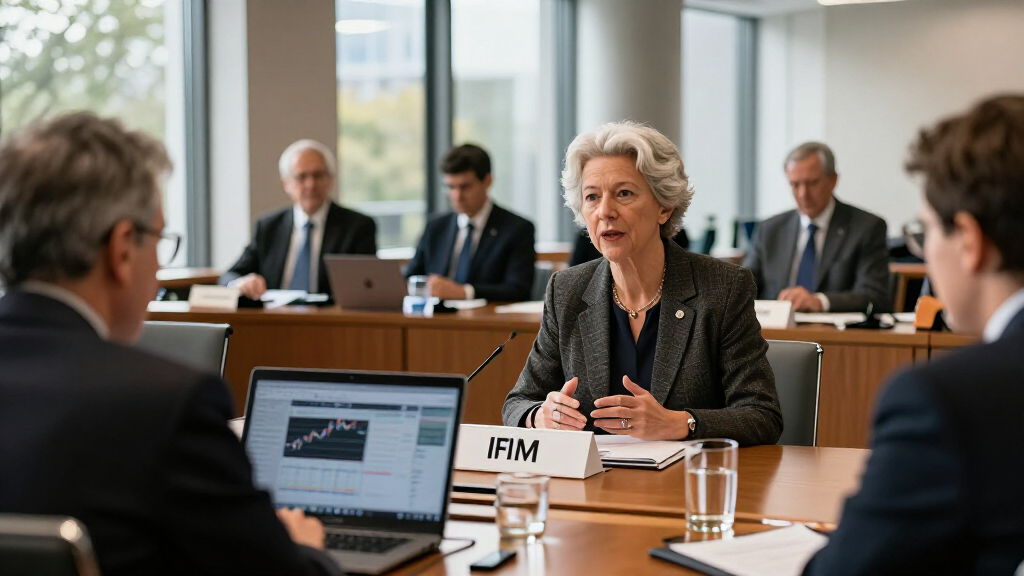
European Central Bank President Christine Lagarde told the International Monetary and Financial Committee on Oct. 17 that the global economy had proved resilient despite geopolitical and energy-market uncertainty, while warning that risks to growth and inflation remained. Her statement also set out the ECB’s response to rising prices: the Governing Council raised key interest rates by 25 basis points in September, after an equal increase in June, and will base future decisions on incoming evidence.
Lagarde presented the statement at the 54th meeting of the IMFC, during the IMF Annual Meetings. She said conflict in the Middle East continued to expose energy markets to sharp swings, while trade tensions and protectionist measures weighed on confidence and changed trade flows. In her account, investment in artificial intelligence had helped support activity and trade, particularly in economies connected to technology supply chains. She characterized global growth risks as tilted to the downside and inflation risks as tilted to the upside.
For the euro area, Lagarde said activity had been broad-based across most countries and sectors in the first half of 2026, despite external pressures and the energy shock. The ECB’s September staff projections forecast growth of 0.9% in 2026, 1.4% in 2027 and 1.5% in 2028. The projections anticipate support from recovering real incomes as energy inflation eases, a resilient labour market, public investment in infrastructure and defence, and investment in AI and digital technologies. These are forecasts, not reported final outcomes.
Euro-area headline inflation rose to 3.8% in September, largely because of higher energy inflation, with smaller contributions from food and services, according to Lagarde. Core inflation was 2.5%. She said underlying inflation measures were broadly stable and wages had not yet shown a material response to the energy shock. The ECB expects energy prices to keep headline inflation well above its target into the first half of 2027, before a decline toward around target near the end of that year.
Energy Shock Shapes ECB Rate Outlook
The statement matters because it connects a sharp energy-price shock with the ECB’s inflation outlook and its decisions on borrowing costs. Higher energy bills can raise household and business costs directly; if those increases spread into wages and other prices, inflation could last longer. Lagarde said the ECB saw no evidence so far of significant additional pass-through to prices and wages beyond what its projections already included, but warned that a more intense or persistent shock could produce stronger indirect and second-round effects.
For households, firms and governments, the combination of higher inflation and tighter financing conditions can affect purchasing power, investment and public budgets. Lagarde said long-term interest rates had risen notably since the ECB’s previous meeting, a development she said would slow growth and reduce price pass-through more than the September projections had assumed. The statement signals that policymakers are weighing both the inflation threat and the economic cost of tighter conditions, rather than committing to a preset path for rates.
Her comments also put fiscal policy in focus. Lagarde argued that any government response to energy costs should be temporary, targeted and tailored, and that countries with high debt should rebuild fiscal buffers. Those recommendations matter because broad or lasting support can add pressure to public finances, while withdrawing support too quickly may leave households exposed to high costs.
As an affiliate, we earn on qualifying purchases.
June and September Rate Increases
The IMFC is a ministerial-level committee that discusses international monetary and financial issues and advises the IMF’s Board of Governors. Lagarde’s statement was delivered at its 54th meeting during the IMF Annual Meetings. It presents the ECB’s assessment to an international forum; it is not itself a new rate decision.
The ECB Governing Council raised key rates by 25 basis points in June and by another 25 basis points in September, according to the statement. Lagarde said decisions are guided by three elements: the inflation outlook and its risks in light of incoming data; underlying inflation dynamics; and the strength of monetary-policy transmission. She described the energy shock as too large to ignore, while saying a measured response remained appropriate.
The statement also referred to the Eurosystem’s enhanced EUREP repo facility for central banks. The ECB decided in July on its operational features and onboarding process. Lagarde said more than 30 central banks had expressed interest in the preceding six months, and described the facility as supporting policy transmission and the international role of the euro.
“The global economy has proven surprisingly resilient in the face of high uncertainty.”
— Christine Lagarde, ECB president, in her IMFC statement
As an affiliate, we earn on qualifying purchases.
Duration of the Energy Shock
The statement does not establish how long the Middle East conflict or the associated energy-market disruption will continue, or how extensively the shock will spread through prices, wages and output. Lagarde said the medium-term outlook depended partly on the conflict’s intensity and duration. The ECB also identified Russia’s war against Ukraine and extreme weather as inflation risks, while saying a sustainable resolution of geopolitical conflicts could lower inflation.
It remains uncertain whether wage and price-setting behaviour will change as energy costs feed through the economy. Lagarde said there was no material wage response so far, but described stronger indirect and second-round effects as a risk. The statement does not announce future rate moves or specify when the Governing Council might change policy again.
artificial intelligence investment tools
As an affiliate, we earn on qualifying purchases.
As an affiliate, we earn on qualifying purchases.
ECB Decisions Await Incoming Data
The Governing Council will continue to assess incoming economic and financial data against its three-part reaction function: the inflation outlook and risks, underlying inflation dynamics, and monetary-policy transmission. Lagarde said future policy would follow a comprehensive assessment under that framework; the statement gave no schedule or commitment for another rate change.
Relevant developments include energy prices, headline and underlying inflation, wage trends, financing conditions and evidence of how the shock affects demand. The ECB’s September projections provide a baseline for growth and inflation, but the path may change if the conflict, energy markets or economic data evolve differently from the assumptions behind those forecasts.
As an affiliate, we earn on qualifying purchases.
Key Questions
What did Christine Lagarde say at the IMFC meeting?
She said the global and euro-area economies had shown resilience, but warned that energy-market disruption and geopolitical uncertainty created downside risks to growth and upside risks to inflation. She also explained the ECB’s approach to interest-rate decisions.
Did the ECB change interest rates on Oct. 17?
The statement reported that the ECB raised key interest rates by 25 basis points in September, following an equal increase in June. It did not announce a new rate decision on Oct. 17.
What were euro-area inflation figures in the statement?
Lagarde said headline inflation reached 3.8% in September 2026, while core inflation was 2.5%. She attributed most of the headline increase to energy inflation, with smaller increases in food and services inflation.
What growth does the ECB project for the euro area?
The ECB’s September staff projections put euro-area growth at 0.9% in 2026, 1.4% in 2027 and 1.5% in 2028. These are projections cited in the statement, not confirmed future results.
What is still unknown about the outlook?
The duration and severity of the Middle East conflict, the path of energy prices and the extent to which higher costs spread to wages and other prices remain uncertain. Lagarde said future interest-rate decisions would depend on incoming data rather than a preset schedule.
Source: primary
Halloween Picks
halloween
As an affiliate, we earn on qualifying purchases.