
TL;DR
A PYMNTS Intelligence report says Amazon accounted for 59% of consumers’ most recent AI-assisted purchases, while representing 29% of online retail research starts and 49% of main purchase completions. The figures come from separate distributions, not a tracked shopper funnel, but point to a gap between AI-led product discovery and established checkout. Consumer willingness to let an AI agent both shop and buy also fell from 32% in September 2025 to 24% in August 2026.
Amazon accounted for 59% of consumers’ most recent purchases made with AI assistance, according to new PYMNTS Intelligence data published October 30. The finding suggests that AI tools are influencing how shoppers discover products without yet displacing established retailers at checkout, though the report’s measures are separate distributions rather than a tracked path from research to purchase.

Get smart everyday buys delivered free with Prime
- Fast, free delivery on millions of items
- Prime Video, Amazon Music and more included
- Member-only deals all year
The report, Will the 2026 Shopping Season Go Agentic?, compares three measures of consumer behavior: Amazon represented 29% of online retail research starts, 49% of consumers’ main purchase completions and 59% of their most recent AI-assisted purchases. Because these figures do not follow the same shoppers through a single shopping journey, they should not be read as a conversion rate or as proof that AI sends a particular share of researchers to Amazon. PYMNTS describes them as evidence of a difference between where discovery begins and where transactions are completed.
The report also describes substantial use of AI in shopping research. PYMNTS Intelligence estimates that about 132 million U.S. adults have bought something with AI assistance, while 58.4 million now start online retail research using an AI tool. Separately, 57.5 million AI-assisted shoppers say they use AI to research items they previously searched for on Amazon; 54.5 million say they still buy on Amazon even when an AI tool found the product. These are reported population counts and survey findings, not measures of a single linked shopping funnel.
Consumers appear more cautious about handing over purchasing authority than about using AI for recommendations. The report says 62.9 million would let an agent shop and buy on their behalf, while 36.8 million would allow an AI application to hold their card. In a separate measure, willingness to let an agent both shop and buy fell from 32% in September 2025 to 24% in August 2026. The report interprets this as a distinction between lower-risk research and higher-risk transactions; the figures alone do not establish why willingness changed.
The Fight Moves From Discovery to Payment
The report’s central implication is that control of product recommendations may not be enough to control the sale. AI can shape discovery by comparing products and summarizing information, while consumers can still rely on an existing retailer to complete the order. Amazon’s 59% share of the latest AI-assisted purchases is relevant to retailers and AI platforms because it suggests that a new research channel can coexist with familiar buying habits.
PYMNTS points to practical reasons a shopper might return to an established retailer: stored payment details, recognized identity, delivery expectations, loyalty benefits and returns. Those features may reduce friction once a consumer has chosen a product. The report does not measure how much each factor contributes to Amazon’s share, so they are explanatory possibilities rather than quantified causes.
For businesses, the issue extends beyond the quality of an AI recommendation. The report says 87% of surveyed merchants view agentic commerce as an opportunity, and 90% have begun work on product and catalog data. Yet just 23% say they are very or fully prepared to connect with AI platforms or agent networks. PYMNTS also reports that merchants spend an average of 2% of annual revenue preparing for agentic commerce. These survey results suggest interest and investment are ahead of reported readiness, although the source does not specify the surveyed merchants’ full profile in the material provided.
Products Worth Considering

Apple Mac mini Desktop Computer with M6 Chip (2026)

FLEXISPOT Electric Adjustable Workbench, 48 x 30 in, Maple
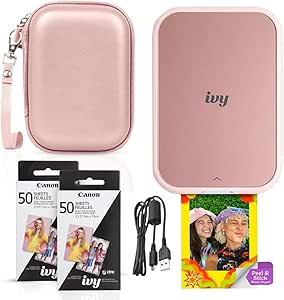
Canon IVY 2 Mini Photo Printer Bundle, Blush Pink
As an affiliate, we earn on qualifying purchases.
Consumer Control Shapes Agent Shopping
The report frames agentic commerce as a gradual delegation of tasks, not a simple switch from human shopping to autonomous buying. Consumers may welcome help with search, comparison and product research while retaining control over whether and where to pay. That distinction is reflected in the separate estimates for people who would let an agent shop and buy and those willing to let an AI application hold a payment card.
PYMNTS characterizes this as a “ladder” of delegation: permission can depend on the task and its perceived risk. One possible model, offered in the report, would give an agent limited authority—such as a spending cap or approved merchants—and require the shopper’s approval when a purchase falls outside those rules. This is a proposed way to think about permissions, not a stated standard already adopted across the industry.
The report’s comparison of Amazon’s research-start and purchase-completion shares predates the AI-assisted purchase figure in the sense that each describes a different measure, not necessarily a sequential stage. The numbers should not be combined into a conversion calculation. Their value is in showing that AI-assisted shopping has become a meaningful research and purchase behavior while established commerce services remain prominent at transaction time.
“The report describes a “ladder” of delegation rather than a switch.”
— PYMNTS Intelligence report, “Will the 2026 Shopping Season Go Agentic?”
The Data Does Not Track Every Purchase
The report provides separate distributions for research starts, main purchase completions and recent AI-assisted purchases. It does not show that the same consumers moved from an AI tool to Amazon, nor does it establish that AI caused the purchase or Amazon’s role in it. The 59% figure is the share of consumers’ most recent AI-assisted purchases attributed to Amazon, not a share of all online retail sales.
The source material does not provide survey sample sizes, field dates for every measure, question wording, or a breakdown by product category. It also does not explain the reasons behind the decline in stated willingness to let an agent both shop and buy, from 32% in September 2025 to 24% in August 2026. As a result, the findings indicate reported behavior and attitudes but do not establish why they changed or how representative each measure is beyond the report’s stated estimates.
It also remains unclear how quickly merchants will connect their systems to AI platforms, what payment and authorization standards will emerge, and whether consumers will grant agents more purchasing authority over time. The reported readiness figure is a survey result, not a forecast of when agent-led checkout will become common.
Merchant Readiness and Permissions
The report points to catalog preparation and platform integration as near-term work for merchants, alongside decisions about how AI agents may identify products and initiate purchases. Businesses will also need workable ways to confirm a shopper’s identity and define the boundaries of an agent’s authority. The supplied report material does not name a specific industry standard, launch date or regulatory milestone for those systems.
For shoppers, the next development to watch is whether AI services offer more limited and transparent purchasing permissions, such as spending caps or approval prompts, and whether consumers choose to use them. Future survey results could show whether the gap between AI-assisted discovery and retailer checkout narrows. For now, PYMNTS’ figures indicate that AI is already part of many consumers’ shopping journeys, while Amazon remains a frequent destination for completing AI-assisted purchases.
Key Questions
It is Amazon’s share of consumers’ most recent AI-assisted purchases in the PYMNTS Intelligence report. It is not Amazon’s share of all online purchases or a conversion rate from AI research.
Does the report show that AI shoppers first researched on an AI tool and then bought from Amazon?
No. The 29%, 49% and 59% figures describe separate distributions, not a single tracked journey involving the same shoppers. The report describes a difference between research and purchase patterns but does not establish individual paths.
How many U.S. adults have bought something with AI assistance?
PYMNTS Intelligence estimates that about 132 million U.S. adults have made a purchase with AI assistance. The source material does not provide the survey methodology or sample details for that estimate.
Are consumers willing to let AI agents make purchases for them?
The report says 62.9 million would let an agent both shop and buy, while 36.8 million would allow an AI application to hold their card. In a separate measure, willingness to delegate both shopping and buying was 24% in August 2026, down from 32% in September 2025.
What is still unknown about agentic checkout?
The report does not establish why consumers’ willingness to delegate declined, how quickly merchants will integrate with AI platforms, or which authorization practices will become standard. Its purchase figures also do not show why shoppers chose Amazon or whether AI caused that choice.
Source: pymnts.com