Mobile physical therapy and telehealth services bring care right to your home or remote location, making treatment more accessible and convenient. You can receive virtual assessments, personalized exercise routines, and ongoing support without the need to travel. These services are ideal for those with mobility challenges or in rural areas, offering effective, customized care that promotes healing and wellness. Keep exploring to discover how these innovative options can fit your recovery needs.
Key Takeaways
- Mobile physical therapy and telehealth services provide convenient, at-home care, eliminating travel and improving access for remote or mobility-challenged patients.
- Virtual assessments enable therapists to monitor progress, adapt treatment plans, and evaluate movement and posture remotely.
- Personalized exercise routines are designed to meet individual needs, boosting motivation and ensuring safe, effective therapy at home.
- Digital platforms facilitate exercise demonstrations, instructions, and ongoing monitoring, enhancing therapy efficiency and outcomes.
- Portable equipment options support continuous practice outside sessions, maximizing recovery and engagement in remote or mobile therapy settings.
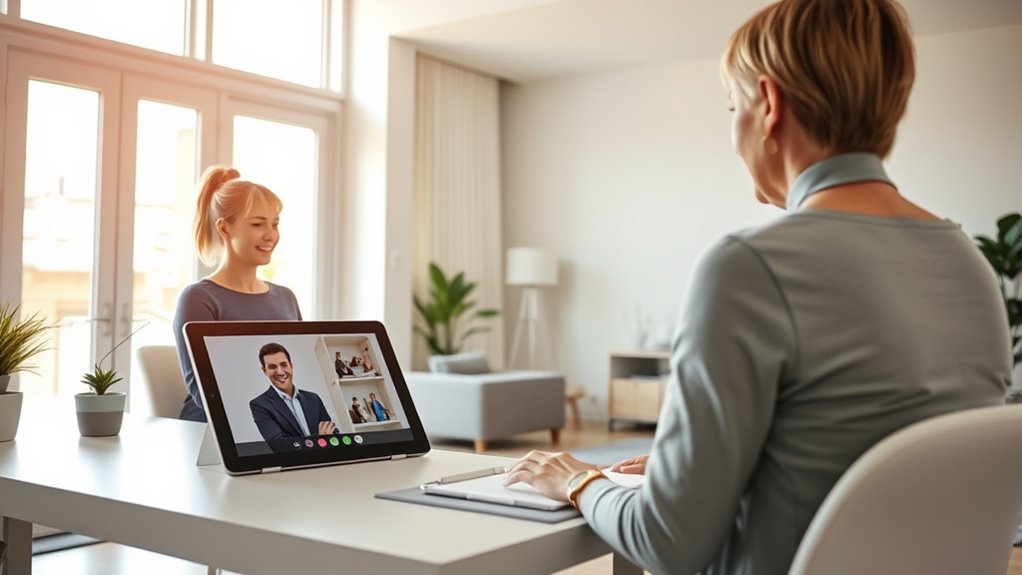
As healthcare continues to evolve, mobile physical therapy and telehealth services have become accessible options that bring care directly to your home or remote location. These innovative approaches allow you to receive expert guidance without the need to travel, making recovery more flexible and convenient. When you opt for remote assessment, your therapist evaluates your condition through virtual consultations, carefully observing your movement, posture, and functional abilities. This process relies heavily on your detailed descriptions and visual cues, enabling your therapist to accurately gauge your progress and identify areas needing attention. Remote assessment offers the benefit of ongoing monitoring, so your care plan can adapt as you improve, ensuring you’re always working toward achievable goals.
Exercise customization is a key feature of mobile physical therapy. Once your therapist understands your unique needs, they develop personalized exercise routines tailored specifically to your condition, lifestyle, and recovery objectives. These routines are designed to optimize your healing process, prevent setbacks, and promote long-term wellness. Because your exercises are customized, you’re more likely to stay motivated and consistent, knowing that each movement is purposeful and targeted. Your therapist provides clear instructions and demonstrations, often through video or digital platforms, so you can perform your exercises safely and correctly. This individualized approach guarantees that your therapy sessions are efficient and effective, even from a distance. Additionally, incorporating portable equipment can enhance your exercise routine and facilitate progress outside of sessions.
Frequently Asked Questions
How Do Mobile Physical Therapists Handle Emergency Situations?
In emergencies, you should follow your mobile physical therapist’s emergency protocols, which are designed for quick, effective responses. They maintain mobile readiness by carrying essential safety equipment and having clear action plans. If you experience a serious issue, your therapist promptly assesses the situation, contacts emergency services if needed, and stays with you until help arrives. This proactive approach guarantees your safety during any unexpected incident.
Is Telehealth Physical Therapy Effective for Post-Surgical Recovery?
You might find telehealth physical therapy highly effective for post-surgical recovery because it offers remote assessment and personalized virtual exercises. With real-time guidance, you stay motivated and on track, even if you’re miles away from a clinic. Many patients report good progress, especially when in-person visits aren’t possible. So, yes, telehealth can be a convenient and efficient way to support your recovery journey from home.
What Equipment Is Needed for Telehealth Physical Therapy Sessions?
For telehealth physical therapy, you’ll mainly need a reliable device like a smartphone, tablet, or computer with a good camera and internet connection. Wearable devices can track your movements and provide real-time feedback, enhancing your home exercise routine. Make sure you have enough space for movement, comfortable clothing, and any specific equipment prescribed by your therapist, like resistance bands or small weights, to effectively follow your personalized program.
How Do Mobile Services Ensure Patient Privacy and Data Security?
You guarantee your privacy and data security with the fiercest protection measures — it’s like Fort Knox for your health info. You rely on robust data encryption to keep your data locked tight and follow strict privacy policies that govern how your information is handled. Regular staff training and secure platforms further safeguard your data, making sure your personal health details stay private and protected from any cyber threats.
Can Telehealth Physical Therapy Replace In-Person Visits Entirely?
Telehealth physical therapy can replace in-person visits for many patients, especially with virtual assessments and remote exercise programs. You can receive personalized care, monitor progress, and adjust treatments without leaving home. However, certain conditions or complex cases may still require in-person visits for hands-on therapy. Ultimately, telehealth is a flexible option that complements traditional treatment, offering convenience and effective care when appropriate.
Conclusion
Embracing mobile physical therapy and telehealth services puts your health in the palm of your hand, like having a personal clinic wherever you go. These innovative options break down barriers, making recovery more accessible and flexible. As technology bridges distances, you’re empowered to take charge of your healing journey with confidence. With this evolution, you’re not just moving better—you’re riding the wave of healthcare’s future, where convenience and care meet seamlessly.