

When people search for financial planning software deals, the real choice is often between buying a discounted subscription and starting with a free tool. A sale can make paid software look like an obvious bargain, but the discount matters only if its features solve a problem you actually have. Free options may cover budgeting and basic net worth tracking; paid plans can add investment analysis, account syncing, retirement projections, or household collaboration, depending on the product.

Get smart everyday buys delivered free with Prime
- Fast, free delivery on millions of items
- Prime Video, Amazon Music and more included
- Member-only deals all year

SavePoint Personal Finance Software – Budgeting, FIRE Planning, Monte Carlo Simulations, Balance Sheets, Cash Flow – Offline, No…
- ✔ License: Lifetime, no subscription
- ✔ Platform: Windows PC; Mac via virtualization
- ✔ Included drive: 8 GB USB drive

Quicken Classic Deluxe for New Subscribers (1 Year, PC/Mac Online Code)
- ✔ Platform: PC and Mac
- ✔ Subscription duration: One year
- ✔ Delivery: Online code
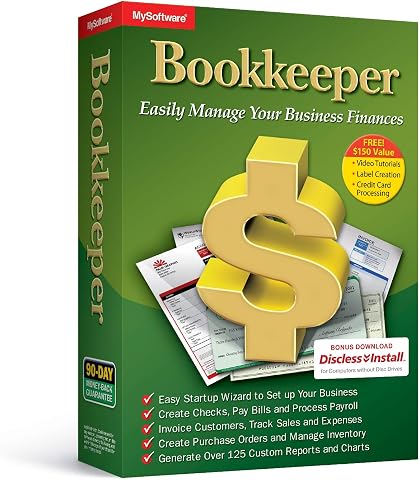
Bookkeeper: Easily Manage Your Business Finances
- ✔ Software type: Bookkeeping and payroll
- ✔ Check printing: Supports blank check stock
- ✔ Check layout: Customization unavailable
This comparison weighs discounted paid software against free financial planning software across cost, planning depth, automation, privacy, and long-term value. Choose a paid deal if its specific tools will save you time or help you make decisions you cannot handle well today. Choose a free tool if your needs are straightforward, you are still building a financial routine, or you want to test a method before committing.
At a Glance
| Criteria | Discounted paid financial planning software | Free financial planning software | Winner |
|---|---|---|---|
| Upfront cost | Discounted subscription or one-time purchase; check renewal and post-promotion rates | No subscription fee, though some free products use ads or paid upgrades | B |
| Planning depth | Often broader tools for investments, goals, scenarios, or retirement, varying by product | Often adequate for budgets, spending categories, and basic tracking | A |
| Automation and account syncing | May connect accounts and update balances automatically; availability and reliability vary | May rely on manual updates or limit connected accounts and features | A |
| Ease of starting | More setup and feature choices can take time | Usually simple to try with little financial commitment | B |
| Privacy and data control | Review the provider’s data policies, connection partners, and cancellation process | Can reduce paid subscription exposure, but data practices still vary by provider | Depends |
| Long-term value | Strong when advanced features are used regularly; weak if the discount masks an unused subscription | Strong for routine needs; may cost time or require an upgrade as needs grow | Depends |
SavePoint Personal Finance Software – Budgeting, FIRE Planning, Monte Carlo Simulations, Balance Sheets, Cash Flow – Offline, No…
SavePoint earns the top spot because it combines day-to-day organization with tools for thinking further ahead. Its budgeting, balance sheet, and cash flow features help us see how the pieces of a personal financial picture relate; Monte Carlo FIRE simulations add scenario planning for buyers evaluating multiple retirement strategies. That breadth makes it a more direct match for long-range personal planning than Quicken Classic Deluxe, whose description centers on connected accounts, spending, and debt scenarios.The purchase model matters to this roundup. SavePoint offers a lifetime license with unlimited updates, so buyers who prefer a one-time commitment can avoid an annual renewal structure. Its fully offline operation also keeps data on the computer rather than in cloud storage, which may appeal to privacy-conscious households. The included USB drive supports data transport, although buyers should think through how they will manage and protect any portable copy.There are real tradeoffs. SavePoint is Windows software; Mac users need virtualization or a compatibility layer, so it is less straightforward on Mac than Quicken’s listed PC/Mac support. And the extensive toolkit may take more effort to learn than a narrower budgeting application. We would choose it when offline control and detailed planning outweigh convenience, but skip it if we need native Mac support or want a simple, guided account dashboard.
Pros:
- Runs fully offline, keeping financial data on the user’s computer.
- Lifetime license with unlimited updates avoids annual subscription renewal.
- Combines budgeting, balance sheets, cash flow, and Sankey diagrams.
- Monte Carlo simulations support comparison of multiple FIRE strategies.
Cons:
- Mac use requires virtualization or a compatibility layer rather than native support.
- The broad feature set may take time to learn.
Best for: Windows users who want offline personal finance management, detailed FIRE scenario planning, and a lifetime license.
Not ideal for: Mac buyers who do not want virtualization, or beginners who prefer a narrow, low-complexity budgeting tool.
Bottom line: For buyers who value offline privacy and serious personal planning, SavePoint offers the broadest fit in this lineup, provided its Windows-first setup works for them.
“For buyers who value offline privacy and serious personal planning, SavePoint offers the broadest fit in this lineup, provided its Windows-first setup works for them.”
Quicken Classic Deluxe for New Subscribers (1 Year, PC/Mac Online Code)
Quicken Classic Deluxe takes a different route from SavePoint: it is built around bringing several parts of a household’s finances into one view. The listed coverage includes bank accounts, credit cards, debts, investments, and property, alongside custom budgets and spending tracking. For buyers who want to monitor connected accounts and see how debt or savings scenarios may develop, that combination may be more immediately useful than SavePoint’s offline-first workflow.Its strength is coverage, not the same kind of specialist forecasting. Quicken includes tools to project debt scenarios and manage savings growth, but the description does not list SavePoint’s Monte Carlo FIRE planning or its Sankey diagrams. Buyers focused on retirement strategy modeling may therefore find SavePoint a closer fit. Quicken’s PC/Mac availability is a practical advantage for households using either platform, though the supplied details caution that specific features may vary between versions.Access is sold as a one-year subscription for new subscribers, so we should factor renewal into the longer-term decision. The online code delivery is convenient for getting started, and a 30-day trial is listed for new users. Still, this is not the pick for someone seeking a lifetime license or fully offline handling. Quicken makes the most sense when connected household tracking is the priority and the subscription model is acceptable; buyers wanting stronger privacy control or deeper FIRE simulations should compare it carefully with SavePoint.
Pros:
- Tracks banking, credit cards, debts, investments, and property.
- Supports custom budgets and spending tracking.
- Includes tools for projecting debt scenarios and managing savings growth.
- Listed for PC and Mac, with a 30-day trial for new users.
Cons:
- Access is for one year and requires a subscription.
- Specific features may differ between PC and Mac versions.
Best for: New subscribers who want to connect household accounts, track spending, and organize budgets across PC or Mac.
Not ideal for: Buyers who want a lifetime license, offline-only data handling, or dedicated Monte Carlo FIRE scenario tools.
Bottom line: Choose Quicken when connected household account coverage matters more than offline privacy or a one-time license.
“Choose Quicken when connected household account coverage matters more than offline privacy or a one-time license.”
Bookkeeper: Easily Manage Your Business Finances
Bookkeeper is the specialist in this group, aimed at small businesses that need bookkeeping and payroll tasks in one package. It can print checks on blank check stock and supports 1099-NEC, with electronic W-2 and 1099 filing available through a third-party service for a fee. Those functions make it more relevant to a business owner handling payroll workflows than either SavePoint or Quicken, whose descriptions focus on personal finances and household planning.That specialization also defines its limits. It is not presented as a household budgeting or long-range financial planning suite, and it does not list investment tracking, cash flow diagrams, or retirement simulations. Compared with Quicken’s broad personal account coverage, Bookkeeper narrows the job to business records and payroll. Check layout customization is unavailable, which may frustrate businesses with specific check formats.We would be cautious about the tax materials: the listed forms are for 2022 and tax tables for 2023. These dates do not establish that the software includes current tax materials, so buyers should verify present-day requirements and filing support before relying on it. Electronic filing also depends on a third-party service with a fee. Bookkeeper belongs in this roundup for buyers whose meaning of financial planning includes business bookkeeping and payroll; for personal forecasting, SavePoint and Quicken are better aligned.
Pros:
- Combines bookkeeping and payroll functions.
- Prints checks on blank check stock.
- Includes support for 1099-NEC.
- Electronic W-2 and 1099 filing is available through a third-party service.
Cons:
- Check layout customization is unavailable.
- Electronic form filing requires a third-party service fee.
- Listed tax forms and tables are dated, so current support needs verification.
Best for: Small-business owners who need bookkeeping, payroll functions, and check printing on blank stock.
Not ideal for: Households seeking personal budgeting, connected investment tracking, or long-range retirement and FIRE planning.
Bottom line: Bookkeeper is a niche fit for small-business workflows, but its dated tax materials and limited personal planning scope put it behind the other two for household buyers.
“Bookkeeper is a niche fit for small-business workflows, but its dated tax materials and limited personal planning scope put it behind the other two for household buyers.”
As an Amazon Associate we earn from qualifying purchases.
Key Differences
The clearest difference is what the software helps you do after you have entered your basic numbers. Free tools can be enough to see monthly spending, set a savings target, and track accounts at a high level. Paid products may add scenario planning, investment views, or retirement estimates. Those features matter when they answer a recurring question; they add little value when you only need a monthly budget.
A deal changes the first bill, not necessarily the ongoing cost. Some offers apply only to an introductory period, while others discount an annual plan or a perpetual license. Compare the full renewal price, cancellation rules, and any limits on the offer. A free option is the better value if it already supports the decisions you make. A paid deal earns its cost when the added tools are useful enough to justify the price after the promotion ends.
Convenience also comes with a choice about data. Account syncing can reduce manual updates, but it requires sharing financial access with a provider or connection service. Free products may have their own data policies, advertising, or upgrade prompts. Check how each candidate handles account connections, exports, deletion, and cancellation before importing sensitive information.
Detailed Comparison
Upfront cost (Free financial planning software wins — major)
Free software wins on immediate price: there is no subscription to pay, though optional upgrades or advertising may apply. A discounted paid plan lowers the entry cost, but its value depends on the renewal rate, contract length, and features included. The gap is major for someone with little room in the budget and minor for a user who already expects to pay for planning tools. Check whether the offer is an introductory price, a reduced annual plan, or a one-time purchase before deciding.
Planning depth (Discounted paid financial planning software wins — moderate)
Discounted paid software generally wins when it includes advanced tools such as retirement estimates, investment analysis, or multiple goal scenarios. Free products often handle budgets and basic tracking well, but may stop short of modeling more involved decisions. The gap is moderate to major depending on the product and the user’s needs. If you are planning around several goals or want to compare possible outcomes, a paid tool may be worthwhile; if you mainly track monthly spending, extra projections may go unused.
Automation and account syncing (Discounted paid financial planning software wins — moderate)
Paid plans are more likely to include automatic account connections or more extensive syncing, which can reduce repeated entry. Free versions may offer limited connections, manual tracking, or upgrades for automation. The advantage is moderate for someone maintaining several accounts and minor for someone who reviews a few categories once a month. Syncing is useful only if the accounts you need are supported and updates work reliably, so verify compatibility before treating it as a reason to buy.
Ease of starting (Free financial planning software wins — minor)
Free tools have the edge because there is no payment decision and usually less pressure to configure every feature. A discounted paid product can still be approachable, but its broader menu may create more setup work. The difference is minor to moderate: a confident user may welcome options, while a beginner may benefit more from a simple budget and a small number of goals. Start with the workflow you can sustain, rather than choosing based on the longest feature list.
Privacy and data control (major difference)
Neither category automatically wins. Some paid products offer clear export and account deletion controls, while some free tools depend on advertising or use of aggregated data; policies differ, and paid products also collect sensitive information. The difference is potentially major because financial records are personal. Compare each provider’s privacy policy, connection method, data retention terms, export options, and process for disconnecting accounts. If you prefer not to share credentials or financial data, choose a tool that works locally or supports manual entry.
Long-term value (moderate difference)
Value depends on actual use. A free tool is the better buy when it supports your routine without creating work that you would gladly pay to avoid. A paid deal can be better value if the features help you keep accurate records, review investments, or plan decisions throughout the year. The gap is moderate and hinges on renewal pricing: calculate the cost after the promotion, then ask whether the time saved or planning support justifies it. A large discount on a plan you stop using is still wasted money.
Discounted paid financial planning software: Pros and Cons
Pros:
- Promotions can reduce the first-year cost of broader planning tools.
- May provide investment, retirement, goal, or scenario features missing from basic tools.
- Account syncing can cut manual entry if relevant accounts are supported.
Cons:
- The renewal price may be much higher than the advertised deal.
- More features can mean added setup and a steeper learning curve.
- Connecting financial accounts requires reviewing data access and privacy terms.
Free financial planning software: Pros and Cons
Pros:
- No paid subscription is required to start tracking finances.
- Often sufficient for straightforward budgets, spending reviews, and basic goals.
- A low-commitment way to learn what features you use before paying.
Cons:
- Advanced planning or investment tools may be limited or unavailable.
- Manual updates can take time, especially across several accounts.
- Some free products rely on ads, upsells, or data practices that still merit scrutiny.
Who Should Choose What
Choose Discounted paid financial planning software if:
- You need retirement, investment, or multi-goal planning features included in the discounted plan.
- You regularly manage several accounts and confirmed syncing supports them.
- You have compared the renewal price and expect to use the added tools beyond the promotion.
Choose Free financial planning software if:
- You mainly need a monthly budget, spending categories, or basic net worth tracking.
- You are starting a financial routine and want to learn what features you need first.
- You prefer manual tracking or want to avoid another recurring subscription.
Skip both if: Skip both if you need personalized tax, legal, or investment advice; software can organize information but cannot replace a qualified professional who understands your circumstances.
Value for Money
Paying more is worthwhile only when the paid plan solves a recurring need. Compare the full price after the offer ends, not just the banner price, and check whether the deal requires annual prepayment or limits cancellation. A discount on a feature-rich subscription is good value for someone who will use its planning tools throughout the year. For a basic household budget, a free product usually offers better value, even if a paid plan is temporarily inexpensive.
Before buying, list the two or three tasks you want the software to handle, confirm that those features are part of the offer, and estimate the yearly cost after renewal. If the free option already handles those tasks, keep the money. If the paid product saves substantial manual effort or supports decisions you otherwise cannot model, the higher price may be justified.
Final Verdict
For most people who want to budget and monitor spending, start with free financial planning software. It costs nothing to establish a routine, and the extra depth in a paid tool is unlikely to matter until you have a specific planning need. Choose discounted paid software if you have confirmed that its investment, retirement, syncing, or scenario features fit your situation and the regular renewal price remains reasonable. The biggest deciding factor is whether you will use those features after the deal expires; if not, the free option is the clearer value.
Frequently Asked Questions
Are financial planning software deals worth it?
They can be, if the offer covers features you will use and the post-promotion price fits your budget. Check the renewal rate, plan length, and cancellation terms before paying.
Is free financial planning software enough?
It is often enough for basic budgets, spending categories, and simple goal tracking. People who want investment analysis, detailed scenarios, or broader automation may need a paid plan, depending on the product.
Should I pay annually to get a software discount?
Pay annually only if you have tried the product or are confident you will use it for the full term. Compare the annual savings with the cost of losing flexibility if your needs change.
What should I check before connecting bank accounts?
Review which accounts are supported, how connections work, what data the provider retains, and how to disconnect accounts or delete your information. Manual entry may suit you better if you do not want to connect accounts.