

You need different strategies for search and feed platforms because each caters to distinct user needs and uses unique algorithms. Search platforms focus on delivering precise results based on specific queries, so your content should be optimized for relevance and clarity. Feed platforms aim to keep users engaged with continuous, personalized content, so your approach should boost engagement and appeal to user preferences. If you keep exploring, you’ll discover how tailoring your tactics can maximize success on both platforms.

Get smart everyday buys delivered free with Prime
- Fast, free delivery on millions of items
- Prime Video, Amazon Music and more included
- Member-only deals all year
Key Takeaways
- Search platforms focus on relevance and accuracy to fulfill specific user queries, requiring targeted content optimization.
- Feed platforms prioritize continuous engagement, relying on user behavior and preferences for content personalization.
- Different algorithms drive search (relevance) and feeds (user engagement), necessitating distinct content strategies.
- Monetization methods differ: search uses targeted ads based on intent, while feeds embed ads seamlessly within content streams.
- Tailoring content for each platform’s unique user intent and engagement model maximizes visibility and revenue.
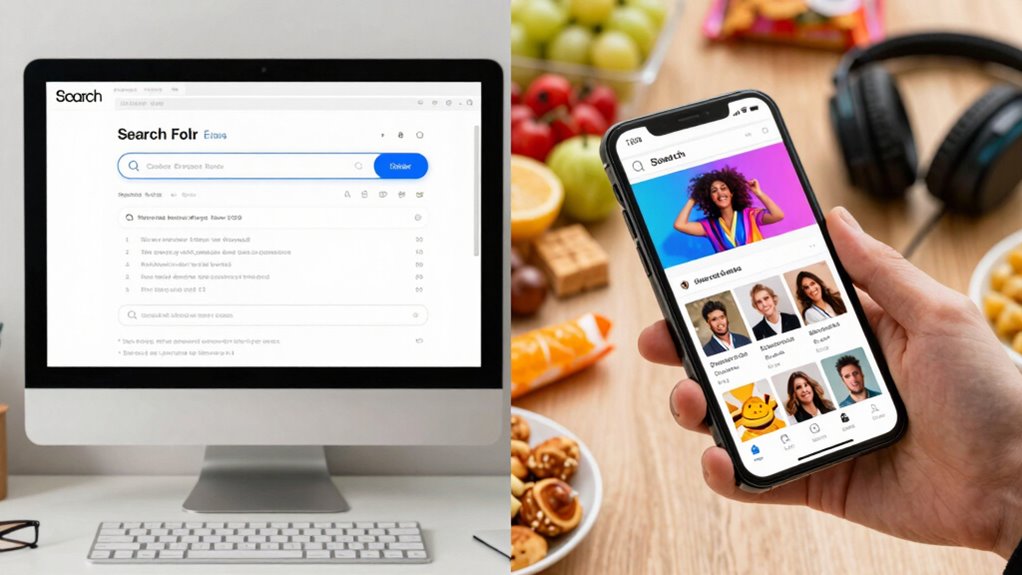
In today’s digital landscape, understanding the distinct strategies behind search and feed platforms is essential for effectively steering through online content. While both serve to connect users with information or entertainment, their core functions demand different approaches. Search platforms, like Google or Bing, are designed to respond to specific queries. You input a question or keyword, and the platform’s goal is to deliver the most relevant results quickly. To succeed here, you need to develop effective personalization tactics that refine results based on your previous searches, location, or device. This ensures that the platform understands your intent and provides precise, tailored information. Additionally, monetization approaches for search engines often rely on targeted advertising, meaning they prioritize sponsored links that align with your search intent. This strategy keeps the platform profitable while maintaining relevance for users.
In contrast, feed platforms such as Facebook, Instagram, or TikTok operate on a different principle. Instead of answering direct questions, they serve a stream of content curated through algorithms designed to keep you engaged. Your feed doesn’t respond to a specific query but evolves based on your interactions, behaviors, and preferences. Here, personalization tactics focus on analyzing your activity—likes, shares, viewing time—to serve up content that holds your attention. Understanding these algorithms is crucial for content creators who want to optimize their reach and engagement. Recognizing that these platforms use different engagement models helps clarify how content should be tailored for each environment. Moreover, the predictive capabilities of these algorithms play a significant role in delivering content that resonates with individual users. Monetization approaches are also distinct; these platforms typically rely heavily on advertising, but their ads are woven seamlessly into your feed, often based on your interests and browsing history. The platform’s ability to predict user preferences plays a vital role in maximizing engagement and ad revenue. Recognizing that the engagement model differs significantly from search is key to adapting your strategy effectively. The goal is to maximize engagement and keep you scrolling, which directly translates into more ad impressions and revenue.
search engine optimization tools
As an affiliate, we earn on qualifying purchases.
As an affiliate, we earn on qualifying purchases.
Frequently Asked Questions
How Do User Intent Differences Influence Strategy Development?
User intent differences greatly influence your strategy development because they shape user behavior and content discovery. When users search, they usually seek specific information, so your focus should be on targeted keywords and precise content. On feeds, users engage with a broader range of content driven by interest and browsing habits. Understanding these differences helps you tailor your approach, ensuring your content aligns with user motivations for better engagement and conversions.
What Role Does Data Privacy Play in Platform-Specific Strategies?
Data privacy plays a vital role in platform-specific strategies by requiring you to prioritize data encryption and privacy compliance. On search platforms, you need to safeguard user queries and browsing data, while on feed platforms, protecting user engagement data is essential. You adapt your tactics to each platform’s privacy rules, ensuring trust and legal adherence, which ultimately influences how you collect, store, and use data responsibly across different environments.
How Can Personalization Be Tailored for Search Versus Feed Platforms?
You can tailor personalization for search and feed platforms by focusing on content curation and user engagement. For search, prioritize relevant, intent-driven results that match user queries, enhancing content relevance. On feeds, emphasize personalized content streams based on browsing behavior and preferences to boost user engagement. Adjust algorithms accordingly, ensuring each platform delivers tailored experiences that meet user expectations and foster ongoing interaction.
What Metrics Are Most Effective for Measuring Success on Each Platform?
You should prioritize engagement metrics on feed platforms, tracking likes, shares, and time spent to gauge relevance. In contrast, search platforms demand focus on keyword targeting effectiveness and conversion rates to measure success. While engagement shows user interest in feeds, search metrics reveal how well your content meets specific intent. Both require tailored metrics—feed success through interaction, search success through intent fulfillment—for ideal performance.
How Do Platform Algorithms Impact Content Visibility Strategies?
Platform algorithms heavily influence your content visibility strategies by prioritizing content relevance and requiring constant algorithm optimization. You need to understand how each platform’s algorithm favors specific engagement metrics, such as clicks, shares, or dwell time. By tailoring your content to meet these criteria, you improve visibility. Regularly analyzing algorithm updates and adjusting your content approach guarantees your content remains relevant and well-positioned in users’ feeds or search results.
social media content engagement tools
As an affiliate, we earn on qualifying purchases.
As an affiliate, we earn on qualifying purchases.
Conclusion
You see, understanding that search and feed platforms require different strategies is essential. For instance, imagine a clothing retailer tailoring search ads to shoppers actively looking for specific items, while curating a personalized feed to inspire browsing. By customizing your approach—targeted searches versus engaging feeds—you maximize engagement and conversions. Recognizing these differences helps you craft smarter marketing plans that truly resonate with users’ intent, ultimately boosting your success across both platforms.
personalized content recommendation software
As an affiliate, we earn on qualifying purchases.
As an affiliate, we earn on qualifying purchases.
As an affiliate, we earn on qualifying purchases.
Evergreen bestsellers Picks
bestsellers
As an affiliate, we earn on qualifying purchases.