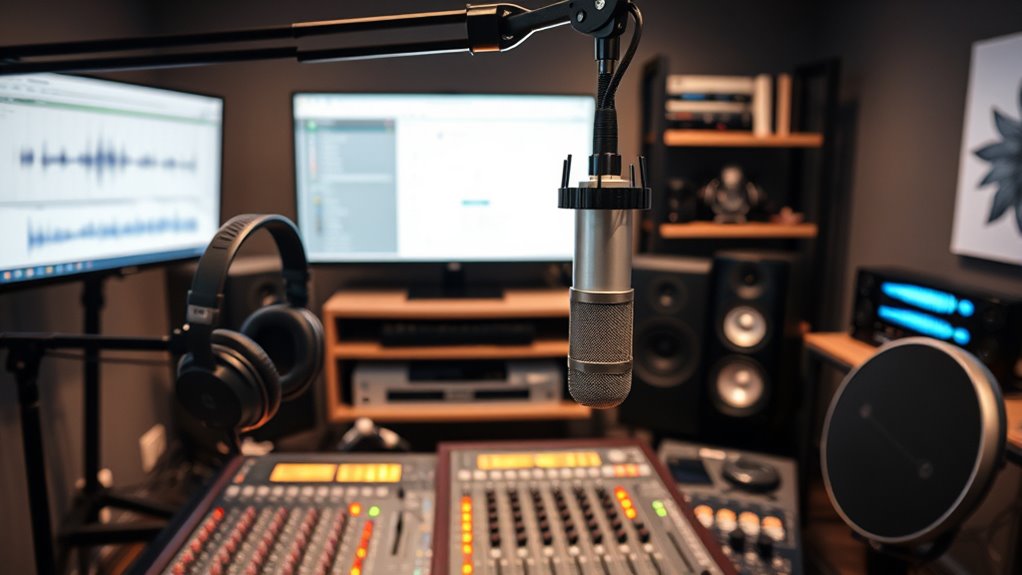

To offer top podcast editing services, invest in quality equipment like noise-reducing microphones, audio interfaces, and editing software such as Audacity or Adobe Audition. Focus on showcasing your skills by providing before-and-after samples that highlight your editing expertise. Build a portfolio, actively promote your services online, and consider offering free trials to attract clients. Keep refining your craft and marketing approach—if you continue, you’ll uncover ways to stand out and grow your client base effectively.

Get smart everyday buys delivered free with Prime
- Fast, free delivery on millions of items
- Prime Video, Amazon Music and more included
- Member-only deals all year
Key Takeaways
- Invest in professional editing software like Adobe Audition or Audacity for precise control and quality enhancement.
- Showcase before-and-after samples to demonstrate your editing skills and attract potential podcast clients.
- Offer free trial edits or sample episodes to build trust and demonstrate your ability to improve audio quality.
- Highlight expertise in noise reduction, leveling, and storytelling editing to appeal to podcast creators.
- Build a portfolio and leverage online platforms and referrals to expand your client base and reputation.
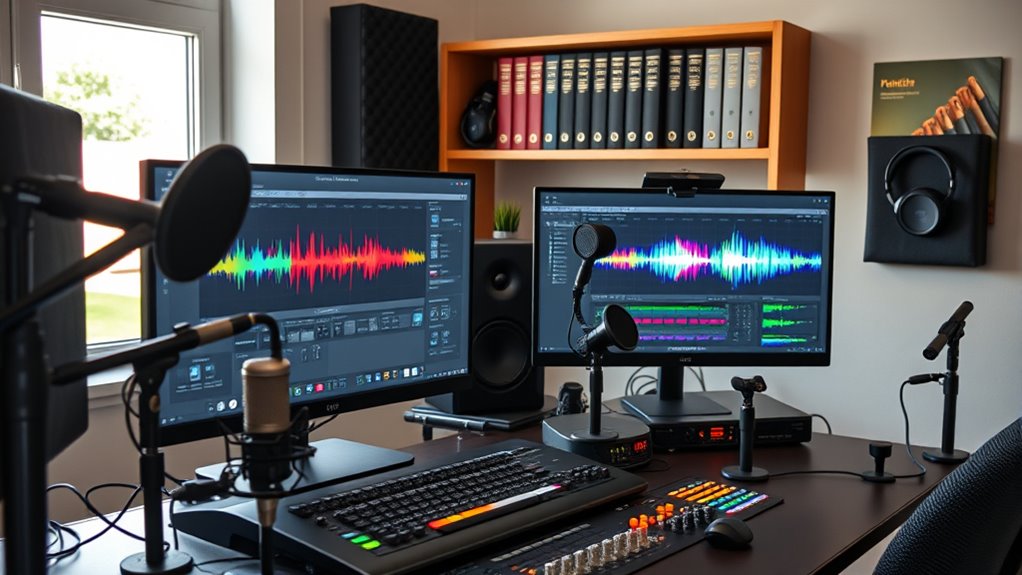
Creating a polished podcast requires more than just recording; it involves careful editing to guarantee your content sounds professional and engaging. The foundation of a high-quality podcast lies in excellent audio quality, which you can achieve through proper editing. When you work on your recordings, you need to pay close attention to clarity, consistency, and background noise. Using reliable editing software is essential for refining your audio. With the right tools, you can remove unwanted sounds, balance volume levels, and enhance overall sound quality, making your podcast more appealing to listeners. Your goal is to produce a seamless listening experience that keeps your audience engaged from start to finish.
Polished podcasts depend on careful editing for clarity, consistency, and high-quality sound.
Choosing the right editing software is a pivotal step in the process. You want an application that offers precise control over audio tracks, supports multiple formats, and provides features like noise reduction, equalization, and compression. Programs like Audacity, Adobe Audition, or GarageBand are popular choices that cater to different skill levels and budgets. These tools allow you to cut out mistakes, tighten pacing, and add effects or music where needed. The better your editing software, the more professional your final product will sound. Remember, investing time in learning the software can make a significant difference, so explore tutorials and practice regularly.
Beyond the technical aspect, your editing process should also focus on storytelling. It’s not just about fixing mistakes but shaping your content to flow naturally and keep your audience interested. Pay attention to pacing, connectors, and the overall structure. Good editing involves more than just cleaning up audio; it’s about crafting a compelling narrative. As you edit, listen critically—think about what your audience needs to hear and eliminate anything distracting or redundant. Incorporating essential oils for audio clarity techniques can also help in reducing background noise and improving overall sound quality. This process will help you create a tight, engaging episode that’s free of awkward pauses, background noise, or inconsistent levels.
Building your client base in podcast editing services hinges on demonstrating your expertise in these areas. Highlight your ability to improve audio quality, your mastery of editing software, and your understanding of storytelling. When you approach potential clients, showcase before-and-after examples of your work, emphasizing how your editing elevates the final product. Offering free samples or trial edits can also attract clients who want to experience your skills firsthand. As you gain more experience and build a portfolio, your reputation will grow, and you’ll find it easier to acquire new clients by word-of-mouth or through online platforms targeted at podcasters seeking professional editing services.
Top picks for "podcast edit servic"
As an affiliate, we earn on qualifying purchases.
Frequently Asked Questions
How Do I Choose the Right Podcast Editing Service for My Niche?
To choose the right podcast editing service for your niche, focus on audience targeting and niche differentiation. Look for a provider that understands your niche’s specific style and needs, ensuring they can tailor editing to resonate with your audience. Check their portfolio or reviews for experience in your field, and communicate your goals clearly. This way, you’ll find a service that aligns perfectly with your podcast’s unique identity and audience expectations.
What Are Common Pricing Models for Podcast Editing Packages?
You’ll find that many podcast editing services offer subscription plans or tiered pricing, making it easier to find a package that fits your budget. Subscription plans often provide a set number of edits per month, while tiered pricing lets you choose different levels of service, like basic editing or advanced features. Comparing these options helps you select a flexible, cost-effective solution that meets your podcast’s needs and growth potential.
How Long Does It Typically Take to Edit and Deliver a Episode?
Typically, it takes you about 4 to 8 hours to complete audio editing for a standard episode, depending on its length and complexity. Once you finish editing, your episode turnaround time usually ranges from 24 to 48 hours. You prioritize quality, ensuring each audio edit is polished and meets client expectations. By managing your workflow efficiently, you can deliver episodes promptly, maintaining a reliable audio editing and episode turnaround process.
How Can I Maintain Consistent Audio Quality Across Episodes?
To maintain consistent audio quality across episodes, focus on using reliable editing techniques like equalization, noise reduction, and compression. Always use the same equipment settings and environment, and create a quality control checklist to review each episode. This approach guarantees audio consistency, making your podcast sound professional and polished. Regularly calibrate your equipment and stay updated on editing best practices to keep your sound uniform.
What Are Effective Strategies to Attract New Clients for Podcast Editing Services?
Think of your client list as a growing garden; you need to nurture it. Use social media outreach to showcase your expertise and connect with podcasters where they hang out. Implement referral programs to turn satisfied clients into ambassadors, spreading the word about your services. Consistently engaging and offering value builds trust, making your editing services the first choice for new podcasters seeking quality and reliability.
Conclusion
In the world of podcasting, your success depends on more than just great content—it’s about mastering your tools and attracting listeners like bees to honey. With the right editing services and equipment, you turn raw audio into a polished masterpiece that captures hearts and minds. Remember, each episode is a seed you plant in your audience’s minds; nurture it with quality, and watch your podcast blossom into a thriving garden of voices.
Fall Picks
fall essentials
As an affiliate, we earn on qualifying purchases.