Sitting all day can drain your energy, reduce focus, and lead to discomfort, hurting both your health and output. To fix this, set up an ergonomic workspace with adjustable chairs, monitor stands, and footrests, and incorporate movement breaks every hour. Simple desk exercises like stretching or leg lifts boost circulation and energy. Creating a routine and using tools for active sitting can make a significant difference. Keep going, and you’ll discover even more ways to stay energized and productive throughout your day.
Key Takeaways
- Use adjustable ergonomic chairs, monitor stands, and footrests to promote proper posture and reduce strain.
- Incorporate regular movement breaks and stretching to boost circulation and mental clarity.
- Switch between sitting and standing with a standing desk or anti-fatigue mats to prevent fatigue.
- Perform quick seated exercises like knee lifts and shoulder rolls to stay active during the day.
- Track activity and break schedules to build consistent, healthy work habits that enhance productivity.
How Sitting All Day Harms Your Health and Productivity

Sitting all day can silently sabotage your health and productivity. When you lead a sedentary lifestyle, you’re at higher risk for serious health issues like heart disease, obesity, and type 2 diabetes. It also affects your mental clarity, making it harder to focus and stay energized. Prolonged sitting weakens your muscles, reduces circulation, and can cause back and neck pain. Incorporating ergonomic accessories can help improve your posture and reduce strain during long hours at your desk. Being mindful of tracking your activity levels can motivate you to take regular movement breaks and avoid prolonged sitting. Recognizing how sitting impacts your health and productivity is the first step toward making meaningful changes in your daily routine. Additionally, understanding ergonomics principles can guide you in setting up your workspace to support better health and comfort. Paying attention to body mechanics can further enhance your comfort and prevent injury during daily activities. Creating a schedule that includes movement breaks can significantly boost your overall well-being and work efficiency.
Signs Your Workspace Is Making You Feel Sluggish
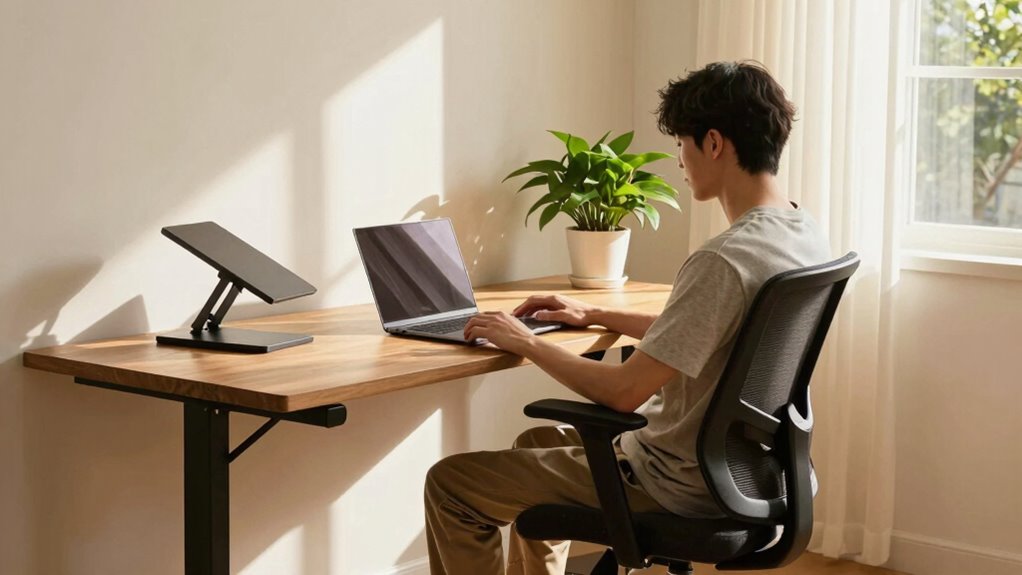
If your workspace isn’t set up properly, you’ll likely notice it affecting how you feel throughout the day. Feeling sluggish, unfocused, or experiencing frequent fatigue are clear signs your environment may be working against you. Poor posture, uncomfortable seating, or inadequate lighting can all contribute to this. You might also find yourself relying heavily on caffeine or struggling to stay motivated. To identify these issues early, look for these signs:
- Discomfort or pain after prolonged sitting
- Decreased focus and mental clarity
- Frequent breaks to stretch or move around. Incorporating ergonomic principles like adjustable chairs and monitor stands can improve comfort. Plus, adopting simple productivity hacks helps maintain energy levels and combat workspace fatigue.
Desk Exercises to Boost Your Energy and Circulation
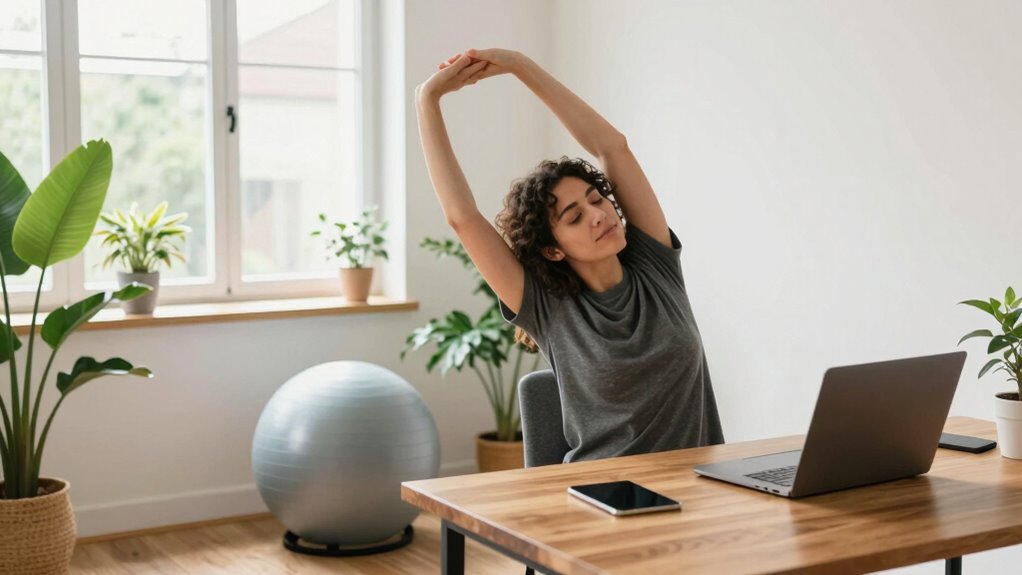
To counteract the negative effects of prolonged sitting, incorporating simple desk exercises into your routine can considerably boost your energy and improve circulation. Start with stretching routines—reach your arms overhead, twist your torso side to side, or stretch your legs under the desk. These moves loosen tight muscles and increase blood flow. You can also do seated cardio, like lifting your knees alternately or rapid leg kicks, to get your heart pumping without leaving your chair. Incorporate shoulder rolls or neck stretches to relieve tension and refresh your mind. Regularly moving throughout the day helps break up long periods of inactivity, keeps your energy levels up, and supports overall circulation. Even quick, deliberate exercises make a big difference in your productivity and well-being. Additionally, implementing soundproofing solutions can create a more focused environment that encourages regular movement and reduces distractions. Incorporating natural elements into your workspace, such as plants or natural light, can further enhance your mood and motivation to stay active. Staying mindful of workplace ergonomics can also contribute to better posture and reduce discomfort, promoting more frequent movement. Moreover, understanding home theatre projectors and their optimal setup can make your workspace more enjoyable and inspiring, encouraging longer periods of engagement and movement.
Smart Ergonomic Tips for a Comfortable Workspace
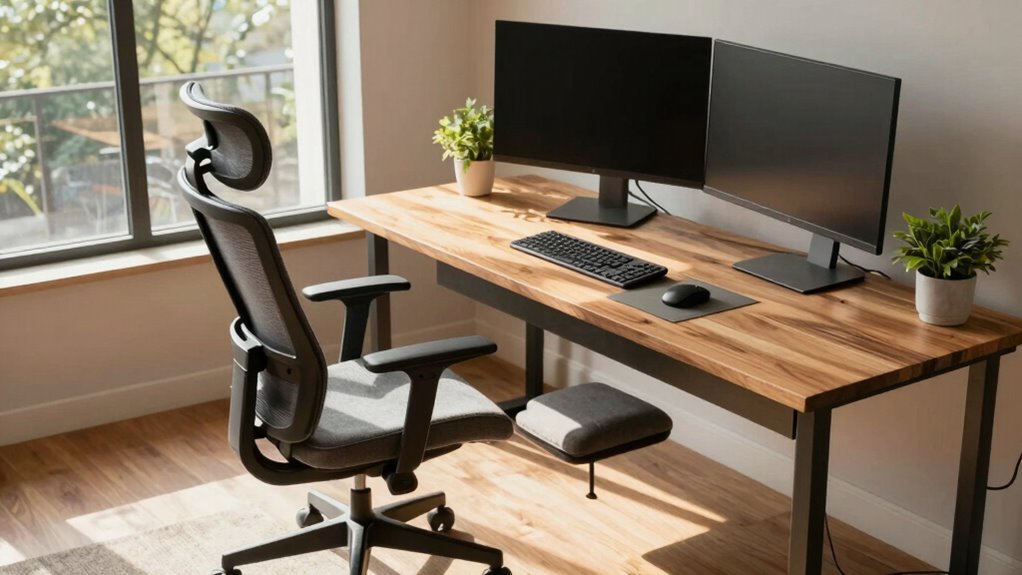
Incorporating simple ergonomic adjustments can make a noticeable difference in how comfortable and productive you feel during long hours at your desk. Start by investing in ergonomic accessories, like an adjustable chair, keyboard, and monitor stand, to support proper alignment. These tools help with posture correction, reducing strain on your neck, shoulders, and back. Ensuring your monitor is at eye level prevents you from craning your neck. Keep your feet flat on the floor or on a footrest to promote stability. Additionally, use wrist supports or ergonomic mouse pads to minimize discomfort during repetitive movements. Prioritizing these ergonomic tips creates a healthier workspace, enhances focus, and reduces fatigue, helping you stay comfortable and efficient throughout the day. Consider adding anti-fatigue mats to your standing desk area to further improve comfort and reduce fatigue during prolonged standing sessions. Incorporating ergonomic design principles can also optimize your workspace for better health and productivity, especially considering the importance of maintaining proper posture to prevent musculoskeletal issues. Being mindful of healthy workspace habits can further support long-term comfort and well-being.
Incorporate Movement Breaks Throughout Your Day
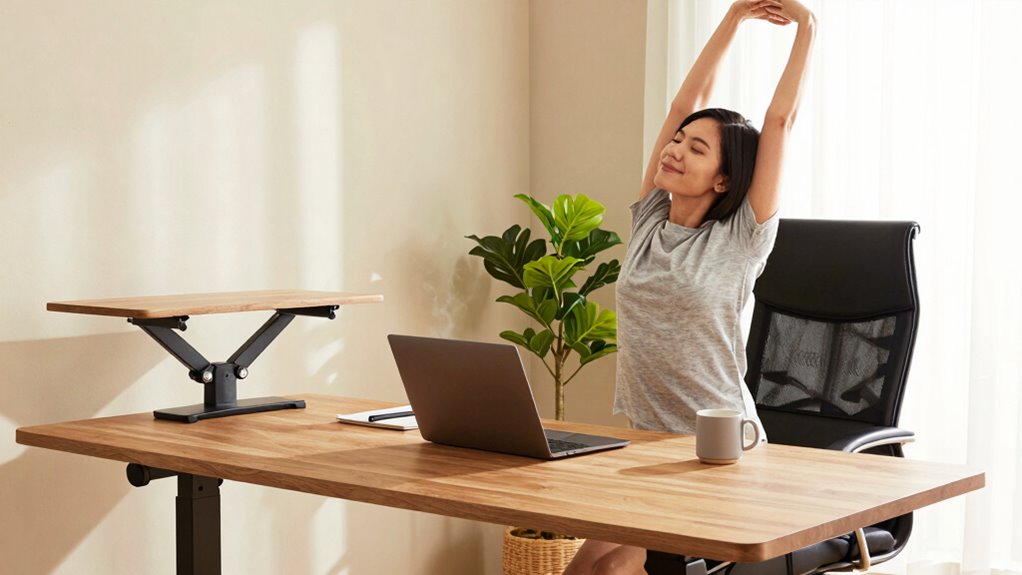
Sitting for long periods can lead to stiffness, decreased circulation, and reduced focus, but taking regular movement breaks can counteract these effects. Incorporate quick stretch routines every hour to loosen up your muscles and boost blood flow. Stand up and stretch your arms, legs, and back to prevent stiffness and improve flexibility. Consider using a standing desk for part of your day; alternating between sitting and standing helps break up long sitting sessions. Even brief walks around your workspace or simple leg lifts can make a difference. Regular movement doesn’t just refresh your body—it sharpens your focus and productivity. Making these small, intentional breaks a habit will also support ergonomic comfort, which is essential for maintaining overall well-being during long work hours. Incorporating movement breaks into your routine can also enhance your posture and reduce the risk of musculoskeletal issues. Additionally, integrating proper ergonomic design into your workspace setup can further promote comfort and prevent strain over time.
Set Up Your Desk for Better Posture and Less Strain
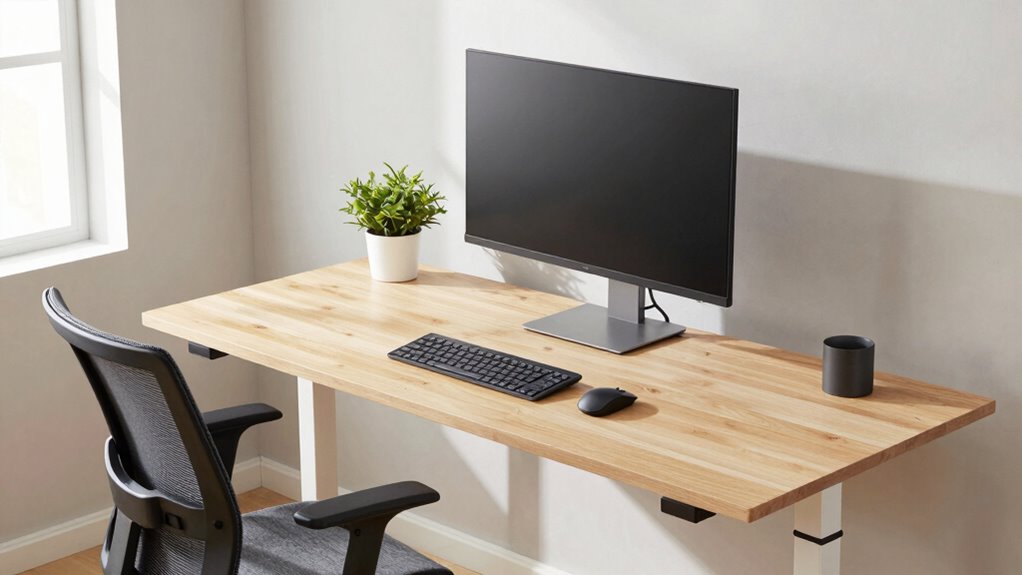
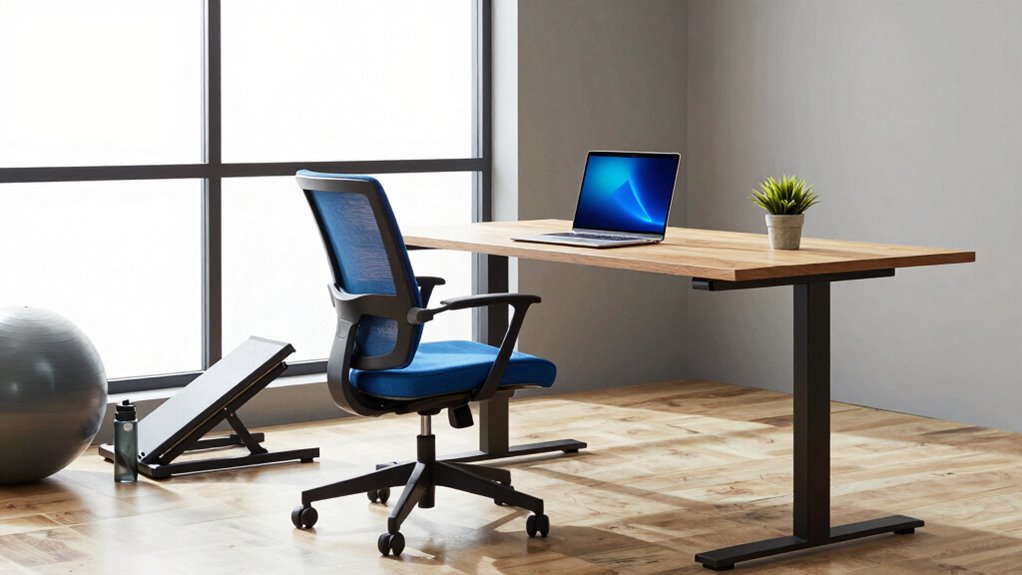
Setting up your desk correctly can make a significant difference in reducing strain and improving your posture. Start by adjusting your chair and desk height so your feet are flat on the floor and your knees are at a 90-degree angle. Use ergonomic accessories like lumbar supports or keyboard trays to support proper alignment. Invest in adjustable furniture to customize your workspace for comfort and flexibility. This guarantees your monitor is at eye level, preventing neck strain. Keep essentials within easy reach to avoid overextending. Proper setup not only reduces discomfort but also boosts productivity by creating a healthier workspace.
Proper desk setup reduces strain, improves posture, and boosts productivity through ergonomic adjustments and accessible essentials.
- Use ergonomic accessories like wrist rests and footrests
- Opt for adjustable furniture for personalized comfort
- Guarantee your monitor is at eye level to prevent neck strain
Top Tools and Accessories for an Active Workspace
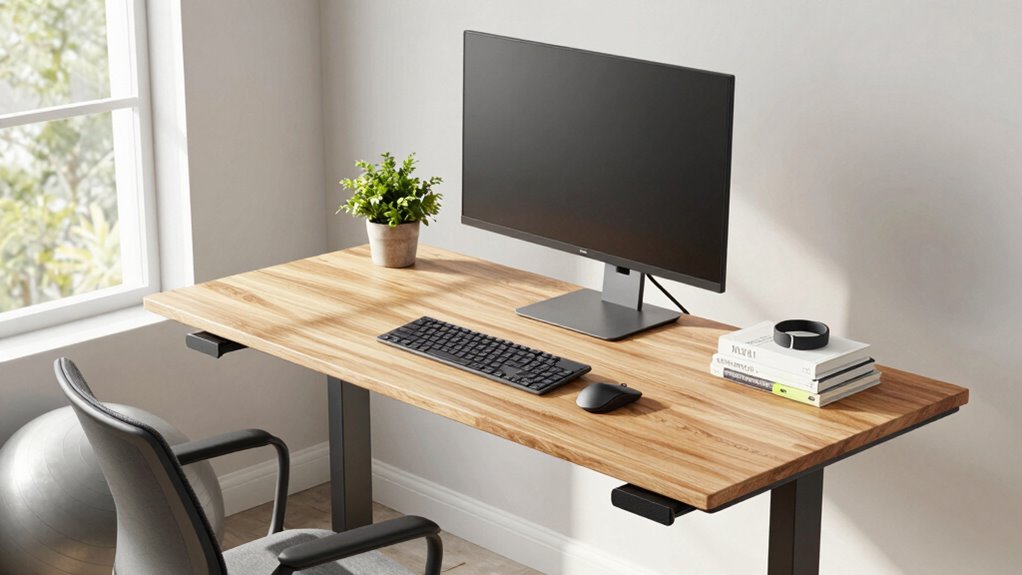
To keep your body active during long work hours, investing in the right tools and accessories is essential. A standing desk allows you to switch between sitting and standing, reducing fatigue and enhancing movement. An adjustable monitor helps you maintain proper eye level, preventing neck strain while encouraging better posture. Other useful tools include ergonomic mats and balance balls that promote subtle movement. Incorporating ergonomic workspace solutions can further enhance your productivity and comfort. Proper ergonomic design can also help prevent discomfort and injuries over time, creating a healthier work environment. Additionally, choosing supportive accessories can help sustain your energy levels throughout the day, aligning with coaching and mentoring dynamics that emphasize long-term well-being. Here’s a quick look at the essentials:
| Tool | Purpose | Benefits |
|---|---|---|
| Standing Desk | Alternates sitting/standing | Boosts circulation |
| Adjustable Monitor | Customizes screen height | Reduces neck strain |
| Ergonomic Mat | Cushions standing periods | Comfort and stability |
| Balance Ball | Active sitting support | Improves core strength |
| Footrest | Supports proper posture | Relieves lower back pain |
Create a Daily Routine to Stay Active and Productive
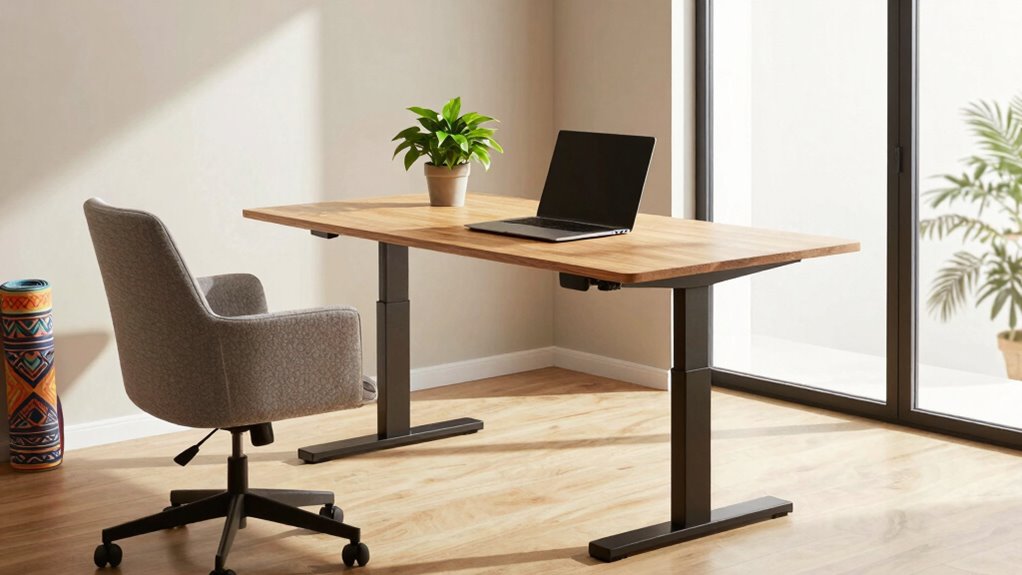
Establishing a consistent daily routine is key to staying active and maintaining productivity throughout your workday. When you set specific times for movement, you reinforce habits that combat prolonged sitting. Incorporate hydration reminders to guarantee you drink water regularly, which supports both physical health and mental well being. To stay energized, consider scheduling short activity breaks, like stretching or walking, every hour. Creating a routine also helps minimize stress and keeps your focus sharp. Here are some ways to build your routine:
- Set alarms or app notifications for hydration reminders and movement breaks
- Dedicate specific periods for deep work and active breaks
- Prioritize mental well being by incorporating mindfulness or breathing exercises
- Include body-mind healing practices to enhance overall resilience and emotional balance
A well-structured routine keeps you active, alert, and productive all day.
Track Your Progress and Stay Motivated to Keep Moving
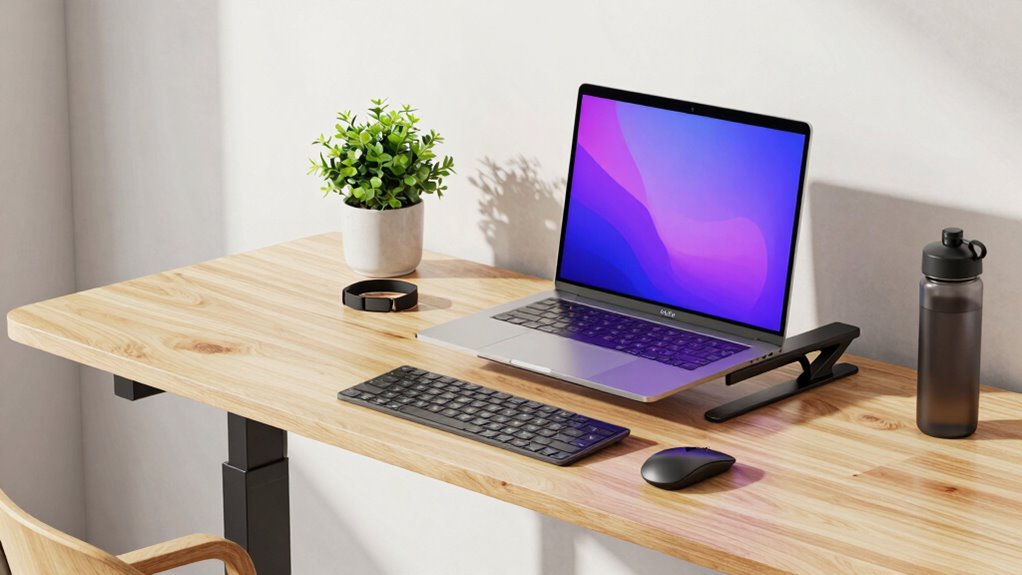
Keeping track of your progress is essential for staying motivated and ensuring you keep moving. When you use progress tracking, you see how far you’ve come, which fuels your motivation techniques. To make it easier, create a simple system to record your activity levels, breaks, and goals. Use the table below to monitor your daily efforts:
| Day | Activity Duration | Notes |
|---|---|---|
| Monday | 30 minutes | Felt energized |
| Tuesday | 45 minutes | Need more breaks |
| Wednesday | 40 minutes | Slight fatigue |
| Thursday | 35 minutes | Better focus |
| Friday | 50 minutes | Achieved target |
Regularly updating this table helps you stay accountable and motivated to keep moving.
Frequently Asked Questions
How Often Should I Take Breaks During Work Hours?
You should take breaks every 30 to 60 minutes during work hours to reduce mental fatigue and improve posture. Stand up, stretch, or walk around for at least five minutes, helping refresh your mind and prevent strain. Regular breaks boost productivity, keep you alert, and promote better posture. Incorporate these pauses into your routine to stay energized and avoid the negative effects of prolonged sitting.
What Is the Ideal Desk Height for Ergonomic Comfort?
Did you know that an ergonomic setup can boost your productivity by up to 17%? To achieve this, set your desk height so your elbows are at a 90-degree angle when typing. The ideal desk height typically ranges from 28 to 30 inches, depending on your height. This guarantees proper ergonomics, reducing strain and fatigue, helping you stay comfortable and focused throughout your workday.
Are Standing Desks Better Than Sitting Desks?
Standing desks can be better than sitting desks if you use them correctly, promoting better posture correction and reducing strain. They encourage movement, which boosts productivity, but only if you incorporate desk accessories like anti-fatigue mats and monitor risers for ergonomic comfort. Alternating between sitting and standing helps prevent fatigue, so consider adjustable desks to maximize benefits and keep your posture healthy throughout the day.
How Can I Stay Motivated to Move Regularly?
To stay motivated to move regularly, set clear movement goals and remind yourself of the benefits for your desk motivation. Incorporate movement habits like short stretching breaks or quick walks into your day, making them part of your routine. Use alarms or reminders to prompt you, and track your progress to stay inspired. When movement becomes a habit, you’ll find it easier to stay active and boost your productivity.
What Are Quick Stretches I Can Do at My Desk?
Think of your desk as a ship sailing smoothly—you need quick maneuvers to keep it steady. Try simple stretches like rolling your shoulders to improve desk posture, or do wrist stretches to prevent strain. These small, quick actions keep your body engaged and alert. Just a few seconds each hour, and your ship stays on course, boosting your comfort and productivity without missing a beat.
Conclusion
Think of your workday as a garden; if you neglect to water and tend it, weeds of fatigue and discomfort take over. But by planting small movement seeds—stretching, adjusting your desk, taking breaks—you’ll cultivate a vibrant, thriving workspace. Keep nurturing these habits daily, and you’ll watch your energy bloom and productivity flourish. Remember, a little daily care turns your sedentary landscape into a lush, lively garden of well-being.