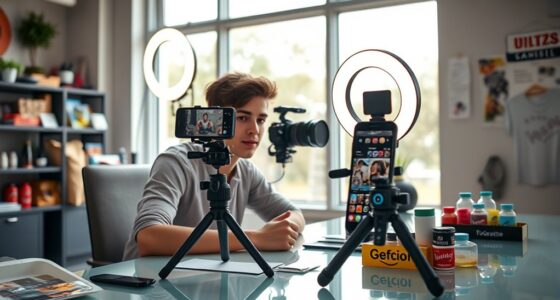

When choosing between a softbox and an LED panel, consider your content style and setup. Softboxes deliver soft, natural-looking light ideal for interviews and beauty shots but require more setup time. LED panels are versatile, energy-efficient, and easier to adjust, perfect for fast-paced vlogs or longer shoots. Knowing their differences helps you pick the right tool. Keep exploring, and you’ll discover detailed tips to elevate your lighting game effortlessly.
Key Takeaways
- Softboxes produce soft, diffused light ideal for flattering skin tones; LED panels offer adjustable brightness and color temperature for versatility.
- Softboxes often require more setup but provide consistent, natural-looking light; LED panels are portable, energy-efficient, and easy to adjust.
- Choose softboxes for professional interviews and beauty content; opt for LED panels for dynamic vlogs and longer shoots.
- LED panels are generally more energy-efficient and suitable for versatile lighting needs; softboxes excel in achieving smooth, gentle illumination.
- Consider ease of setup, power consumption, and desired light quality to determine the best option for your content creation needs.
What Are Softboxes and LED Panels?
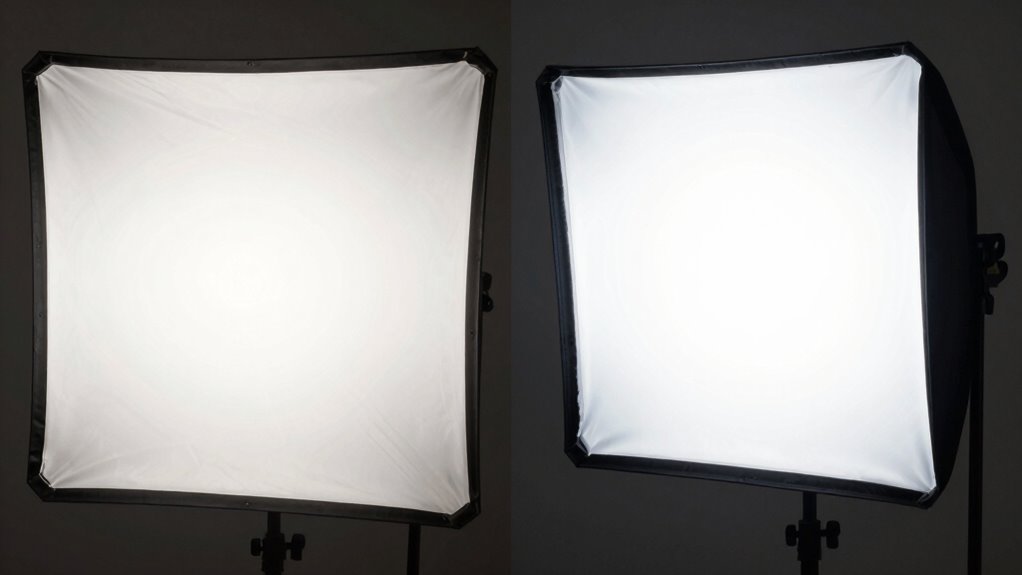
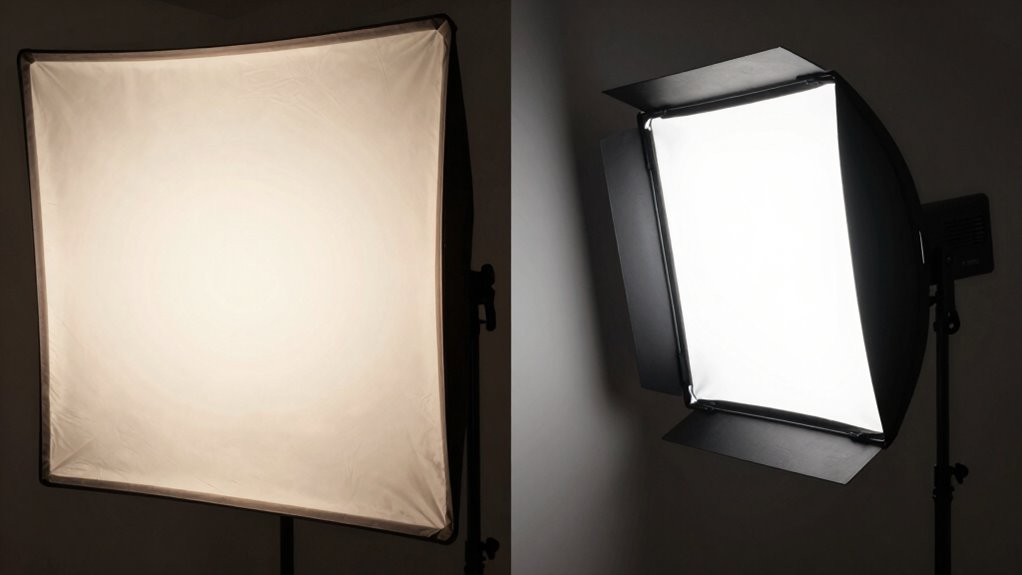
Softboxes and LED panels are two popular lighting tools used in photography and videography to achieve different lighting effects. Softboxes are fabric enclosures with diffusers that soften and diffuse light, creating a natural, flattering look. They often use continuous lights or strobes, with adjustable color temperature to match ambient lighting or create specific moods. LED panels are versatile, flat light sources with multiple diodes that emit consistent light. They typically have adjustable color temperature and are energy-efficient, meaning lower power consumption compared to traditional lighting. LED panels can be battery-powered or plugged in, making them portable and convenient. Both tools give you control over color temperature, but their power consumption and portability vary, influencing your choice based on your setup needs. Additionally, advancements in AI-powered lighting solutions are beginning to influence how creators select and optimize their lighting setups. Understanding the light quality of each device is essential for achieving the desired visual effect in your projects. As technology continues to advance, the efficiency and versatility of LED panels make them increasingly attractive options for many creators. Moreover, the power consumption of these lights can impact the overall energy efficiency of your production environment. Recognizing the lighting setup that best suits your needs can significantly enhance your creative outcomes.
How Do Softboxes and LED Panels Differ in Light Quality and Output?
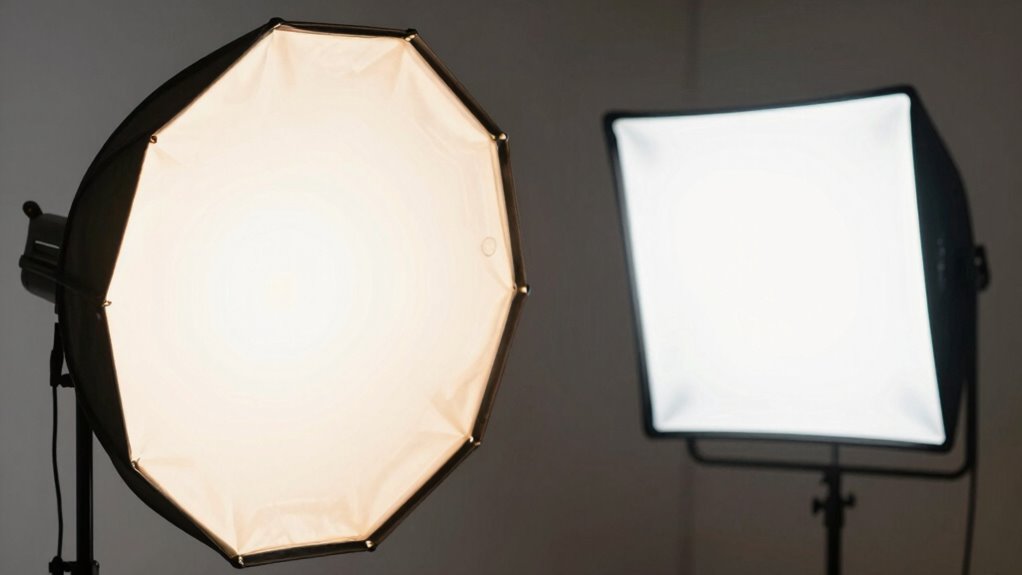
While both softboxes and LED panels allow you to control your lighting, they produce different qualities of light that can substantially impact your images and videos. Softboxes create a soft, diffused light with a smooth falloff, resulting in a natural, flattering look. Their color temperature is usually consistent but may require adjustments for different settings. LED panels, on the other hand, offer adjustable color temperature, giving you more flexibility to match ambient light or create specific moods. They also tend to be more power-efficient, delivering high brightness with less energy consumption. The output of softboxes is often more uniform, but they may require more setup time. LED panels provide versatile, adjustable illumination, making them suitable for various shooting conditions and styles.
Which Lighting Is Best for Your Content Type?
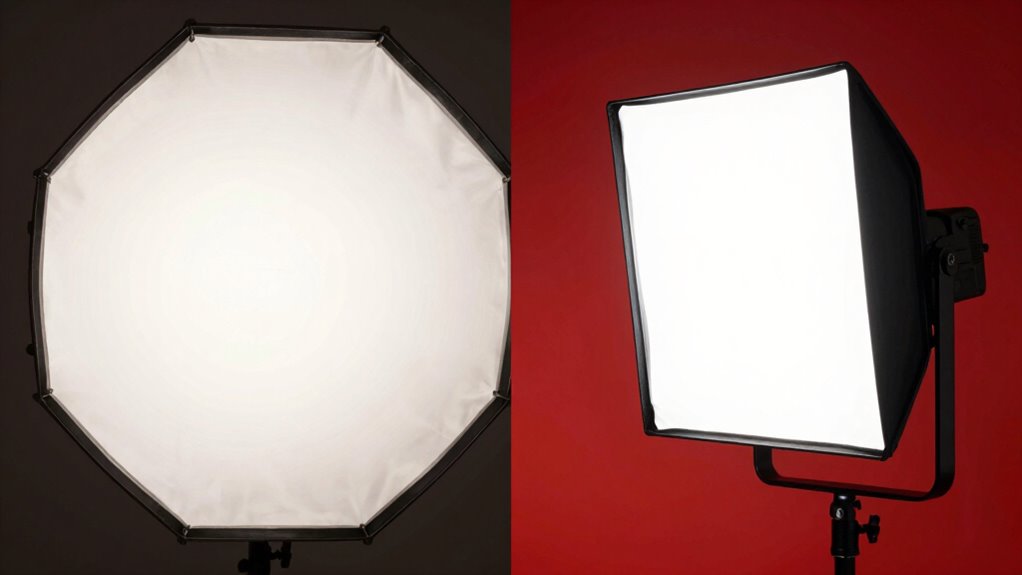
Choosing the right lighting depends heavily on your content type and the mood you want to create. If you’re filming a professional interview or beauty tutorial, softboxes offer a softer, more natural light with adjustable color temperature, helping you achieve consistent skin tones. For dynamic vlogs or fast-paced content, LED panels provide higher power efficiency, allowing longer shooting sessions without overheating. LEDs often have adjustable color temperature, giving you control over the atmosphere—warm or cool—based on your scene. Softboxes tend to be less power-efficient but deliver a more diffuse light, ideal for softer, more intimate visuals. Ultimately, match your lighting choice to your content’s aesthetic needs and your setup’s power constraints to produce the best results.
Key Factors to Consider When Choosing Your Lighting
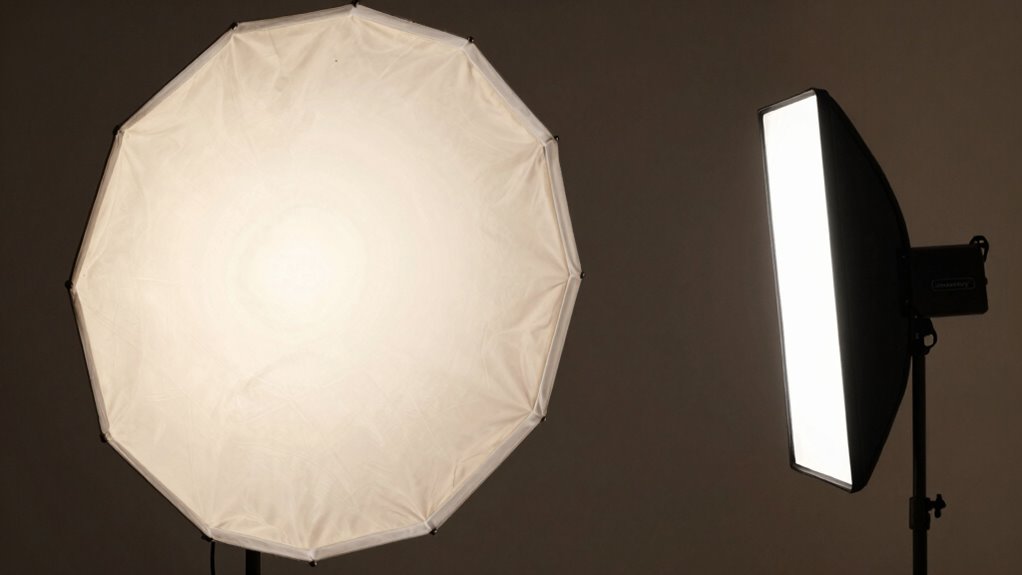
When selecting your lighting, there are several key factors you need to take into account to make certain it meets your specific needs. First, consider lighting placement—think about how you’ll position the light to achieve the desired effect without causing unwanted shadows or glare. Next, evaluate power consumption; softer, more energy-efficient options like LED panels typically use less power and are cost-effective in the long run. If your setup requires flexibility, look for lights that offer adjustable brightness and color temperature. Ease of use and durability are also important—choose equipment that’s user-friendly and built to last. Additionally, understanding crypto pump detection techniques can help you stay aware of market manipulations that might affect your investments. Balancing these factors ensures you select lighting that enhances your content quality while fitting your workspace and budget.
How to Set Up Softboxes and LED Panels for a Professional Look
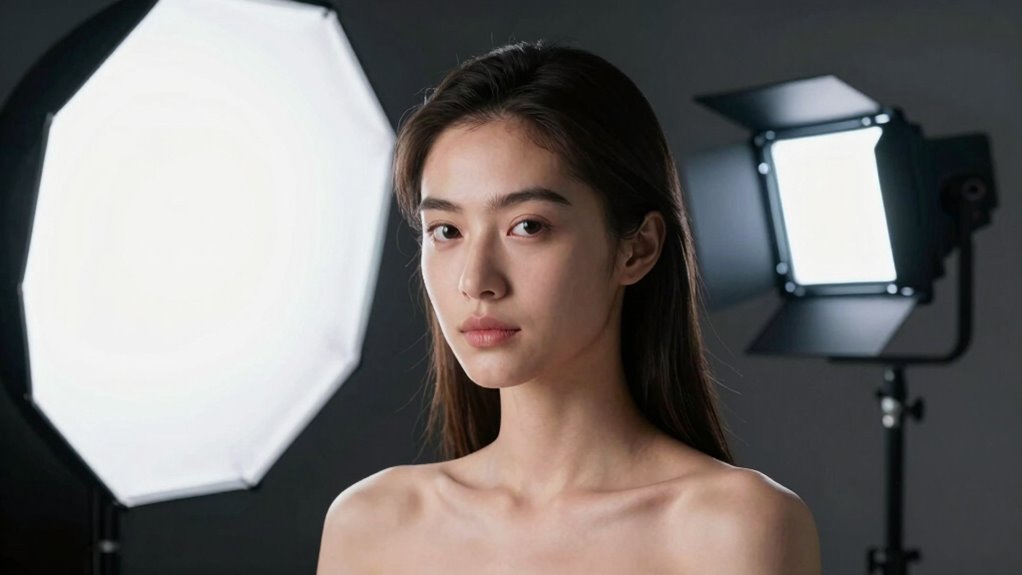
To achieve a professional look with your lighting setup, start by positioning your softboxes or LED panels at the right angles and distances from your subject. Aim for a 45-degree angle for softboxes to create smooth, natural shadows, while LED panels should be placed slightly above eye level. Adjust the color temperature to match your scene—around 5600K for daylight or lower for warmer tones. Keep an eye on power consumption; softboxes generally use less energy, but LED panels offer adjustable brightness, reducing waste. Confirm your lights are evenly spaced to avoid harsh shadows or hotspots. Fine-tune the distance and angle until you get soft, flattering illumination. Proper setup enhances professionalism and ensures your lighting complements your shoot’s mood and technical requirements.
Frequently Asked Questions
Can Softboxes and LED Panels Be Used Together Effectively?
Yes, you can use softboxes and LED panels together effectively. Softboxes provide excellent light diffusion and soften shadows, while LED panels offer adjustable color accuracy to match various settings. By combining them, you get versatile lighting with consistent color and smooth diffusion, enhancing your overall footage. This setup allows you to control the light quality and color temperature precisely, giving your projects a professional look without complex equipment.
How Energy-Efficient Are Softboxes Compared to LED Panels?
Softboxes are generally less energy-efficient than LED panels because they rely on traditional bulbs that consume more power. While softboxes provide excellent light diffusion, they typically need higher wattage to achieve the same brightness as LED panels. LED panels use less power, making them more energy-efficient and cost-effective over time. If you prioritize saving on power consumption, LED panels are the better choice for your lighting setup.
What Is the Typical Lifespan of Softboxes Versus LED Panels?
You’ll find that LED panels typically last between 30,000 to 50,000 hours, outlasting softboxes, which generally have a lifespan of around 1,000 to 3,000 hours. When considering durability comparison, LED panels are more resilient and require less maintenance, making them a smarter investment for long-term use. Softboxes, on the other hand, need occasional replacement of fabric diffusers and careful handling to avoid damage.
Are There Any Safety Concerns When Using Softboxes or LED Panels?
You should be aware of safety concerns with softboxes and LED panels, especially regarding heat generation and electrical safety. Softboxes can get quite hot, so avoid touching the fabric or bulb area to prevent burns. With LED panels, guarantee proper ventilation to prevent overheating and always check electrical connections for damage. Using equipment correctly and following manufacturer guidelines minimizes risks and keeps your workspace safe.
How Portable Are Softboxes Compared to LED Panels for On-The-Go Shooting?
Think of softboxes as sturdy ships, often less suited for quick trips, while LED panels are your nimble kayaks. LED panels excel in portability thanks to their lightweight design and battery compatibility, making them perfect for on-the-go shooting. Softboxes, though more bulky and requiring power cords, are less portable. So, if you need convenience and mobility, LED panels are your best bet for spontaneous shoots.
Conclusion
Think of your lighting choices as crafting a story. Softboxes are like gentle whispers, adding warmth and softness that invite intimacy. LED panels are bold narrators, offering versatility and brightness to capture attention. Choosing between them is like selecting the right tone for your tale—each has its own voice. When you find the perfect balance, your content becomes a compelling narrative that resonates, illuminating your unique voice and connecting with your audience on a deeper level.