Choosing between APS-C and full-frame sensors impacts your gear costs, size, and image quality. Full-frame cameras offer better low-light performance, sharper images, and more professional video options, but come with a higher price and larger size. APS-C models are more affordable, lightweight, and perfect for travel or beginner setups. To understand which fits your style and budget better, you’ll want to take into account the differences in autofocus, lens options, and system versatility—there’s much more to discover.
Key Takeaways
- Full-frame sensors offer superior image quality, better low-light performance, and more dynamic range, justifying higher costs.
- APS-C cameras are more affordable, lightweight, and portable, ideal for travel and casual shooting.
- Full-frame systems provide faster autofocus and broader lens options suited for professional video and photography.
- Larger sensors influence depth of field, enabling more creative control and subject isolation.
- The decision impacts long-term investment, system versatility, durability, and how well the camera suits specific creative needs.
What Are the Main Differences Between APS-C and Full-Frame Sensors?

The main difference between APS-C and full-frame sensors lies in their size and resulting image quality. In sensor manufacturing, full-frame sensors are larger, typically measuring 36x24mm, while APS-C sensors are smaller, around 23.6×15.6mm. This size difference influences how light is captured, affecting image clarity and detail. Your camera’s image processing system also plays a role; larger sensors gather more light, enabling better detail and dynamic range. With APS-C sensors, you might notice a slight reduction in image quality, especially in challenging lighting conditions. Conversely, full-frame sensors offer superior performance due to their size, helping you achieve sharper, more detailed images. Overall, sensor size impacts your camera’s ability to produce high-quality photos, even before considering lens choices. Additionally, larger sensors can better accommodate wide-angle lenses, enhancing versatility in various shooting scenarios. Moreover, the sensor size can influence the depth of field, allowing for more pronounced background blur in full-frame cameras.
How Does Sensor Size Impact Image Quality and Low-Light Performance?
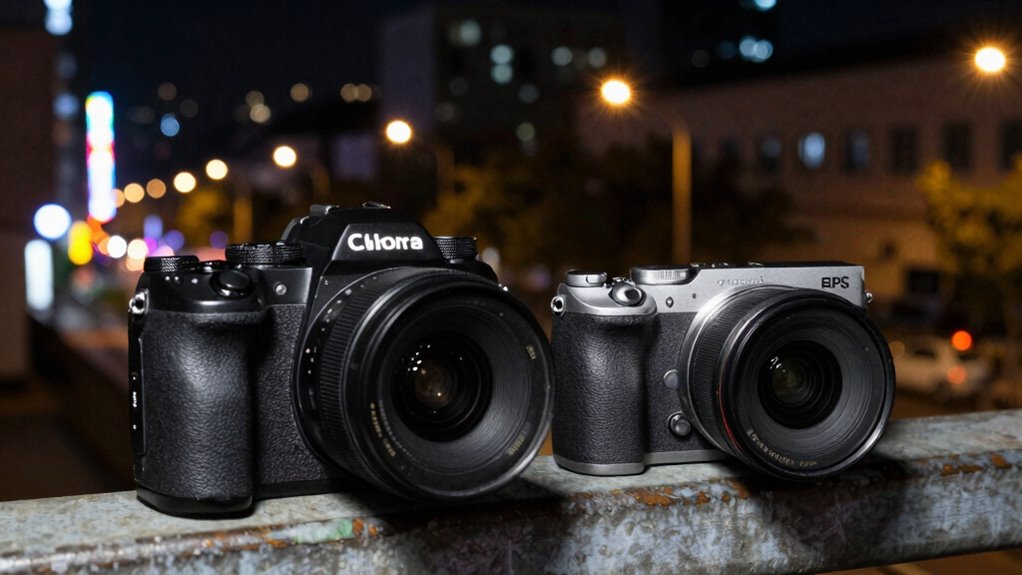
Larger sensors naturally capture more light, which directly enhances image quality and low-light performance. When you shoot in dim conditions, a full-frame sensor gathers more photons, reducing sensor noise and producing cleaner images. This increased light sensitivity also expands your dynamic range, allowing you to capture details in shadows and highlights more effectively. Additionally, larger sensors often support advanced image processing techniques that further improve image clarity in challenging environments. The increased size of the sensor also benefits shallow depth of field, enabling creators to better isolate subjects from backgrounds for more professional-looking images. Smaller sensors, like APS-C, tend to have higher sensor noise in low-light, which can compromise image clarity. Additionally, their limited dynamic range makes it harder to retain detail in high-contrast scenes. Overall, the bigger the sensor, the better your chances of achieving sharp, detailed photos with minimal noise, especially in challenging lighting situations. This is a key reason many creators prefer full-frame cameras for low-light work. Sensor size plays a crucial role in determining overall image performance, particularly in environments with less available light. Moreover, advancements in sensor technology continue to narrow the performance gap between different sensor sizes. A larger sensor also allows for shallower depth of field, helping to isolate subjects from their backgrounds for more professional-looking images.
What Are the Cost and Portability Benefits of APS-C Cameras?
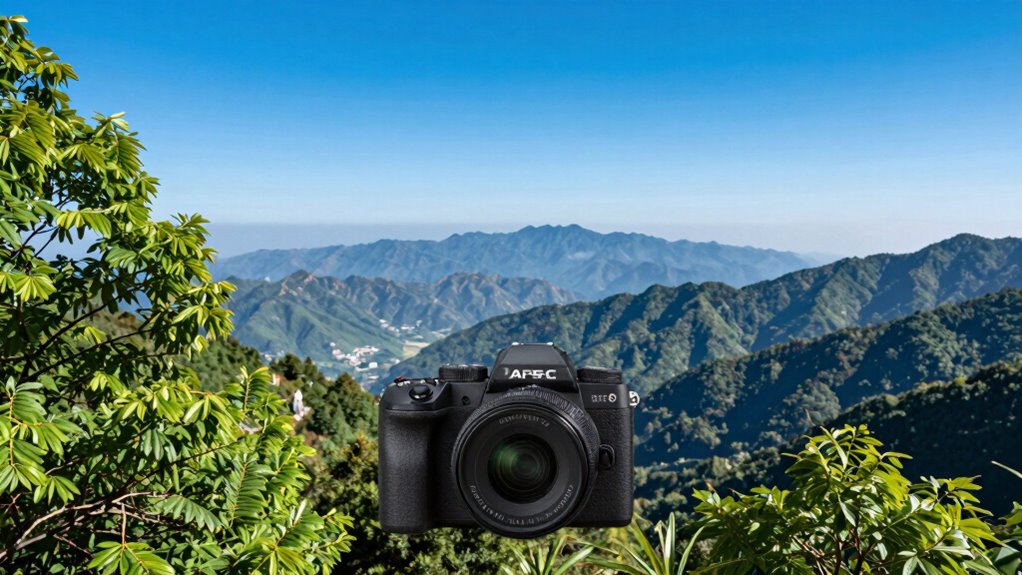
APS-C cameras are more affordable, making them a great choice if you’re on a budget. Their compact and lightweight design also makes them easier to carry around, especially during travel. This combination of cost and portability benefits helps you focus more on capturing moments rather than lugging heavy gear. Additionally, their smaller size makes them suitable for luxury lifestyle products, ensuring you can enjoy high-quality photography without sacrificing elegance or convenience. For those interested in enhancing their photography experience, choosing a camera with easy-to-use features can further simplify the process and improve results. Understanding the art and culture intersections can also inspire more creative compositions, elevating your work without added expense. Moreover, familiarizing yourself with different camera terminology can help you make more informed decisions and optimize your shooting experience. Recognizing the differences in sensor size can also impact your image quality and depth of field, making your photography more versatile.
Lower Camera Prices
If you’re looking to save money without sacrificing too much quality, APS-C cameras offer a compelling option. Their lower prices stem from simpler sensor manufacturing processes, which keep costs down compared to full-frame sensors. Additionally, these cameras often feature streamlined image processing, reducing the need for expensive hardware. This makes APS-C models more affordable for creators on a budget or those just starting out. You’ll also find a wider range of options at various price points, giving you more flexibility. The lighter, more compact bodies further cut costs by reducing the need for bulky accessories and carrying gear. Overall, choosing an APS-C camera means you get good image quality at a fraction of the cost, making it easier to invest in lenses and accessories.
Compact and Lightweight Design
Because APS-C cameras are more affordable, many photographers and videographers opt for models that are also easier to carry around. Their compact design offers a clear advantage, making them ideal for on-the-go shooting. The lightweight advantage means you can easily slip the camera into a small bag or even a jacket pocket, reducing fatigue during long shoots. This portability allows you to stay spontaneous and responsive, capturing moments without the bulk of larger gear. Whether you’re walking through city streets or hiking rugged trails, an APS-C camera’s smaller size helps you move freely. Plus, its lighter weight means less strain on your arms and shoulders, letting you focus on your creative process instead of discomfort.
Easier for Travel
Traveling with a camera becomes much simpler when you choose an APS-C model, thanks to its affordability and compact size. Its travel convenience means you can easily slip it into a backpack or carry-on without adding bulk. The portability benefits are clear—you won’t feel weighed down during long hikes or city explorations. Because APS-C cameras are generally lighter and smaller, they’re perfect for spontaneous shots or extended trips. You won’t need to worry about bulky gear slowing you down or taking up too much space. Plus, their lower cost makes them less intimidating to pack and less stressful if lost or damaged. Overall, an APS-C camera streamlines your travel experience, letting you focus on capturing moments without the hassle of heavy, cumbersome equipment.
How Do Autofocus, Lens Options, and Video Features Compare?
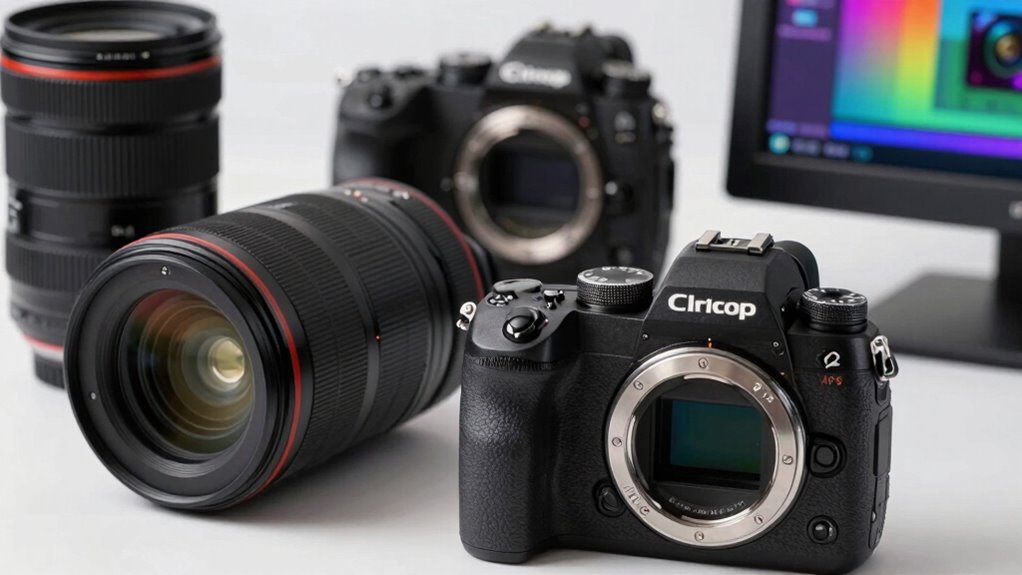
When it comes to autofocus, full-frame cameras often deliver faster and more accurate tracking, especially in challenging lighting. You’ll find a wider selection of lens options for full-frame systems, giving you more creative freedom. Additionally, video features like stabilization and resolution tend to be more advanced on full-frame models, enhancing your footage quality. Considering power sources, battery capacity can significantly impact your shooting time, especially for extended projects. The environmental impact of tissue paper can also influence choices, encouraging the use of more sustainable materials whenever possible. Understanding technological advancements in camera design can help you make better-informed decisions about which system suits your needs best. Staying updated on latest innovations can further empower your creative process and ensure you select the most suitable gear.
Autofocus Speed and Accuracy
Autofocus performance is a key factor when choosing between APS-C and full-frame cameras, as it directly impacts your ability to capture sharp images quickly and accurately. Full-frame sensors often excel in autofocus speed and precision because they use advanced autofocus algorithms that process data more effectively. They tend to handle sensor noise better in low light, enabling reliable focus even in challenging conditions. APS-C cameras, while improving, may lag slightly in autofocus accuracy and speed, especially in complex scenes. For video, full-frame models typically offer smoother, more reliable autofocus due to more sophisticated algorithms. Overall, if autofocus speed and accuracy are priorities, full-frame cameras usually provide a more dependable and refined experience, especially when tracking fast-moving subjects.
Lens Compatibility and Variety
Lens compatibility and variety play a significant role in your overall shooting experience, especially when considering the differences between APS-C and full-frame cameras. With APS-C cameras, you often get access to a broader range of affordable lenses, but some may have limited autofocus precision and lens durability. In contrast, full-frame systems typically offer:
- A wider selection of high-quality lenses optimized for larger sensors.
- Better autofocus performance, especially with advanced features.
- Enhanced sensor durability, reducing damage risks during tough shoots.
- More robust lens durability, ensuring longevity under demanding conditions.
- Lens compatibility also influences the potential for future upgrades, making it an important consideration for long-term investment.
Your choice impacts not only lens compatibility but also the longevity of your gear. Full-frame lenses tend to be more durable, but APS-C options can be more versatile and budget-friendly.
Video Recording Capabilities
How do autofocus performance, lens options, and video features differ between APS-C and full-frame cameras? Full-frame cameras usually offer superior autofocus accuracy and faster tracking, thanks to more advanced sensor calibration and better processing. Lens options are broader for full-frame models, providing more versatile video capabilities and higher-quality optics. Both sensor sizes feature image stabilization, but full-frame cameras often have more effective in-body stabilization systems, reducing camera shake during handheld shooting. Video recording on full-frame cameras generally delivers higher resolution and better low-light performance, with advanced features like 10-bit color and improved autofocus in video mode. Additionally, sensor size differences influence depth of field and overall image quality, making full-frame sensors more desirable for professional video production. The crop factor also impacts how lenses behave, offering different creative options for videographers. It’s important to note that sensor size also affects the field of view, which plays a significant role in framing and composition during video shoots. APS-C cameras, while capable, may have slightly limited autofocus precision and fewer professional video features, but they still serve well for casual and semi-professional video creation.
Which Sensor Size Is Best for Different Photography Styles and Budgets?
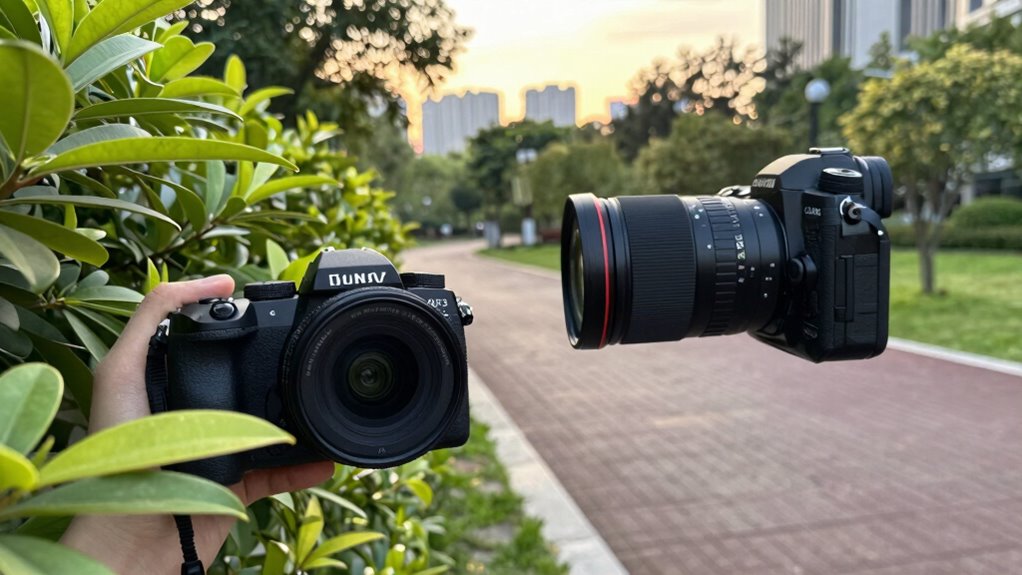
Choosing between APS-C and full-frame sensors depends largely on your photography style and budget. If you shoot outdoors frequently, consider the durability of your gear: a sturdier sensor might withstand rough conditions better. For budget-conscious photographers, APS-C cameras often offer a more affordable entry point, with lower costs for lenses and accessories. Think about battery longevity—smaller sensors tend to conserve power, allowing longer shooting sessions. Visualize your needs:
Choosing the right sensor depends on your style, durability needs, budget, and battery life considerations.
- Capturing expansive landscapes, where full-frame’s wider field of view excels.
- Shooting fast-paced sports, benefiting from quicker autofocus and burst speeds.
- Documenting everyday moments, where compact APS-C models shine.
- Traveling light, with lighter, more portable setups.
Match your style and budget to these factors, and you’ll find the sensor size that best suits your photography journey.
What Factors Should You Consider When Choosing Between APS-C and Full-Frame?

When deciding between APS-C and full-frame sensors, it’s vital to evaluate several key factors that directly impact your photography experience. Sensor durability matters because a more robust sensor can withstand tough conditions, ensuring your gear lasts longer. Battery life is also essential; full-frame cameras often consume more power, reducing shooting time without recharge. Consider how you’ll use your camera—if portability and extended shoots are priorities, APS-C models might be better. Additionally, think about your budget: full-frame cameras typically cost more upfront but can offer better image quality and low-light performance. Understanding the horsepower of electric dirt bikes can also give insight into the power and capabilities of camera systems, especially when considering high-performance models. Moreover, the durability of a camera is influenced by build quality and environmental resistance, which are important factors to consider for long-term use. Ultimately, weigh these factors against your specific needs and shooting style to make a choice that balances durability, battery life, and long-term value.
Frequently Asked Questions
How Does Crop Factor Affect Composition and Framing?
Crop factor impacts your composition and framing by effectively narrowing your field of view, thanks to smaller sensor size. When you use a camera with a smaller sensor, like APS-C, image cropping occurs, making it seem like you’re zoomed in more. This means you need to step back or use a wider lens to capture the same scene, affecting your creative framing and how you compose your shots.
Are There Specific Brands Better Suited for Each Sensor Type?
Brands boast specific strengths, so sensor compatibility and lens selection matter. Canon’s consistent quality shines in both APS-C and full-frame, making it a top choice. Sony’s stellar sensors excel in full-frame cameras, perfect for professional creators. Nikon balances versatility with innovative options across sensor types. When choosing, consider your style, as brands like Fujifilm excel with APS-C, offering excellent lens options, while Sony and Canon dominate full-frame with broad lens selections.
What Maintenance Differences Exist Between APS-C and Full-Frame Cameras?
You’ll find that maintenance differences between APS-C and full-frame cameras mainly involve cleaning procedures and sensor longevity. Full-frame sensors are larger, making them more prone to dust, so regular cleaning is essential. Both sensor types benefit from careful cleaning to maintain image quality, but full-frame sensors might require more frequent attention due to their size. Proper handling and gentle cleaning extend sensor longevity, ensuring your camera stays in top shape longer.
How Do Battery Life and Durability Compare?
You’ll find that full-frame cameras generally have better battery longevity because they often include larger batteries, allowing for longer shooting sessions. When comparing durability, both camera types are built to withstand various conditions, but full-frame models tend to use more rugged materials and weather sealing, making them more durable in harsh environments. So, if longevity and durability matter, full-frame cameras often come out ahead, especially for professional use.
Can APS-C Cameras Produce Professional-Grade Images?
Think of an APS-C sensor as a skilled painter with a smaller canvas. It can produce professional-grade images by harnessing high sensor sensitivity and excellent image resolution. While it may not have the grandeur of a full frame, an APS-C camera captures sharp, detailed photos suitable for professional work. With the right skills and settings, you can create stunning images that rival those from larger sensors.
Conclusion
So, which sensor size will you choose? Will the potential for stunning images with a full-frame camera outweigh the portability and affordability of APS-C? The decision isn’t just about specs—it’s about your passion, style, and future projects. Whichever path you pick, know that your choice could open new creative possibilities—or pose unexpected challenges. Ready to make that leap? The next step awaits, and it might just change how you see the world.