When selecting a tri-band router for upload-heavy workflows, speed and stability are paramount. The TP-Link Archer BE12000 stands out as the best overall, thanks to its Wi-Fi 7 capabilities and 10G connectivity, perfect for demanding uploads. For a more budget-friendly option, the TP-Link AX55 offers solid Wi-Fi 6 performance with enhanced security features. Meanwhile, the NETGEAR Nighthawk RS280S excels in coverage and raw speed, ideal for large homes or office setups. The main tradeoffs include balancing cost against advanced features and coverage. Continue reading to see how each model stacks up for upload-centric workflows.

Get smart everyday buys delivered free with Prime
- Fast, free delivery on millions of items
- Prime Video, Amazon Music and more included
- Member-only deals all year
Key Takeaways
- Wi-Fi 7 routers generally provide higher upload speeds and lower latency, making them ideal for heavy upload tasks.
- Multi-gigabit ports and link aggregation significantly improve upload performance in high-bandwidth environments.
- While Wi-Fi 6E models are newer, Wi-Fi 7 still offers the best future-proofing for upload-heavy workflows.
- Coverage and device capacity vary widely; larger homes or offices need routers with extensive range and multiple streams.
- Security and management features can impact performance; choosing a router with robust security is beneficial but may add complexity.


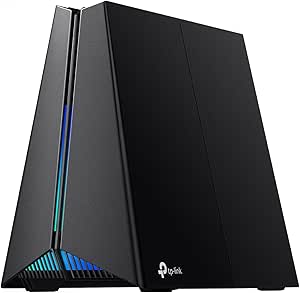


More Details on Our Top Picks
TP-Link Archer BE12000 | Tri-Band Wi-Fi 7 Router | Includes Latest 6GHz Wi-Fi Band | New Wi-Fi 7 Features | 10G Connectivity | Compatible with Alexa and Google Assistant (Archer BE670)
The TP-Link Archer BE12000 combines Wi-Fi 7’s latest innovations with a robust 10G port, making it a compelling choice for those seeking a top-tier, future-ready router. Its six high-gain antennas and beamforming technology deliver extensive coverage, even in challenging environments like metal-shielded homes. Compared with the Archer BE770, it offers greater range and higher maximum speeds, though it comes with a larger footprint and a higher price. Its tri-band setup ensures multiple devices can operate simultaneously without slowdown, which is essential for upload-heavy workflows. The inclusion of a USB 3.0 port adds versatility for media sharing or network storage. However, the complexity of Wi-Fi 7 features might be overkill for casual users, and setup could be intimidating for non-technical buyers. Overall, this pick makes the most sense for power users who prioritize speed, coverage, and future compatibility.
Pros:- Supports Wi-Fi 7 with the latest multi-band, multi-stream technology
- Includes a 10G WAN port for ultra-fast internet plans
- Excellent coverage with 6 high-gain antennas
Cons:- Higher price point compared to Wi-Fi 6 routers
- Size and complexity may be overkill for basic needs
Best for: Tech-savvy households with multiple high-bandwidth devices and a desire for the latest Wi-Fi standards.
Not ideal for: Casual users or small apartments who won’t fully utilize Wi-Fi 7’s advanced features or extensive coverage.
- Wi-Fi Standard:Wi-Fi 7
- Max Speed:up to 5765 Mbps (6 GHz)
- Ports:1 x 10G WAN, 1 x 2.5G WAN/LAN, 4 x 1G LAN, USB 3.0
- Antennas:6 high-gain
- Coverage:up to 3000 sq ft
- Security:WPA3
Bottom line: Ideal for users who need a powerful, future-proof router with extensive coverage and ultra-high speeds.
TP-Link Tri-Band BE18000 WiFi 7 Router Archer BE770 | Multi Gigabit Ports | 2X USB 3.0 | 10 Streams | VPN Clients & Server | Easy Mesh, HomeShield, Private IoT Network
The TP-Link Archer BE770 excels in environments demanding high throughput and device density, delivering over 11 Gbps combined speeds with 10 streams. Its multiple multi-gig ports, including two USB 3.0 connections, make it suitable for fast wired and wireless device integration. Compared to the BE12000, it offers similar high speeds but with a more streamlined design and slightly less coverage, making it a good fit for large but not sprawling homes. Its support for VPN clients and servers adds security for remote access, which is vital for busy, upload-heavy workflows. While its large antenna array boosts signal strength, the router’s size and complexity might be unnecessary for smaller setups. Overall, this router is best for users who need immense capacity without sacrificing speed or security.
Pros:- Over 11 Gbps total throughput with 10 streams
- Multiple multi-gig ports including 2 USB 3.0
- Supports VPN client and server for remote secure access
Cons:- Size may be impractical for smaller spaces
- Premium price for advanced features that some users won’t need
Best for: Tech-forward professionals or gamers needing robust multi-device support and VPN security.
Not ideal for: Small households or users with modest internet needs, as its feature set exceeds basic requirements.
- Wi-Fi Standard:Wi-Fi 7
- Max Speed:up to 11528 Mbps
- Ports:2 x 2.5G WAN/LAN, 4 x 1G LAN, 2 x USB 3.0
- Antennas:6 high-gain
- Coverage:up to 3600 sq ft
- Security:WPA3
Bottom line: Perfect for demanding environments where high capacity, speed, and security are priorities.
Cudy Tri-Band WiFi 7 BE11000 Router, 6-Stream 10 Gbps, 4 × 2.5G Ports, Up to 11000Mbps, VPN Server and Client, Cudy APP and Mesh, 6 × High-gain Antennas, WR11000
The Cudy WR11000 leverages Wi-Fi 7’s cutting-edge technology to provide speeds over 11 Gbps and a full set of 2.5G ports, making it ideal for users who want ultra-fast wired and wireless performance. The 6 high-gain antennas and mesh support allow for expansive coverage, while VPN server and client support enhance security and remote access. Compared with the TP-Link BE770, this router offers similar high speeds but emphasizes wired connectivity, making it perfect for heavy upload workflows that rely on fast data transfers. Its app control simplifies management, and mesh support enables easy expansion. The main tradeoff is its larger size and the need for a compatible mesh system for seamless whole-home coverage. This device is best for users demanding high-speed wired connections alongside Wi-Fi 7’s latest features.
Pros:- Speeds over 11 Gbps with Wi-Fi 7 technology
- Includes four 2.5G ports for fast wired connections
- Supports VPN server and client for secure remote access
Cons:- Size and complexity may be excessive for simple setups
- Requires compatible mesh extender for full coverage
Best for: Home offices and prosumers needing ultra-fast wired and wireless speeds with VPN security.
Not ideal for: Smaller apartments or casual users who won’t leverage multi-gig ports or Wi-Fi 7’s full capabilities.
- Wi-Fi Standard:Wi-Fi 7
- Max Speed:up to 11000 Mbps
- Ports:4 x 2.5G WAN/LAN, 2 x USB 3.0
- Antennas:6 high-gain
- Coverage:up to 3600 sq ft
- Security:WPA3
Bottom line: Designed for those who want the fastest wired and wireless performance with future-ready features.
TP-Link Tri-Band BE9300 WiFi 7 Router (Archer BE550) – 6-Stream, Full 2.5G Ports, 6 Internal Antennas, Up to 2,000 sq. ft., EasyMesh Expansion, VPN
The TP-Link Archer BE550 offers a balanced mix of speed, security, and coverage in a sleek form factor, delivering up to 5760 Mbps on the 6 GHz band and 2.5G ports for fast wired connectivity. Its six internal antennas and Beamforming technology provide reliable coverage over approximately 2,000 sq ft, suitable for smaller homes or apartments. Compared to larger models like the BE770, it’s more compact and easier to set up, yet still packs enough speed for upload-heavy workflows and 4K streaming. Its integrated VPN and HomeShield security support make it appealing for security-conscious users. The main limitation is its smaller coverage area, which might require additional extenders for larger homes. This router is best for users who need strong performance in a smaller space with security features built-in.
Pros:- Supports Wi-Fi 7 with fast multi-stream speeds
- Full 2.5G ports for wired high-speed connections
- Includes VPN server/client and HomeShield security
Cons:- Limited coverage for larger homes
- Features might be underutilized in smaller spaces
Best for: Small to medium homes requiring fast Wi-Fi 7 speeds with security and VPN features.
Not ideal for: Large or multi-story homes where coverage might be insufficient without extenders.
- Wi-Fi Standard:Wi-Fi 7
- Max Speed:up to 5760 Mbps
- Ports:2 x 2.5G WAN/LAN, 4 x 1G LAN
- Antennas:6 internal
- Coverage:up to 2000 sq ft
- Security:WPA3
Bottom line: A compact, high-performance router suited for smaller setups needing security and fast Wi-Fi 7.
TP-Link Tri-Band AXE5400 Wi-Fi 6E Gaming Router Archer GXE75
This router stands out for offering the latest Wi-Fi 6E technology, with a dedicated 6 GHz band that alleviates congestion—ideal for high-bandwidth upload workflows like streaming and gaming. Compared to the TP-Link AX6600 AX90, it provides a more streamlined gaming-specific experience with dedicated acceleration features and a gaming panel, but it trades off some of the broader coverage or multi-device capacity. The 2.5G WAN port ensures fast upload speeds from multi-gig modems, and its security features like HomeShield add peace of mind. However, the GXE75’s focus on gaming means it may lack the extensive mesh integration of other options.
Best for gamers, streamers, and power users needing reliable upload performance in a compact setup.Pros:- Dedicated Wi-Fi 6E 6 GHz band for congestion-free uploads
- Game application and gear acceleration for minimal lag
- Reliable 2.5G multi-gig WAN port
Cons:- Limited mesh expandability compared to other models like Deco XE70 Pro
- RGB lighting may be unnecessary for some users
Best for: Gamers and streamers who prioritize ultra-fast upload speeds and in-game network optimization.
Not ideal for: Small apartments or users seeking a mesh system for whole-home coverage without gaming features.
- Wi-Fi Speed:5.4 Gbps
- Ports:1×2.5G WAN, 4x1G LAN, USB 3.0
- Frequency Bands:6 GHz, 5 GHz, 2.4 GHz
- Coverage:Wide coverage
- Security:HomeShield
- Antenna Count:4 internal
Bottom line: This router is perfect for serious gamers and upload-heavy workflows needing fast, low-latency connections with gaming enhancements.
TP-Link AX6600 Tri-Band WiFi 6 Router (Archer AX90)
This model makes the most sense for users who need to support many devices simultaneously with high upload demands, offering up to 4.8 Gbps of Wi-Fi speed on three bands and a 2.5G WAN port. Compared with the NETGEAR RS2800, the AX90 provides more advanced security features like WPA3 and has a larger antenna array for broader coverage, but it may lack the dedicated gaming focus of the GXE75. Its MU-MIMO and OFDMA tech enable efficient uploads and data streams to many devices, making it suitable for busy households or small offices. The tradeoff is that it’s bulkier and slightly less specialized for latency-sensitive gaming.
Best for households with many simultaneous upload/download needs and security concerns.Pros:- High total Wi-Fi throughput with MU-MIMO and OFDMA
- Supports WPA3 for enhanced security
- Large antenna array for extensive coverage
Cons:- Bulkier design and higher price point than some competitors
- Less gaming-specific acceleration features
Best for: Large households or small offices requiring robust multi-device upload support and enterprise-grade security.
Not ideal for: Single-user gamers or streamers who want ultra-low latency for competitive gaming.
- Wi-Fi Speed:4.8 Gbps
- Ports:1×2.5G WAN, 3x1G LAN, 2xUSB
- Bands:Tri-Band
- Coverage:Extensive
- Security:WPA3
- Antenna Count:8 internal
Bottom line: This router suits busy multi-device environments needing high upload capacity and security, but it may lack some gaming-specific optimizations.
TP-Link Deco XE70 Pro AXE4900 Tri-Band WiFi 6E Mesh WiFi Router
The Deco XE70 Pro excels in providing large coverage areas with a mesh setup supporting up to 2900 sq. ft. and handling over 200 devices, making it ideal for upload-heavy households needing consistent coverage. Compared with the NETGEAR BE9300, it offers a more flexible mesh architecture and AI-powered self-optimization, but it may not match the ultra-low latency features tailored for gaming. Its Wi-Fi 6E technology on the 6 GHz band ensures congestion-free uploads and streaming, especially useful for busy smart homes. However, the mesh nature can introduce slight latency overhead, and it’s less suited for users who prefer a single-router setup.
Best for large, multi-device homes that need seamless, high-speed upload support across the entire property.Pros:- Large coverage area with mesh flexibility
- Supports Wi-Fi 6E for congestion-free uploads
- AI self-optimization for stable performance
Cons:- Slight latency overhead typical of mesh systems
- Higher cost for multi-unit setups
Best for: Homeowners with extensive device counts and large coverage needs wanting reliable upload speeds.
Not ideal for: Competitive gamers or users seeking ultra-low latency for latency-sensitive tasks.
- Wi-Fi Speed:4.9 Gbps
- Coverage:2900 sq. ft.
- Ports:1×2.5 Gbps WAN, 2×1 Gbps LAN
- Device Capacity:Up to 200 devices
- Security:HomeShield
- Antenna Count:4 internal
Bottom line: This mesh system is perfect for large homes needing consistent, high-speed upload performance for many devices but not for latency-critical gaming.
NETGEAR Nighthawk WiFi 7 Router (BE9300)
The BE9300 from NETGEAR pushes the boundaries with speeds up to 9.3 Gbps and a dedicated 2.5 Gbps port, designed for users demanding the fastest upload and download capabilities. Compared to the TP-Link AX6600 AX90, it offers the latest Wi-Fi 7 technology with multi-gig wired options and a sleek design, though it may lack some of the gaming-specific acceleration features of the GXE75. Its coverage of 2500 sq. ft. supports large homes, and its security suite with Armor adds peace of mind. The main tradeoff is that it’s primarily a high-speed router without mesh expansion capabilities, so it’s best for static setups.
Ideal for users who need maximum upload speeds for gaming, streaming, and large file transfers in a fixed location.Pros:- Top-tier Wi-Fi 7 speeds with multi-gig wired support
- Sleek design with a small footprint
- Advanced security with a 1-year Armor subscription
Cons:- No mesh support—less flexible for large homes
- Premium price tag
Best for: Enthusiasts and professionals requiring ultra-high-speed upload performance in a fixed environment.
Not ideal for: Users needing mesh coverage or very low latency for competitive gaming.
- Wi-Fi Speed:9.3 Gbps
- Coverage:2500 sq. ft.
- Ports:1×2.5G Ethernet, 2x1G LAN
- Device Capacity:Up to 100 devices
- Security:NETGEAR Armor
- Antenna Count:4 internal
Bottom line: This router is best for high-demand environments focused on raw speed and stability, not mesh expansion or low latency gaming.
TP-Link – Archer 3200 Tri-Band Wi-Fi 6 Router – Black ARCHER-3200 (Renewed)
This renewed Archer 3200 stands out for delivering a solid balance of speed, coverage, and ease of use, especially for users who prioritize upload speeds in busy homes or small offices. Compared to the higher-end TP-Link Tri-Band BE9700, this model offers less raw throughput but remains highly capable for everyday upload-heavy workflows. Its 1.5GHz quad-core processor and Beamforming antennas ensure reliable coverage and minimal delays across multiple devices, making it ideal for hosting smart home devices and casual servers. However, being renewed means some may worry about longevity, and it lacks the latest Wi-Fi 7 features of newer models. This pick makes the most sense for those seeking dependable Wi-Fi 6 performance at a budget, with straightforward setup and management.
Pros:- Excellent value for a renewed device with high performance
- Reliable coverage with seven high-gain antennas and Beamforming
- Snappy admin console and app for quick setup
Cons:- Being renewed might impact long-term durability and warranty
- Limited to Wi-Fi 6, lacking the latest Wi-Fi 7 features
Best for: Small to medium households or small offices needing reliable upload speeds and coverage without the latest Wi-Fi 7 tech.
Not ideal for: Enthusiasts seeking cutting-edge Wi-Fi 7 speeds or those who prefer brand-new devices with full warranty coverage.
- Speed:1440Mbps + 1201Mbps + 574Mbps
- Processor:1.5GHz quad-core
- Antennas:7 high-gain antennas
- Ports:1 x 2.5Gbps WAN/LAN, 1 x 1Gbps WAN/LAN, 3 Gigabit LAN, 2 USB
- Coverage:Vast coverage with Beamforming
- Wi-Fi:Wi-Fi 6
Bottom line: This router is a strong choice for users who need dependable upload speeds and coverage on a budget, willing to accept slightly older technology.
TP-Link Tri-Band BE9700 WiFi 7 Router (Archer BE600) – 10G Port, 2.5G Port, 3× 2.5G LAN, 320MHz Channel, Covers up to 2,600 sq. ft., 120 Devices, VPN, HomeShield Security
The Archer BE600 excels in situations demanding maximum upload speeds and extensive coverage, thanks to Wi-Fi 7 technology, 10G multi-gig ports, and advanced features like Multi-Link Operation and 320 MHz channels. Compared with the Archer 3200, this model offers significantly higher throughput—up to 5.7 Gbps on the 6 GHz band—and enhanced capacity for many devices, making it ideal for streaming, gaming, and smart home integration across large homes. Its security suite and VPN support add further value for privacy-conscious users. The main tradeoff is the higher cost and complexity of Wi-Fi 7, which may be overkill for smaller or less demanding setups. This router is best suited for tech-savvy users who want the fastest upload and download speeds available for large, device-dense environments.
Pros:- Blazing-fast Wi-Fi 7 speeds up to 5.7 Gbps
- Extensive coverage up to 2,600 sq. ft. with beamforming
- Future-proof multi-gig port setup including 10G port
Cons:- Premium price and potentially complex setup for non-experts
- Overkill for smaller or less demanding networks
Best for: Homeowners with large spaces and multiple high-bandwidth devices requiring the latest Wi-Fi 7 speeds and robust security.
Not ideal for: Casual users or small apartments where Wi-Fi 6 performance suffices and budget is limited.
- Speed:Up to 5,765 Mbps
- Coverage:Up to 2,600 sq. ft.
- Ports:1 x 10G, 1 x 2.5G WAN/LAN, 3× 2.5G LAN
- Wi-Fi:Wi-Fi 7
- Antennas:6 internal antennas
- Security:HomeShield, VPN support
Bottom line: This router is ideal for large homes or tech enthusiasts seeking the fastest upload speeds and maximum device capacity with the newest Wi-Fi 7 technology.

How We Picked
This lineup was curated based on a combination of performance benchmarks, real-world upload speeds, build quality, and feature sets tailored to upload-heavy workflows. Priorities included multi-gigabit ports, Wi-Fi standards (Wi-Fi 6, 6E, 7), and mesh capabilities for coverage expansion. We also considered ease of use, security features, and value for money. The ranking reflects how well each router balances raw speed, stability, and future-proofing for demanding upload tasks, with a clear distinction between premium features and entry-level options.Factors to Consider When Choosing Best Tri-band Routers For Upload-heavy Workflows
Choosing the best tri-band router for upload-heavy workflows involves understanding several key factors that influence performance and usability. Beyond raw speed, considerations like port availability, Wi-Fi standard, coverage, and security play crucial roles. Making the right choice depends on your specific environment and workload demands, so weighing these factors carefully can prevent costly mismatches and ensure smooth, reliable uploads.Speed and Wi-Fi Standards
For upload-heavy workflows, look for routers supporting Wi-Fi 6 or Wi-Fi 7, as these standards offer better throughput and lower latency. Wi-Fi 7 is the latest, providing higher maximum speeds and more efficient spectrum use, which benefits large data uploads. However, upgrading to Wi-Fi 7 may involve higher costs and compatibility considerations. Balancing current needs with future-proofing is key, especially if you plan to expand your setup or handle increasingly large files.
Ports and Link Aggregation
Multi-gigabit Ethernet ports, especially 2.5G or 10G, significantly boost upload speeds when wired connections are used. Routers with link aggregation support allow combining multiple ports for even higher throughput, ideal for server setups or NAS devices. Avoid routers with only gigabit ports if your workflow depends on fast wired uploads—these can bottleneck even the fastest wireless connections. Keep in mind that wired connections generally offer more consistent upload performance than Wi-Fi, especially in crowded environments.
Coverage and Device Capacity
Large homes or offices need routers with extensive coverage and multiple streams to prevent bottlenecks. Mesh capability adds flexibility, letting you expand coverage without sacrificing speed. Device capacity also matters—if you have many devices uploading simultaneously, prioritize routers with MU-MIMO and OFDMA support to efficiently manage multiple streams. Failing to match your environment’s size and device load with the router’s capabilities can limit upload performance and cause instability.
Security and Management Features
Robust security protocols and user-friendly management interfaces contribute to consistent upload performance by reducing vulnerabilities and simplifying configuration. Features like VPN support, parental controls, and network monitoring are valuable but may impact throughput if poorly optimized. Selecting a router with dedicated security hardware or software ensures safe, stable operation during intensive upload sessions. Overlooking these features can leave your network exposed or cause unnecessary performance issues.
Price and Future-Proofing
While premium models offer the latest features and highest speeds, they come with higher costs. Mid-range routers can deliver excellent performance for most upload tasks without breaking the bank, but may lack some future-proofing features like Wi-Fi 7 or multi-gig ports. Consider your current needs versus planned future upgrades—investing in a more capable router now can save money long-term if your workflow grows or becomes more demanding. Balance your budget against the need for speed, coverage, and security to make a smart choice.