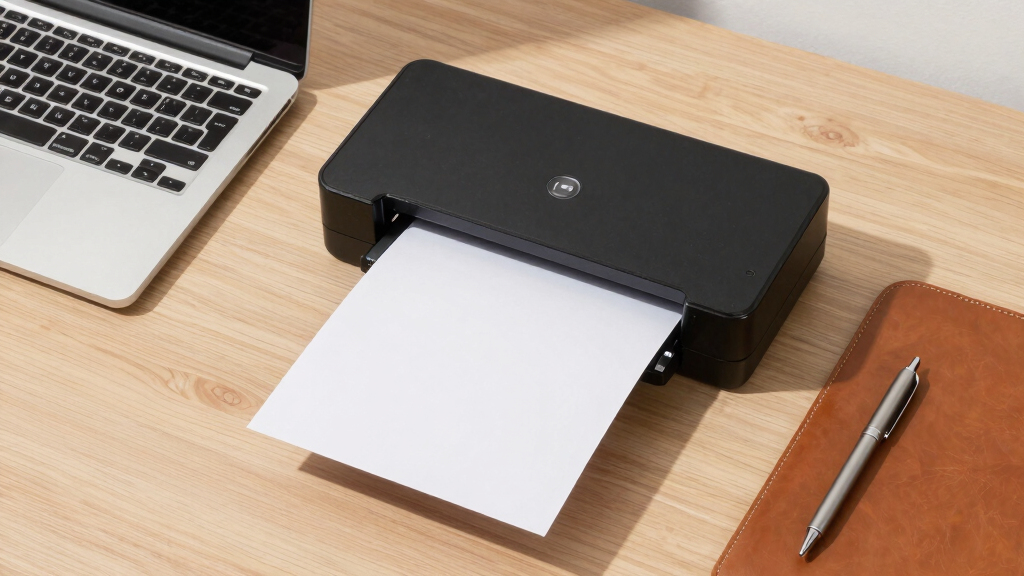
Finding the best desk-friendly scanners for small offices means balancing size, speed, and ease of use. The Canon imageFORMULA R10 stands out for its portability, making it ideal for mobile setups. Meanwhile, the Brother ADS-1300 offers faster scanning speeds suitable for daily office workflows. These options illustrate common tradeoffs: compact size versus speed, and simplicity versus advanced features. Keep reading to see which models suit your specific needs and workspace constraints.
Key Takeaways
- Top picks balance size and performance, with most models fitting comfortably on a desk without sacrificing scanning speed.
- Wireless connectivity features, like those on the ScanSnap iX1300, add convenience but can increase complexity and cost.
- Auto Document Feeders (ADF) significantly streamline workflow but tend to be larger and more expensive.
- Portable scanners excel for mobile or hybrid work environments but may lack some advanced features of desktop models.
- Price points vary widely; investing in a higher-priced model often yields faster speeds, better build quality, and more durability.


More Details on Our Top Picks
Canon imageFORMULA R10 – Portable Document Scanner, USB Powered, Duplex Scanning, Document Feeder, Easy Setup, Convenient, Perfect for Mobile Users, White
The Canon imageFORMULA R10 stands out for its compact size and effortless duplex scanning, making it ideal for mobile professionals who need quick, on-the-go digitization. Compared with the larger Epson Workforce ES-C220, the R10’s lightweight design makes it more portable, though it sacrifices some advanced features like the extensive software options. Its built-in software supports editing and organizing scans directly, reducing setup time. However, it’s less suited for high-volume workflows, with a suggested daily volume of only 500 scans, and it doesn’t handle photographic media well. This pick makes the most sense for remote workers, students, or small teams who prioritize a simple, reliable scanner that travels easily without sacrificing quality for everyday documents.
Pros:- Extremely lightweight and portable for mobile use
- Duplex scanning in color or black-and-white at up to 12 ppm
- No need for software installation—built-in, auto-updating software
Cons:- Limited suggested daily volume of 500 scans, not ideal for high-volume tasks
- Does not support photographic media or high-resolution photo scanning
Best for: Mobile professionals, remote workers, students needing lightweight, portable scanning.
Not ideal for: Heavy office environments or users with large-scale scanning needs due to its limited daily volume capacity.
- Scanner Type:Portable Document Scanner
- Connection Type:USB
- Resolution:600 dpi
- Sheet Capacity:20 sheets
- Color Depth:24 bits
- Dimensions:3.74″D x 11.22″W x 1.57″H
- Weight:998 grams
- Wattage:2.5W
Bottom line: This scanner is perfect for users who need a reliable, portable device for light, everyday document scanning on the move.
Brother ADS-1300 Compact Desktop Scanner | Scan Speeds of Up to 30ppm | Single Pass Double-Sided Scanning
The Brother ADS-1300 delivers an impressive balance of speed, versatility, and affordability for small office environments. It surpasses the Canon R10 in capacity and productivity, with scanning speeds of up to 30 ppm and a 20-page automatic feeder, making it suitable for moderate daily workloads. Its ability to handle diverse media types like business cards, IDs, and thick documents is a key advantage over the more basic Canon R10. The bundled software adds value, enabling easy organization and OCR. However, its size makes it less ideal for frequent travelers, and its slightly higher price may be a deterrent for budget-conscious users. This model makes the most sense for small teams seeking a reliable, all-around desktop scanner with higher throughput and media handling capabilities.
Pros:- Fast scanning speed of up to 30 ppm
- Handles a variety of media including IDs and plastic cards
- Bundled OCR and file organization software
Cons:- Bulkier than ultra-portable models, less ideal for frequent travel
- Limited to Windows and Mac, no mobile or cloud-only options
Best for: Small office teams needing fast, multi-purpose document scanning with software support.
Not ideal for: Highly mobile users or those with very limited space, due to its slightly larger footprint.
- Scanner Type:Desktop Document Scanner
- Scan Speed:30 ppm
- Media Handling:20-page ADF, card slot
- Resolution:600 dpi
- Connectivity:USB
- Dimensions:4″D x 11.3″W x 3.3″H
- Weight:3 pounds
- Warranty:1 year
Bottom line: This scanner offers excellent performance and versatility for small offices that need dependable, high-capacity document digitization.
Epson Workforce ES-C220 Compact Desktop Document Scanner with 2-Sided Scanning and Auto Feeder (ADF) for PC as Well as Mac
The Epson Workforce ES-C220 is tailored for users who require high-volume, high-quality scanning in a space-efficient form factor. It excels over the Canon R10 and Brother ADS-1300 in speed, with up to 30 ppm and a 20-page ADF, making it suitable for busy small offices. Its advanced image processing features, like automatic cropping, background removal, and dirt detection, ensure professional-quality scans. Its versatility extends to scanning a wide range of document types, including passports and IDs, unlike more basic models. The robust software suite supports OCR and easy file management. The main tradeoff is its larger size compared to ultra-portable scanners, and it’s a bit more expensive, which could be a concern for tight budgets. It’s the best choice for small offices with consistent high-volume needs and a bit of extra space.
Pros:- Fast 30 ppm duplex scanning for high productivity
- Handles various document types including passports and IDs
- Advanced image processing for professional-quality output
Cons:- Larger footprint less suitable for tight spaces
- Higher price point relative to portable models
Best for: Small office environments with high daily scan volumes and diverse document types.
Not ideal for: Mobile professionals or users with very limited desk space looking for portability.
- Scanner Type:Desktop Document Scanner
- Scan Speed:30 ppm
- Media Handling:20-page ADF
- Resolution:600 dpi
- Connectivity:USB, Mac, PC
- Dimensions:4″D x 11″W x 4″H
- Weight:4.4 pounds
- Warranty:1 year
Bottom line: This scanner is optimal for small offices that prioritize speed, quality, and volume handling in a compact footprint.
Epson Workforce ES-400 II Color Duplex Desktop Document Scanner for PC and Mac with Auto Doc Feeder (ADF), Image Adjustment Tools
The Epson Workforce ES-400 II excels in high-speed, high-volume scanning, making it an excellent choice for busy small offices. It offers up to 35 ppm and a generous 50-sheet ADF, outperforming the Epson B11B261201 and other portable models, especially for bulk tasks. Its advanced image adjustment tools, including auto crop and background removal, ensure professional-quality digital copies. Compatibility with both Windows and Mac, plus OCR features for creating searchable PDFs, adds to its appeal. The main tradeoff is its larger size and higher cost, which may be unnecessary for infrequent or light users. This model is ideal for small offices with demanding daily scan volumes and a need for fast, reliable document handling without sacrificing quality.
Pros:- Fast 35 ppm duplex scanning for high productivity
- 50-sheet capacity for large batches
- Advanced image adjustment and OCR for professional results
Cons:- Larger size makes it less suitable for small or shared desks
- Higher price point may be a concern for budget-conscious buyers
Best for: Small offices with high daily scan volumes and need for efficient, high-speed document processing.
Not ideal for: Mobile professionals or those with very limited desk space, due to its larger footprint.
- Scanner Type:Desktop Document Scanner
- Scan Speed:35 ppm
- Media Handling:50-sheet ADF
- Resolution:600 dpi
- Connectivity:USB, Mac, PC
- Dimensions:14.5″D x 10″W x 11.25″H
- Weight:3.7 kg
- Warranty:1 year
Bottom line: This scanner is best suited for offices that require rapid, high-volume scanning with excellent image quality and OCR capabilities.
Canon Canoscan Lide 300 Scanner (PDF, AUTOSCAN, Copy, Send)
The Canon CanoScan LiDE 300 stands out for its affordability and ease of use, especially for those who need a straightforward scanner without complex features. Compared to the more feature-rich Brother DS-640, the LiDE 300 offers a higher resolution of 2400 dpi, making it ideal for detailed image scans like art or photos. Its compact design easily fits into small office or home setups, and the auto scan mode simplifies operation by detecting document types automatically. However, it lacks a document feeder, which limits its efficiency for large batches. The software setup is minimal, and many users report it works perfectly straight out of the box, especially on older Mac systems where driver support can be tricky. This pick makes the most sense for individuals who prioritize simple, high-quality scans over high-speed batch processing or advanced features.
Pros:- Excellent 2400 dpi resolution for detailed scans
- Compact, space-saving design ideal for small desks
- Auto scan mode simplifies operation without manual settings
- Plug-and-play compatibility with older Mac OS versions
Cons:- Lacks a document feeder, limiting batch processing
- No color depth beyond basic levels, less ideal for color-heavy artwork
- Manual operation required for multi-page or batch scans
Best for: Small office workers or artists needing high-resolution scans of documents and images with minimal setup.
Not ideal for: High-volume users or offices needing rapid batch scanning, as it has no document feeder and slower throughput.
- Scanner Type:Flatbed
- Connectivity:USB
- Resolution:2400 x 2400 dpi
- Wattage:4.5 watts
- Color Depth:48 bits
- Sheet Capacity:1
- Dimensions:14.5″D x 9.9″W x 1.7″H
- Weight:3.6 pounds
- Warranty:1 Year
Bottom line: This scanner is perfect for individuals with limited space who need high-quality, occasional scanning of documents and photos, especially on older Mac systems.
Brother DS-640 Compact Mobile Document Scanner, (Model: DS640)
The Brother DS-640 excels as a portable, ultra-lightweight scanner designed for mobile professionals who need quick, on-the-fly document digitization. Its speed of up to 16 pages per minute is slower than the ScanSnap iX1300 or iX2500, but its compact size—less than 1.5 pounds—makes it ideal for travel or remote work. Its support for multiple platforms, including Windows, Mac, and Linux, combined with TWAIN/WIA and ICA drivers, offers great flexibility. The scan quality includes automatic color detection, image rotation, and background removal, which benefits users scanning diverse document types. However, the lower speed and smaller capacity make it less suitable for high-volume offices. The device’s reliance on USB power and the absence of wireless connectivity mean it’s best for users who prefer a wired, portable solution without the need for network setup.
Pros:- Ultra-lightweight and highly portable for mobile use
- Supports multiple OS including Linux and Mac
- Automatic color detection and image rotation for versatile documents
- Powered via USB, no external power supply needed
Cons:- Limited sheet capacity of 20 pages
- Slower than desktop scanners at 16 ppm
- No wireless or network connectivity
Best for: Frequent travelers or field workers needing quick, small batches of scans with portability and flexibility.
Not ideal for: Office environments requiring high-speed batch processing or large-volume scanning, as it has limited capacity and slower throughput.
- Scanner Type:Document
- Connectivity:USB
- Resolution:600 dpi
- Wattage:17 watts
- Media Type:Paper, Business Card
- Sheet Capacity:100
- Dimensions:6.26″D x 11.5″W x 6.34″H
- Weight:7.7 pounds
- Warranty:Amazon 30-Day Return
Bottom line: Ideal for mobile professionals needing reliable, high-quality scans in a compact package, but not suited for high-volume work.
ScanSnap iX2500 Wireless or USB High-Speed Cloud Enabled Document, Photo & Receipt Scanner
The ScanSnap iX2500 stands out for its speed, large touchscreen, and cloud integration, making it suitable for busy small offices that need fast, versatile scanning. Its 45 ppm duplex speed significantly outpaces the Canon R40 and Canon LiDE 300, allowing rapid digitization of large batches. The 100-sheet auto document feeder and support for wireless and USB connectivity provide flexible placement options and seamless integration with cloud services and mobile devices. The customizable profiles and automatic text recognition streamline document management, ideal for daily office workflows. Its premium build quality and user-friendly interface justify its higher price point. However, its size and cost may be overkill for very occasional users or those with limited space. This scanner makes the most sense for small but high-volume offices needing reliable, fast, and cloud-ready workflows.
Pros:- Fast 45 pages per minute duplex scanning
- Large 100-sheet capacity with auto feeder
- Wireless and USB connectivity options
- Customizable profiles and cloud support
Cons:- Higher price compared to basic scanners
- Larger footprint requiring more desk space
- Complex setup for non-technical users
Best for: Small offices with high scanning volume and a need for cloud and mobile device integration.
Not ideal for: Individuals with minimal scanning needs or very tight desk space, given its larger footprint and higher price.
- Scanner Type:Document and Photo
- Connectivity:Wi-Fi, USB
- Resolution:600 dpi
- Wattage:17 watts
- Sheet Capacity:100
- Speed:45 ppm duplex
- Display:Large Touchscreen
- Media Type:Documents, Photos, Receipts
- Warranty:1 Year
Bottom line: This scanner is perfect for busy small offices that require high-speed, cloud-enabled, and user-friendly scanning solutions, but may be too large or expensive for occasional use.
Canon imageFORMULA R40 Office Document Scanner Receipt Edition, for PC and Mac
The Canon imageFORMULA R40 Receipt Edition makes this list for its fast batch scanning and data extraction capabilities, particularly suited for small offices managing numerous receipts and invoices. It features a color duplex scanner with a 40 pages per minute speed, which is more suited for processing large stacks efficiently compared to basic flatbed models like the LiDE 300. Its software allows for extracting key data such as payee, date, and amount, then uploading directly to cloud accounting services like QuickBooks Online. While setup is simple via USB, the software can sometimes forget the connection, especially on newer Windows 11 systems, which might require reinstallation. Its design includes an auto document feeder that handles various document sizes, making it ideal for routine financial document digitization. This pick is best for users who need both speed and data extraction, but it involves a tradeoff of slightly more complex setup and occasional software issues.
Pros:- Fast 40 pages per minute duplex scanning
- Data extraction capabilities for receipts and invoices
- Supports a variety of document sizes and types
- Easy connection to cloud services like QuickBooks
Cons:- Software can forget connection on some systems, requiring reinstallation
- Limited to USB connection, no wireless option
- Auto document feeder can jam on glue or damaged pages
Best for: Small business owners or office staff needing fast batch processing and automated data extraction from receipts and invoices.
Not ideal for: Users primarily scanning occasional or small batches of documents, as the software and setup complexity may be unnecessary.
- Scanner Type:Document, Receipt
- Connection:USB
- Resolution:600 dpi
- Sheets Capacity:40
- Speed:40 ppm
- Media Type:Documents, Receipts
- Data Extraction:Yes
- Warranty:1 Year
- Compatibility:PC, Mac
Bottom line: This scanner suits small offices that need quick batch processing combined with automated data extraction, but it requires some technical patience for setup.
ScanSnap iX1300 Compact Wireless or USB Double-Sided Color Document, Photo & Receipt Scanner
The ScanSnap iX1300 excels as a versatile, space-efficient scanner suitable for small offices that need quick, double-sided scans with minimal fuss. Its duplex speed of up to 30 pages per minute is slightly slower than the iX2500 but still more than enough for daily small-office tasks. Its compact design allows it to stay out of the way while providing high-quality color scans at 600 dpi. Features like auto de-skew, blank page removal, and easy connectivity via Wi-Fi or USB make it a user-friendly choice for those who want flexibility without complex setup. The ScanSnap Home software consolidates management, editing, and uploading, streamlining everyday document workflows. However, the lower maximum speed compared to larger models might be a bottleneck for high-volume environments. This makes it ideal for small offices prioritizing speed, versatility, and space savings over large batch capacity.
Pros:- Compact, desk-friendly size
- Fast duplex scanning at 30 ppm
- Supports wireless and USB connections
- Easy-to-use ScanSnap Home software
Cons:- Limited 20-page capacity in the auto feeder
- Slightly slower than larger high-volume scanners
- No integrated touchscreen, relies on software
Best for: Small offices needing fast, double-sided color scans with simple connectivity and management features.
Not ideal for: High-volume scanning environments or users requiring large paper capacities, as it has a smaller feeder and slightly slower speed.
- Scanner Type:Document, Photo
- Connectivity:Wi-Fi, USB
- Resolution:600 dpi
- Speed:30 ppm duplex
- Media Type:Documents, Photos, Receipts
- Sheet Capacity:20
- Dimensions:9.9″D x 6.6″W x 4.1″H
- Weight:4 pounds
- Warranty:1 Year
Bottom line: This scanner offers an excellent balance of speed, space efficiency, and ease of use for small-office environments, but not for large batch processing needs.
Doxie Pro – Duplex Document Scanner and Receipt Scanner for Home and Office with Amazing Software for Mac and PC
The Doxie Pro stands out for its ability to handle a wide variety of document types, from receipts and photos to reports, making it a flexible choice for small offices that need multi-purpose scanning. Compared with the Epson WorkForce ES-50, it offers duplex scanning and higher resolution, which benefits users dealing with two-sided documents and detailed images. Its collapsible feeder and direct feed slot enable gentle handling of delicate or thick papers, unlike many compact scanners that struggle with such media. The software is intuitive, supporting direct uploads to popular cloud services without complicated driver setups. However, this extra versatility comes with a slightly larger footprint and a higher price point. It’s ideal for users who prioritize range and quality over ultra-simplicity or minimal desk space. The main tradeoff is size and cost versus maximum functionality and media handling.
Pros:- Handles a variety of media including photos, sketches, and business cards
- Supports duplex scanning with automatic cropping and contrast boost
- Compact footprint with collapsible feeder for space efficiency
Cons:- Larger and heavier than ultra-compact options like the Epson ES-50
- Higher price point may deter budget-conscious buyers
- Limited maximum sheet capacity (20 pages) for bulk scanning needs
Best for: Small office workers who need a versatile, all-in-one scanner capable of handling different media types and duplex documents.
Not ideal for: Users with extremely limited desk space or a tight budget, since its size and price are higher than basic models.
- Maximum Media Size:11×17 inches
- Resolution:600 dpi
- Item Weight:3 pounds
- Connectivity:USB
- Auto-Duplex:Yes
- Scan Speed:up to 22 ppm
Bottom line: This scanner makes the most sense for small offices needing flexible media handling and duplex capabilities, even if it costs a bit more and takes up some space.
Epson WorkForce ES-50 Portable Sheet-Fed Document Scanner for PC and Mac
The Epson WorkForce ES-50 is a standout for its ultra-lightweight design and quick single-page scans, making it perfect for small offices that require mobility or frequent travel. Its ability to scan a page in as little as 5.5 seconds surpasses many bulkier models, including the Doxie Pro. The scanner’s USB-powered setup means no need for batteries or external power supplies, streamlining portability. It handles documents up to 8.5 x 72 inches and supports ID cards and receipts, which is sufficient for many small office tasks. While it excels at speed and portability, it lacks duplex scanning, limiting its efficiency for double-sided documents. Its simple design makes it ideal for users who prioritize quick, on-the-go scans over media variety or advanced features. The main tradeoff is sacrificing duplex capability for maximum portability and speed.
Pros:- Extremely lightweight and portable, less than 1 lb
- Fast scanning speed of 5.5 seconds per page
- USB powered — no external power source needed
Cons:- Limited to single-sided scans; no duplex capability
- Smaller media handling limits to 8.5 inches width
- Less suitable for bulk scanning or double-sided documents
Best for: Small office professionals who need a fast, portable scanner for single-sided documents, receipts, or ID cards, often working remotely or traveling.
Not ideal for: Offices that require duplex scanning or larger media handling, as the ES-50 only scans one side at a time and is limited in media size.
- Maximum Media Size:8.5 x 72 inches
- Scan Speed:5.5 seconds per page
- Weight:less than 1 lb
- Connectivity:USB
- Duplex Scanning:No
- Power:USB powered
Bottom line: This pick is ideal for mobile professionals needing quick, single-sided scans on the go without extra bulk or expense.
Plustek Mobile Scanner S410 Plus – Portable Sheet-Fed Document Scanner – for Windows 7 / 8 / 10 / 11, Featuring Button-Free Scanning with Included OCR Software
The Plustek S410 Plus offers a truly hands-free experience, with its button-free automatic scanning system that makes it ideal for users who prefer set-and-forget operation. It handles a variety of media, including invoices, receipts, business cards, and ID cards, similar to the Epson ES-50 but with added convenience of seamless, automatic processing. Its ultra-lightweight design, under half a pound, caters perfectly to small offices that need a portable, easy-to-use device. The built-in OCR software allows conversion into searchable PDFs and editable files, streamlining document organization. However, because it relies on automatic operation without manual controls, it might be less suitable for users who want to manually review each scan. It’s best for those who value simplicity and automation over detailed control during scanning. The main tradeoff is less user control for maximum ease and speed.
Pros:- Automatic, button-free scanning—no need to push buttons
- Extremely lightweight and portable, under half a pound
- Built-in OCR for converting scans into searchable or editable files
Cons:- Limited manual control; not suitable for detailed review
- Reliance on automatic operation may produce less precise scans for some media
- Limited to single-page scans per operation
Best for: Small office users who want a simple, automatic, button-free scanner for quick, unattended document digitization, especially those handling a variety of media types.
Not ideal for: Users who need manual control over each scan or frequently review and adjust images before saving, as it lacks manual operation options.
- Maximum Media Size:Letter / Legal, ID cards
- Weight:0.41 kg (less than 1 lb)
- Resolution:600 dpi
- Connectivity:USB
- Automatic Document Feeding:Button-free, auto-sensing
- Built-in OCR:Yes
Bottom line: Perfect for users who prefer effortless, automated scanning of diverse media, with minimal need for manual intervention and review.

How We Picked
The scanners in this roundup were selected based on a combination of performance, usability, build quality, and value. I prioritized models that offer a compact footprint suitable for small office desks, with features like duplex scanning and auto feeders that enhance productivity. Additional considerations included connectivity options—favoring wireless models for versatility—and overall durability for frequent use. The ranking reflects a balance between affordability and feature set, ensuring each option caters to different office scenarios and user priorities.Factors to Consider When Choosing Best Desk-friendly Scanners For Small Offices
Choosing the right desk-friendly scanner depends on understanding your specific needs and workspace constraints. Beyond basic features, it’s important to consider factors like size, speed, and connectivity, which directly impact your workflow. Making the wrong choice can lead to frustration, whether due to slow performance, complicated setup, or insufficient document handling capacity. Here are key considerations to help you find a scanner that fits your small office perfectly.Size and Footprint
The primary advantage of desk-friendly scanners is their compact size. However, even among small models, dimensions vary, so measuring your available space is essential. A model that’s too bulky, even if small compared to traditional scanners, can clutter your workspace. Conversely, ultra-compact models might lack features like an auto feeder or high-speed scanning. Prioritize a size that fits your desk while offering the necessary functionality.
Scanning Speed and Volume
Speed matters if you process large volumes of documents regularly. For small offices, a scanner with a moderate speed of around 20-30 pages per minute often strikes a good balance, avoiding bottlenecks without adding excessive bulk or cost. If your workflow involves frequent batch scanning, investing in models with auto feeders and higher throughput is worthwhile. However, if occasional use suffices, simpler, slower models may be more cost-effective.
Connectivity Options
Wireless connectivity adds flexibility, especially in shared or multi-user environments, making scans accessible from multiple devices. USB connections are more straightforward and reliable but limit mobility. Some models also support Ethernet, which can be useful for networked setups. Consider your existing office infrastructure and whether wireless features justify their additional cost and complexity.
Ease of Use and Setup
A straightforward setup process can save time and reduce frustration, especially for users less familiar with tech. Features like touchscreens, intuitive software, and plug-and-play design improve usability. Be cautious of models with overly complex interfaces or requiring extensive configuration, as these can slow down daily workflows. User reviews often highlight real-world ease of use, so check those before buying.
Additional Features and Software
Advanced features like OCR (Optical Character Recognition), automatic color detection, and integrated editing tools can enhance productivity but add cost. Software compatibility with your existing systems is also vital, particularly if you need to export to specific formats or integrate with cloud services. Weigh these extras against your budget and actual needs—more features aren’t always better if they complicate usage.
Frequently Asked Questions
Is wireless connectivity necessary for small office scanners?
Wireless connectivity offers significant convenience by allowing multiple users to access the scanner without physical connections, which is especially useful in small offices with shared spaces. It reduces cable clutter and enables mobile device scanning directly to cloud storage or local devices. However, it can introduce setup complexity and potential connectivity issues, so if your office prefers simplicity, a USB-only model might suffice. Ultimately, choose wireless if flexibility and ease of access outweigh the minimal added complexity.
Should I prioritize speed or compact size for my small office scanner?
This depends on your scanning volume. If you process dozens of documents daily, speed—around 20-30 pages per minute—becomes important to prevent workflow bottlenecks. Conversely, if space is limited or your volume is light, a smaller, slower model may serve your needs just fine. Many compact models strike a good balance, but for high-volume work, sacrificing some desk space for faster throughput can boost overall productivity.
Are auto document feeders (ADF) worth the extra cost?
Auto Document Feeders significantly streamline scanning by handling multiple pages automatically, saving time and reducing manual effort. They are particularly valuable if you regularly scan large batches of documents. However, ADFs tend to increase the size and price of a scanner, and may require more maintenance. For occasional or light use, a flatbed model might be enough, but for daily office workflows, ADFs are generally a worthwhile investment.
Can I get good quality scans from budget models?
Budget models can produce acceptable scans for basic needs like digitizing receipts or text documents. They typically lack advanced features like color accuracy or high-speed processing but are often sufficient for light, infrequent use. If your workflow demands high-quality images or frequent scanning, investing in a mid-range or premium model will deliver better results and durability over time.
What should I consider about software compatibility?
Compatibility with your existing systems and preferred file formats is vital. Many scanners come with bundled software, but check if it integrates well with your operating system—Windows, Mac, or cloud platforms like Google Drive or Dropbox. OCR capabilities are also important if you need editable, searchable documents. Ensuring software ease of use and ongoing updates can save headaches down the line, especially if you rely on specific document management workflows.
Conclusion
For small office setups, the Canon imageFORMULA R10 offers unmatched portability, making it ideal for mobile professionals or flexible workspaces. The Brother ADS-1300 stands out as the best all-around performer with a good balance of speed and desk footprint, suitable for daily use. If budget is a concern, budget-friendly options like the Canon Canoscan Lide 300 or Epson WorkForce ES-50 provide decent quality for light workloads. Those seeking a premium, feature-rich experience may prefer the ScanSnap iX2500 with its large touchscreen and cloud capabilities. Ultimately, your choice depends on your volume, space, and workflow priorities—consider these factors carefully to find your ideal fit.