
For readers choosing index funds for retirement accounts, my best overall pick is The Little Book of Common Sense Investing for its clear case for long-term, low-cost index investing. Index Investing For Dummies is a more approachable starting point, while Index Fund Investing for Beginners: A Six-Level Guide to VOO, VTI, and the 3-Fund Portfolio focuses on practical portfolio choices. The main tradeoff is between a concise investing philosophy and step-by-step guidance on account types, fund selection, and portfolio upkeep. These books can inform your decisions, but they are not substitutes for checking your retirement plan’s fund menu, fees, and tax rules. Read on for the full breakdown and a guide to matching a book with your needs.

Get smart everyday buys delivered free with Prime
- Fast, free delivery on millions of items
- Prime Video, Amazon Music and more included
- Member-only deals all year
Key Takeaways
- The Little Book of Common Sense Investing stands apart as the roundup’s strongest choice for readers seeking a durable, low-cost investing philosophy rather than a detailed account setup manual.
- Index Investing For Dummies is the clearest fit for a first-time investor who wants broad foundational explanations before comparing funds.
- The books naming VOO, VTI, and the 3-fund portfolio offer a more portfolio-specific route, but readers should still check whether those funds are available in their retirement plan.
- HSA Investing for Beginners: 2026 Edition serves a narrower purpose than general retirement-account guides: it focuses on investing through a health savings account.
- The titles range from broad introductions to specialized comparisons, so the best match depends on whether you need basic concepts, fund-versus-ETF distinctions, dividend context, or portfolio-building guidance.
| Index Fund Investing: The Warren Buffett Way |  | Best for S&P 500–Focused Retirement Investors | Title: Index Fund Investing: The Warren Buffett Way | ASIN: B0H46S6F1K | Format: Not specified | VIEW LATEST PRICE | See Our Full Breakdown |
| The Patient Investor’s Guide to Index Funds: A No-Nonsense Guide to Building Wealth Automatically |  | Best for Automatic Investing Habits | Title: The Patient Investor’s Guide to Index Funds: A No-Nonsense Guide to Building Wealth Automatically | ASIN: B0HMNYWWXZ | Format: Guide | VIEW LATEST PRICE | See Our Full Breakdown |
| Index Investing For Dummies |  | Best for a Broad Introductory Overview | Title: Index Investing For Dummies | ASIN: 047029406X | Format: Not specified | VIEW LATEST PRICE | See Our Full Breakdown |
| HSA Investing for Beginners: 2026 Edition |  | Best for HSA-Based Retirement Planning | Title: HSA Investing for Beginners: 2026 Edition | ASIN: B0H4S9BN8R | Format: Not specified | VIEW LATEST PRICE | See Our Full Breakdown |
| Index Funds: Your Guide to Effortless Investing for Retirement |  | Best Match for Retirement-Focused Reading | Title: Index Funds: Your Guide to Effortless Investing for Retirement | ASIN: 1980535191 | Format: Not specified | VIEW LATEST PRICE | See Our Full Breakdown |
| Index Fund Investing for Beginners: Simple Strategies for Building Wealth with Passive Income |  | Best for VOO and VTI Beginners | Format: Not specified | Topics: Index fund investing, ETFs, passive income, retirement planning | ETF examples: VOO and VTI | VIEW LATEST PRICE | See Our Full Breakdown |
| Index Funds & ETFs: What They Are and How to Make Them Work for You |  | Best for Understanding Index Funds and ETFs | Product type: Book | ASIN: 1545291853 | Topics: Index funds and exchange-traded funds | VIEW LATEST PRICE | See Our Full Breakdown |
| Index Fund and ETF Investing for Beginners: How to Build Long-Term Wealth with Simple, Low-Cost Portfolios |  | Best for Building a Simple Portfolio | Topic: Index fund and ETF investing | Audience: Beginners | Approach: Simple, low-cost portfolios | VIEW LATEST PRICE | See Our Full Breakdown |
| High-Dividend Stocks vs. Index Funds: What 100 Years of Data Reveal About Dividends |  | Best for Evaluating Dividend Strategies | Topics: High-dividend stocks and index funds | Comparison focus: Dividends versus index fund investing | Method described: Mathematical analysis | VIEW LATEST PRICE | See Our Full Breakdown |
| All About Index Funds: The Easy Way to Get Started |  | Best for a Basic First Step | Series: All About Series | Topic: Index funds | Intended audience: Beginners | VIEW LATEST PRICE | See Our Full Breakdown |
| Index Funds vs. ETFs vs. Mutual Funds: A Beginner’s Guide to Investing |  | Best for Comparing Fund Types | Format: Not specified | Topics: Index funds, ETFs, and mutual funds | Audience: Beginners | VIEW LATEST PRICE | See Our Full Breakdown |
| Index Fund Investing in Your Hoodie: A Beginner’s Guide to Passive Investing and Growing Wealth the Lazy Way |  | Best for a Casual Introduction to Passive Investing | Format: Not specified | Series: Comfy Trading & Investing Series | Audience: Beginners | VIEW LATEST PRICE | See Our Full Breakdown |
| Investing in Index Funds: Foundations of Index-Based Investing |  | Best for a Foundations-First Reader | Format: Book | Series: Finance Book 7 | Primary topic: Index-based investing | VIEW LATEST PRICE | See Our Full Breakdown |
| The Little Book of Common Sense Investing: The Only Way to Guarantee Your Fair Share of Stock Market Returns | 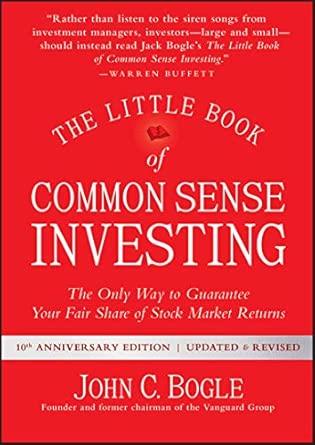 | Best for a Long-Term Indexing Philosophy | Format: Not specified | Primary topic: Common-sense investing | Investment focus: Stock-market returns | VIEW LATEST PRICE | See Our Full Breakdown |
| Index Fund Investing for Beginners: A Six-Level Guide to VOO, VTI, and the 3-Fund Portfolio |  | Best for a Step-by-Step Portfolio Starting Point | Format: Not specified | Series: The Everyday Investor’s Library | Book number: 2 | VIEW LATEST PRICE | See Our Full Breakdown |
| index funds for retirement account | Format |
|---|---|
| Index Fund Investing: The Warr | Not specified |
| The Patient Investor’s Guide t | Guide |
| Index Investing For Dummies | Not specified |
| HSA Investing for Beginners: 2 | Not specified |
| Index Funds: Your Guide to Eff | Not specified |
| Index Fund Investing for Begin | Not specified |
| Index Funds & ETFs: What They | Not specified |
| Index Fund and ETF Investing f | Not specified |
| High-Dividend Stocks vs. Index | Not specified |
| All About Index Funds: The Eas | — |
| Index Funds vs. ETFs vs. Mutua | Not specified |
| Index Fund Investing in Your H | Not specified |
| Investing in Index Funds: Foun | Book |
| The Little Book of Common Sens | Not specified |
| Index Fund Investing for Begin | Not specified |
More Details on Our Top Picks
Index Fund Investing: The Warren Buffett Way
This guide earns its place for retirement savers who want a clear focus on low-cost S&P 500 index funds rather than a broad tour of investing topics. Its long-term wealth-building emphasis fits investors who can stay invested through market swings and prefer a simple, stock-focused approach in a retirement account. Compared with The Patient Investor’s Guide to Index Funds, which foregrounds automatic investing, this book’s distinguishing angle is its named S&P 500 focus. That focus can make the core idea easier to grasp, but it may leave readers wanting more discussion of international stocks, bonds, asset allocation, or account-specific choices. The supplied listing gives no chapter outline or author details, so I would not treat it as a complete retirement plan. It makes most sense as a focused starting point, not a substitute for comparing diversified portfolio options.
Pros:- Specifically focuses on low-cost S&P 500 index funds
- Emphasizes long-term wealth building rather than short-term trading
- Offers a defined investing angle compared with broadly titled index fund guides
Cons:- The available description does not establish coverage of diversified portfolios beyond the S&P 500
- No chapter details or author information are provided
- The listing does not confirm guidance tailored to retirement account rules
Best for: Retirement savers who want an introductory, S&P 500-centered approach to long-term investing.
Not ideal for: Readers seeking a detailed retirement portfolio plan covering bonds, international funds, and account-specific allocation choices.
- Title:Index Fund Investing: The Warren Buffett Way
- ASIN:B0H46S6F1K
- Format:Not specified
- Primary subject:Index fund investing
- Fund focus:Low-cost S&P 500 index funds
- Approach:Long-term investing
Our verdict“Choose this guide if you want an S&P 500-centered introduction, but pair it with broader planning resources if you need a diversified retirement strategy.”
The Patient Investor’s Guide to Index Funds: A No-Nonsense Guide to Building Wealth Automatically
The clearest signal in this title is its emphasis on building wealth automatically, making it a plausible fit for retirement savers who want investing routines to require less ongoing decision-making. That angle separates it from Index Fund Investing: The Warren Buffett Way, whose supplied description centers on low-cost S&P 500 funds rather than an automatic approach. For a workplace plan or recurring IRA contributions, the habit-focused framing may be more relevant than choosing a particular market index. The limitation is that the listing supplies no detail about its strategies, examples, or treatment of retirement accounts, so I cannot tell how actionable the guidance is. I would rank it for its stated investing habit, not assume it explains fund selection, tax rules, or portfolio construction in depth.
Pros:- Explicitly emphasizes an automatic investing approach
- Focuses on index fund investing rather than general wealth topics
- The patient-investor framing suits a long-term retirement mindset
Cons:- The listing provides no details about chapters, examples, or specific strategies
- Retirement account guidance is not confirmed
- The available description does not identify funds, allocation methods, or account types covered
Best for: New retirement savers who want to build a regular, automated investing routine and are comfortable checking the book’s contents before relying on it.
Not ideal for: Readers who need confirmed guidance on fund selection, retirement account rules, or a specific portfolio allocation.
- Title:The Patient Investor’s Guide to Index Funds: A No-Nonsense Guide to Building Wealth Automatically
- ASIN:B0HMNYWWXZ
- Format:Guide
- Primary subject:Index fund investing
- Stated approach:Automatic investing
- Stated objective:Building wealth
Our verdict“Pick this if automating contributions is your main goal, but verify the contents if you need concrete retirement portfolio instructions.”
Index Investing For Dummies
Among these five options, Index Investing For Dummies has the most general title, which may suit readers who want an introduction to index investing before choosing a retirement-account strategy. Unlike HSA Investing for Beginners: 2026 Edition, it is not presented as account-specific; that broad scope could help readers who are still learning the basic subject, but the supplied data does not confirm what topics the book actually covers. There is no description of its examples, level of detail, or treatment of retirement planning, so I would not infer a particular portfolio method from the title alone. This is a reasonable candidate for a general orientation, but it is a less targeted choice than Index Funds: Your Guide to Effortless Investing for Retirement for someone whose immediate question is how index funds fit a retirement goal.
Pros:- Directly addresses index investing
- Broad title may suit readers who want an introductory overview
- Does not signal a narrow focus on one account type or fund category
Cons:- No description of the book’s contents or teaching approach is provided
- Retirement account coverage is not confirmed
- The available data does not identify examples, portfolio guidance, or edition details
Best for: Readers who want a general introduction to index investing before settling on a retirement-account approach.
Not ideal for: Investors seeking confirmed HSA strategies, detailed retirement allocation guidance, or a clearly described step-by-step plan.
- Title:Index Investing For Dummies
- ASIN:047029406X
- Format:Not specified
- Primary subject:Index investing
- Account focus:Not specified
- Contents description:Not provided
Our verdict“Consider it for a general introduction, but choose a more specifically described guide if you need retirement-account instructions.”
HSA Investing for Beginners: 2026 Edition
This is the most account-specific option in the batch: it focuses on investing through a Health Savings Account and describes tax-saving strategies alongside long-term wealth building. That makes it a different kind of retirement resource from Index Funds: Your Guide to Effortless Investing for Retirement, which is framed around retirement investing more broadly. For a saver eligible to contribute to an HSA, an account-focused guide may help connect investing choices with the account’s tax role. Its scope is also its limit: it is not presented as a guide to IRAs, workplace plans, or index funds generally. The listing offers no detailed contents or author information, so I would check whether its advice matches your HSA situation and needs before treating it as a practical playbook.
Pros:- Specifically addresses investing through an HSA
- Targets beginners rather than assuming prior investing knowledge
- Connects tax-saving strategies with long-term investing goals
Cons:- The scope is limited to HSA investing rather than retirement accounts generally
- No detailed contents or author information are provided
- The listing does not specify which index fund strategies or HSA rules are covered
Best for: HSA-eligible beginners who want to learn how investing within an HSA may support long-term savings.
Not ideal for: Retirement savers without an HSA, or readers looking for a general guide to index funds across IRAs and workplace plans.
- Title:HSA Investing for Beginners: 2026 Edition
- ASIN:B0H4S9BN8R
- Format:Not specified
- Edition:2026 Edition
- Primary subject:Investing through a Health Savings Account
- Intended audience:Beginners
- Stated topics:Tax-saving strategies and long-term investing
Our verdict“Choose this if you are an HSA-eligible beginner focused on investing that account; skip it for guidance across retirement accounts.”
Index Funds: Your Guide to Effortless Investing for Retirement
Of these five titles, this one makes the most direct promise to readers searching for index funds for retirement: it explicitly pairs index fund investing with retirement. That positioning gives it a clearer audience than Index Investing For Dummies, whose listing is general and supplies no retirement-specific description. Still, the product data includes no further details, so the title alone cannot establish whether the book covers account types, asset allocation, risk, or withdrawal planning. I would treat it as the most on-topic starting point in this group, not as proof of a complete retirement guide. Its broad retirement framing may appeal to savers who want the subject tied to a long-term goal, while readers needing HSA-specific information should look instead at HSA Investing for Beginners: 2026 Edition.
Pros:- Explicitly connects index funds with retirement investing
- Has a more retirement-specific title than the general index investing option
- Its stated subject aligns closely with long-term retirement saving
Cons:- No detailed description of the book’s contents is provided
- Account-specific guidance and portfolio methods are not confirmed
- The listing does not provide author or format details
Best for: Retirement savers who want a guide explicitly framed around using index funds for retirement and are willing to verify the detailed contents.
Not ideal for: Readers who need confirmed instructions for a particular account type, fund allocation, or retirement withdrawal strategy.
- Title:Index Funds: Your Guide to Effortless Investing for Retirement
- ASIN:1980535191
- Format:Not specified
- Primary subject:Index funds
- Stated goal:Investing for retirement
- Contents description:Not provided
Our verdict“Start here if retirement is your main focus, but confirm the book covers the account and portfolio questions you need answered.”
Index Fund Investing for Beginners: Simple Strategies for Building Wealth with Passive Income
This guide is a fit for retirement savers who want an introductory route into index funds through familiar ETFs, with VOO and VTI named as examples. Its retirement-planning focus makes it more directly relevant to long-term account decisions than High-Dividend Stocks vs. Index Funds, which centers on comparing dividend strategies with index investing. The description also connects passive income with building wealth, though it does not explain how the book treats distributions, diversification, or account-specific tax considerations. That lack of detail is the main tradeoff: readers can identify the subject matter, but cannot judge how much practical guidance the book offers. I’d choose it as a starting point for learning the vocabulary, not as a detailed retirement portfolio manual.
Pros:- Explicitly aimed at beginner investors
- Names VOO and VTI as ETF examples
- Includes retirement planning among its topics
- Connects index investing with passive income
Cons:- No format or further content details are provided
- The description does not specify retirement-account tax or contribution guidance
- The depth of its portfolio and ETF explanations is unclear
Best for: New retirement investors seeking a basic introduction to index investing and ETF examples such as VOO and VTI
Not ideal for: Readers who need detailed portfolio instructions, tax guidance for retirement accounts, or documented information about the book’s format and contents
- Format:Not specified
- Topics:Index fund investing, ETFs, passive income, retirement planning
- ETF examples:VOO and VTI
- Intended audience:Beginner investors
- Investment approach:Passive investing
- Planning focus:Retirement planning
Our verdict“Choose this for a first introduction to VOO, VTI, and retirement-focused index investing, but not for detailed account or portfolio guidance.”
Index Funds & ETFs: What They Are and How to Make Them Work for You
This book’s clearest role is explaining the two investment types named in its title: index funds and ETFs. For a retirement-account buyer still sorting out what these options are and how to use them, that broad orientation may be more useful than All About Index Funds: The Easy Way to Get Started, whose description only promises an introduction to index funds. The available information does not say whether the book explains portfolio construction, fund selection, or tax treatment inside retirement accounts, so I would not treat its title as proof of detailed account guidance. That uncertainty limits its appeal for readers ready to choose holdings. I’d place it earlier in the learning process, where clarifying the basic categories matters more than following a specific retirement strategy.
Pros:- Covers both index funds and ETFs
- The title promises an explanation of what the investments are
- Addresses how readers might use the investment types
- Can serve as a broad starting point before selecting funds
Cons:- No further content details are provided
- Retirement-account treatment is not specified
- Format and depth of coverage are not supplied
Best for: Retirement savers who are new to investing and want an introduction that covers both index funds and ETFs
Not ideal for: Investors seeking a step-by-step retirement portfolio, specific fund recommendations, or confirmed coverage of account taxes
- Product type:Book
- ASIN:1545291853
- Topics:Index funds and exchange-traded funds
- Stated focus:What index funds and ETFs are
- Stated application:How to use index funds and ETFs
- Format:Not specified
Our verdict“Pick this if you need a general introduction to index funds and ETFs before making retirement-account choices.”
Index Fund and ETF Investing for Beginners: How to Build Long-Term Wealth with Simple, Low-Cost Portfolios
Among these five, this guide offers the clearest portfolio-building promise: simple, low-cost portfolios for long-term investing. That makes it more actionable in concept than Index Funds & ETFs: What They Are and How to Make Them Work for You, which is described as an explanation of the investment types rather than a portfolio approach. Its beginner audience and stated entry point of $100 may also appeal to readers who want to start small, although the description does not explain whether that figure relates to a particular account or fund. The drawback is the absence of detail about the book’s length, holdings, or retirement-account coverage. I’d favor it for learning a basic investing framework, while readers who need tax-aware account instructions should look for clearer evidence of that coverage.
Pros:- Designed for beginner investors
- Emphasizes simple, low-cost portfolios
- Focuses on long-term wealth building
- Mentions starting with as little as $100
Cons:- No book length or detailed contents are provided
- The description does not confirm coverage of retirement accounts
- Specific portfolio holdings and allocation guidance are not listed
Best for: Beginning retirement savers who want a straightforward, low-cost portfolio framework and are starting with a modest amount
Not ideal for: Readers who need detailed retirement-account tax guidance, specific fund allocations, or confirmed information about the book’s contents
- Topic:Index fund and ETF investing
- Audience:Beginners
- Approach:Simple, low-cost portfolios
- Starting amount mentioned:$100
- Investment horizon:Long-term wealth building
- Format:Not specified
Our verdict“Choose this for a beginner-level, low-cost portfolio framework, provided you do not need confirmed retirement-account or tax instructions.”
High-Dividend Stocks vs. Index Funds: What 100 Years of Data Reveal About Dividends
This is the most specialized choice in the group: rather than introducing index investing broadly, it compares high-dividend stocks with index funds through mathematical analysis and a century of historical data. That focus can help retirement savers question whether dividend income should drive their investment choices, a different decision from learning the ETF basics in Index Fund Investing for Beginners: Simple Strategies for Building Wealth with Passive Income. Its evidence-based framing is appealing, but the supplied description does not summarize the findings or say whether it addresses taxes, account types, or how historical results apply to a personal retirement portfolio. I’d use it to examine the dividend-versus-index question, not as a general guide to building a retirement account. Readers who want beginner instructions should choose a broader introductory title.
Pros:- Directly compares high-dividend stocks and index funds
- Uses mathematical analysis according to the description
- Draws on a century of historical data
- Targets a specific decision relevant to income-focused investors
Cons:- No findings or conclusions are included in the product details
- Retirement-account and tax treatment are not specified
- Its narrow dividend focus may not cover broader portfolio construction
Best for: Retirement investors deciding whether to prioritize high-dividend stocks or broad index funds
Not ideal for: New investors looking for basic explanations, portfolio setup steps, or confirmed retirement-account tax guidance
- Topics:High-dividend stocks and index funds
- Comparison focus:Dividends versus index fund investing
- Method described:Mathematical analysis
- Historical scope:100 years of data
- Retirement-account coverage:Not specified
- Format:Not specified
Our verdict“Choose this to examine dividend stocks against index funds, not as your sole guide to setting up a retirement portfolio.”
All About Index Funds: The Easy Way to Get Started
This title makes the most straightforward promise in the group: an easy introduction to getting started with index funds. That narrow, approachable scope may suit someone opening a retirement account who first needs to understand the basic idea before comparing funds. It is less explicitly portfolio-focused than Index Fund and ETF Investing for Beginners: How to Build Long-Term Wealth with Simple, Low-Cost Portfolios, which describes a low-cost portfolio approach and mentions a starting amount. Here, the available details provide no chapter outline, account guidance, or investment examples, so I can’t judge how far the introduction goes. Its place is as a basic entry point, not a substitute for resources that explain allocations or retirement-account rules. Readers seeking more specific ETF or tax guidance may prefer a better-documented option.
Pros:- Aimed at beginners
- Focuses on getting started with index funds
- The title signals an introductory approach
- Part of the All About Series
Cons:- No detailed description or contents are provided
- Specific guidance for retirement accounts is not confirmed
- ETF coverage and portfolio examples are not specified
Best for: First-time retirement investors who want a basic introduction to index funds before choosing investments
Not ideal for: Readers who want clear ETF comparisons, retirement-account tax guidance, or a documented portfolio-building plan
- Series:All About Series
- Topic:Index funds
- Intended audience:Beginners
- Stated focus:Getting started with index funds
- Product type:Book
- ASIN:0071484922
Our verdict“Pick this as a basic first read on index funds, but choose a more detailed guide if you need retirement-account or portfolio instructions.”
Index Funds vs. ETFs vs. Mutual Funds: A Beginner’s Guide to Investing
This guide’s clearest retirement-account use is helping new investors distinguish index funds, ETFs, and mutual funds before choosing what to hold. That comparison can help readers understand that a fund’s structure and its investment strategy are separate questions, a useful starting point when comparing workplace plans with IRAs. Unlike Index Fund Investing for Beginners: A Six-Level Guide to VOO, VTI, and the 3-Fund Portfolio, which names specific strategies and funds in its description, this title signals a broader comparison across fund types. Its stated emphasis on simple, long-term investing suits readers who want a basic framework rather than active trading ideas. The tradeoff is limited available detail: the product data does not confirm coverage of retirement-account rules, asset allocation, taxes, or withdrawal planning. I would treat it as an introductory primer, not a complete retirement plan.
Pros:- Compares three common investment fund types in one beginner-focused guide.
- Emphasizes simple, long-term investing rather than short-term trading.
- Can help readers frame fund selection questions for retirement accounts.
Cons:- Available information does not confirm coverage of retirement-account tax rules or withdrawal strategies.
- No details are provided about the book’s format, depth, or specific examples.
Best for: New retirement savers who want to understand the differences among index funds, ETFs, and mutual funds before selecting investments for an IRA or workplace plan.
Not ideal for: Readers who already understand fund structures or need detailed guidance on account-specific rules, portfolio allocation, or retirement withdrawals.
- Format:Not specified
- Topics:Index funds, ETFs, and mutual funds
- Audience:Beginners
- Approach:Simple investing strategies
- Time horizon:Long-term wealth building
- Retirement-account coverage:Not specified
Our verdict“Choose this as a starting point if you need to compare fund types, but pair it with retirement-specific guidance before setting an account strategy.”
Index Fund Investing in Your Hoodie: A Beginner’s Guide to Passive Investing and Growing Wealth the Lazy Way
The relaxed framing makes this title a plausible entry point for readers who find conventional investing books intimidating. Its stated subject is passive investing through index funds, with wealth building presented as a low-maintenance approach—an appealing contrast to Index Funds vs. ETFs vs. Mutual Funds: A Beginner’s Guide to Investing, which explicitly compares several fund structures. For a retirement saver, the central appeal is the focus on a repeatable long-term approach rather than frequent trading. The product information also identifies it as part of the Comfy Trading & Investing Series. That does not establish how much practical retirement-account guidance it offers, though: account rules, fund selection criteria, and portfolio examples are not described. I would choose it for an accessible introduction, not as the sole source for building an IRA or workplace-plan portfolio.
Pros:- Centers on passive investing with index funds.
- Presents wealth building as a low-maintenance process that may suit long-term savers.
- Part of a named investing series, giving readers a clear beginner-oriented framing.
Cons:- The available description does not identify specific retirement-account topics or strategies.
- No format, portfolio examples, or level of detail is provided.
Best for: First-time investors who prefer an informal introduction to passive index investing and want a low-maintenance mindset for long-term retirement saving.
Not ideal for: Readers seeking verified step-by-step portfolio instructions, detailed comparisons of account types, or specific guidance on retirement taxes and withdrawals.
- Format:Not specified
- Series:Comfy Trading & Investing Series
- Audience:Beginners
- Primary topic:Index fund investing
- Investing approach:Passive investing
- Stated aim:Growing wealth with a low-maintenance approach
Our verdict“Pick this for an approachable passive-investing introduction, but look elsewhere for confirmed retirement-account instructions and portfolio specifics.”
Investing in Index Funds: Foundations of Index-Based Investing
Its foundations-first focus gives this book a distinct role for readers who want to start with index-based investing concepts rather than a named portfolio recipe. That makes it a different entry point from Index Fund Investing for Beginners: A Six-Level Guide to VOO, VTI, and the 3-Fund Portfolio, whose description points directly to particular funds and a portfolio structure. For retirement accounts, foundational knowledge can help a saver ask better questions about diversification and long-term holdings, but the listing does not confirm that those subjects are covered in detail. Nor does it describe the book’s examples, account guidance, or intended experience level. The known Finance Book 7 series placement offers a classification, not evidence of advanced coverage. I would shortlist it for a reader who values fundamentals, while treating the lack of detail as a real limitation.
Pros:- Explicitly focuses on the foundations of index-based investing.
- Book format is identified in the supplied product data.
- May suit readers who prefer concepts before selecting a specific portfolio.
Cons:- No detailed description confirms coverage of retirement accounts or portfolio construction.
- The available data provides no examples, format specifics, or level-of-detail guidance.
Best for: Readers who want an introductory grounding in index-based investing before choosing funds for an IRA or employer-sponsored retirement plan.
Not ideal for: Investors who need confirmed guidance on VOO, VTI, three-fund portfolios, retirement-account rules, or a clearly documented step-by-step curriculum.
- Format:Book
- Series:Finance Book 7
- Primary topic:Index-based investing
- Stated focus:Foundations
- Retirement-account coverage:Not specified
- Portfolio examples:Not specified
Our verdict“Consider this for a fundamentals-led introduction, but choose a more specifically documented guide if you need retirement portfolio instructions.”
The Little Book of Common Sense Investing: The Only Way to Guarantee Your Fair Share of Stock Market Returns
A broad, common-sense investing philosophy is the draw here: the title centers on seeking a fair share of stock-market returns, making it relevant to retirement savers interested in a patient, index-oriented approach. Compared with Index Fund Investing for Beginners: A Six-Level Guide to VOO, VTI, and the 3-Fund Portfolio, this listing does not advertise named funds or a stepwise portfolio-building framework. That distinction favors readers looking for investing principles over a checklist for selecting holdings in an IRA. The tradeoff is that the supplied description gives no further detail about account-specific advice, implementation, or retirement withdrawals. The subtitle’s promise should also be read as a statement of philosophy, not a guarantee that market returns or retirement outcomes are assured. I would choose it for perspective, not as a substitute for plan-specific decisions.
Pros:- Clearly emphasizes common-sense investing and a fair share of stock-market returns.
- Its long-term framing aligns with patient retirement investing.
- Offers a philosophy-led contrast to guides focused on named funds and portfolio recipes.
Cons:- The supplied product data does not establish coverage of IRA or workplace-plan rules.
- No details are provided about implementation steps, portfolio examples, or withdrawal planning.
Best for: Long-term retirement savers who want a principles-led case for index-oriented investing rather than a fund-by-fund setup guide.
Not ideal for: Readers who need current, account-specific instructions, a named fund allocation, or a step-by-step retirement portfolio plan.
- Format:Not specified
- Primary topic:Common-sense investing
- Investment focus:Stock-market returns
- Stated approach:Long-term investing
- Index-fund focus:Indicated by the title
- Retirement-account coverage:Not specified
Our verdict“Choose this for a long-term indexing perspective, not for detailed instructions on implementing a retirement-account portfolio.”
Index Fund Investing for Beginners: A Six-Level Guide to VOO, VTI, and the 3-Fund Portfolio
Specific fund names and a 3-fund portfolio make this the most concrete portfolio-oriented choice in this group. Its beginner focus and six-level framing suggest an organized learning path, while the named VOO and VTI references give readers recognizable examples to investigate for a retirement account. That specificity sets it apart from Investing in Index Funds: Foundations of Index-Based Investing, whose listing offers a broader foundations focus without identifying particular funds or a portfolio structure. The tradeoff is that the available data does not explain the guide’s actual steps, format, or how it handles account selection, taxes, or risk. Named funds are examples, not automatic recommendations for every saver. I would shortlist it for a beginner who wants to learn about portfolio building, while checking whether its full contents match their account and planning needs.
Pros:- Aimed directly at beginner investors.
- Names VOO and VTI, giving readers specific funds to research.
- Covers the three-fund portfolio concept.
- Uses a six-level guide framing that signals a staged learning approach.
Cons:- The product data does not confirm the details or depth of the six levels.
- No information establishes coverage of retirement-account rules, taxes, or withdrawal strategy.
- Format is not specified.
Best for: Beginning retirement investors who want an organized introduction to VOO, VTI, and the three-fund portfolio concept before choosing holdings.
Not ideal for: Readers who need confirmed IRA or workplace-plan tax guidance, detailed withdrawal planning, or advice tailored to a specific retirement date and risk tolerance.
- Format:Not specified
- Series:The Everyday Investor’s Library
- Book number:2
- Audience:Beginners
- Guide structure:Six-level guide
- Named funds:VOO and VTI
- Portfolio topic:3-fund portfolio
Our verdict“Choose this if you want a beginner-oriented path into named funds and a three-fund portfolio, but verify that its full guidance fits your retirement account.”

How We Picked
I ranked these books by how directly their stated focus can help a reader make retirement investing decisions: understanding index investing, choosing and combining funds, and applying a long-term approach. I also weighed accessibility for beginners, the usefulness of the book’s stated scope, and how well each title appears suited to a distinct reader need. Since the product list provides titles rather than verified contents, I avoid claims about specific chapters, performance results, or advice that cannot be confirmed from the title.
The ranking favors books with a strong fit for retirement savers who need a lasting investing framework, followed by accessible introductions and practical portfolio-focused guides. Specialized books remain valuable for the right reader, but they rank lower for a general retirement-account audience when their focus is narrower. A book can explain investment concepts; it cannot tell you which funds your employer plan offers or replace checking current account rules and fund documents.
| index funds for retirement account | Format |
|---|---|
| Index Fund Investing: The Warr | Not specified |
| The Patient Investor’s Guide t | Guide |
| Index Investing For Dummies | Not specified |
| HSA Investing for Beginners: 2 | Not specified |
| Index Funds: Your Guide to Eff | Not specified |
| Index Fund Investing for Begin | Not specified |
| Index Funds & ETFs: What They | Not specified |
| Index Fund and ETF Investing f | Not specified |
| High-Dividend Stocks vs. Index | Not specified |
| All About Index Funds: The Eas | — |
| Index Funds vs. ETFs vs. Mutua | Not specified |
| Index Fund Investing in Your H | Not specified |
| Investing in Index Funds: Foun | Book |
| The Little Book of Common Sens | Not specified |
| Index Fund Investing for Begin | Not specified |
Factors to Consider When Choosing Index Funds For Retirement Accounts
Choosing a book is only one part of learning how to invest through a retirement account. I would match the book’s scope to the decision you actually need to make, then verify fund details against your plan and account provider.
Start With the Account, Not the Ticker
A fund name in a book may not appear in your 401(k), 403(b), or other workplace plan. Employer plans typically limit your choices to a menu, while an IRA may give you access to a broader selection. Before settling on a specific ticker, identify the account you will use and review the funds available there. A common mistake is treating a popular fund as the only way to get broad market exposure. If your plan offers a comparable index option, compare its benchmark, fees, and structure instead of focusing only on the name. Books that explain general principles can help, but your plan documents decide what you can actually buy.
Choose a Reading Level That Matches Your Next Decision
A beginner introduction is useful when terms such as diversification, expense ratio, and asset allocation are still unfamiliar. If you already understand those basics, another broad primer may repeat material without helping you build a portfolio. A focused guide can be a better fit when you need to compare index funds with ETFs, understand dividends, or think through a three-fund approach. Match the book to the question you need answered now, not to the most advanced-sounding title. Readers often buy several introductory books when a single focused resource would address the gap. Keep in mind that a beginner-friendly explanation is not the same as individualized financial advice.
Look Beyond the Expense Ratio
Fees matter because recurring costs reduce the portion of investment returns that remains in your account. Yet comparing expense ratios alone can miss other differences, including tracking error, trading costs, and plan-level administration fees. In a workplace account, the plan may charge fees outside the fund itself, so check both layers. A slightly lower fund expense ratio may not settle the decision if the option tracks a different index or carries other costs. Avoid assuming that a book’s example fund is automatically the cheapest choice available to you. Use current fund documents and your plan’s fee disclosures for the final comparison.
Decide How Much Portfolio Maintenance You Want
A single target-date index fund can combine stocks and bonds and adjust its allocation over time, while a multi-fund portfolio gives you more control. That control comes with a job: you need to choose an allocation, monitor it, and decide when to rebalance. Rebalancing can help keep risk near your intended level, but frequent changes based on market headlines can work against a long-term plan. A simple portfolio is not automatically a poor choice if it fits your goals and you can stick with it. On the other hand, a hands-off option may not suit someone who wants to manage asset allocation directly. Choose the maintenance level you are likely to sustain through both rising and falling markets.
Treat Tax Account Rules as Part of the Decision
Retirement accounts have different tax treatment and withdrawal rules, so the same investment choice can sit within different account frameworks. Traditional and Roth accounts, workplace plans, and HSAs do not all work alike. An HSA-focused book can help readers investigating health savings accounts, but an HSA is not interchangeable with a standard retirement account and has its own eligibility and qualified-expense rules. Check current IRS guidance and your plan provider’s terms before making account decisions. Do not choose an account solely because a book presents it as tax-efficient; access, eligibility, and withdrawal needs matter too. When rules are unclear, a qualified tax or financial professional can help apply them to your situation.
Use Books for Principles and Fund Documents for Current Facts
Books can help explain diversification, long-term discipline, and the tradeoffs between investment structures. Fund details, plan menus, and tax rules can change, so confirm current information before acting on an example. Check the fund’s benchmark, holdings, fees, and prospectus rather than relying on a ticker mentioned in a guide. A book centered on dividends may help you understand that investing approach, but dividend yield alone does not establish that a fund is suitable for retirement. The common mistake is treating an educational example as a personal recommendation. Combine a sound framework with up-to-date documents tied to your own account.
Frequently Asked Questions
Should I buy a book that recommends a specific ticker if my retirement plan does not offer it?
Not necessarily. A ticker can serve as an example of a broader investment approach, but a workplace plan may offer different funds that track similar markets. Compare the available options by benchmark, diversification, fees, and plan charges rather than trying to force a particular ticker into your account. If you invest through an IRA, the fund menu may be wider, but you should still check current fund documents. The useful lesson is often the underlying portfolio idea, not the exact symbol.
Is a target-date index fund better than building a three-fund portfolio myself?
Neither choice is automatically better; the right fit depends on how much control and upkeep you want. A target-date fund can simplify allocation and rebalancing, while a three-fund portfolio lets you set the mix yourself. That flexibility means you must monitor and rebalance the portfolio, and avoid changing the plan in response to short-term market moves. Compare the target-date fund’s allocation and fees with the funds available for a self-built portfolio. Pick the structure you can maintain consistently, not just the one that sounds more sophisticated.
Can I use an HSA investing guide to make decisions about my 401(k) or IRA?
You may find general investing ideas that apply across accounts, such as diversification and long-term discipline, but HSA rules are distinct. An HSA has eligibility requirements and rules for qualified medical expenses, while 401(k)s and IRAs follow different contribution and withdrawal frameworks. A guide focused on HSAs may not address your workplace plan’s fund menu or IRA choices in enough detail. Use it for HSA-specific questions and rely on account-specific sources for other retirement accounts. Check current official guidance before making tax-related decisions.
Do I need a book comparing index funds, ETFs, and mutual funds before investing?
It can help if you are unsure how those structures differ, but you do not need to master every distinction before starting a retirement plan. First identify the options your account actually offers and compare their investment goals, costs, and trading rules. In many workplace plans, the available choices may be mutual funds, while an IRA may offer ETFs as well. A comparison guide is most useful when the account gives you a real choice between structures. Do not let terminology delay a basic review of your plan’s fees and diversification.
What should I check before following a book’s suggested portfolio?
Check whether its assumptions match your account, available funds, time horizon, and comfort with investment risk. Confirm each fund’s benchmark, holdings, fees, and availability using current fund and plan documents. Also check whether the portfolio includes an allocation to bonds that fits your needs and whether it calls for rebalancing. A sample portfolio is educational, not a personalized recommendation, and the book may not reflect later changes in fund offerings or rules. If the stakes feel beyond your knowledge, seek advice from a qualified professional who can review your full situation.
Conclusion
For a strong general foundation, I recommend The Little Book of Common Sense Investing as the best overall pick, while readers seeking a more direct starting point can choose Index Investing For Dummies as the best beginner option. My best value choice for a practical, portfolio-centered introduction is Index Fund Investing for Beginners: A Six-Level Guide to VOO, VTI, and the 3-Fund Portfolio, though its named funds may not match your plan’s menu. For a more in-depth investing philosophy, Investing in Index Funds: Foundations of Index-Based Investing is the best premium-style choice among these titles based on its stated focus. Readers with a specific question should choose the matching guide: the HSA book for HSA investing, the funds-versus-ETFs book for investment structures, or the dividend comparison for dividend-focused questions. Whichever book you pick, use it to build your framework, then verify current choices and rules against your own retirement account.
Halloween Picks

Thuodo 8 FT Tall Halloween Inflatable Three-Headed Dragon with LEDs

Haunted Hill Farm 2-Ft. Zombie Raccoon Halloween Animatronic

Pumpkin Halloween Fog Machine with 12-Color LED Lights, Bluetooth Speaker, and Remote
As an affiliate, we earn on qualifying purchases.