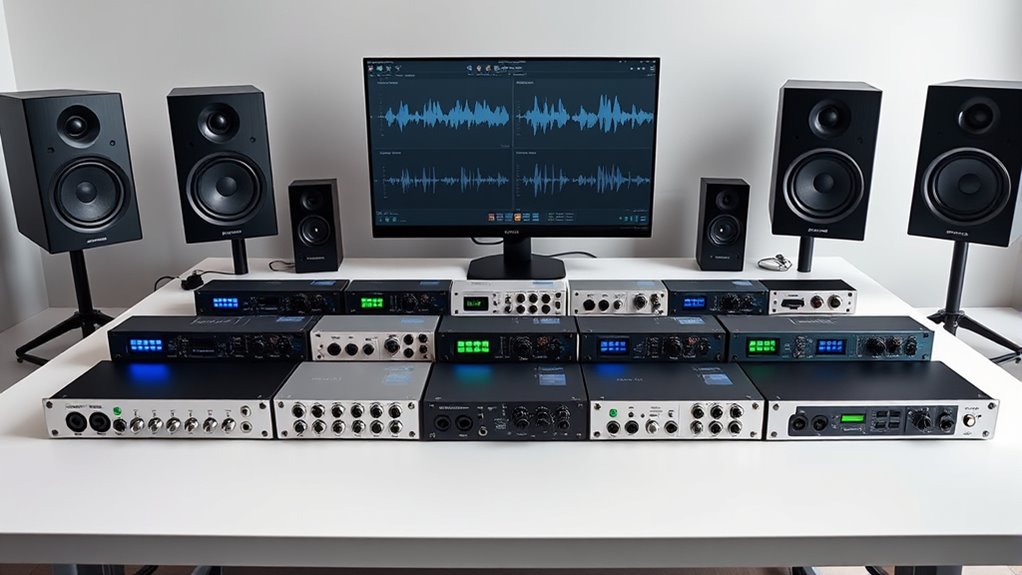

Finding the right USB audio interface can significantly impact your recording quality and workflow. The Focusrite Scarlett 2i2 4th Gen stands out as the overall best choice for its reliable performance and user-friendly design. For those needing a budget-friendly option, the M-AUDIO M-Track Solo offers solid basics without breaking the bank. Meanwhile, the Focusrite Scarlett Solo 4th Gen excels for solo artists and podcasters seeking simplicity and quality. The main tradeoffs in this category often revolve around balancing features versus ease of use and price. Keep reading for a detailed breakdown of what makes each of these options unique and how to choose the best one for your needs.

Get smart everyday buys delivered free with Prime
- Fast, free delivery on millions of items
- Prime Video, Amazon Music and more included
- Member-only deals all year
Key Takeaways
- Top picks balance audio quality with ease of use, making them suitable for both beginners and experienced users.
- Many interfaces now focus on versatile connectivity options like USB-C, ensuring compatibility with modern devices.
- Tradeoffs often exist between affordability and advanced features such as multiple inputs or high-resolution recording.
- Build quality and low latency performance are critical for professional-sounding recordings and live monitoring.
- Choosing the right interface depends heavily on your specific use case—whether streaming, podcasting, or music production.
| M-AUDIO M-Track Solo USB Audio Interface |  | Best for Portable Podcasting and Streaming | Audio Resolution: 48kHz | Inputs: 1 combo XLR/Line, 1 instrument | Outputs: Headphone, RCA stereo | VIEW ON AMAZON | See Our Full Breakdown |
| USB Audio Interface with 48V Phantom Power, XLR/TRS Inputs, USB-C Recording Interface with Direct Monitor & Echo Control |  | Best for Musicians Requiring Real-Time Effects | Sample Rate: 48kHz | Inputs: 2 XLR/TRS combo, 1 instrument | Outputs: Headphone, line out | VIEW ON AMAZON | See Our Full Breakdown |
| Focusrite Scarlett 2i2 4th Gen USB-C Audio Interface |  | Best for Professional Music Production | Sample Rate: 120dB dynamic range, 24-bit/192kHz | Inputs: 2 combo mic/line/instrument | Outputs: 2 balanced line | VIEW ON AMAZON | See Our Full Breakdown |
| 2×2 USB-C Audio Interface for PC/Mac Recording |  | Best for High-Resolution Home Studio Beginners | Sample Rate: 192kHz | Inputs: 2 XLR/Trs combo | Outputs: 2 TRS/TS | VIEW ON AMAZON | See Our Full Breakdown |
| USB Audio Interface for PC, 2×2 Recording Interface with 48V Phantom Power, 24Bit/192kHz Studio Sound, XLR/TRS Inputs, Low Latency Monitoring |  | Best for Home Studios and Content Creators | Resolution: 24Bit/192kHz | Inputs: 2 combo XLR/1/4″ | Outputs: Line and headphone | VIEW ON AMAZON | See Our Full Breakdown |
| XTUGA USB Audio Interface for PC, 2-Channel Recording Studio Audio Interface with XLR and 3.5mm Microphone Jack, Ultra-low Latency Plug & Play |  | Best for Beginners and Mobile Use | Compatible Devices: Personal Computer | Supported Software: Audacity, Ableton Live, FL Studio, Pro Tools | Connectivity Technology: USB | VIEW ON AMAZON | See Our Full Breakdown |
| Focusrite Scarlett Solo 4th Gen USB-C Audio Interface |  | Best for Solo Artists and Home Recording | Connectivity: USB-C | Sample Range: 120dB | Included Software: Pro Tools Intro+, Ableton Live Lite, Cubase LE | VIEW ON AMAZON | See Our Full Breakdown |
| Focusrite Scarlett Solo 3rd Gen USB-C Audio Interface |  | Best for Beginner Home Studios and Singer-Songwriters | Connectivity: USB-C | Sample Rate: 24-bit/192kHz | Inputs: 1 XLR microphone, 1 instrument | VIEW ON AMAZON | See Our Full Breakdown |
| MAONO P2 Hybrid USB Audio Interface Dual XLR for PC, Phone, iPad, Guitar |  | Best for Versatile Multi-Device Streaming and Podcasting | Compatible Devices: Guitar, Headphone, Laptop, Microphone, Smartphone | Supported Software: Ableton Live, Studio One, Logic Pro, Cubase, GarageBand, YouTube, TikTok | Connectivity Technology: USB | VIEW ON AMAZON | See Our Full Breakdown |
| M-AUDIO M-Track Duo USB Audio Interface |  | Best Overall for Versatile Entry-Level Recording | Audio Resolution: 48kHz | Inputs: 2 combo XLR/Line/Instrument with phantom power | Outputs: 1/4″ headphone and stereo 1/4″ outputs | VIEW ON AMAZON | See Our Full Breakdown |
| Jolgoo 2×2 USB Audio Interface, 24-Bit/192kHz Phantom Power Recording Card |  | Best for High-Fidelity Recording on a Budget | Audio Resolution: 24-bit/192kHz | Inputs: XLR/Line combo | Phantom Power: +48V | VIEW ON AMAZON | See Our Full Breakdown |
| M-AUDIO M-Track Duo HD USB-C Audio Interface |  | Best for Beginners and Versatile Content Creators | Inputs: 2 combo (mic, guitar, bass, line-level) | Outputs: Headphone output with independent level control | Audio Resolution: 24-bit/192kHz | VIEW ON AMAZON | See Our Full Breakdown |
| Audio Interface, 2X2 24-bit/192kHz for PC/Mac/iOS Recording, XLR/TRS Combo Input, Monitor Loopback, One-Cable Setup (Alloy Red) |  | Best for Mobile High-Quality Recording with Advanced Features | Resolution: 24-bit/192kHz | Inputs: 2 XLR/TRS combo | Phantom Power: 48V | VIEW ON AMAZON | See Our Full Breakdown |
| Mackie Onyx Artist 1-2 USB Audio Interface |  | Best for Portable Professional-Quality Recording | Inputs: 2 | Outputs: 2 | Resolution: 24-bit/192kHz | VIEW ON AMAZON | See Our Full Breakdown |
| usb audio interface | Inputs | Outputs | Connectivity | Phantom Power |
|---|---|---|---|---|
| M-AUDIO M-Track Solo USB Audio | 1 combo XLR/Line, 1 instrument | Headphone, RCA stereo | USB | Yes |
| USB Audio Interface with 48V P | 2 XLR/TRS combo, 1 instrument | Headphone, line out | — | Yes |
| Focusrite Scarlett 2i2 4th Gen | 2 combo mic/line/instrument | 2 balanced line | USB-C | — |
| 2×2 USB-C Audio Interface for | 2 XLR/Trs combo | 2 TRS/TS | USB-C | Yes |
| USB Audio Interface for PC | 2 combo XLR/1/4" | Line and headphone | — | Yes |
| XTUGA USB Audio Interface for | — | — | — | — |
| Focusrite Scarlett Solo 4th Ge | 1 XLR microphone, 1 instrument | 2 balanced outputs | USB-C | — |
| Focusrite Scarlett Solo 3rd Ge | 1 XLR microphone, 1 instrument | 2 balanced outputs | USB-C | — |
| MAONO P2 Hybrid USB Audio Inte | — | — | — | — |
| M-AUDIO M-Track Duo USB Audio | 2 combo XLR/Line/Instrument with phantom power | 1/4" headphone and stereo 1/4" outputs | — | — |
| Jolgoo 2×2 USB Audio Interface | XLR/Line combo | — | USB-C, USB-A | +48V |
| M-AUDIO M-Track Duo HD USB-C A | 2 combo (mic, guitar, bass, line-level) | Headphone output with independent level control | USB-C with direct/monitor switch | +48V |
| Audio Interface | 2 XLR/TRS combo | — | USB C | 48V |
| Mackie Onyx Artist 1-2 USB Aud | 2 | 2 | USB 2.0 | 48V |
More Details on Our Top Picks
M-AUDIO M-Track Solo USB Audio Interface
The M-AUDIO M-Track Solo stands out for offering a versatile all-in-one solution that combines simplicity with solid audio quality, making it ideal for content creators who need a portable setup. Unlike the Focusrite Scarlett 2i2 4th Gen, which offers more advanced features and higher dynamic range, the M-Track Solo prioritizes ease of use and affordability, though it sacrifices some professional-grade details. Its combination of a single combo XLR/Line input with phantom power and a dedicated instrument input covers most beginner and intermediate needs without overwhelming users. The inclusion of MPC Beats software adds value for those starting in production. However, it lacks the extensive software bundle of the Scarlett, and its monitoring options are more limited. This pick suits users seeking a straightforward, reliable interface for streaming, podcasting, or home recording, who prefer portability over advanced features.
Pros:- Compact and portable design for on-the-go recording
- Includes MPC Beats software for immediate production use
- Pristine 48kHz audio resolution ensures clear recordings
- Combo XLR/Line input with phantom power covers multiple sources
Cons:- Limited to one input channel, restricting multi-mic or instrument recordings
- Basic monitoring outputs lack advanced features like direct monitoring with multiple mixes
Best for: Beginners and streamers who need a compact, all-in-one device for casual recording and live streaming
Not ideal for: Professional producers or multi-instrument recording setups, as it has only one combo input and basic monitoring options
- Audio Resolution:48kHz
- Inputs:1 combo XLR/Line, 1 instrument
- Outputs:Headphone, RCA stereo
- Phantom Power:Yes
- Software Included:MPC Beats
- Connectivity:USB
Our verdict“This interface is best for beginners or streamers who prioritize portability and simplicity over extensive connectivity or advanced features.”
USB Audio Interface with 48V Phantom Power, XLR/TRS Inputs, USB-C Recording Interface with Direct Monitor & Echo Control
This USB interface offers a compelling balance of flexibility and real-time control, making it well-suited for musicians and podcasters who want direct monitoring with adjustable echo effects. Compared with the Focusrite Scarlett 2i2, which offers high-quality preamps and software, this model emphasizes monitoring features and input versatility, though it lacks the same level of software integration. Its dual XLR/TRS combo inputs plus dedicated instrument input enable recording multiple sources simultaneously, while the built-in echo control facilitates real-time effects, ideal for vocalists and guitarists during practice or live sessions. The USB-C connection ensures broad compatibility, but the interface’s output options are limited to two channels, which could be restrictive for more complex recordings. This device is perfect for creators who need flexible input options and real-time effects, especially for live or practice settings.
Pros:- Multiple input options suitable for various instruments and mics
- Built-in echo effects for real-time vocal or instrument processing
- USB-C connectivity for fast, reliable connection with modern devices
- Phantom power for condenser microphones
Cons:- Limited to two-channel output, not ideal for multi-track mixing
- No dedicated software bundle included, requiring additional software for full production
Best for: Musicians and podcasters who want real-time monitoring with effects and multiple input options
Not ideal for: Studio engineers or producers needing multi-track recording or extensive software features
- Sample Rate:48kHz
- Inputs:2 XLR/TRS combo, 1 instrument
- Outputs:Headphone, line out
- Phantom Power:Yes
- Connection:USB-C
- Features:Direct monitoring, echo effects
Our verdict“This interface excels for musicians and content creators who prioritize real-time effects and versatile inputs over multichannel recording capacity.”
Focusrite Scarlett 2i2 4th Gen USB-C Audio Interface
The Focusrite Scarlett 2i2 4th Gen is a staple for musicians and producers seeking studio-quality sound in a compact form. Its ultra-low-noise mic preamps and 120dB dynamic range surpass many entry-level interfaces, including the M-AUDIO M-Track Solo. Features like auto gain and the innovative Air mode help deliver professional results with minimal setup, making it ideal for serious home studios. It also includes comprehensive software, such as Pro Tools First and Ableton Live Lite, which adds value for those starting or expanding their production environment. However, with only two inputs, it’s less suitable for multi-mic recording sessions or larger projects. Its full suite of features and high-quality conversion make it a clear choice for those prioritizing sound fidelity and ease of use in a professional context.
Pros:- Superior 120dB dynamic range for pristine recordings
- Auto gain and Air mode for simplified operation
- Includes industry-standard recording software
- High-quality USB-C connectivity
Cons:- Limited to two inputs, not suitable for multi-mic recordings
- Initial learning curve for the advanced features and software
Best for: Professional musicians, producers, and serious home studio owners who need high sound quality and reliable features
Not ideal for: Beginners or casual users who might find the interface’s features overwhelming or unnecessary
- Sample Rate:120dB dynamic range, 24-bit/192kHz
- Inputs:2 combo mic/line/instrument
- Outputs:2 balanced line
- Mic Preamps:Ultra-low-noise
- Included Software:Pro Tools First, Ableton Live Lite
- Connectivity:USB-C
Our verdict“This interface is ideal for professionals or serious hobbyists seeking top-tier sound quality and reliable performance in a compact package.”
2×2 USB-C Audio Interface for PC/Mac Recording
This 2×2 interface provides high-fidelity recordings with 24-bit/192kHz clarity, making it a solid choice for newcomers and experienced musicians alike. Its plug-and-play design ensures quick setup on Mac, PC, and mobile devices, similar to the M-AUDIO M-Track Duo HD. It includes phantom power for condenser mics and versatile connectivity options, although it doesn’t include bundled recording software, which could be a downside for beginners without experience in choosing DAWs. Its basic design and limited channels mean it’s less suited for complex multi-mic or multi-instrument projects, but for straightforward recording tasks, it offers excellent audio quality and ease of use. This model appeals to users who want high-quality sound without the complexity of larger interfaces.
Pros:- Exceptional 24-bit/192kHz recording quality
- Plug-and-play compatibility with major DAWs and platforms
- Built-in phantom power for condenser mics
- Lightweight and compact for portability
Cons:- No bundled software, requiring separate DAW or recording app
- Limited to 2 channels, not suitable for larger setups
Best for: Home studio beginners and hobbyists wanting high-resolution recording with simple setup
Not ideal for: Professional studios or users needing more than two inputs and outputs
- Sample Rate:192kHz
- Inputs:2 XLR/Trs combo
- Outputs:2 TRS/TS
- Phantom Power:Yes
- Connectivity:USB-C
- Dimensions:6″D x 6.5″W x 1.75″H
Our verdict“This interface offers high-resolution audio in a straightforward, easy-to-use package for entry-level home recording enthusiasts.”
USB Audio Interface for PC, 2×2 Recording Interface with 48V Phantom Power, 24Bit/192kHz Studio Sound, XLR/TRS Inputs, Low Latency Monitoring
The USB Audio Interface for PC combines professional sound quality with straightforward controls, making it suitable for home studios, streamers, and podcasters. Its 24-bit/192kHz resolution ensures detailed recordings, comparable to the Focusrite Scarlett 2i2, but with a focus on low latency and simple operation. The inclusion of phantom power supports condenser microphones, and its flexible input/output options accommodate a variety of devices. While it doesn’t come with built-in effects or extensive software, its plug-and-play nature simplifies setup. However, for larger or multi-mic projects, its two-channel limitation may be a drawback. Overall, this interface fits users who need reliable, high-quality sound with minimal fuss for podcasts, vocals, or basic music production.
Pros:- High-resolution 24-bit/192kHz audio clarity
- Supports condenser mics with 48V phantom power
- Low latency monitoring essential for live performance or recording
- Plug-and-play compatibility with major DAWs
Cons:- Only two input/output channels, limiting multi-source recordings
- No onboard effects or processing features
Best for: Content creators and home studio users needing high-quality recordings with minimal setup
Not ideal for: Musicians requiring multi-mic or multi-instrument recording with complex routing
- Resolution:24Bit/192kHz
- Inputs:2 combo XLR/1/4″
- Outputs:Line and headphone
- Phantom Power:Yes
- Features:Low latency monitoring
- Connection:USB
Our verdict“This interface is well-suited for content creators and home producers who need high-quality, reliable audio with simple operation and minimal setup.”
XTUGA USB Audio Interface for PC, 2-Channel Recording Studio Audio Interface with XLR and 3.5mm Microphone Jack, Ultra-low Latency Plug & Play
The XTUGA Q-12 stands out for its straightforward setup and solid sound quality at 48kHz, making it ideal for newcomers or those who need a portable option. Compared with the Focusrite Scarlett Solo 4th Gen, it offers a simpler, plug-and-play experience without the high-end features, but it lacks the expanded input options and advanced processing of the Scarlett. Its primary tradeoff is its basic feature set, which won’t satisfy users needing multi-mic or professional-grade editing tools. Still, for home studio beginners or streamers seeking reliable, no-fuss audio, this model provides excellent value and durability in a compact package.
Pros:- High-quality 16-bit/48kHz audio resolution for clear sound
- Supports phantom power for condenser microphones
- Plug & Play with USB connection, no external power needed
- Durable build suitable for home and mobile use
Cons:- Limited to 2 channels, not suitable for multi-mic setups
- Basic feature set may not satisfy professional studio needs
- Lacks advanced audio processing features
Best for: Beginners setting up a home studio or streamers needing a simple, portable interface
Not ideal for: Professional producers or multi-mic setups requiring more inputs and advanced features
- Compatible Devices:Personal Computer
- Supported Software:Audacity, Ableton Live, FL Studio, Pro Tools
- Connectivity Technology:USB
- Number of Channels:2
- Frequency Response:48000 hertz
- Audio Input:XLR, 3.5mm microphone jack
- Maximum Sample Rate:48 KHz
- Item Dimensions:5.98″D x 4.92″W x 1.97″H
- Item Weight:0.31 kg
Our verdict“This interface makes the most sense for entry-level users prioritizing simplicity and portability over advanced features.”
Focusrite Scarlett Solo 4th Gen USB-C Audio Interface
The Focusrite Scarlett Solo 4th Gen offers professional-quality sound with a 120dB dynamic range, making it ideal for solo musicians and home studios. Its improved Air mode provides a brighter, more open sound, which is a step up from the XTUGA’s basic clarity, especially for vocals and guitar. Unlike the MAONO PS22 Lite, it offers a more refined build and better preamp quality. However, its limited number of inputs—just one XLR and one instrument—restricts multi-mic or multi-instrument setups. It’s best suited for individuals focused on recording a single source at a time, who prioritize studio-grade sound and durability.
Pros:- High-quality 24-bit/192kHz audio recording
- Enhanced Air mode for brighter, more detailed vocals
- Includes professional software and plugins
- Compact and durable design for travel
Cons:- Limited to two inputs, not suitable for multi-mic recordings
- Requires USB-C port, may need adapters for some devices
- No external power supply, limiting some setups
Best for: Solo musicians and home studio users needing high-fidelity recordings
Not ideal for: Podcast hosts or streamers requiring multiple microphone channels or complex routing
- Connectivity:USB-C
- Sample Range:120dB
- Included Software:Pro Tools Intro+, Ableton Live Lite, Cubase LE
- Inputs:1 XLR microphone, 1 instrument
- Outputs:2 balanced outputs
- Item Dimensions:6.29″D x 5.19″W x 2″H
- Item Weight:0.43 kg
Our verdict“Ideal for solo artists and home recordists valuing professional sound quality in a compact, durable form.”
Focusrite Scarlett Solo 3rd Gen USB-C Audio Interface
The Focusrite Scarlett Solo 3rd Gen provides reliable 24-bit/192kHz recordings, with a user-friendly design for those new to home recording. Its high-performance preamp with the Air mode ensures bright, professional vocals, which makes it a strong choice compared to the XTUGA’s simpler interface. While it offers just one XLR and one instrument input, this limitation is offset by its high-quality sound and solid build. For those wanting a straightforward, portable device that delivers studio-grade results, this model balances ease of use with top-tier audio performance, but it isn’t the best choice for multi-mic projects or complex routing.
Pros:- High-quality 24-bit/192kHz audio recording
- Includes professional software and sound content
- Easy to use with high-headroom inputs and gain Halo metering
- Durable, travel-friendly design
Cons:- Limited to two inputs, not suitable for multi-mic recordings
- Requires USB-C connection, may need adapters
- No external power supply, limiting some setups
Best for: Beginner singer-songwriters and home studio users focused on solo recording
Not ideal for: Producers needing multiple inputs or large multichannel setups
- Connectivity:USB-C
- Sample Rate:24-bit/192kHz
- Inputs:1 XLR microphone, 1 instrument
- Outputs:2 balanced outputs
- Included Software:Pro Tools Intro+, Ableton Live Lite
- Item Dimensions:4.9″ x 3.3″ x 2″ (approx)
- Item Weight:0.3 kg
Our verdict“Perfect for beginners and singer-songwriters seeking simple, high-quality recordings in a portable package.”
MAONO P2 Hybrid USB Audio Interface Dual XLR for PC, Phone, iPad, Guitar
The MAONO P2 offers remarkable flexibility with dual XLR inputs and compatibility across a wide range of devices, from PC and Mac to smartphones and tablets. Its 24-bit/192kHz audio quality rivals more expensive interfaces like the Focusrite Scarlett 4th Gen, but its real strength lies in its ability to connect multiple devices simultaneously, making it perfect for streamers and podcasters needing quick device switching. Compared with the MAONO PS22 Lite, it offers more advanced routing and real-time effects, though it demands some technical know-how to maximize its features. Its larger size and lack of included accessories might be drawbacks for those seeking a simple, plug-and-play solution.
Pros:- Supports simultaneous connection to multiple devices including PC, phone, and iPad
- High-quality 24-bit/192kHz audio with low noise
- Includes advanced features like real-time VST effects and loopback recording
- Compact, durable design suitable for mobile setups
Cons:- Requires some technical knowledge to fully utilize features
- Limited to two channels, not suited for multi-mic setups
- No built-in microphone or accessories included
Best for: Streamers, podcasters, and home recorders needing multi-device connectivity and advanced software routing
Not ideal for: Users seeking a small, straightforward interface for single-device use or beginners unfamiliar with complex software
- Compatible Devices:Guitar, Headphone, Laptop, Microphone, Smartphone
- Supported Software:Ableton Live, Studio One, Logic Pro, Cubase, GarageBand, YouTube, TikTok
- Connectivity Technology:USB
- Number of Channels:2
- Maximum Sample Rate:192 KHz
- Item Dimensions:6.42″D x 8.27″W x 3.23″H
- Item Weight:0.5 kg
Our verdict“This interface is best for users who need flexible device connectivity combined with advanced routing, at the cost of a steeper learning curve.”
M-AUDIO M-Track Duo USB Audio Interface
The M-AUDIO M-Track Duo stands out as a well-rounded option for beginners and content creators seeking reliable sound quality without complexity. Its two combo XLR/Line/Instrument inputs with phantom power make it flexible for vocals, instruments, or podcasts. Compared to the Focusrite Scarlett Solo, it offers similar high-quality preamps but with more input options, though it falls short of higher-resolution or advanced features like MIDI. The 48kHz resolution is sufficient for most home and casual projects but may not satisfy professionals requiring higher fidelity. Its zero-latency monitoring and included software enhance usability, yet it lacks MIDI support and multiple outputs for complex setups. Overall, this interface is ideal for those prioritizing versatility and ease of use, but less so for advanced recording workflows requiring higher resolution or expanded connectivity.
Pros:- Versatile with multiple input types and phantom power
- High-quality crystal preamps for clear recordings
- Zero-latency monitoring with USB/Direct switch
Cons:- Limited to 48kHz resolution, not suitable for high-end audio production
- Lacks MIDI support and multiple outputs for complex setups
Best for: Beginners, podcasters, and musicians seeking a versatile, portable interface with good preamps and software inclusion.
Not ideal for: Professional studio engineers or users needing 96kHz+ resolution, MIDI support, or extensive outputs.
- Audio Resolution:48kHz
- Inputs:2 combo XLR/Line/Instrument with phantom power
- Outputs:1/4″ headphone and stereo 1/4″ outputs
- Software:Includes MPC Beats
Our verdict“This interface offers a strong balance of features for entry-level recording and streaming, but falls short for those needing higher fidelity or expanded connectivity.”
Jolgoo 2×2 USB Audio Interface, 24-Bit/192kHz Phantom Power Recording Card
The Jolgoo 2×2 USB Audio Interface is designed for those who prioritize professional-grade sound quality at an accessible price point. Its 24-bit/192kHz resolution surpasses many competitors like the M-AUDIO M-Track Duo, making it suitable for serious vocal and instrument recording. Its rugged metal housing adds durability, and the zero-latency monitoring ensures real-time playback. However, with only two inputs, it might be limiting for multi-mic setups or larger projects. The lack of included software means users need to bring their own DAWs or recording tools, and it relies on USB power, which could be an issue for mobile setups that lack power adapters. Overall, this model makes the most sense for solo artists or small studios that need high-fidelity sound and durable build but don’t require extensive input options or bundled software.
Pros:- High-fidelity 24-bit/192kHz audio quality
- Zero-latency direct monitoring for real-time playback
- Rugged metal construction for durability
Cons:- Limited to 2 inputs, restricting multi-mic or multi-instrument setups
- No bundled software or extensive features for advanced users
Best for: Solo musicians, podcasters, and content creators seeking high-resolution audio with durable build quality.
Not ideal for: Producers or bands that need multiple inputs or MIDI support for complex recording sessions.
- Audio Resolution:24-bit/192kHz
- Inputs:XLR/Line combo
- Phantom Power:+48V
- Connectivity:USB-C, USB-A
- Compatibility:Windows, macOS, iOS, Android
- Build:Rugged metal housing
Our verdict“This interface is ideal for high-quality solo recordings and mobile setups but isn’t suited for larger or more complex projects.”
M-AUDIO M-Track Duo HD USB-C Audio Interface
The M-AUDIO M-Track Duo HD offers a compelling mix of professional features and user-friendly design, making it well-suited for newcomers and seasoned creators alike. Its 24-bit/192kHz resolution matches higher-end interfaces like the Mackie Onyx Artist 1-2, but with a more comprehensive software bundle including Ableton Live Lite and Akai MPC Beats. Its multiple input options accommodate microphones, guitars, and line-level sources, while the USB-C connection ensures faster data transfer. Compared to the Jolgoo 2×2, it adds more software and slightly more input flexibility, but it lacks MIDI support. Its compact build enhances portability, though it might not suffice for complex multi-instrument sessions. This makes it ideal for beginners or mobile producers seeking a versatile interface with solid software support.
Pros:- High-quality 24-bit/192kHz audio resolution
- Includes comprehensive software bundle for creativity
- Multiple input options for various instruments and mics
Cons:- Limited to 2 inputs and outputs, not for multi-instrument sessions
- No built-in MIDI support
Best for: Beginners, home studio users, and mobile content creators needing a flexible, all-in-one audio interface.
Not ideal for: Professional studios or users requiring MIDI I/O or higher channel counts for complex setups.
- Inputs:2 combo (mic, guitar, bass, line-level)
- Outputs:Headphone output with independent level control
- Audio Resolution:24-bit/192kHz
- Phantom Power:+48V
- Connectivity:USB-C with direct/monitor switch
- Included Software:Ableton Live Lite, Akai MPC Beats, 2-month Splice
Our verdict“This interface is suited for those starting out or working on mobile setups, offering versatility without complexity.”
Audio Interface, 2X2 24-bit/192kHz for PC/Mac/iOS Recording, XLR/TRS Combo Input, Monitor Loopback, One-Cable Setup (Alloy Red)
The Alloy Red 2×2 USB C Audio Interface emphasizes portability and professional sound, making it a top choice for mobile musicians and streamers. Its 24-bit/192kHz fidelity and zero-latency monitoring ensure high-quality recordings and real-time feedback. The inclusion of loopback functionality and illuminated controls adds convenience for live broadcasting and podcasting. Compared with the M-AUDIO M-Track Duo, it offers more advanced features like monitor loopback and a sleek, illuminated interface, but its minimal control set might frustrate users seeking extensive onboard controls. Its reliance on bus power limits use in some mobile scenarios without an external power source. Overall, this model suits users who need reliable, high-quality audio with extra features for live streaming but don’t require extensive physical controls.
Pros:- Professional 24-bit/192kHz audio quality
- Zero-latency monitoring and loopback for streaming
- Portable, illuminated design with phantom power
Cons:- Limited to two channels, not suitable for multi-mic or multi-instrument setups
- Bus-powered design may limit use in some mobile scenarios
Best for: Mobile streamers, podcasters, and solo musicians who value high-fidelity sound and simple setup.
Not ideal for: Users requiring multiple outputs or extensive onboard controls for complex studio work.
- Resolution:24-bit/192kHz
- Inputs:2 XLR/TRS combo
- Phantom Power:48V
- Features:Zero-latency monitoring, Loopback
- Connectivity:USB C
Our verdict“This interface is excellent for portable streaming and high-quality recording but isn’t the best choice for complex multi-channel needs.”
Mackie Onyx Artist 1-2 USB Audio Interface
The Mackie Onyx Artist 1-2 combines professional-grade preamps with a durable, portable design, making it suitable for serious musicians and producers who need reliable high-resolution recording. Its Onyx mic preamp is renowned for transparency, and the 24-bit/192kHz fidelity matches higher-end interfaces like the Focusrite Scarlett 2i2 4th Gen, but with a slightly more rugged build. While its two inputs are sufficient for solo recording or overdubs, the absence of MIDI or additional outputs limits its scope for larger projects. The bus-powered USB 2.0 connection offers convenience but can be incompatible with some older or incompatible systems. Overall, this interface is a strong choice for portable, professional-quality recording, especially for users valuing build quality and preamp clarity over expandability.
Pros:- High-resolution 24-bit/192kHz audio quality
- Boutique-quality Onyx preamps with transparent sound
- Durable, portable design for mobile recording
Cons:- Limited to 2 inputs and outputs, restricting multi-mic/multi-instrument use
- Requires USB 2.0 bus power, which may limit compatibility
Best for: Musicians and producers seeking portable, high-res recording with a durable build and professional preamps.
Not ideal for: Studio users or producers needing multiple inputs, MIDI I/O, or extensive connectivity for complex sessions.
- Inputs:2
- Outputs:2
- Resolution:24-bit/192kHz
- Phantom Power:48V
- Connectivity:USB 2.0
- Build:Bus-powered, durable
Our verdict“Ideal for portable, high-quality recording, especially where durability and preamp quality matter most, but not for large multi-instrument setups.”

How We Picked
The products in this roundup were evaluated based on core factors that matter most to users: sound performance, build quality, usability, and value. We prioritized interfaces that deliver clear audio at 24-bit/192kHz for professional results, while also considering ease of setup and compatibility with common DAWs. Additional features like phantom power, multiple inputs, and low-latency monitoring were also key. Our ranking reflects a balance between high-end performance and affordability, ensuring options for different levels of users—from beginners to seasoned professionals.| usb audio interface | Connectivity |
|---|---|
| M-AUDIO M-Track Solo USB Audio | USB |
| USB Audio Interface with 48V P | — |
| Focusrite Scarlett 2i2 4th Gen | USB-C |
| 2×2 USB-C Audio Interface for | USB-C |
| USB Audio Interface for PC | — |
| XTUGA USB Audio Interface for | — |
| Focusrite Scarlett Solo 4th Ge | USB-C |
| Focusrite Scarlett Solo 3rd Ge | USB-C |
| MAONO P2 Hybrid USB Audio Inte | — |
| M-AUDIO M-Track Duo USB Audio | — |
| Jolgoo 2×2 USB Audio Interface | USB-C, USB-A |
| M-AUDIO M-Track Duo HD USB-C A | USB-C with direct/monitor switch |
| Audio Interface | USB C |
| Mackie Onyx Artist 1-2 USB Aud | USB 2.0 |
Factors to Consider When Choosing Usb Audio Interfaces
Choosing the perfect USB audio interface involves understanding several critical factors. Beyond just the number of inputs and outputs, consider how the device fits your workflow, future needs, and setup environment. Making the right choice can improve your recording quality, streamline your process, and save money in the long run. Here are the key considerations to keep in mind:Number and Type of Inputs and Outputs
Assess how many instruments or microphones you’ll need to connect simultaneously. If you record vocals and guitar, a 2-input interface with XLR and line inputs may suffice. For multi-mic setups or complex recordings, look for models with 4 or more inputs. Also, consider the outputs—do you need multiple headphone outs or direct connections for studio monitors? Choosing an interface with the right configuration helps avoid bottlenecks and ensures seamless recording sessions.
Compatibility and Connectivity
Make sure the interface supports your computer or device—USB-C is increasingly standard for fast, reliable connections. Some interfaces also support iOS or iPadOS, which is a plus if you record on mobile. Compatibility with your recording software (DAW) is equally important; most interfaces work with major DAWs, but double-check before purchasing. Also, consider whether the device supports future upgrades or integrations with other gear to maximize your investment.
Audio Quality and Latency
High audio resolution—typically 24-bit/192kHz—is essential for professional-sounding recordings. Lower latency ensures real-time monitoring without distracting delays, which is crucial for performers. Look for interfaces with direct monitoring features that bypass the computer for instant sound. While higher-end models may offer superior audio fidelity and lower latency, many mid-range options now meet professional standards at a reasonable price.
Build Quality and Durability
An interface with solid construction ensures it withstands regular use and transport. Metal chassis tend to last longer and tend to be less prone to interference or noise. Additionally, consider the placement of knobs and connectors—ergonomics matter for quick adjustments during sessions. A well-built device reduces the risk of failure and provides peace of mind during critical recordings or live performances.
Price and Value
Price often reflects the range of features and build quality, but not always. Evaluate whether the additional features justify the cost for your specific needs. For beginners, a simpler, budget-friendly model may suffice, while professionals might benefit from interfaces offering multiple inputs, DSP effects, or higher sample rates. Remember that investing in a slightly more expensive model with better durability and performance can pay off over time as your setup evolves.
Frequently Asked Questions
Do I need a USB-C interface, or will USB-A work?
While USB-A interfaces are still common, USB-C has become the standard for newer devices due to faster data transfer and better power delivery. If your computer supports USB-C, choosing an interface with that connection can ensure better compatibility and future-proofs your setup. However, many interfaces include USB-A cables or adapters, so compatibility depends on your existing hardware. Consider your computer’s ports and whether you might upgrade soon to avoid needing multiple adapters later.
Is a higher sample rate always better?
Higher sample rates, like 96kHz or 192kHz, can capture more detail, which benefits professional mixing and mastering. However, they also demand more processing power and storage. For most home studios and streaming setups, 44.1kHz or 48kHz is sufficient, providing excellent quality without unnecessary resource use. Choose higher rates only if your workflow specifically requires ultra-high fidelity or if you’re planning to do professional post-production.
Can I use a USB audio interface with a tablet or smartphone?
Many modern interfaces support iOS and Android devices, especially those with USB-C or with specific compatibility modes. You might need an additional adapter, like a USB-C to Lightning cable for iOS devices. Verify that the model explicitly states support for mobile devices, as not all interfaces are optimized for this. Using a compatible interface can turn your mobile device into a portable recording studio, but ensure it has the necessary power and driver support.
Should I prioritize multiple inputs or portability?
This depends on your recording needs. If you plan to record bands or multiple instruments simultaneously, prioritize an interface with multiple inputs and outputs. Conversely, if portability is critical—say, for on-the-go recording or live streaming—a compact, lightweight model makes more sense. Balancing these factors involves considering your typical setup environment and whether extra features justify additional size and weight.
What is the main difference between beginner and professional interfaces?
Beginner interfaces usually focus on simplicity, affordability, and essential features, making them easy to set up and use. Professional models, on the other hand, often include higher-quality preamps, more inputs, better build quality, and advanced features such as internal DSP processing. The choice depends on your skill level and goals—beginners can start with basic models and upgrade later, while professionals should look for interfaces that meet the demands of complex projects and high-fidelity audio.
Conclusion
For those just starting out or on a limited budget, the M-AUDIO M-Track Solo offers reliable sound at an accessible price. If you need a versatile, all-around performer with excellent build quality, the Focusrite Scarlett 2i2 4th Gen provides a balanced mix of features and performance. For professional studio setups or demanding workflows, investing in a premium model like the Focusrite Clarett+ (not listed here but recommended for high-end needs) might be worth it. Beginners and hobbyists will find value in simple, user-friendly units, while advanced users should prioritize durability, low latency, and higher input counts. Ultimately, the best choice hinges on your specific recording environment, budget, and future plans.
Halloween Picks
halloween
As an affiliate, we earn on qualifying purchases.