To structure your website smartly, focus on your audience’s needs by creating valuable, targeted content that encourages engagement. Integrate ads seamlessly within relevant content to guarantee a natural user experience, while placing affiliate links thoughtfully for genuine recommendations. Grow your email list with compelling lead magnets and strategic sign-up placements. Design clear navigation to guide visitors toward monetized sections. Continue exploring these strategies to maximize your revenue and build lasting user trust.
Key Takeaways
- Design content around audience interests to boost engagement, retention, and trust, enhancing ad and affiliate performance.
- Integrate ads and affiliate links naturally within relevant content for seamless user experience and higher conversion rates.
- Implement strategic email sign-up placements with compelling lead magnets to grow and nurture your subscriber list.
- Develop a clear, intuitive site architecture that guides visitors to monetized content and encourages longer visits.
- Balance content, ads, and affiliate links from the start to maximize revenue while maintaining user value and trust.
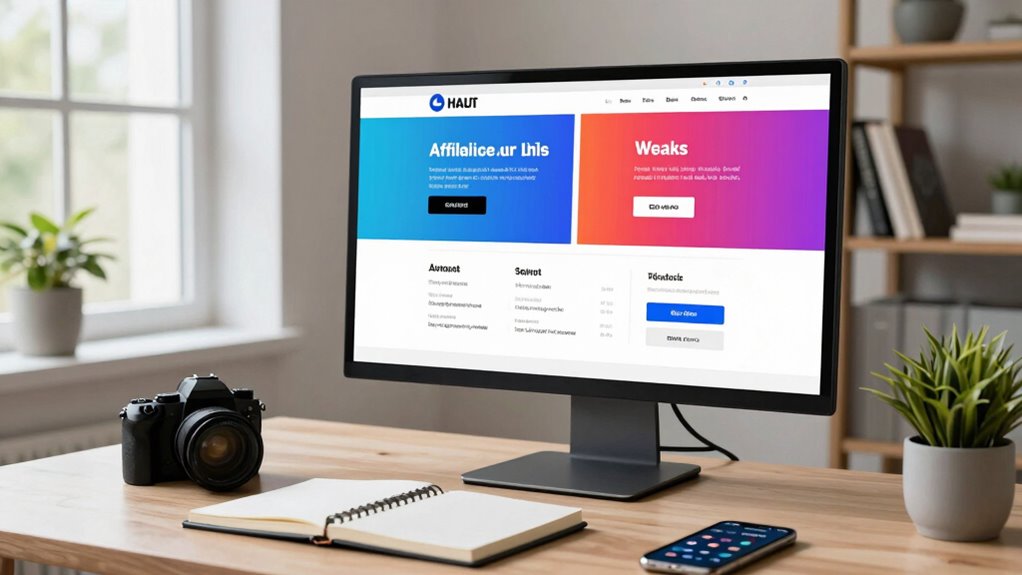
Creating a website that effectively balances ads, affiliates, and email growth doesn’t happen by chance; it requires strategic planning from the start. Your goal should be to develop a structure that maximizes content monetization while fostering genuine user engagement. To do this, you need to carefully consider how each element interacts and supports your overall objectives. Start by designing your website around your audience’s interests, ensuring that your content provides real value. When your content resonates, users are more likely to stay longer, share your material, and return regularly—key factors in increasing user engagement.
Effective website design balances monetization and engagement through strategic planning and audience-focused content.
As you build your site, think about placement and flow. Ads should be integrated seamlessly so they don’t disrupt user experience but are still visible enough to generate revenue. Use contextual advertising that aligns with your content, making it more relevant and less intrusive. This approach improves content monetization because users are more receptive to ads that feel natural within the context of what they’re reading or viewing. Similarly, affiliate links should be embedded thoughtfully within your content, offering genuine recommendations that add value for your audience. When your audience trusts your suggestions, conversions increase, and your affiliate income grows.
Email list growth is another cornerstone of a smart website structure. Create compelling lead magnets—like free downloads, exclusive content, or discounts—that encourage visitors to subscribe. Place sign-up forms strategically, such as at the end of articles or in pop-ups, but avoid overwhelming your users. Once you’ve grown your email list, nurture your subscribers with targeted, personalized content that keeps them engaged. This ongoing communication not only boosts user engagement but also creates a direct channel for promoting your monetized content, products, or affiliate offers. Additionally, understanding content monetization strategies from the start ensures your site is optimized for revenue potential.
Your site architecture should facilitate easy navigation, guiding visitors toward your most monetized and engaging content. Use clear menus, internal linking, and a logical layout so users can find what interests them quickly. This structure enhances content consumption and encourages longer visits—both of which are crucial for increasing monetization opportunities. Remember, the more engaged your users are, the more likely they are to click on ads, affiliate links, or respond to your email campaigns.
best lead magnet tools for email list growth
As an affiliate, we earn on qualifying purchases.
As an affiliate, we earn on qualifying purchases.
Frequently Asked Questions
How Can I Balance User Experience With Ad Placement?
To balance user experience with ad placement, prioritize placing ads where they don’t interrupt user engagement, like within content or at natural breaks. Use non-intrusive formats and limit the number of ads to avoid overwhelming visitors. Test different placements to find what works best, ensuring ads complement rather than hinder browsing. This approach maintains a positive user experience while maximizing ad revenue and keeping engagement high.
What Are the Best Tools for Managing Affiliate Links?
You should use tools like ThirstyAffiliates or Pretty Links for managing affiliate links. These tools help with content optimization by making links clean and clickable, and they also provide link tracking, so you can monitor performance. By organizing your links with these tools, you guarantee better user experience and maximize your affiliate revenue. They simplify managing multiple links and provide insights to refine your strategy effectively.
How Should I Segment My Email List for Maximum Growth?
You should segment your email list using segmentation techniques like demographics, purchase history, and engagement levels. Personalization strategies enhance these segments by tailoring content to specific interests, increasing open rates and conversions. Regularly analyze your data to refine segments, ensuring your messages remain relevant. This approach boosts growth by fostering stronger connections and encouraging action, making your email campaigns more effective and your overall marketing efforts more successful.
What Metrics Indicate a Successful Website Structure for Monetization?
Think of your website as a well-tuned orchestra; each section plays an essential role. Metrics like increased page views, longer session durations, and higher conversion rates show your content hierarchy and SEO optimization hit the right notes. You’ll also see growth in ad revenue, affiliate clicks, and email sign-ups. These indicators reveal your site’s structure effectively guides visitors, maximizes engagement, and boosts monetization potential.
How Often Should I Update My Website Layout for Optimal Results?
You should update your website layout every 3 to 6 months to maintain design consistency and keep it fresh. Regular updates help you adapt to design trends and improve user experience. Focus on maintaining consistent color schemes and layout structures, ensuring your site remains visually appealing and easy to navigate. This approach keeps visitors engaged, encourages longer visits, and boosts your chances of successful monetization through ads, affiliates, and email growth.
contextual advertising plugins for WordPress
As an affiliate, we earn on qualifying purchases.
As an affiliate, we earn on qualifying purchases.
Conclusion
Remember, a well-structured website is your secret weapon for success. By strategically placing ads, optimizing for affiliates, and prioritizing email growth, you set yourself up for steady gains. Don’t put all your eggs in one basket—diversify your efforts and stay adaptable. As the saying goes, “A chain is only as strong as its weakest link.” Keep refining your site, and you’ll build a resilient, thriving online presence.

Amazon Affiliate Marketing for Beginners: How to Make Money with Amazon Associates: How to Build Affiliate Links, Drive Traffic, and Earn Commissions … (The Passive Income Starter Library Book 3)
As an affiliate, we earn on qualifying purchases.
As an affiliate, we earn on qualifying purchases.
As an affiliate, we earn on qualifying purchases.