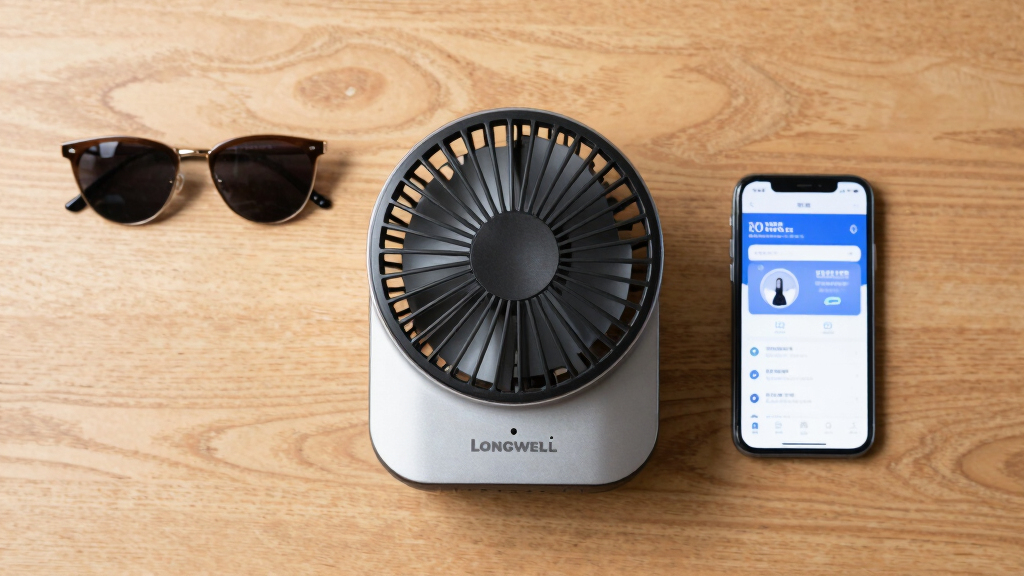

TL;DR
LONGWELL’s new biomimetic EC-Lüfter has achieved a static efficiency of up to 82%, with significant noise reduction. This breakthrough could impact energy-efficient ventilation systems. Details on long-term performance are still emerging.
LONGWELL’s biomimetic EC-Lüfter has reached a static efficiency of 73-82%, according to the company’s recent announcement. This development is significant for the ventilation industry, as higher efficiency can lead to lower energy consumption and operational costs. The achievement also includes a noise reduction of 4-6 dB(A), which improves acoustic comfort in various applications.
The biomimetic EC-Lüfter from LONGWELL demonstrates a static efficiency range of 73% to 82%, based on data provided by the company in a PR Newswire release. This efficiency level surpasses many conventional EC fans and is attributed to the biomimetic design principles that emulate natural airflow mechanisms. The noise reduction of 4-6 dB(A) further enhances its suitability for environments where acoustic comfort is critical.
LONGWELL stated that the new fan design uses innovative blade geometries inspired by natural structures, which improve airflow and energy transfer. The company emphasized that this development aims to support energy-saving initiatives and sustainable building standards. The efficiency figures are based on laboratory testing, and real-world performance data are expected to follow in the coming months.
Implications for Energy Efficiency and Noise Reduction
The achievement of up to 82% static efficiency signifies a potential shift towards more energy-efficient ventilation solutions, reducing operational costs for buildings and industrial facilities. The noise reduction also addresses a common concern in HVAC systems, making this fan suitable for noise-sensitive environments such as hospitals, offices, and residential buildings. If adopted widely, this technology could contribute to lower carbon emissions and improved indoor air quality.
energy-efficient EC ventilation fan
As an affiliate, we earn on qualifying purchases.
As an affiliate, we earn on qualifying purchases.
Biomimetic Design and Industry Standards
Biomimetic engineering draws inspiration from natural systems to improve technological performance. LONGWELL’s latest EC-Lüfter builds on existing trends toward sustainable, high-efficiency fans used in HVAC and industrial applications. Previous models have achieved efficiencies around 60-70%, but reaching over 80% marks a notable advancement. The industry is increasingly focused on reducing energy consumption, aligning with global climate goals and stricter building codes.
While the efficiency figures are promising, it remains to be seen how the fan performs in diverse real-world settings. Long-term durability and maintenance costs are also factors under evaluation, as the industry moves toward adopting new, biomimetic technologies.
“Our biomimetic EC-Lüfter sets a new standard in static efficiency, combining energy savings with noise reduction to meet the demands of modern ventilation.”
— LONGWELL spokesperson
low noise industrial ventilation fan
As an affiliate, we earn on qualifying purchases.
As an affiliate, we earn on qualifying purchases.
Performance in Real-World Applications Unclear
It is not yet confirmed how the biomimetic EC-Lüfter will perform outside laboratory conditions, including long-term reliability, maintenance costs, and efficiency retention over time. Real-world testing results are expected in the coming months but are currently unavailable.
As an affiliate, we earn on qualifying purchases.
Next Steps: Field Testing and Industry Adoption
LONGWELL plans to conduct field trials across various applications to validate laboratory results. The company also intends to gather user feedback and monitor long-term performance. Industry observers will watch for potential adoption in commercial and industrial ventilation systems, which could influence future standards and regulations.
As an affiliate, we earn on qualifying purchases.
Key Questions
What is the significance of the efficiency range 73-82%?
This range indicates a high level of energy efficiency, which can lead to lower energy costs and reduced environmental impact in ventilation systems.
How does the biomimetic design contribute to performance?
The design emulates natural airflow structures, improving aerodynamics and energy transfer, which enhances efficiency and noise reduction.
When will real-world performance data be available?
LONGWELL has announced plans for field testing, but specific timelines for results have not yet been disclosed.
Could this technology replace conventional fans?
If proven effective in diverse applications, the biomimetic EC-Lüfter could become a preferred option for energy-efficient, low-noise ventilation systems.
What are the potential environmental benefits?
Higher efficiency fans reduce energy consumption, which can lower greenhouse gas emissions associated with power generation.
Source: primary