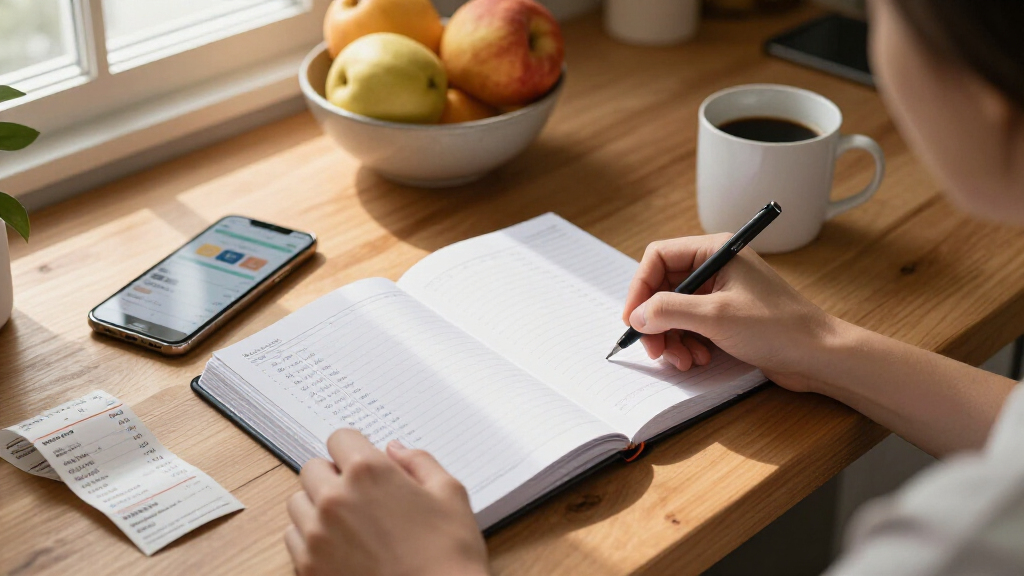
Budgeting planners and expense trackers come down to one core tradeoff: structure versus simplicity. The SOLIGT 8.5 x 11-Inch Budget Planner earns my best overall pick for giving a full year of undated monthly layouts with the most usable page real estate, while the Poluma Undated Budget Planner stands out as the best all-around A5 option for daily carry and the Soligt Undated Monthly Budget Planner with 12 Pockets wins for people who file paper receipts alongside their tracking. The big decisions in this category are size (A6 versus A5 versus letter-size), time horizon (12-month versus 14-month versus weekly formats), and how much guided structure you want per page. People who overspend on impulse benefit from a daily tracker, while salaried budgeters with predictable bills usually just need a monthly spread. Read on for the full ranking, the tradeoffs behind each pick, and which format fits your money habits.

Get smart everyday buys delivered free — and shop member deals
- Fast, free delivery on millions of items
- Access to Prime Big Deal Days deals on October 6–7
- Prime Video, Amazon Music and more included
Key Takeaways
- Page size was the single biggest differentiator: letter-size planners like the SOLIGT 8.5 x 11 offered room for detailed category breakdowns, while A6 pocket planners forced simpler budgets that only work for minimal expense tracking.
- Only one option in the lineup, the Undated A5 14-Month Financial Organizer, extends beyond a year — a real advantage for anyone starting mid-year who wants uninterrupted tracking through the next calendar year.
- The Soligt planner with 12 pockets was the only pick that solved receipt storage, a gap in every other book; without pockets, paper-trail budgeters need a separate envelope system.
- Weekly-format trackers (the Year-Long Weekly Budget Planner and the Daily Spending Tracker) suit impulse spenders better than monthly books because frequent logging catches overspending before the month ends.
- Several mid-priced A5 planners (Poluma, Snootion, the Twig Account Book) are nearly identical in layout — choosing between them comes down to cover build, binding durability, and aesthetic preference rather than features.


| budgeting planners and expense tracker | Format | Binding | Brand |
|---|---|---|---|
| SUNEE Undated Monthly Budget P | A5 | — | SUNEE |
| Weekly Budget Planner: A Year- | Undated weekly planner | Not specified in product data | — |
| Poluma Undated Budget Planner | Undated | Twin-wire, lay-flat 360° | Poluma |
| Taja Aesthetic Budget Planner | — | — | Taja |
| Budget Planner Account Book | — | — | meDolove |
| Taja Undated Budget Planner an | Undated monthly planner | — | Taja |
| SOLIGT 8.5 x 11-Inch Budget Pl | — | Spiral-bound | — |
| Snootion Budget Planner | Undated, 12-month planner | Metal lay-flat twin-wire | Snootion |
| Budget Planner | A5, undated, one year | Metal twin-wire, lay-flat | — |
| Expense Tracker Notebook | Paper notebook | — | — |
| Kamoy Budget Planner | — | Spiral coil | Kamoy |
| Soligt Undated Monthly Budget | Undated | Spiral | — |
| A6 Budget Planner and Expense | — | Twin-wire | — |
| Undated A5 Budget Planner | Undated | Coil binding | — |
| Kamoy Budget Planner | Undated | Pink and gold coil with metal corner protectors | Kamoy |
More Details on Our Top Picks
SUNEE Undated Monthly Budget Planner and Expense Tracker, A5, Green
The SUNEE earns my Best Overall spot by bringing monthly budgets, expenses, bills, savings, debt, and goals into one 12-month undated system. Its monthly calendars also give due dates and money-related events a place beside the numbers, which makes it more useful for routine planning than the simpler weekly format of the Weekly Budget Planner. The A5 size, water-resistant cover, elastic closure, and pocket make it easier to carry and keep receipts together. Those extras add convenience, though the colorful page backgrounds may not suit readers who prefer a restrained layout. It is still a paper planner, so updating figures requires handwriting, and its year-long structure means starting again for another cycle.
Pros:- Undated 12-month format can begin at any time.
- Dedicated pages cover bills, expenses, savings, debt, and goals.
- Monthly calendars help connect spending plans with due dates.
- Water-resistant cover, elastic closure, and pocket support carrying and receipt storage.
Cons:- The planner is structured for one year of use.
- Colorful page backgrounds may distract readers who prefer minimal layouts.
- Manual entry does not sync with digital finance tools.
Best for: People who want one portable, start-anytime planner for monthly budgets, bill dates, savings, and debt.
Not ideal for: Digital-first budgeters or readers who want a multi-year book or a plain, monochrome page design.
- Brand:SUNEE
- Format:A5
- Dimensions:6.4 x 8.3 inches
- Duration:12 months
- Design:Undated
- Color:Green
- Cover:Water-resistant
- Features:Elastic band, dual-sided pocket, colorful monthly tabs
- Included:Guidebook and 4 sticker sheets
Our verdict“Choose the SUNEE if you want a portable, all-in-one paper planner with calendars and dedicated trackers for a full budgeting year.”
Weekly Budget Planner: A Year-Long Undated Spending Tracker
The Weekly Budget Planner is the most focused choice here for readers who want to check spending week by week. Its undated, year-long format lets buyers begin whenever they are ready, while a weekly rhythm can make frequent purchases easier to notice before they accumulate. That narrower focus sets it apart from the SUNEE, which includes monthly calendars and dedicated bill, savings, and debt sections for broader planning. The tradeoff is that the available product information gives little detail about its page layout, binding, or storage features, so buyers cannot confirm how much room it provides or whether it supports deeper monthly reviews. It makes the most sense for a simple tracking habit, rather than for someone seeking a richly specified finance organizer.
Pros:- Undated format supports starting at any point in the year.
- Year-long coverage provides a consistent tracking period.
- Weekly focus can help readers review spending more often than a monthly-only routine.
Cons:- Source information does not specify the page layout or writing space.
- No details are provided about binding, cover, or storage features.
- Product data does not confirm dedicated bill, savings, or debt trackers.
Best for: People who want a straightforward weekly routine for recording spending across a year.
Not ideal for: Buyers who need confirmed details about page layout, dedicated debt and savings sections, or storage features.
- Format:Undated weekly planner
- Coverage:One year
- Primary use:Expense and spending tracking
- ASIN:1441332863
- Binding:Not specified in product data
- Dimensions:Not specified in product data
Our verdict“Pick this planner if a weekly spending check-in is your main goal and you are comfortable with limited product detail.”
Poluma Undated Budget Planner and Expense Tracker
The Poluma stands out for the way its twin-wire binding lays flat through a 360° turn, giving frequent note-takers a stable surface for monthly figures and expense entries. Its undated, 12-month setup also covers monthly budgets, spending reviews, savings, and debt, so it offers broader tracking than the weekly-focused Weekly Budget Planner. The black cover and inner pocket keep the presentation comparatively restrained and practical; the elastic closure helps hold loose notes in place. The central tradeoff is shared by paper planners: figures must be recorded and reviewed by hand, with no digital syncing. It also covers just one year, so buyers who want a longer-running record will need another book when the cycle ends.
Pros:- Undated 12-month layout can be started at any time.
- Monthly budgeting, expense, savings, and debt tracking are included.
- Twin-wire binding opens flat and can turn back 360°.
- Thick archival-quality paper, inner pocket, and elastic closure support regular use.
Cons:- Expense totals and budget reviews must be done manually.
- Designed for one year of use.
- The product data does not specify page dimensions.
Best for: People who regularly write in their budget book and want it to lie flat while tracking monthly spending, savings, and debt.
Not ideal for: Digital budgeters or anyone seeking a multi-year record or automatic calculations.
- Brand:Poluma
- Model:PUA5HSWZXQJZB
- Duration:12 months
- Format:Undated
- Binding:Twin-wire, lay-flat 360°
- Features:Inner pocket and elastic closure
- Color:Black
- Paper:Thick archival-quality paper
Our verdict“Choose the Poluma if a stable lay-flat writing surface matters as much as tracking your monthly budget and debt.”
Taja Aesthetic Budget Planner & Monthly Bill Organizer, Undated Budget Book
The Taja is the clearest fit for someone who wants a guided place to plan bills alongside budgets, savings goals, debt, and monthly expenses. Its guidebook and bill payment trackers give it more instructional structure than the Poluma, whose product details emphasize lay-flat writing and manual tracking. An undated calendar lets the owner choose when to begin, and the dual-sided pocket and elastic band help keep loose notes with the planner. This feature set suits people who prefer prompts and visual organization, with three sticker sheets adding a personal touch. The tradeoff is that calendar dates must be filled in by hand; buyers who want a ready-dated schedule or a specified physical size have less certainty from the available product data.
Pros:- Combines monthly budget pages with bill, debt, savings, and goal tracking.
- Undated calendar allows a flexible start date.
- Guidebook provides budgeting tips and instructions.
- Elastic closure, dual-sided pocket, and 3 sticker sheets are included.
Cons:- Calendar dates must be written in manually.
- Product data does not list dimensions or duration.
- Multiple trackers and decorative stickers may be more structure than a simple spending log needs.
Best for: Budgeters who want a guided monthly routine with separate bill, debt, and savings trackers.
Not ideal for: People who want preprinted dates, a minimalist page style, or confirmed dimensions before buying.
- Brand:Taja
- Model number:T010-P
- Target audience:Adult
- Recommended use:Budgeting
- Color:A.Wildflowers
- Unit count:1 count
- Calendar:Undated monthly calendar
- Included:Guidebook and 3 sticker sheets
- Storage and closure:Elastic band and dual-sided storage pocket
Our verdict“Choose the Taja if bill due dates and guided monthly budgeting deserve a prominent place in your planner.”
Budget Planner Account Book – Monthly Expense, Saving & Debt Tracker (5.5″ x 8.5″)
The meDolove Budget Planner is a strong match for readers who want to see a month’s schedule and finances together: it pairs full-page monthly calendars with income, expense, savings, and debt tracking. That calendar emphasis gives it a distinct planning role beside the SUNEE, whose A5 format and colorful tabs prioritize a compact, portable setup. At 5.5 x 8.5 inches, the meDolove offers a larger page footprint than a small A5 book, while its water-resistant cover, elastic band, and pocket help contain receipts and notes. The tradeoff is paper-only record keeping, which will not sync with finance apps; the product data also lists no warranty. The three sticker sheets are optional personalization, rather than a substitute for digital reminders.
Pros:- Full-page monthly calendars pair schedule planning with budget reviews.
- Tracks income, expenses, savings goals, and debt in one book.
- Water-resistant cover and elastic closure help protect the planner.
- Storage pocket and 3 sticker sheets support receipt keeping and personalization.
Cons:- Paper entries do not sync with digital finance tools.
- No warranty is listed in the product data.
- The larger page footprint is less compact than the SUNEE A5 planner.
Best for: People who plan bills and spending against a monthly calendar and want space for receipts in the same book.
Not ideal for: Digital-first budgeters or buyers who require a stated warranty or app syncing.
- Brand:meDolove
- Model number:KPPL001
- Model year:2025
- Size:5.5 x 8.5 inches
- Duration:12 months
- Cover:Water-resistant
- Included:3 sticker sheets, elastic band closure, storage pocket
- Target audience:Adults
Our verdict“Choose the meDolove if calendar space and receipt storage matter more to you than digital syncing or the smallest carry size.”
Taja Undated Budget Planner and Expense Tracker, 6.9 × 9.9 in
The Taja stands out for pairing broad money tracking with a guidebook, which can help buyers who want prompts for setting up a budget rather than a blank log. Its pages cover income, expenses, savings goals, bills, and debt, giving it wider monthly coverage than the more focused Expense Tracker Notebook. The undated layout lets you begin whenever your next budgeting cycle starts, though you’ll need to fill in the dates yourself. At 6.9 × 9.9 inches, it offers room for planning while staying smaller than the letter-size SOLIGT. Stickers, an elastic closure, and a dual-sided pocket add practical organization, but the extras won’t suit everyone, and filling in dates adds setup work. This is a strong fit for someone who wants instruction and multiple trackers in one paper planner.
Pros:- Tracks income, expenses, savings goals, bills, and debt in one place
- Undated pages allow a flexible start date
- Guidebook offers budgeting instructions
- Pocket, elastic closure, and stickers support carrying and organizing the planner
Cons:- Users must write in dates themselves
- Multiple sections may feel like extra upkeep for someone who only logs daily spending
Best for: Adults starting a monthly budgeting routine who want guidance alongside expense, bill, savings, and debt pages
Not ideal for: Buyers who want a predated planner or prefer a fast, minimal spending log with no setup
- Brand:Taja
- Dimensions:6.9 × 9.9 in
- Format:Undated monthly planner
- Tracking sections:Income, expenses, savings goals, bills, and debt
- Included:Guidebook and three sticker sheets
- Storage:Dual-sided pocket
- Closure:Elastic band
- Target audience:Adults
Our verdict“Choose the Taja if you want an undated monthly planner with both broad tracking and a guide to help you get started.”
SOLIGT 8.5 x 11-Inch Budget Planner and Monthly Bill Organizer
The SOLIGT gives monthly budgeting room to spread out, with large 8.5 × 11-inch pages and dedicated sections for budgets, bills, debt, goals, and monthly reviews. That makes it better suited to detailed household planning than the more portable Snootion A5 Budget Planner, where writing space is more constrained. Its undated 12-month format lets you choose when to begin, and the 120 g/m² paper, spiral binding, and hardcover support regular desk use. A receipt pocket helps keep paper records with the relevant budget. The tradeoff is size: carrying it around is less convenient than carrying the compact Expense Tracker Notebook. It also covers 12 months, so buyers wanting a longer continuous record may need another planner after the year is filled.
Pros:- Large pages provide room for detailed monthly entries
- Dedicated sections cover budgets, bills, debt, goals, and monthly reviews
- 120 g/m² paper and hardcover suit frequent writing
- Receipt pocket keeps paper records close to the budget
Cons:- 8.5 × 11-inch size is less portable than A5 or 6 × 9-inch alternatives
- Undated pages require the user to fill in dates
- The planner is limited to 12 months
Best for: Households or detail-oriented budgeters who plan bills, debt, and goals at a desk and want generous writing space
Not ideal for: Commuters who need a bag-friendly daily tracker or buyers seeking more than 12 months of pages
- Size:8.5 × 11 inches
- Duration:12 months, undated
- Binding:Spiral-bound
- Cover:Hardcover with boho design
- Paper weight:120 g/m²
- Sections:Monthly budget, debt, bills, expenses, financial goals, and monthly review
- Included:Receipt pocket, five stickers, and matching gift box
Our verdict“Pick the SOLIGT if you value ample desk space for detailed monthly finances more than portability.”
Snootion Budget Planner – Monthly Finance Organizer with Expense Tracker, Undated A5 Account Book (8.6×5.9 in), Silver
The Snootion puts a full set of monthly finance sections in a compact A5 format, making it a practical choice for people who want to carry their budget book between home, work, and errands. It tracks goals, savings, debts, budgets, daily expenses, and monthly reviews, so it covers more than the basic daily log in the Expense Tracker Notebook. Its metal twin-wire binding lies flat for writing, while 100gsm paper is a sturdier writing surface than the Taja listing specifies. The undated 12-month format also leaves the start date up to you. The smaller pages mean less space for long daily notes than the desk-oriented SOLIGT, and the one-year format may not suit anyone who wants a longer record in a single book.
Pros:- Compact A5 size is suited to carrying in a bag
- Includes goals, savings, debt, budget, daily expense, and review sections
- 100gsm paper and lay-flat twin-wire binding support regular writing
- Undated format allows a flexible start
Cons:- A5 pages offer less writing room than the larger SOLIGT
- Covers one 12-month period
- Available color is listed as silver
Best for: Adults who want a portable, structured monthly budget and expense planner they can carry in a bag
Not ideal for: Budgeters who need wide pages for detailed daily notes or a planner that covers more than one year
- Brand:Snootion
- Model number:snpl-0324
- Size:A5 (8.6 × 5.9 in)
- Color:Silver
- Paper weight:100gsm
- Format:Undated, 12-month planner
- Binding:Metal lay-flat twin-wire
- Target audience:Adults
Our verdict“Choose the Snootion if portability matters and you still want more than a basic daily expense log.”
Budget Planner – Monthly Finance Organizer with Expense Tracker Notebook, Undated A5 Account Book, 1 Year Use, Twig
This A5 planner is the most structured pick in this batch: each of its 12 months has 10 pages, supported by sections for goals, strategy, savings, debt, daily expenses, and monthly reviews. It also includes a Christmas budget and yearly summary, giving it more planning depth than the streamlined Snootion. An illustrated manual with filled examples can help make those sections easier to put to work, while the elastic closure, pocket, and lay-flat binding add useful everyday details. That breadth has a cost in simplicity. Compared with the Expense Tracker Notebook, this book asks for more planning and upkeep, and its A5 pages leave limited room for lengthy daily entries. It makes the most sense for someone who wants a guided annual system and will use its extra pages.
Pros:- Ten pages per month support a detailed budgeting routine
- Includes savings, debt, goals, daily expenses, and monthly reviews
- Christmas budget and yearly summary extend planning beyond routine monthly bills
- Illustrated manual with filled examples supports setup
Cons:- The many sections can feel demanding for users who prefer a simple tracker
- A5 size limits space for detailed daily entries
- Users need to fill in dates because the planner is undated
Best for: Budgeters who want guided, year-round tracking that includes savings, debt, seasonal spending, and an annual summary
Not ideal for: People who want a simple daily log or need large pages for detailed expense notes
- Format:A5, undated, one year
- Paper:100gsm
- Pages per month:10
- Binding:Metal twin-wire, lay-flat
- Planning sections:Goals, strategy, monthly budgets, savings, debt, daily expenses, and reviews
- Additional pages:Christmas budget, yearly summary, and 12 note pages
- Storage and closure:Inner pocket and elastic closure
- Included:Illustrated user manual
Our verdict“Pick this planner if you want a guided annual system with seasonal and year-end budgeting built in.”
Expense Tracker Notebook – Daily Spending Tracker, Bill Organizer & Budget Planner Log Book
This 6 × 9-inch notebook keeps the job focused on daily spending, bills, and basic budget planning. Its compact dimensions make it easier to carry than the desk-sized SOLIGT, while its personal or small-business use gives it a broader role than a household-only monthly planner. Compared with the section-rich Taja, this book is a simpler fit for someone who mainly wants to record transactions and organize bills. That simplicity also means less built-in structure: the listed details don’t specify dedicated savings, debt, or goal trackers. With 105 pages, frequent daily logging can use up the notebook sooner than a year-long planner. It suits buyers who value a straightforward paper record and accept that it won’t automate totals or keep pace with digital tools.
Pros:- 6 × 9-inch format is compact and portable
- Combines daily expense logging, bill organization, and budget planning
- Can be used for personal or small-business money records
Cons:- Paper tracking lacks digital automation
- 105 pages may fill quickly with daily use
- Listed sections do not specify dedicated savings or debt trackers
Best for: Individuals or small-business owners who want a compact paper log for daily expenses, bills, and basic budget planning
Not ideal for: People who want guided savings and debt sections, automated totals, or a planner guaranteed to cover a full year
- Pages:105
- Dimensions:6 × 9 inches
- Use:Personal or small-business money management
- Format:Paper notebook
- Tracking:Daily spending
- Organization:Bill organizer
- Planning:Budget planner log book
Our verdict“Choose this notebook for a portable, straightforward spending log, but look to a fuller planner for guided savings and debt tracking.”
Kamoy Budget Planner – Monthly Budget Book with Expense Tracker
The 14-month run gives this A5 planner more runway than the 12-month Kamoy B5, while its compact footprint is easier to carry. Each month pairs a budget page with four expense-tracking pages, a summary, and space for notes, so it suits someone who wants to see both spending details and the month’s result in one place. The spiral binding makes it practical to keep open while entering purchases. Its main tradeoff is the manual paper workflow: totals and recurring expenses need to be entered by hand, unlike digital tools that can automate them. Choose this over the roomier B5 if portability and a longer tracking period matter more than writing space.
Pros:- 14 months of tracking extends beyond a standard 12-month cycle.
- Four expense pages per month provide room for ongoing entries.
- A5 dimensions are convenient for carrying in a bag.
- Spiral binding makes pages easy to turn and keep open.
Cons:- Manual entry and calculations take more effort than digital tracking.
- Compact pages offer less writing room than the Kamoy B5 planner.
Best for: People who want more than a year of monthly expense records in a compact planner they can carry.
Not ideal for: Budgeters who want automatic transaction imports or generous writing space for detailed entries.
- Brand:Kamoy
- Size:A5 (5.8 x 8.2 inches)
- Duration:14 months
- Monthly layout:Budget page, four expense-tracking pages, monthly summary, and notes
- Binding:Spiral coil
- Cover:Pink with gold lettering
- Model number:RYLT-A5-Daily Planner-x1
Our verdict“Pick this Kamoy if you want a portable, 14-month paper system for monthly budgets and expense details.”
Soligt Undated Monthly Budget Planner with 12 Pockets
The Soligt is the strongest fit here for people who want their paper records and paper receipts together: its 12 storage pockets can hold bills or receipts alongside pages for income, expenses, savings, debt, and bills. Unlike the dated overview in the pocket-size A6 planner, its undated pages let you begin whenever your budgeting routine starts. That flexibility comes with setup work: months and budget categories are not pre-filled, so you’ll need to label and organize the system yourself. The hardcover, spiral binding, and 100 gsm paper make it a more substantial desk companion than the slim A6 option, but its larger format is less pocketable. Pick it for paper organization, not automated tracking.
Pros:- 12 pockets provide places to store bills and receipts.
- Undated pages allow use to start at any point in the year.
- Includes sections for income, expenses, savings, debt, and bills.
- Hardcover, spiral binding, and 100 gsm paper support regular desk use.
Cons:- Months and budget categories require manual setup.
- At 9.25 x 6.81 inches, it is less compact than the A6 planner.
- Paper records still require handwritten entries and calculations.
Best for: Households or bill payers who keep receipts and want to track savings, debt, and expenses in one undated book.
Not ideal for: People who want a small everyday carry planner or pre-labeled pages that are ready to fill in.
- Format:Undated
- Pockets:12
- Binding:Spiral
- Cover:Hardcover
- Paper weight:100 gsm
- Dimensions:9.25 x 6.81 inches
- Included accessories:Colored sticker month tabs
Our verdict“Choose the Soligt if keeping receipts with a broad set of budget records matters more than a prefilled or pocket-size layout.”
A6 Budget Planner and Expense Tracker, Pink
At 3.75 x 6.75 inches, this A6 planner is the easiest option here to keep close for jotting down spending while away from home. Its 160 pages cover daily expenses, savings, debts, and financial goals, and the elastic closure and inner pocket help keep loose notes with the book. The 100 gsm paper and lay-flat twin-wire binding are useful when making entries on the go. Its calendar overview is specifically labeled 2025–2026, which makes the dated pages less flexible than the undated Soligt and Kamoy options. The tradeoff for portability is less room to write than in the larger Soligt. It suits concise tracking better than detailed household budgeting.
Pros:- Pocket-sized dimensions are easy to carry.
- 160 pages include daily expenses, savings, debts, and goals.
- 100 gsm paper is designed to reduce ink leakage.
- Twin-wire binding lays flat, with an inner pocket and elastic closure.
Cons:- The calendar overview is limited to 2025–2026.
- Small pages restrict space for detailed entries and calculations.
- Paper-based tracking requires manual entry.
Best for: Students and commuters who want a small planner for brief daily spending notes and savings goals.
Not ideal for: People who need an open-ended calendar or room for extensive monthly budgets and household bills.
- Size:3.75 x 6.75 inches
- Pages:160
- Sheets:80
- Paper weight:100 gsm
- Cover material:PP
- Binding:Twin-wire
- Calendar overview:2025–2026
- Paper certification:FSC-certified
- Color:Pink
Our verdict“Pick this A6 planner for portable, concise tracking if its 2025–2026 calendar suits your planning period.”
Undated A5 Budget Planner – 14-Month Financial Organizer with Expense Tracker
This planner combines an undated format with 14 months of monthly layouts, so a late start or a missed month need not leave a dated calendar out of step. Its budget page, four expense pages, summary, and notes section give each month a consistent place for planning and review. Compared with the pink Kamoy A5, this green-covered alternative offers the same stated monthly structure and extended duration; the choice between them is mainly cover style. It is also less tailored to receipts and bills than the Soligt, which adds 12 pockets. The manual date entry is the cost of flexibility, and its paper format means no automatic totals. This suits people who want a repeatable monthly routine on their own schedule.
Pros:- Undated format supports flexible start dates.
- 14 months provides an extended tracking period.
- Monthly pages combine budget planning, expense entries, summaries, and notes.
- A5 size and coil binding support portable use and page turning.
Cons:- Dates need to be entered manually each month.
- Paper-based tracking requires handwritten totals and calculations.
- Unlike the Soligt, it has no specified receipt-storage pockets.
Best for: People who want a 14-month monthly budgeting routine but may begin or restart at any time.
Not ideal for: Anyone who wants stored receipts, automated calculations, or pre-dated monthly pages.
- Size:A5
- Duration:14 months
- Format:Undated
- Monthly layout:Budget page, four expense-tracking pages, monthly summary, and notes
- Cover:Green with gold lettering
- Binding:Coil binding
Our verdict“Choose this A5 organizer if you want an undated, 14-month monthly structure without the receipt storage of the Soligt.”
Kamoy Budget Planner – Monthly Budget Book with Expense Tracker, B5 (7.2″ x 10″)
The B5 page size gives this Kamoy more room for household budgets, bills, savings goals, and debt tracking than the compact A5 Kamoy. Its undated 12-month format can start at any time, and tab stickers make it easier to move between sections. Coil binding with metal corner protectors is suited to a book that may be handled regularly. The tradeoff is portability: at 7.2 x 10 inches, it is less convenient to carry than the A5 options. Its paper format also requires manual entries, while the Soligt adds 12 pockets for keeping receipts and bills physically with the budget. This pick makes sense when writing room and broad planning sections take priority over compact size or receipt storage.
Pros:- B5 dimensions provide more writing space than the A5 Kamoy.
- Combines expense, bill, savings-goal, and debt tracking.
- Undated 12-month format can start at any point in the year.
- Coil binding, metal corner protectors, and tab stickers support regular organization.
Cons:- Larger dimensions make it less portable than A5 and A6 planners.
- Manual paper tracking requires entering transactions and totals.
- Color options are limited, according to the product description.
Best for: Families and students who want a larger undated book for monthly budgets, bills, savings goals, and debt tracking.
Not ideal for: Commuters seeking a compact daily tracker or budgeters who want receipt pockets or automatic calculations.
- Brand:Kamoy
- Size:B5 (7.2 x 10 inches)
- Duration:12 months
- Format:Undated
- Color:Green
- Binding:Pink and gold coil with metal corner protectors
- Model year:2026
- Target audience:Adults and teens
Our verdict“Choose this Kamoy for a roomier, undated household budget book if portability matters less than writing space.”
How We Picked
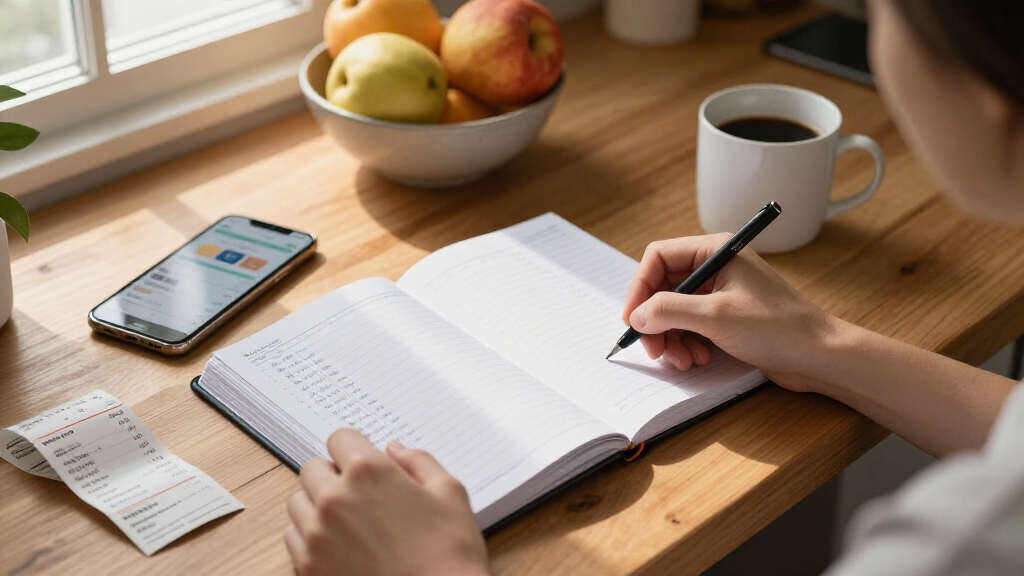
I evaluated each planner on layout depth (how many categories, trackers, and summary pages it provides per month), format and portability (A6, A5, B5, or letter-size, and whether that matches real usage patterns like desk-based versus on-the-go logging), and durability (binding quality, cover material, and whether the book survives a full year of daily handling). Undated layouts scored higher than dated ones because they let buyers start any month without wasting pages — a practical advantage most shoppers underestimate until they abandon a planner in March.
Beyond the physical book, I weighed time horizon (12-month, 14-month, or weekly), extras like receipt pockets and debt/savings trackers, and overall value relative to how much usable structure each book delivers. The ranking favors products whose layouts match a clear buyer type — heavy planners, minimal trackers, beginners, and receipt hoarders — over books that try to do everything moderately well. Options that felt cramped, redundant, or poorly bound relative to direct competitors landed lower even when their feature lists looked similar on paper.
| budgeting planners and expense tracker | Brand |
|---|---|
| SUNEE Undated Monthly Budget P | SUNEE |
| Weekly Budget Planner: A Year- | — |
| Poluma Undated Budget Planner | Poluma |
| Taja Aesthetic Budget Planner | Taja |
| Budget Planner Account Book | meDolove |
| Taja Undated Budget Planner an | Taja |
| SOLIGT 8.5 x 11-Inch Budget Pl | — |
| Snootion Budget Planner | Snootion |
| Budget Planner | — |
| Expense Tracker Notebook | — |
| Kamoy Budget Planner | Kamoy |
| Soligt Undated Monthly Budget | — |
| A6 Budget Planner and Expense | — |
| Undated A5 Budget Planner | — |
| Kamoy Budget Planner | Kamoy |
Factors to Consider When Choosing Budgeting Planners And Expense Trackers
The right budgeting planner depends less on the product and more on your actual money habits. Before choosing, think honestly about how often you will log expenses, where you will keep the book, and whether you are building a full budget or simply tracking where money goes.Match the Format to How You Actually Spend
The most common mistake buyers make is choosing a monthly planner when their spending problem is daily. If you make lots of small purchases — coffee, apps, gas station stops — a daily or weekly log format catches overspending in real time, because you see the running total before the month collapses. Monthly spreads work well for people with predictable incomes and fixed bills who mostly want to allocate once and check in occasionally. Choosing the wrong cadence is the number one reason budget books get abandoned by February, so pick the format that matches your attention span, not the one that looks most organized on the shelf.
Size Determines Whether the Planner Gets Used
An A6 pocket planner travels everywhere but forces abbreviated entries, while an 8.5 x 11 desk planner gives generous room for categories, notes, and summaries but rarely leaves the house. A5 is the practical middle ground and explains why most of the books in this roundup use it — large enough for readable spreads, small enough for a work bag. Think about where you will actually record expenses: if the answer is “at the store,” portability wins; if it is “Sunday evening at my desk,” size and layout depth win. A beautiful large planner that lives in a drawer is worse than a modest one you open daily.
Undated Versus Dated — and Month Count
Undated planners dominate this category for good reason: you can start in any month, skip a bad month without guilt, and never waste prepaid pages. The tradeoff is that you must write the dates yourself, and some people find undated books easier to quietly abandon because there is no calendar keeping them accountable. Also check the total month count — most books cover 12 months, but a 14-month option lets you start in November or December and roll cleanly into the next year. If you are buying late in the year, that extra coverage matters more than any other spec.
Look Beyond the Monthly Spread: Savings, Debt, and Receipts
Buyers often compare only the monthly budget pages and ignore what surrounds them. Good planners include annual summary pages, debt payoff trackers, and savings goal sections that turn raw expense data into actual progress. If you keep paper receipts for taxes, reimbursements, or dispute protection, a planner with built-in storage pockets eliminates the loose-envelope problem entirely — only a couple of options offer this. Decide up front whether your goal is awareness (expense tracking alone is fine) or behavior change (you need goal and debt pages to close the loop).
Binding and Paper Quality Decide Longevity
A budget planner gets opened, flattened, written in, and carried for twelve months — that is harder use than most notebooks ever see. Spiral binding lies completely flat, which matters more than it sounds when you are writing in the inner margin near the spine, while sewn or glued bindings look sleeker but can crack with heavy daily use. Check paper weight too, especially if you write with gel pens or markers; thin paper shows ghosting through the page and makes both sides harder to read. A planner that falls apart in month seven has terrible value no matter what it costs.
Guided Structure Versus Blank Flexibility
Highly guided planners with pre-labeled categories, checkboxes, and prompts work best for beginners who do not yet know their own spending patterns. The drawback is rigidity — if your life does not fit the printed categories (freelancers, variable incomes, shared households), half the pages fight you. More structure is not automatically better; experienced budgeters often prefer lightly structured layouts they can adapt. Skim the actual page layouts before buying, not just the cover, and ask whether the printed categories match how your money genuinely moves.
Frequently Asked Questions
Is an undated budget planner really better than a dated one?
For most buyers, yes, because undated layouts let you start any month of the year without wasting pages, and if life gets busy for a few weeks you can resume without a guilt-inducing block of empty dated pages. The downside is accountability: a printed calendar date creates a small psychological commitment that some people need to stay consistent. Dated planners also tend to include calendar-specific extras like holiday spending pages. If you are buying in January and confident in your habits, either works; if you are starting mid-year or have a spotty track record with planners, undated is the safer choice.
What size budget planner should I get — A5, A6, or letter?
Let your logging location decide. If you record expenses at the point of purchase, a compact A6 or small A5 book that fits in a purse or jacket pocket will actually get used, and abbreviated entries are fine. If you sit down weekly or monthly at a desk to reconcile everything, a B5 or letter-size planner gives you room for detailed categories, side notes, and readable summaries. The failure mode is mismatch: large books carried “sometimes” and tiny books too cramped to hold a real budget. A5 is the compromise most people land on and is why it dominates this category.
Can a paper budget planner actually compete with a budgeting app?
It competes on different strengths. Writing expenses by hand creates stronger memory encoding, which is the whole point for impulse spenders — the friction that makes apps convenient makes them forgettable. Paper also never nags, never sells your data, and never requires a subscription. Apps win on automation, bank syncing, and real-time balance updates, which matters if you have many accounts or split expenses with a partner. Many people actually use both: the app for passive tracking and the planner for the weekly review where decisions happen.
Do I need a planner with receipt pockets?
Only if you genuinely keep paper receipts. If you need them for taxes, expense reimbursements, warranty claims, or disputing charges, built-in pockets keep the receipt physically attached to the month it belongs to, which saves real frustration later. If you photograph receipts or rely on digital records, pockets just add bulk and cost. One honest caveat: filling twelve pockets with receipts makes the book fatter and harder to close by December. Skip the feature unless paper trails are part of your routine.
How long should a budget planner last before I replace it?
Most undated planners in this category are built for roughly twelve months of use, so the standard replacement cycle is annual. If you buy a 14-month book, expect to run it slightly longer, which is useful for bridging across calendar years. Replace earlier if the binding fails, the cover detaches, or pages fill up faster than expected — heavy daily trackers with dense layouts can exhaust their page count in nine or ten months. Do not force a dying planner to limp along; a broken spine means fewer open pages, and an unopened planner tracks nothing.
Fall Picks
fall essentials
As an affiliate, we earn on qualifying purchases.