

Choose financial planning books that match your immediate money goals, then use them to make a simple plan for spending, saving, debt, and investing. This guide is for readers who are new to personal finance and want a manageable starting point rather than a long reading list. Allow 2-4 hours to compare books and set up your plan; reading and applying the material will take several weeks.

Get smart everyday buys delivered free with Prime
- Fast, free delivery on millions of items
- Prime Video, Amazon Music and more included
- Member-only deals all year

Financial Literacy Essentials for Dummies
- ✔ Format: Paperback
- ✔ Experience level: Beginner
- ✔ Topics: Budgeting, saving, investing, and debt management
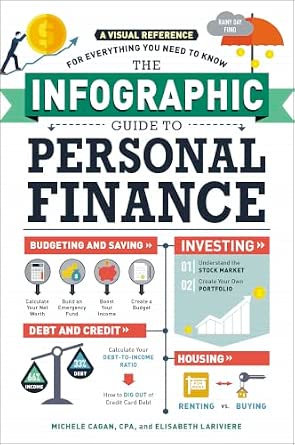
The Infographic Guide to Personal Finance: A Visual Reference
- ✔ Format: Visual reference guide
- ✔ Experience level: Beginner
- ✔ Topics: Budgeting, saving, investing, credit, and retirement basics
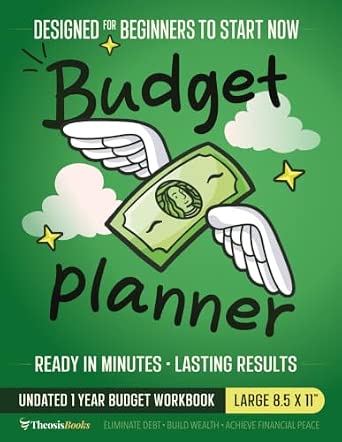
Achieve Financial Peace Budget Planner – 12-Month Practical Debt Workbook for Beginners (Large)
- ✔ Format: Budget planner workbook
- ✔ Experience level: Beginner
- ✔ Focus: Debt management and budgeting
Difficulty: Beginner | Time: 2-4 hours to choose books and plan; several weeks to read and apply them
What You’ll Need
Tools & Materials:
- A library card, bookstore, or ebook service
- A notebook or notes app
- A recent overview of your income, regular bills, debts, and savings
Knowledge:
- Basic comfort with addition, subtraction, and percentages
- A general idea of your main money concern, such as budgeting, debt, saving, or investing
Gather approximate figures before you start. You do not need to share account numbers or other sensitive details with anyone. If your finances involve taxes, a business, major legal issues, or urgent debt collection, a general beginner book may not cover your needs; note those issues for a qualified professional.
Financial Literacy Essentials for Dummies
When we are starting from scratch, the main challenge is often understanding how everyday money decisions connect. Financial Literacy Essentials for Dummies addresses that need with approachable coverage of budgeting, saving, investing, and debt management. Its plain-language explanations and real-world examples make it the most balanced first read in this group. Compared with the infographic guide, it appears better suited to readers who want concepts explained in prose rather than summarized visually; compared with the debt planner, it gives us a wider view beyond paying down balances.That breadth is useful, but it does not make the book a specialist reference. The supplied description notes that complex investing receives limited depth, and the examples may age as circumstances change. Beginners who want to understand foundational terms and practical habits are likely to get more from this than from a workbook focused mainly on debt. Readers who already know the basics, or who need detailed investing strategies, may find it too introductory. We see it as the strongest general starting point here, provided we treat it as a foundation rather than a complete financial plan.
Pros:
- Jargon-free explanations help newcomers follow core ideas.
- Covers budgeting, saving, investing, and debt in one guide.
- Practical tips and real-world examples connect concepts to everyday choices.
- Paperback format is convenient to keep nearby for reference.
Cons:
- Advanced investment strategies receive limited depth.
- The introductory approach may feel basic to financially experienced readers.
- Some examples could become dated over time.
Best for: Beginners who want plain-language coverage of several core personal finance topics in one book.
Not ideal for: Readers seeking advanced investment analysis or a workbook dedicated to recording and tracking a debt payoff plan.
Bottom line: For most beginners seeking a rounded financial foundation, this is the most versatile first book in the lineup.
“For most beginners seeking a rounded financial foundation, this is the most versatile first book in the lineup.”
The Infographic Guide to Personal Finance: A Visual Reference
Some beginners learn more readily from a clear visual summary than from several pages of explanation. The Infographic Guide to Personal Finance is built for that preference, presenting budgeting, saving, investing, credit, and retirement basics through organized infographics. Its broad topic list gives it more range than the debt planner, and its compact, reference-oriented format makes it easier to revisit a concept than to work through a long chapter. For readers who find financial terminology intimidating, a visual layout can help make relationships between ideas easier to grasp.The same concise format also sets a limit: diagrams can clarify the outline of a subject without answering every follow-up question. Compared with Financial Literacy Essentials for Dummies, this guide is more scannable but likely less explanatory; compared with the planner, it offers broader financial topics but less structured practice. The supplied description also notes that its images are static, so we should not expect interactive exercises. It makes the most sense as an accessible overview or companion reference. Readers who need detailed instructions, extensive examples, or worksheets for their own numbers should choose the general guide or debt planner instead.
Pros:
- Infographics make concepts approachable at a glance.
- Covers budgeting, saving, investing, credit, and retirement basics.
- Organized layout supports quick lookup and review.
- Compact reference format is suited to brief learning sessions.
Cons:
- Concise presentation limits depth on advanced strategies.
- Static images do not provide interactive learning.
- Less suited to readers who need detailed worked examples or personal worksheets.
Best for: Visual learners who want a concise overview of common money topics they can quickly revisit.
Not ideal for: Readers who need detailed, step-by-step explanations or space to record and calculate a personal plan.
Bottom line: Choose this when seeing the concepts laid out visually matters more than reading a detailed course or filling in a plan.
“Choose this when seeing the concepts laid out visually matters more than reading a detailed course or filling in a plan.”
Achieve Financial Peace Budget Planner – 12-Month Practical Debt Workbook for Beginners (Large)
If our immediate goal is getting a handle on debt, general explanations may not be enough; we also need a place to organize figures and keep a plan moving. Achieve Financial Peace Budget Planner is the most action-oriented option here, with step-by-step worksheets, budgeting templates, and a 12-month structure. Its large format is intended to provide room for notes and calculations. Compared with the two reference books, it asks us to participate and apply the material, which can make it more useful when we are ready to track our own finances.That focus is also the central limitation. This planner is described as centered on debt, while Financial Literacy Essentials for Dummies covers a wider set of beginner topics and the infographic guide includes credit and retirement basics alongside budgeting and saving. If we want a broad introduction to investing or a general financial planning education, this workbook will leave substantial gaps. It may also feel too basic to readers who already have a method. We rank it third overall because its practical format is valuable for a specific situation, but its narrow scope makes it a less complete first book for beginners whose goals extend beyond debt.
Pros:
- Step-by-step worksheets offer a practical way to engage with debt management.
- Budgeting templates support hands-on planning.
- The 12-month period encourages continued attention to a goal.
- Large format provides room for notes and calculations.
Cons:
- Debt-centered coverage leaves broader financial planning needs largely outside its scope.
- The basic approach may not suit readers with established financial knowledge.
- Workbook exercises are less useful to readers seeking a read-only reference.
Best for: Beginners who want structured worksheets and budgeting space to work through debt over a year.
Not ideal for: Readers looking for broad guidance on investing, retirement, or personal finance topics beyond debt management.
Bottom line: For a beginner who wants to work directly on debt with a structured planner, this is the clearest hands-on choice.
“For a beginner who wants to work directly on debt with a structured planner, this is the clearest hands-on choice.”
As an Amazon Associate we earn from qualifying purchases.
Before You Start
Decide what you want to change first. A book about investing may not help if your main challenge is making monthly bills fit your income. Check publication dates and look for current information where rules, account types, fees, or tax treatment can change. Treat a book as education, not personalized financial, tax, or legal advice. Avoid choosing a book just because it promises fast wealth or promotes a product you are expected to buy.
Step-by-Step Instructions
Step 1: Name your first money goal
Write one specific goal you want a book to help with. Examples include tracking spending for a month, starting an emergency fund, paying down high-interest debt, or understanding retirement accounts. Add a reason and a rough time frame. For example: “I want to set aside $500 for unexpected expenses over six months so a car repair does not go on a credit card.”
Choose only one main goal for your first book. You can record other questions separately, but one focus makes it easier to select a useful book and act on what you read.
Tip: If you are unsure where to start, choose the issue causing the most stress or costing you the most money right now.
Check: You have one written goal with a clear subject and a result you can recognize.
Step 2: Find books that fit your goal and experience
Search a library catalog, reputable bookstore, or publisher site using your goal and phrases such as “personal finance basics” or “beginner guide.” Read the table of contents and introduction before selecting a title. Look for plain explanations, examples for everyday situations, and chapters that cover your goal. Check the publication date for topics that depend on current laws or financial products.
Shortlist two or three candidates. Read a sample chapter or borrow a copy when possible. Pick the book that explains unfamiliar terms clearly and gives you actions you can take. A beginner book should help you understand the basics without assuming you already know how markets, credit, or retirement accounts work.
Tip: Check whether the author discloses a financial interest, sells a related service, or receives compensation for recommending products. That does not automatically make a book unsuitable, but it helps you judge its recommendations.
Check: You have one primary book whose contents match your goal and whose explanations you can follow.
Step 3: Check advice against your circumstances
Before relying on specific recommendations, identify the country and financial system the book covers. Rules for taxes, retirement accounts, insurance, credit, and investment products vary by location. If the book was written for a different country, use it for general concepts and verify local details through official government or regulator sources.
Review the author’s credentials and the book’s sources. Separate broadly useful habits, such as spending less than you earn, from recommendations that depend on your income, debts, family needs, risk tolerance, or local rules. Mark any claim that promises guaranteed returns, urges immediate action, or tells every reader to buy the same product.
Tip: Do not move money, take on debt, or cancel insurance solely because a book recommends it. Pause and verify decisions that can create fees, taxes, or loss of protection.
Check: You know which advice is general and which recommendations need local or personal verification.
Step 4: Set up a simple reading plan
Choose a realistic pace, such as one chapter each week or 20 minutes twice a week. Put reading time on your calendar and keep your notebook nearby. At the start of each chapter, write one question you want it to answer. As you read, note the main idea in your own words, one action to try, and anything you need to check.
Do not copy every statistic or build a large list of products. Your purpose is to understand the ideas that support your goal. If a chapter uses unfamiliar terms, write them down and look them up in a reliable glossary or regulator resource before acting on the advice.
Tip: Borrowing before buying lets you sample the writing and check whether the book gives enough practical detail for your needs.
Check: Your calendar shows specific reading sessions, and your notes have a place to capture questions and actions.
Step 5: Apply one low-risk action at a time
After each useful chapter, choose one small action that fits your goal. You might list recurring expenses, set an automatic transfer you can afford, compare the interest rates on your debts, or learn the terms of an employer retirement plan. Write down what you will do, when you will do it, and what information you need first.
Start with actions that are reversible and do not require buying a product. Check your budget before setting a savings transfer, and review fees and terms before opening an account. For investing decisions, learn how risk, diversification, costs, and time horizon work before choosing an investment. Do not borrow to invest or make a rushed purchase because a book creates urgency.
Tip: A practical book should help you make a decision or ask a better question. If advice does not fit your finances, record why and skip it until you can verify it.
Check: You have completed or scheduled at least one specific action, and you can explain why it fits your goal.
Step 6: Review what changed and choose the next resource
At the end of the book, revisit your original goal and compare it with what you know or do now. Record any measurable change, such as a monthly spending total, debt balance, or amount saved. List unanswered questions and sort them into three groups: information to verify, habits to keep, and topics for a later book.
Choose a second book only if it addresses a clear gap. For instance, after learning basic budgeting, you may want a focused guide to debt repayment or retirement planning. Prefer a focused resource over starting several books at once. If the next decision has major tax, legal, investment, or insurance consequences, use the book to prepare questions for an appropriately qualified professional.
Tip: Keep your notes and check the figures again in a month. A plan that works in practice is more useful than a perfect plan that you cannot maintain.
Check: You can describe your progress, identify remaining questions, and name one sensible next action.
Common Mistakes to Avoid
- Buying several popular books before deciding what problem to solve. — Write one money goal first and select a book with chapters that directly address it. Borrow or sample titles before purchasing.
- Treating every recommendation as universal or current. — Check the book’s country, publication date, sources, and author disclosures. Verify tax, account, and product details with current official sources.
- Reading without recording or trying any actions. — After each chapter, write one takeaway and choose one manageable action that fits your circumstances.
- Making a major financial change under pressure. — Pause before borrowing, investing, changing insurance, or buying a promoted service. Check costs, risks, and local rules first.
Troubleshooting
Problem: The book assumes knowledge of terms you do not understand.
Solution: Use the book’s glossary or a reputable regulator or government glossary. Note the terms, then resume the chapter once the basic meaning is clear. If many chapters remain inaccessible, choose a more introductory title.
Problem: The examples or account advice come from another country.
Solution: Keep the general concepts, such as comparing fees or planning for emergencies, and verify product names, tax rules, and account limits with official local sources.
Problem: The suggested budget or savings target does not fit your income.
Solution: Treat the example as a model, not a required amount. Use your actual take-home income and essential expenses to set a smaller target, or focus first on getting a clear picture of cash flow.
Problem: You finish reading but do not know what to do next.
Solution: Return to your original goal, choose the smallest useful action from your notes, and schedule it. If a decision depends on personal legal, tax, or investment details, write down the facts and questions to discuss with a qualified professional.
What Success Looks Like
You have selected a beginner-friendly book that matches one written money goal, checked whether its time-sensitive advice applies to your country, and completed or scheduled at least one practical action. Your notes identify what changed, what remains uncertain, and what you will do next. Success does not require finishing several books or following every recommendation.
Next Steps
Review your chosen action and the relevant financial figures after a month. Keep habits that fit your budget, adjust targets that proved unrealistic, and verify information again when rules or circumstances change. Select another book only when you can name a specific question it will answer. For decisions with significant tax, legal, investment, or insurance consequences, use your reading to prepare for advice from a qualified professional.
Frequently Asked Questions
Which financial planning book should a beginner read first?
Start with a book that matches your most immediate goal and explains its terms in plain language. Check the contents and sample pages before choosing; a budgeting book may be a better first read than an investing book if monthly cash flow is your main concern.
Should I buy a book or borrow it from the library?
Borrow or sample it if you are unsure whether its style and advice fit you. Buy a copy if you expect to refer back to its exercises or worksheets and the book provides useful, current material.
How do I know whether financial advice in a book is trustworthy?
Check who wrote it, whether the author discloses financial interests, what sources support the claims, and whether the advice fits your country and situation. Be cautious of guaranteed returns, pressure to act immediately, or recommendations to buy one product without discussing costs and risks.
Do I need to finish the whole book before making a money change?
No. You can try a low-risk action after understanding the relevant chapter. Pause before decisions that could create fees, taxes, debt, investment losses, or reduced insurance protection, and verify the details first.
What should I read after a beginner financial planning book?
Choose a focused book for the next question you need to answer, such as debt repayment, retirement planning, or investing basics. Use your unanswered questions to guide that choice instead of collecting books without a specific purpose.