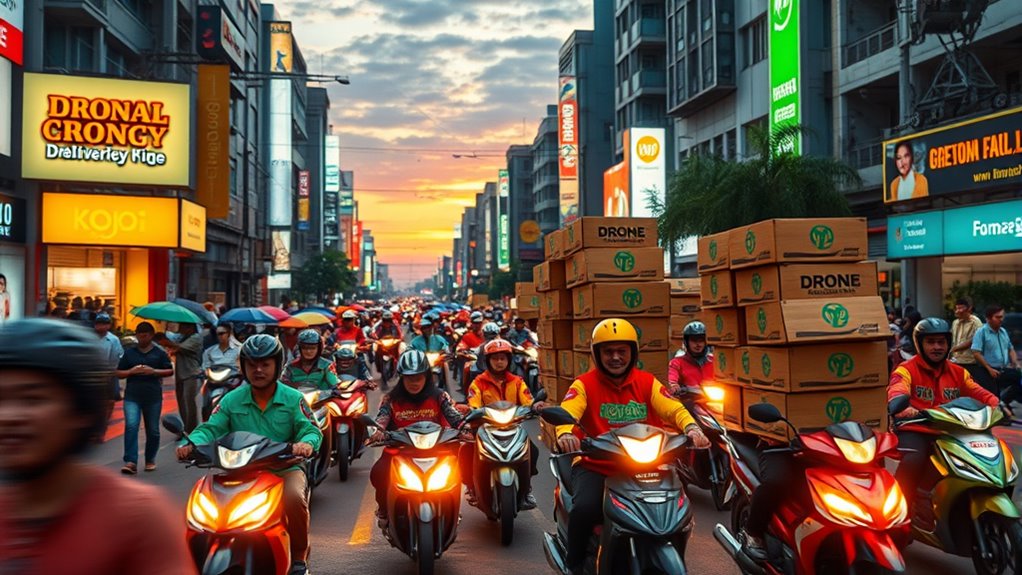

In Southeast Asia’s competitive grocery delivery scene, companies battle fiercely for speed and affordability, making last-mile logistics essential. Urban growth and high demand push them to optimize routes, use innovative tech, and guarantee fresh, reliable deliveries. Improving last-mile support helps meet consumer expectations for quick, hassle-free service. If you want to know how these strategies are shaping the future of grocery delivery and who’s leading the race, stay tuned to discover more.
Key Takeaways
- Intense competition among grocery delivery players drives innovation in last-mile logistics to gain market share.
- Urban density and high demand require optimized, fast, and cost-effective delivery networks.
- Technologies like dark stores and micro-fulfillment centers are critical for meeting consumer speed expectations.
- Personalization based on local preferences enhances customer loyalty and delivery efficiency.
- Security measures and data analytics improve delivery reliability, ensuring groceries arrive fresh and intact.
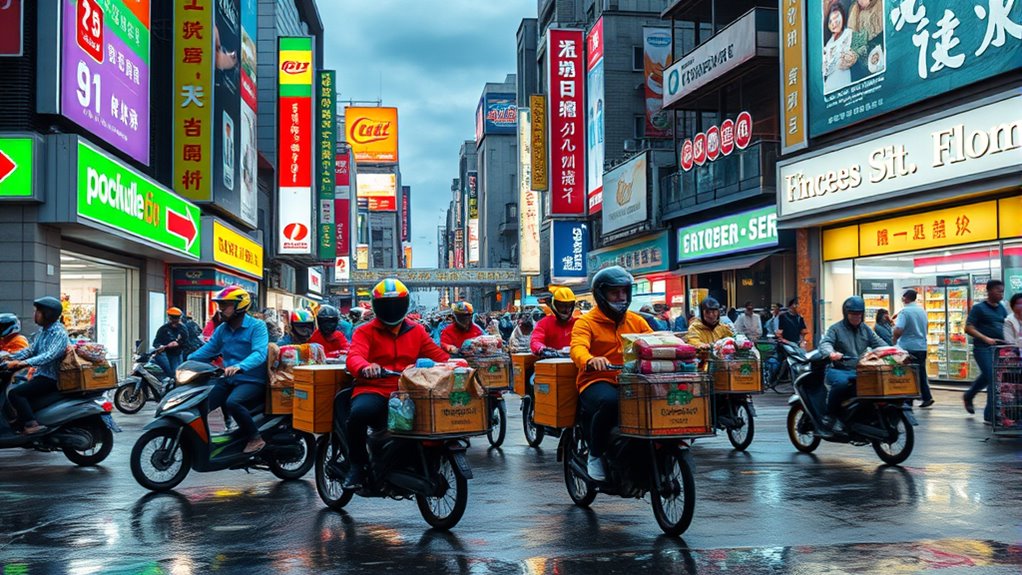
Grocery delivery in Southeast Asia has become fiercely competitive as multiple players battle for market dominance. If you’re steering through this landscape, you’ll quickly realize that urban logistics plays a crucial role in shaping how companies operate and deliver on consumer expectations. The dense, rapidly growing cities across the region demand efficient, reliable delivery networks that can handle high order volumes while maintaining speed and affordability. As delivery times shrink and customer expectations rise, companies are constantly refining their urban logistics strategies to stay ahead. They’re investing heavily in technology, optimizing delivery routes, and using data analytics to anticipate demand patterns. This focus on logistics isn’t just about speed; it’s about ensuring that groceries arrive fresh and intact, which directly impacts consumer satisfaction.
Your choices as a consumer are heavily influenced by these logistical improvements. You want your groceries delivered quickly, at a reasonable cost, and with minimal hassle. That means companies are competing fiercely to improve last-mile delivery, often experimenting with innovative solutions like dark stores, micro-fulfillment centers, and even autonomous vehicles. These efforts are aimed at reducing delivery times and costs, which are critical factors in your decision to order from one platform over another. Consumer preferences in Southeast Asia are shifting toward convenience, with a growing number of people expecting same-day or even same-hour deliveries. To meet these demands, companies are tailoring their offerings, providing flexible delivery windows, and expanding their product selections to include more fresh produce, household essentials, and specialty items.
Consumers now expect quick, affordable, and hassle-free grocery delivery with flexible options and expanded product choices.
This fierce competition has also sparked a race to understand and adapt to local consumer preferences. Different countries and cities within Southeast Asia have unique tastes and shopping habits, which companies are keenly studying to personalize their services. For example, in urban areas where space is limited, consumers might prioritize smaller, more frequent deliveries over bulk buys. Meanwhile, preferences for specific product types and brands influence how companies stock their inventories and plan their logistics routes. By aligning their offerings with local tastes and optimizing urban logistics, these businesses boost customer loyalty and gain an edge over rivals. Additionally, implementing advanced penetration testing methods helps companies identify vulnerabilities in their digital infrastructure, ensuring the security of customer data amid the rapid technological advancements.
Ultimately, your experience as a shopper in Southeast Asia’s grocery delivery scene hinges on how well companies can refine their urban logistics to match your evolving preferences. The more efficient and tailored their last-mile solutions become, the more likely you are to stick with a service that consistently delivers on speed, quality, and convenience. As the competition heats up, expect even more innovations designed to get your groceries to you faster, fresher, and more reliably, making the last mile not just a challenge but a strategic opportunity for growth.
Frequently Asked Questions
How Are Local Regulations Impacting Grocery Delivery Companies?
You’re likely finding that local regulations critically impact your grocery delivery operations. Regulatory compliance becomes more complex as you navigate licensing hurdles and varying rules across regions. These regulations can slow down your delivery process, increase costs, and create uncertainties. Staying updated on local laws, securing the right licenses, and adapting your practices are vital for maintaining smooth service and avoiding legal issues that could hinder your growth in competitive markets.
What Role Does Technology Innovation Play in These Wars?
Did you know that 65% of delivery companies now leverage AI optimization? In these wars, technology innovation is vital. You see, AI streamlines routes, boosts efficiency, and reduces costs, giving companies a competitive edge. Drone delivery also plays a significant role by enabling faster, contactless service, especially in dense urban areas. If you harness these innovations, you can stay ahead and meet rising customer expectations amidst fierce competition.
How Are Consumer Preferences Shifting in Southeast Asian Markets?
You notice that consumer behavior in Southeast Asia is shifting toward convenience, immediacy, and digital engagement. Purchase patterns now favor quick, contactless transactions, with more people ordering groceries online rather than in-store. You see a rise in preferences for affordable, diverse options and personalized experiences. As a result, delivery services must adapt to these changing demands, emphasizing speed, reliability, and tailored offerings to stay competitive in this evolving market.
What Sustainability Challenges Are Emerging in Last-Mile Delivery?
Like a tightrope walker balancing, you face sustainability challenges in last-mile delivery. You must prioritize green logistics and energy efficiency to reduce carbon footprints, but the rapid pace of delivery often leads to increased emissions and waste. Finding innovative solutions, such as electric vehicles and optimized routing, becomes essential. Without these efforts, the environmental toll could threaten your brand’s reputation and the future of eco-friendly urban mobility.
How Do These Wars Affect Small Local Businesses?
You might notice that these delivery wars cause local business disruption, making it harder for small shops to compete with larger platforms. This intense competition can push small businesses out of the market, weakening community resilience. As delivery services prioritize speed and scale, local businesses struggle to keep up, risking loss of community identity and economic diversity. Supporting local shops helps maintain community resilience amid these challenging delivery dynamics.
Conclusion
As these grocery delivery giants battle like lightning storms across Southeast Asia, the road ahead remains unpredictable. You can almost see the racecar engines revving, each vying for the finish line, while last-mile hurdles act like winding mountain roads, testing every turn. In this fast-paced race, only the most agile will reach the podium. So, keep your eyes on the horizon—this vibrant, chaotic landscape promises more twists and turns before the finish line is truly in sight.