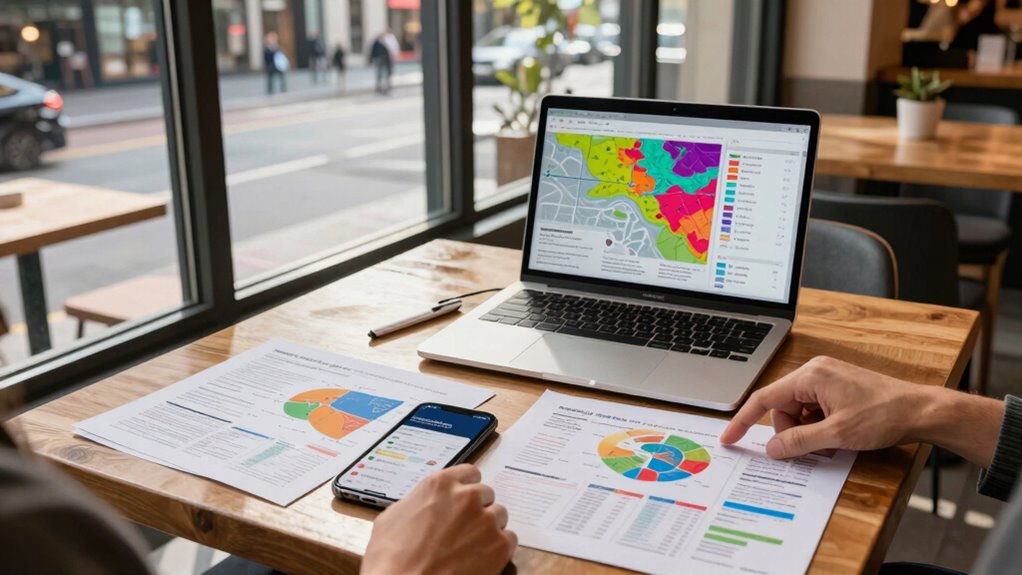

To judge business potential, you should analyze census data to understand your target demographics, such as age, income, and education levels, helping you identify promising customer profiles. Use maps to visualize location advantages, competition, and infrastructure, ensuring accessibility and identifying gaps in the market. Incorporate customer reviews for insights into preferences and pain points. Combining these data sources gives a clear picture of opportunities, and exploring further can help refine your strategic approach.

Get smart everyday buys delivered free with Prime
- Fast, free delivery on millions of items
- Prime Video, Amazon Music and more included
- Member-only deals all year
Key Takeaways
- Analyze census data to identify demographic trends and customer profiles in target areas.
- Use maps to assess physical infrastructure, competitor locations, and accessibility.
- Review customer feedback to uncover unmet needs and satisfaction levels in specific locations.
- Combine demographic, geographic, and review insights for a comprehensive market potential assessment.
- Leverage integrated data to target marketing, select optimal locations, and anticipate future demand.
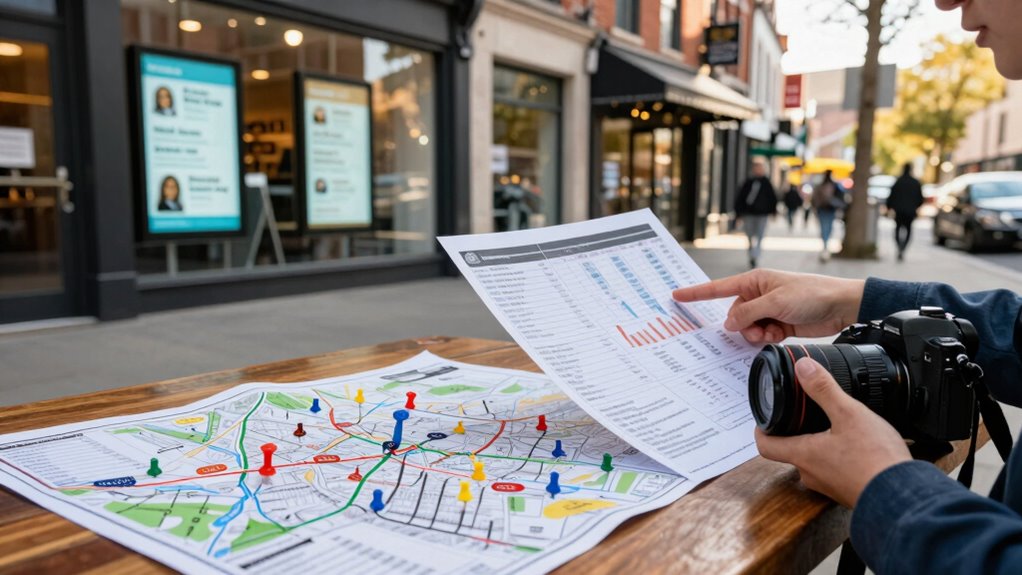
When evaluating a business opportunity, leveraging data from the census, maps, and customer reviews can give you a clear edge. These sources reveal essential insights about market trends and customer demographics, enabling you to make informed decisions. Census data provides an all-encompassing snapshot of the population, including age groups, income levels, education, and household sizes. This information helps you understand who your potential customers are and whether there’s a demand for your product or service in the area. For example, if the census shows a growing young population with increasing disposable income, opening a trendy café or boutique might be promising. Conversely, if the area’s demographics skew toward an aging population with limited disposable income, a different business approach may be necessary. Understanding demographic data can help you tailor your marketing strategies more effectively. Additionally, analyzing population growth trends can indicate whether an area is likely to experience future demand for your offerings. Recognizing these trends early can give you a competitive advantage in planning your business.
Maps are a powerful tool for visualizing the physical landscape. They help you identify the location of competitors, accessibility, and foot traffic patterns. By analyzing map data, you can determine if an area is saturated with similar businesses or if there’s a niche you can fill. For instance, if maps reveal a lack of dining options near busy transit hubs or popular parks, setting up a restaurant there could meet unmet demand. Maps also show zoning laws, parking availability, and infrastructure quality, all crucial factors influencing your business’s success. Combining this with customer reviews offers a layered perspective—reviews reveal what customers value, complain about, or wish was different. This integrated approach ensures you’re making well-rounded decisions based on both physical and experiential data. Considering the location’s accessibility can significantly influence customer turnout and overall business viability.
As an affiliate, we earn on qualifying purchases.
Frequently Asked Questions
How Do I Interpret Census Data for Niche Markets?
You interpret census data for niche markets by focusing on demographic segmentation and income analysis. Look at age, ethnicity, and household size to identify your target audience’s characteristics. Then, analyze income levels to gauge purchasing power. Combining these insights helps you understand if the area supports your niche, enabling targeted marketing and tailored products. This approach guarantees your business aligns with the community’s needs and economic capacity.
What Map Features Best Predict Customer Accessibility?
Think of map features like a roadmap guiding your business success. The best predictors of customer accessibility are transport infrastructure and demographic density. Well-connected roads and public transit options make it easier for customers to reach your business, while high demographic density indicates a larger potential customer base nearby. Prioritize these features on maps to identify locations where accessibility is seamless, boosting your chances of attracting and retaining customers.
How Reliable Are Online Reviews for Business Evaluation?
Online reviews can be helpful but aren’t foolproof for business evaluation. You should be cautious, as fake reviews and review manipulation can skew perceptions. Look for patterns like overly positive or negative feedback, and cross-check reviews across multiple platforms. Trust genuine, detailed reviews over suspiciously perfect ones, and consider other data sources like census and maps to get a clearer picture of a business’s true potential.
Can Geographic Data Predict Future Market Trends?
Sure, geographic data can predict future market trends, but don’t rely on it alone. Demographic shifts and economic indicators paint a clearer picture—yet many overlook these clues, hoping maps can do all the work. In reality, understanding these factors helps you see where a market’s headed, giving you an edge. So, while maps are handy, it’s the interplay of data that truly reveals future opportunities.
How Do I Combine Census, Maps, and Reviews Effectively?
You combine census, maps, and reviews by analyzing demographic shifts and cultural influences to identify promising locations. Use census data to understand population trends, age groups, and income levels. Maps help visualize these patterns geographically. Reviews reveal customer preferences and local culture. By integrating these sources, you get a thorough view of market potential, enabling smarter decisions on where to establish or expand your business effectively.
As an affiliate, we earn on qualifying purchases.
Conclusion
By harnessing census data, maps, and reviews, you can paint a clear picture of a business’s potential—almost like having a crystal ball. These tools help you gauge demand, understand local demographics, and spot area strengths or weaknesses. Think of it as plotting your course on a modern-day treasure map, guiding you through the landscape of opportunity. With this info, you’re better equipped to make smart decisions and avoid ending up in a business disaster like the Titanic.
As an affiliate, we earn on qualifying purchases.
demographic market research reports
As an affiliate, we earn on qualifying purchases.
As an affiliate, we earn on qualifying purchases.
Evergreen bestsellers Picks
bestsellers
As an affiliate, we earn on qualifying purchases.