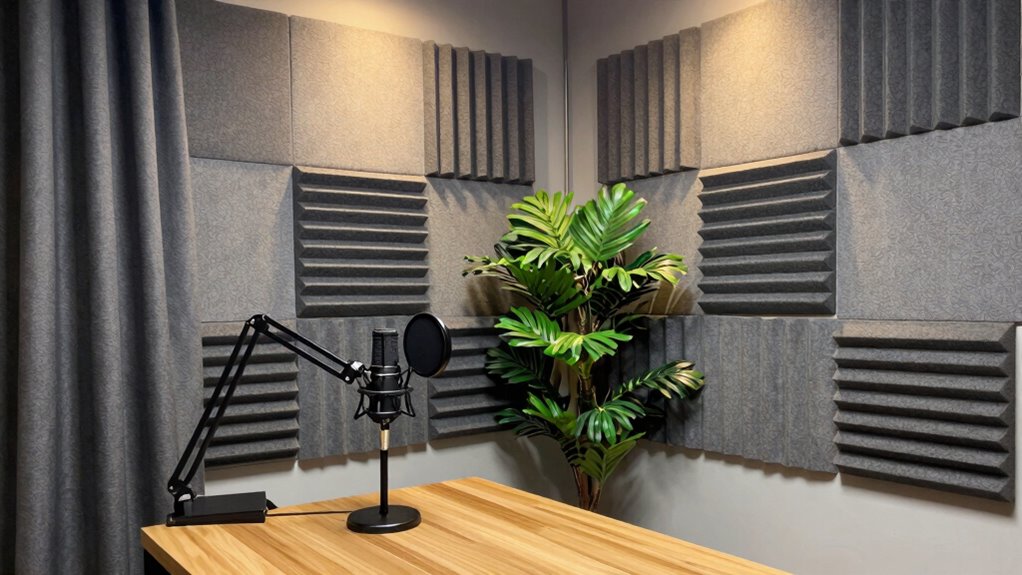

To improve your podcast room sound without building a booth, start by adding soft materials like curtains, rugs, and fabric-covered furniture to absorb sound. Arrange furniture to reduce reflections and position your microphone away from reflective surfaces and noisy windows or vents. Seal gaps around doors and windows to block external noise. Use DIY acoustic panels or household items to dampen echoes and minimize noise leaks. Keep exploring for more tips to create a professional-quality space.

Get smart everyday buys delivered free with Prime
- Fast, free delivery on millions of items
- Prime Video, Amazon Music and more included
- Member-only deals all year
Key Takeaways
- Use soft materials like rugs, curtains, and fabric-covered furniture to absorb sound and reduce echo.
- Place the microphone away from reflective surfaces and noise sources for clearer recordings.
- Add portable acoustic panels or household items like blankets around the recording area for noise reduction.
- Seal gaps around doors and windows with weatherstripping to prevent external noise intrusion.
- Position furniture strategically to minimize sound reflections and improve room acoustics.
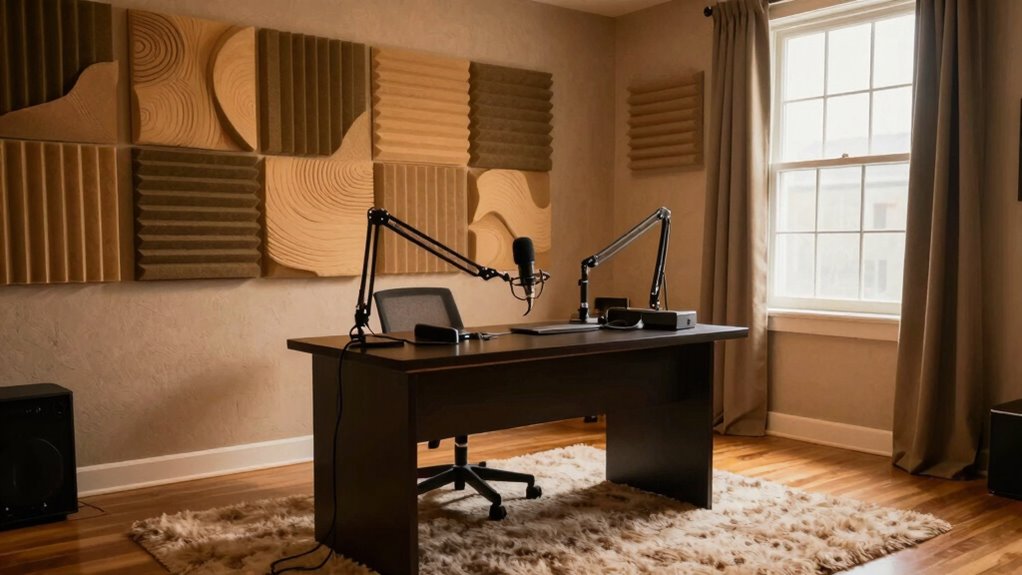
Have you ever wondered why some podcasts sound crisp and professional while others are muffled or echoey? The secret often lies in the room’s acoustics and how well you manage soundproofing techniques. You don’t need a fancy studio or a dedicated booth to improve your sound quality. Instead, you can make smart adjustments to your current space, turning it into an acoustically friendly environment that enhances your recordings.
Start by paying attention to your room’s acoustics. Hard surfaces like bare walls, floors, and ceilings reflect sound waves, causing echo and reverb. To counter this, introduce soft materials that absorb sound, such as thick curtains, rugs, or fabric-covered furniture. These help break up sound reflections and create a warmer, more focused audio. Placing a bookshelf filled with books against a wall is another effective way to scatter sound waves and reduce echo without cluttering your space. Additionally, understanding the principles of sound absorption can guide you to select the most effective materials for your setup. Adding plants or hanging tapestries can also help absorb sound and improve the overall acoustics. Moreover, experimenting with different room arrangements can reveal the optimal setup for minimizing unwanted reflections and noise.
Soft materials like curtains, rugs, and bookshelves absorb sound and reduce echo for crisper, warmer recordings.
Soundproofing techniques play a critical role in improving your audio quality. You want to prevent outside noise from creeping in and ensure your voice remains clear and isolated. Use weatherstripping around doors and windows to block drafts and sound leaks. Hanging heavy blankets or specialized acoustic panels on walls helps absorb unwanted noise and minimizes sound transmission to neighboring rooms. Even DIY solutions like foam mattress toppers or egg cartons can make a difference if placed strategically, though commercial acoustic panels are more effective.
Creating a dedicated corner or small enclosure within your room can also help. Position your microphone away from reflective surfaces and in a space that’s less prone to external noise. Using a mic stand and a pop filter will further improve clarity by reducing plosives and handling noise. If you’re recording in a shared space, consider placing a portable sound shield or shield made from household items around your microphone to contain your voice and block ambient sounds. Experimenting with soundproofing techniques can also optimize your setup further.
Finally, experiment with the arrangement of your furnishings and acoustic treatments. Sometimes, moving your desk or microphone placement can noticeably impact sound quality. Avoid placing your recording setup near windows or vents, as these areas tend to be noisier. The goal is to create a room that naturally minimizes echo and external noise, making your voice sound more professional. With a few strategic adjustments, you can greatly improve your podcast’s sound without building a dedicated booth.
As an affiliate, we earn on qualifying purchases.
Frequently Asked Questions
What Are the Best Portable Soundproofing Solutions for Small Spaces?
You should consider using soundproof curtains and portable isolation booths for small spaces. Soundproof curtains are easy to install, affordable, and effectively reduce echo and noise. Portable isolation booths provide a dedicated, quiet environment without permanent modifications, perfect for on-the-go recording. Combining these solutions offers flexible, efficient soundproofing, ensuring your recordings are clear and professional, even in compact or shared spaces.
How Can I Reduce Echo Without Expensive Acoustic Panels?
To reduce echo without expensive acoustic panels, focus on simple acoustic treatment solutions. Add soft furnishings like rugs, curtains, and cushions to absorb sound reflections. Position bookshelves filled with books or foam tiles strategically around your room to help dampen echo. You can also hang blankets or quilts on walls for effective echo reduction. These affordable options improve sound quality and make your space more suitable for podcasting without breaking the bank.
Are There DIY Methods to Improve Sound Quality Quickly?
Think of your room as a sponge soaking up sound waves—you can make it more absorbent with simple DIY acoustic treatments. Use everyday items like thick blankets, foam mats, or even duvet covers to create effective sound absorption techniques. Hang these around your space, especially on walls and ceilings. These DIY solutions act like sound traps, reducing echo and improving audio clarity without needing professional gear.
What Equipment Can Help Cancel Background Noise Effectively?
To effectively cancel background noise, you should use noise-canceling microphones designed for voice clarity. Proper microphone placement, like positioning the mic close to your mouth and away from noise sources, makes a big difference. Additionally, consider using a pop filter or foam windscreen to reduce unwanted sounds. Noise reduction software can also help clean up recordings afterward, ensuring your audio stays clear and professional without building a soundproof booth.
How Does Room Shape Influence Sound Quality and Recording?
Room shape considerably impacts sound quality by affecting acoustic reflections and overall clarity. Rectangular rooms with parallel walls often cause echo, while irregular or non-parallel walls help diffuse sound, reducing reflections. You should consider room dimensions that avoid too much echo, and add soft furnishings or acoustic panels to minimize reflections further. This approach creates a more controlled environment, improving your recordings without needing a dedicated booth.
As an affiliate, we earn on qualifying purchases.
Conclusion
By boosting your room’s acoustics, you’ll bring brilliance to your broadcasts and banish background blather. With simple solutions like strategic soft furnishings and savvy soundproofing, you can create a cozy, clutter-free space that sounds professional without building a booth. Remember, small shifts make significant sound. So, seize the space, soften surfaces, and stay committed to crafting a mesmerizing, clear-cut podcast. Your perfect podcasting place is just a few savvy steps away!
As an affiliate, we earn on qualifying purchases.
As an affiliate, we earn on qualifying purchases.
Halloween Picks
halloween
As an affiliate, we earn on qualifying purchases.