
Choosing between an audio interface and a mixer depends on your needs. If you’re focused on high-quality digital recording, an audio interface is ideal because it converts analog signals to digital for your computer. A mixer is better if you perform live, control multiple sound sources, or need real-time adjustments. Understanding these differences helps you pick the right gear, and if you keep exploring, you’ll find more details to make the best choice.

Get smart everyday buys delivered free with Prime
- Fast, free delivery on millions of items
- Prime Video, Amazon Music and more included
- Member-only deals all year
Key Takeaways
- Audio interfaces are ideal for high-quality digital recording and editing, while mixers excel in live sound and real-time audio control.
- Choose an audio interface for studio-focused tasks; opt for a mixer when managing multiple live inputs and performances.
- Audio interfaces typically have simpler controls for input/output management; mixers feature complex physical controls for real-time adjustments.
- Consider future scalability: interfaces are more suited for expanding digital recording setups, whereas mixers support adding multiple live channels.
- The decision depends on whether your priority is professional studio recording (audio interface) or live sound and performance mixing (mixer).
audio interface for digital recording
As an affiliate, we earn on qualifying purchases.
As an affiliate, we earn on qualifying purchases.
What Do Audio Interfaces and Mixers Do?
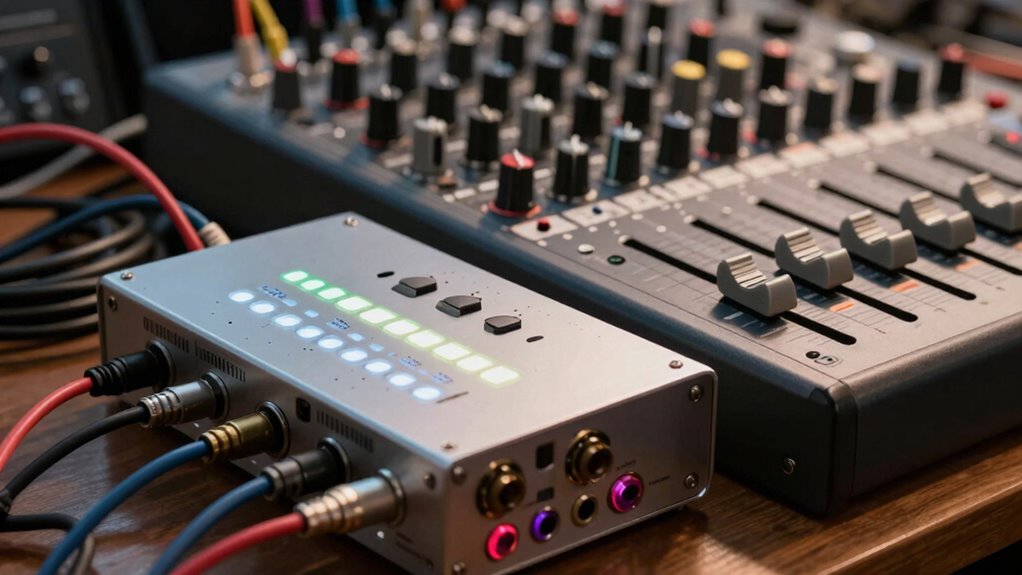
Audio interfaces and mixers both serve as essential tools for managing audio signals, but they do so in different ways. An audio interface focuses on converting analog signals from microphones—such as dynamic, condenser, or ribbon types—into digital data for recording or editing on your computer. It provides clean preamps and high-quality sound conversion, often requiring acoustic treatment in your space to guarantee ideal audio quality. Mixers, on the other hand, allow you to control multiple microphone inputs simultaneously, adjusting levels, EQ, and effects in real-time. They’re essential for live performances or complex recording setups. While an audio interface emphasizes sound quality and digitization, a mixer offers real-time control for multiple sources, making each suitable for different audio management needs. Additionally, studio equipment like outdoor sound systems can benefit from understanding the distinct roles of these devices to optimize both live and recorded audio environments. Knowing the difference between analog and digital signals can further help in choosing the right gear for your specific needs. It’s also important to understand the connectivity options available on each device to ensure compatibility with your existing setup.
As an affiliate, we earn on qualifying purchases.
How Are Audio Interfaces and Mixers Designed and Used?
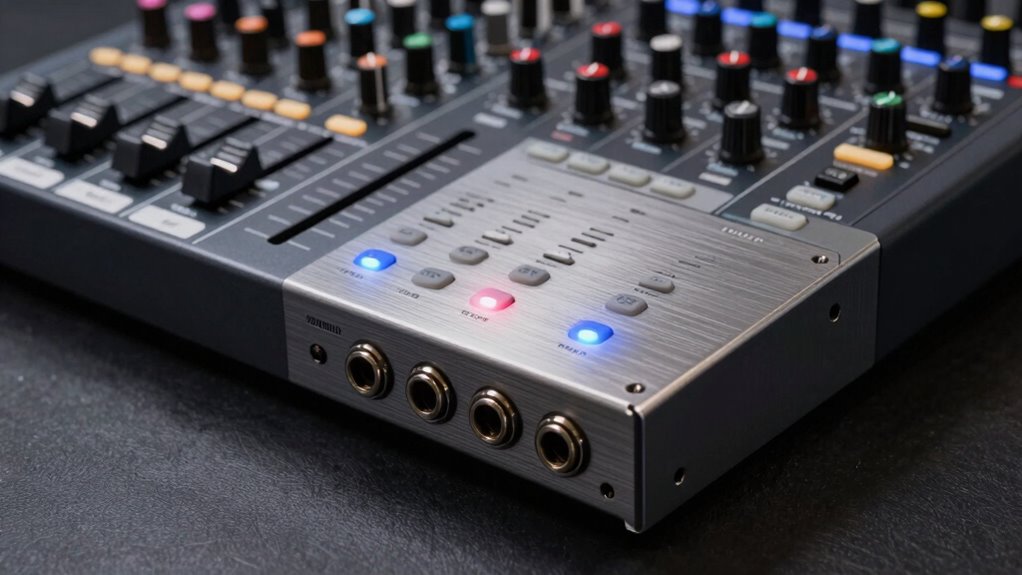
Both audio interfaces and mixers are designed with specific features that reflect their primary functions, shaping how you interact with audio signals. Audio interfaces emphasize device ergonomics by offering streamlined user interfaces focused on input/output management and digital conversion. They often feature minimal controls, making them simple to operate for recording and editing. Mixers, on the other hand, prioritize complex user interfaces with multiple physical controls, such as knobs, faders, and buttons, enabling real-time manipulation of multiple audio sources. Their design supports live sound and mixing scenarios, allowing you to adjust levels, EQ, and effects on the fly. Both devices are built to optimize your workflow, but their design philosophies cater to different usage contexts, whether for precise digital recording or dynamic live mixing.
USB audio interface for home studio
As an affiliate, we earn on qualifying purchases.
As an affiliate, we earn on qualifying purchases.
When Is an Audio Interface the Right Choice?
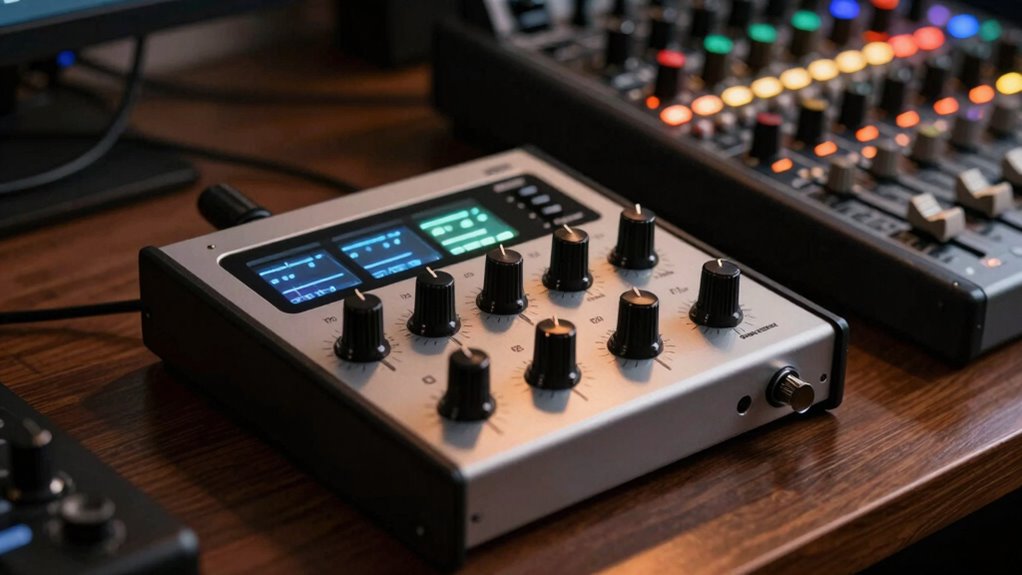
An audio interface is the right choice when you’re focused on recording high-quality audio into your computer, especially if you need clear digital conversion and easy connectivity for microphones, instruments, or line-level sources. It’s ideal for home studios, podcasting, or music production where pristine sound matters. If you’re into wireless streaming, an audio interface provides the low-latency, reliable connection you need. Plus, it can capture vintage analog sounds through specialized preamps or external gear, preserving their warmth in digital form. Additionally, an audio interface often supports digital audio standards, ensuring compatibility with various recording and production setups. Here’s a quick comparison:
| Feature | Audio Interface | Mixer |
|---|---|---|
| Use case | Recording into computer | Live sound, DJing |
| Connectivity | Focused on recording inputs | Multiple outputs and inputs |
| Vintage analogs | Preserves analog warmth | Less emphasis on digital quality |
| Wireless streaming | Supports high-quality digital input | Less suitable for streaming |
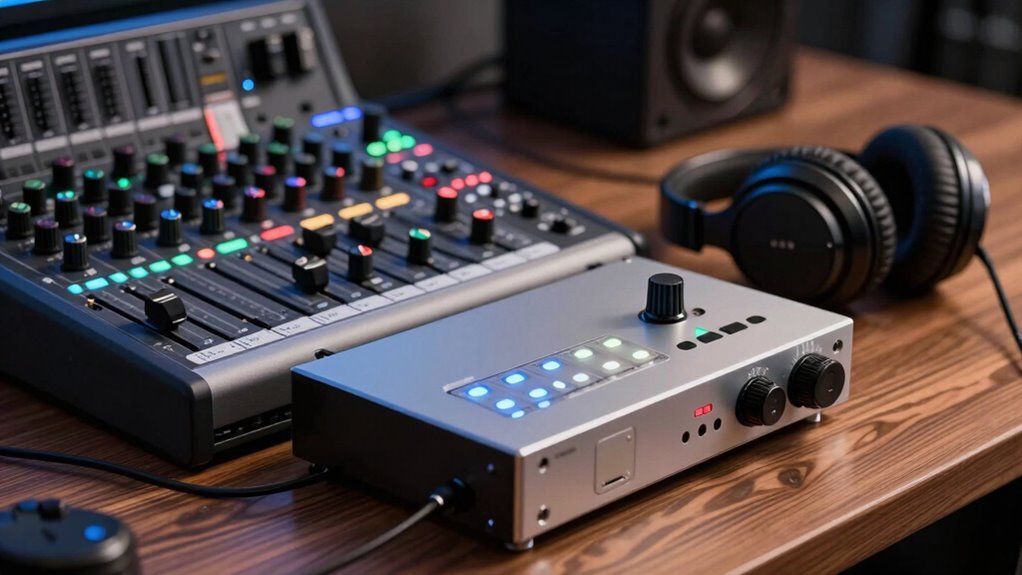
professional audio mixer with effects
As an affiliate, we earn on qualifying purchases.
As an affiliate, we earn on qualifying purchases.
What Features Matter Most in an Audio Interface?
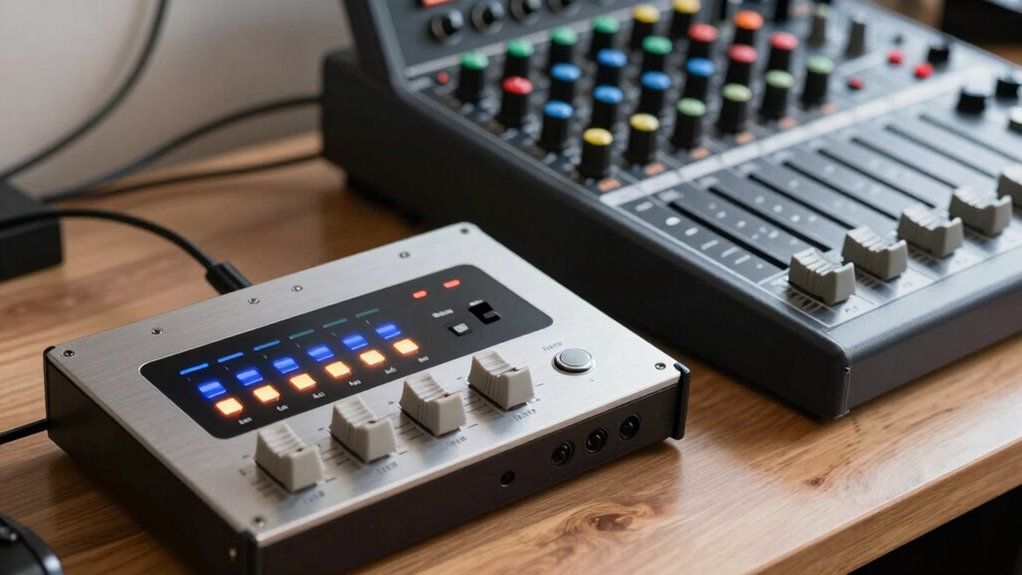
When choosing an audio interface, you need to take into account your input and output options to match your setup. Sound quality standards ensure your recordings stay clear and professional, while compatibility and connectivity determine how easily it integrates with your gear. Focusing on these features helps you find an interface that suits your needs perfectly.
Input/Output Options
Have you ever considered how the input and output options of an audio interface can impact your recording setup? These features determine how flexible your system is and how easily you can connect various devices. Look for multiple input types, like XLR and TRS, to accommodate microphones and instruments. Output options matter too, especially if you need to connect to studio monitors or headphones. Wireless streaming and Bluetooth compatibility are increasingly useful, allowing you to record directly from smartphones or stream audio effortlessly. If you plan to integrate your interface into a more complex setup, guarantee it offers the right mix of inputs and outputs. This flexibility can save you time and improve your overall workflow, making your recording process smoother and more versatile.
Sound Quality Standards
Since sound quality directly impacts your recordings, focusing on key features can make a significant difference in your setup. Look for an audio interface with precise sound calibration, which guarantees your recordings are accurate and true to the source. A good interface will also have a broad and flat frequency response, capturing all the nuances of your sound without coloration or distortion. This means the audio will sound natural and clear across all frequencies. High-quality components and low-latency processing also contribute to better sound fidelity. By prioritizing these standards, you’ll guarantee your recordings and mixes are professional-grade, making your entire workflow smoother and more reliable. Ultimately, solid sound quality standards help you produce clearer, more balanced audio every time.
Compatibility & Connectivity
- Wireless connectivity – Enables seamless wireless audio transfer, reducing cable clutter and increasing flexibility. Considering latency issues is important to ensure real-time performance without delays.
- Power requirements – Check if the interface needs external power or can run via USB, ensuring it fits your setup.
- Input/output options – Make sure it has enough inputs and outputs for your gear, such as MIDI or headphone jacks.
- Compatibility – Confirm it works with your operating system and DAW software to avoid integration problems.
- The effectiveness of performance cookies in tracking user interactions can also influence how well your setup integrates with your workflow, ensuring a smoother recording experience.
Why Choose a Mixer for Live Sound or Recording?
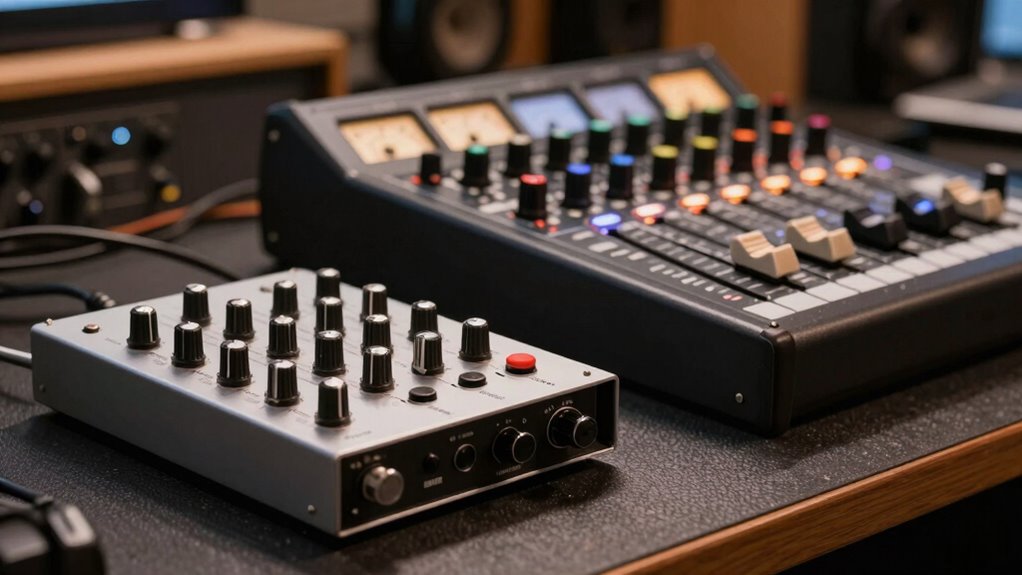
A mixer provides a versatile and hands-on way to manage multiple audio sources simultaneously, making it an ideal choice for live sound and recording scenarios. Its vintage aesthetic appeals to those who appreciate classic gear’s charm, adding character to your setup. With aesthetic customization options, you can tailor the mixer’s look to match your style or stage design, creating a unique visual presence. Using physical knobs and faders, you gain immediate control over each channel, allowing for quick adjustments during performances or recordings. Unlike digital alternatives, a mixer’s tactile interface fosters intuitive operation, which is *essential* in high-pressure environments. Additionally, a mixer’s role in society influences how audio technology impacts live and recorded sound quality, making it a valuable tool for both professionals and enthusiasts. Overall, a mixer’s combination of practical functionality and aesthetic appeal makes it a preferred tool for live sound engineers and recording enthusiasts alike.
Sound Quality and Connectivity: Which Device Performs Better?
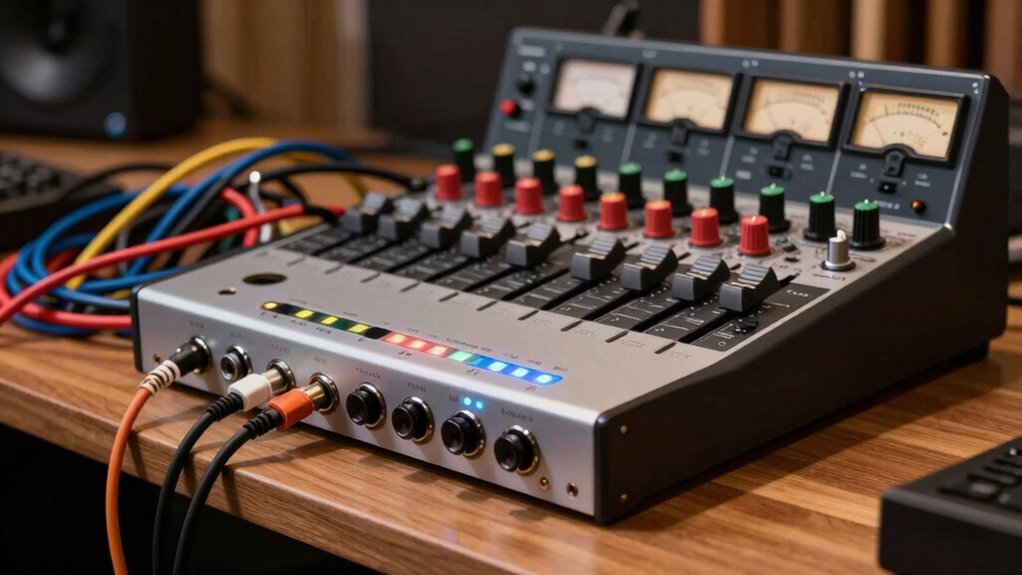
When comparing sound quality and connectivity, you’ll notice differences in signal clarity and fidelity that impact your recordings or mixes. Connectivity options and flexibility also play a role in how easily you can set up and expand your system. Additionally, lower noise levels and minimal interference are vital for achieving professional, clean audio results. Incorporating high-quality components can also influence the overall audio fidelity and ensure a more immersive listening experience.
Signal Clarity and Fidelity
Signal clarity and fidelity are essential for guaranteeing your audio sounds professional and accurate. When comparing devices, consider how well they preserve sound quality. A high-quality audio interface typically offers a broader frequency response, capturing more detail across the spectrum, and a wider dynamic range, preventing distortion at high volumes. Mixers, on the other hand, may introduce slight noise or signal degradation during multiple channel processing. To evaluate, look at:
- Frequency response – wider means better sound detail.
- Dynamic range – larger range ensures clarity at quiet and loud sounds.
- Preamp quality – affects overall sound fidelity.
- Connectivity quality – impacts signal integrity from source to output.
Choosing the right device depends on your need for pristine fidelity and minimal signal loss.
Connectivity Options and Flexibility
Connectivity options and flexibility considerably influence how easily you can integrate your audio device into various setups. An audio interface generally offers more wired options, such as USB, Thunderbolt, or Thunderbolt 3, providing high-quality, reliable connections. Mixers often include multiple input and output ports, making them versatile for live performances or complex setups. Wireless connectivity is less common but increasingly available on modern mixers, allowing you to connect devices without cables. Power requirements also matter; audio interfaces typically need external power or bus power via USB, while many mixers operate on standard AC power, offering more stability during extended use. Your choice depends on your setup’s complexity and mobility needs, affecting how seamlessly your gear fits into your workflow.
Noise Levels and Interference
While connectivity options determine how easily your gear can be integrated, the quality of your audio often hinges on how well your device minimizes noise and interference. Noise issues, like ground loop hums or electromagnetic interference, can markedly degrade sound quality. To reduce these problems:
- Use balanced connections to help cancel out electromagnetic interference.
- Keep cables away from power sources and other electronic devices.
- Install ground loop isolators if you experience hum from grounding issues.
- Choose gear with good shielding and low input noise levels.
- Incorporating mind-body healing techniques like yoga can help reduce stress and improve focus during audio setup and troubleshooting.
These steps help guarantee cleaner audio, free from unwanted noise. A device’s ability to minimize interference directly impacts sound clarity, making it an essential factor when selecting between an audio interface and a mixer.
Best Gear for Small Home Studios vs. Live Performances
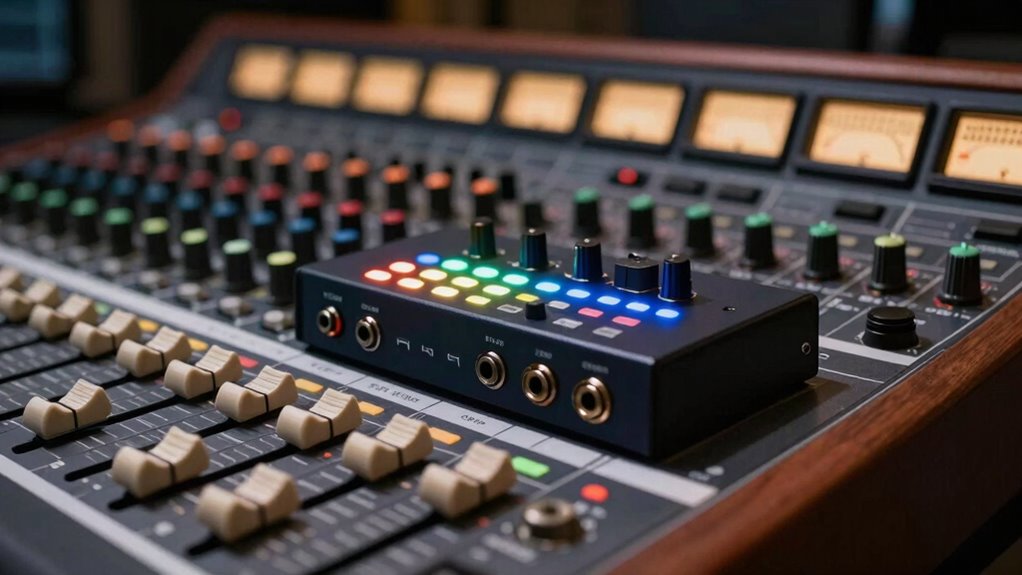
Choosing the right gear for small home studios versus live performances requires understanding the unique demands of each setting. For home studios, focus on compact, versatile equipment with vintage aesthetics and wireless capabilities for convenience and style. Live setups need rugged gear with high durability, powerful outputs, and easy portability. Additionally, considering backup power solutions can ensure uninterrupted sessions or performances during outages or storms. Ensuring reliable connections is essential when selecting equipment for both environments to prevent signal loss or interference. Incorporating sound quality considerations is crucial for achieving professional results in both scenarios.
How Much Do Audio Interfaces and Mixers Cost?
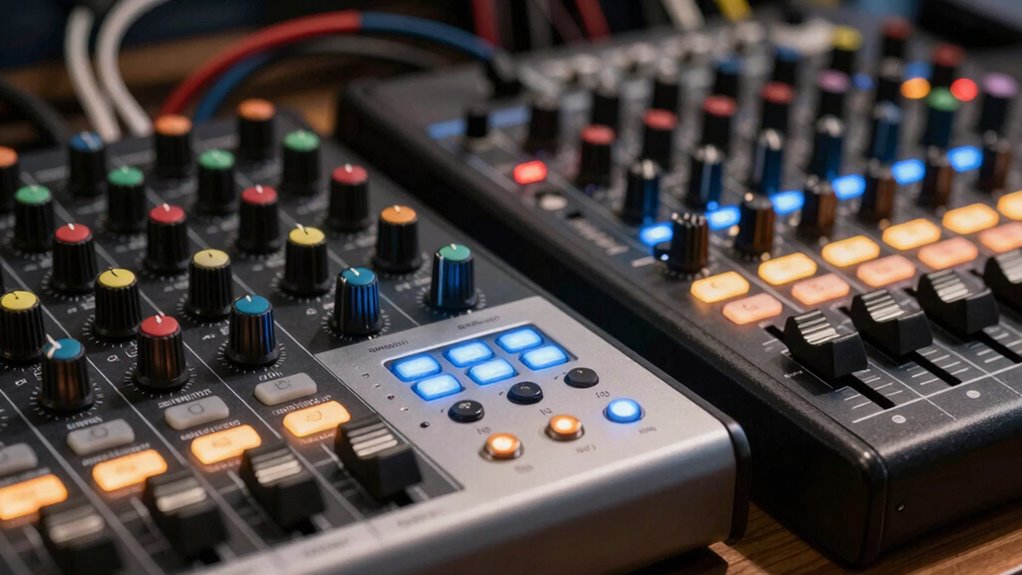
Audio interfaces and mixers come in a wide range of prices, so your budget plays a significant role in determining which models are accessible. Generally, you’ll find options starting at budget considerations under $100, suitable for beginners. Mid-range models, around $200-$500, balance features and affordability. High-end units, exceeding $1,000, often boast superior brand reputation and professional quality. Here’s what to contemplate:
Choose audio interfaces and mixers within your budget, balancing features, quality, and brand reputation for reliable, professional results.
- Basic models for beginners or casual use.
- Mid-tier options with more inputs and better sound quality.
- Top-tier units for professional studios.
- Brand reputation, influencing durability and resale value. Additionally, choosing equipment with reliable components can ensure longevity and consistent performance over time.
Your budget influences your choice, but investing in reputable brands ensures reliability and long-term satisfaction. Additionally, considering connected equipment can enhance your overall setup and performance. For example, choosing the right audio accessories can significantly improve your sound quality. Weigh these factors carefully to match your needs and financial plan.
How to Pick the Right Audio Gear for Your Needs

Selecting the right audio gear depends on understanding your specific needs and how you plan to use it. For creative applications like recording music, podcasts, or live streaming, consider a device that offers flexibility and high-quality inputs. Reflect on the historical evolution of audio gear—early equipment focused on simple functionality, while modern devices incorporate advanced features for versatility. If you’re just starting, opt for an interface with straightforward controls and multiple inputs, or a mixer if you need hands-on control for live performances. Think about your future projects as well, choosing gear that can grow with your skills. Identifying your primary use case—whether recording, mixing, or live sound—helps you select the most suitable gear that balances features, budget, and ease of use.
Common Mistakes When Choosing Between an Audio Interface and a Mixer
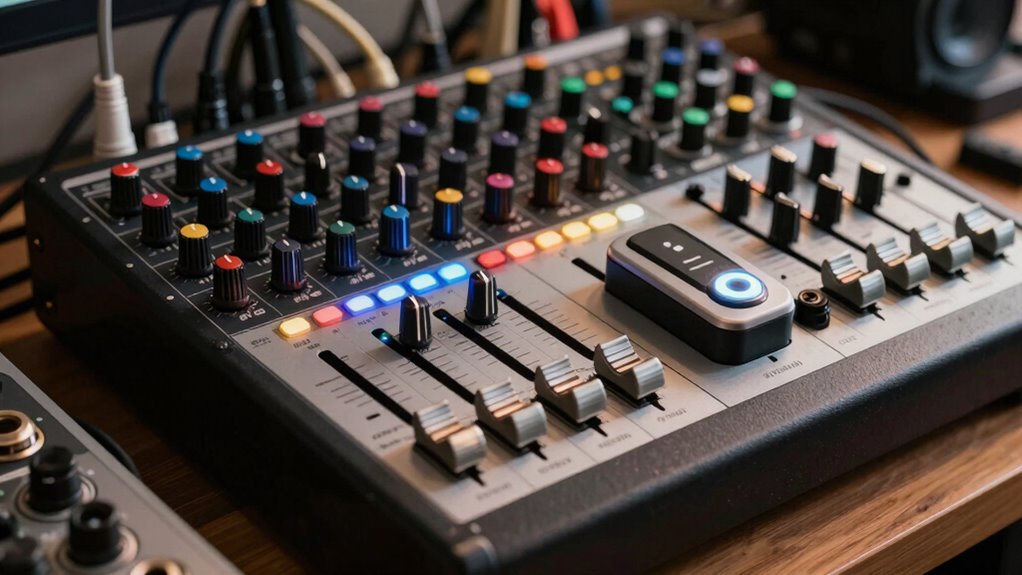
Many people make the mistake of overlooking a device’s capabilities, which can lead to choosing equipment that doesn’t meet their needs. Ignoring future expansion plans can also limit your options down the line, causing you to upgrade sooner than necessary. Additionally, misunderstanding your input requirements might result in selecting a device that’s either overkill or underpowered for your setup.
Overlooking Device Capabilities
One common mistake is overlooking the specific capabilities of each device, which can lead you to choose an option that doesn’t meet your needs. Understanding device limitations is key, especially considering your user expertise. If you underestimate what a mixer can handle, you might find it lacking for complex setups. Conversely, assuming an audio interface can replace a mixer’s mixing capabilities can cause frustration. To avoid this, consider:
- How many channels you need for your setup.
- Whether you require built-in effects or EQ.
- If your user expertise matches the device’s complexity.
- The need for hardware or software routing options.
Ignoring these details can result in mismatched gear, limiting your workflow and growth. Properly evaluating device capabilities ensures you select the right gear for your current and future needs.
Ignoring Future Expansion
While it’s easy to focus on your current needs, ignoring future expansion can lead to significant limitations down the line. You might choose an audio interface or mixer that meets today’s demands but lacks future proofing options. Scalability considerations are essential if you plan to grow your setup, add more instruments, or incorporate additional microphones later. A device with limited inputs and outputs can restrict your creativity and force costly upgrades prematurely. Think about whether the gear allows for easy expansion, such as extra channels or integrated features. Failing to take this into account can result in outdated equipment that hinders your growth. Investing in a system with better scalability ensures you won’t outgrow it quickly, saving you time and money in the long run.
Misunderstanding Input Needs
Choosing between an audio interface and a mixer often hinges on understanding your input needs, but it’s a common mistake to overlook the number and types of connections you’ll require. Consider these factors:
- Do you use wireless microphones that need reliable, multiple channels?
- Will you connect instruments, microphones, or both simultaneously?
- Do you require direct monitoring or headphone outputs?
- Is your acoustic treatment setup sensitive to input quality, demanding better preamps?
- If you’re incorporating electric instruments like electric dirt bikes or bike generators into your setup, understanding their power output and connection options can also influence your gear choice.
Ignoring these needs can lead to inadequate gear that limits your setup’s flexibility. For example, wireless microphones might need specific inputs, and poor preamps can affect acoustic treatment results. Assess your current and future input demands carefully to choose the right device that scales with your setup.
Frequently Asked Questions
Can I Use an Audio Interface and Mixer Together?
Yes, you can use an audio interface and a mixer together. To do this effectively, make sure they’re compatible with your studio setup and understand signal routing. Connect the mixer’s outputs to the audio interface’s inputs to record multiple channels simultaneously or manage live sound. Properly configuring your studio’s hardware allows seamless integration, giving you flexible control over your audio signals and improving your overall recording or mixing workflow.
Do Both Devices Support MIDI Connections?
Both devices support MIDI connections, but their capabilities vary greatly. An audio interface typically offers robust MIDI compatibility, making it perfect for digital integration and controlling virtual instruments. Mixers, on the other hand, usually have limited or no MIDI support unless specifically designed for it. If digital integration is your goal, choose an audio interface with MIDI features, because relying solely on a traditional mixer might leave your setup in the dust.
How Do I Connect Multiple Microphones Simultaneously?
To connect multiple microphones simultaneously, you should use a mixer, which allows you to connect several mics with individual controls for placement and sound isolation. Position each microphone carefully to optimize placement and minimize bleed. The mixer’s multiple channels help you manage sound isolation and clarity, giving each microphone its own dedicated input. This setup guarantees clear, balanced audio, especially when recording or live streaming with multiple sources.
Are There Portable Options for Live Performances?
Imagine you’re performing under the stars, and suddenly, a battery-powered, compact device appears—perfect for live gigs. Yes, there are portable options designed specifically for live performances. These gear pieces are lightweight, battery operated, and easily fit into your backpack. They offer multiple inputs, great sound quality, and user-friendly controls, enabling you to perform anywhere without sacrificing audio quality. These portable solutions make live music effortless and spontaneous.
Which Device Is Better for Podcast Recording?
For podcast recording, an audio interface is generally better because it offers superior recording quality and clearer sound. It’s easier to connect microphones directly and guarantees professional audio output. When comparing costs, audio interfaces are often more affordable and provide better value for solo or small-group podcasts. Mixers can be useful if you need to manage multiple audio sources live, but for most podcasting needs, an audio interface is the smarter choice.
Conclusion
Choosing between an audio interface and a mixer is like picking the right paintbrush for your masterpiece—you want tools that suit your needs perfectly. By understanding their roles, features, and best uses, you can avoid the confusion and craft soundscapes that truly resonate. Whether you’re recording in a cozy home studio or rocking a live show, the right gear will be your loyal compass guiding you through the sonic landscape.
Halloween Picks
halloween
As an affiliate, we earn on qualifying purchases.