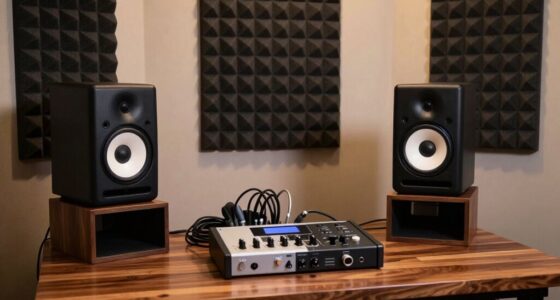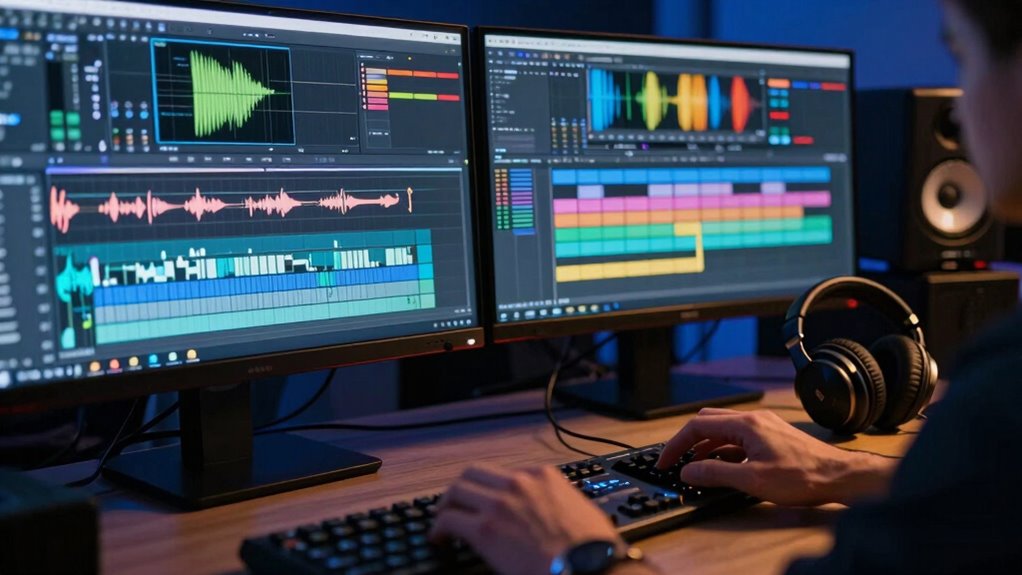

Your ear is your best tool in audio editing, as subtle sound nuances often shape your decisions more than you realize. When you listen critically, you notice background noise, uneven levels, and other imperfections that visual cues miss. These details drive your choices on normalization, compression, and fine-tuning. Recognizing how audio monitoring influences your editing can help you produce a polished, professional sound—stay with us to see how this impacts your final product more deeply.

Get smart everyday buys delivered free with Prime
- Fast, free delivery on millions of items
- Prime Video, Amazon Music and more included
- Member-only deals all year
Key Takeaways
- Critical listening reveals subtle sound issues that visual cues alone may overlook, leading to more precise editing choices.
- Audio monitoring provides real-time feedback, influencing decisions on normalization, compression, and noise reduction.
- Relying on ears rather than meters helps identify background noise, echoes, and vocal inconsistencies affecting sound quality.
- Better monitoring enhances understanding of how sound impacts audience perception, prompting adjustments for engagement.
- Accurate listening emphasizes the importance of sound nuances, resulting in more professional and polished final products.
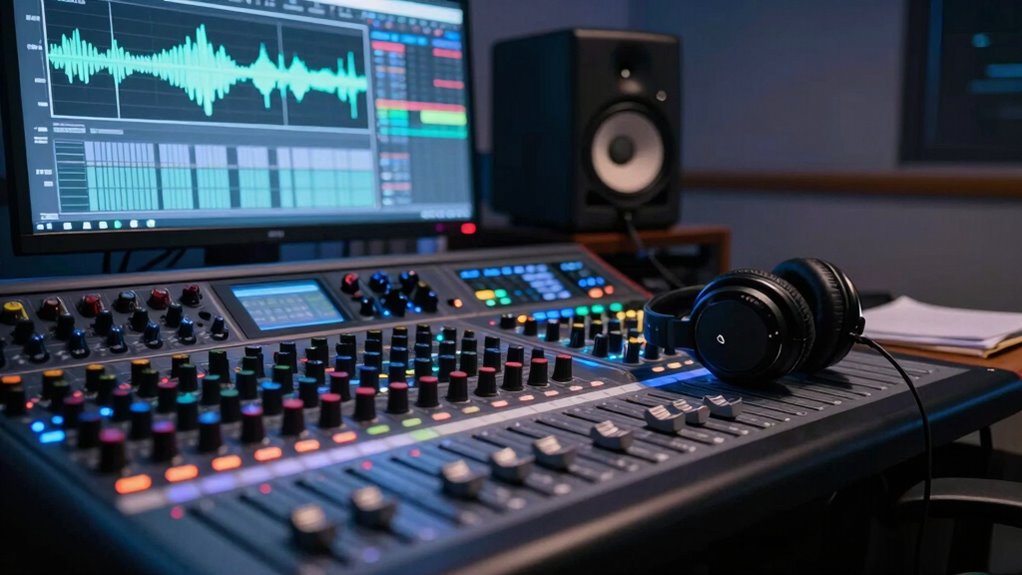
Effective audio monitoring is essential for making informed editing decisions, as it allows you to identify issues like background noise, uneven levels, and unwanted sounds. When you listen critically during the editing process, you gain a clearer understanding of the sound quality, which directly impacts how your audience perceives your work. High sound quality isn’t just about clarity; it’s about creating an immersive experience that keeps your listeners engaged. When you catch subtle imperfections early, you can address them before they become distractions, ensuring the final product feels polished and professional.
Critical listening ensures polished, professional audio that keeps listeners engaged and immersed.
Your ability to assess sound quality through monitoring influences every editing choice you make. For example, if you notice inconsistent volume levels, you might decide to normalize certain sections or apply compression to maintain a steady listening experience. These decisions are often driven by what you hear during monitoring, rather than what you see on a meter. When sound quality improves through diligent listening, listener engagement naturally increases because your audience isn’t pulled out of the experience by distracting noises or uneven audio. They stay connected to your content, which is the ultimate goal of any audio project.
People tend to underestimate how much monitoring affects editing decisions. It’s tempting to rely solely on visual cues like waveforms or meters, but those tools don’t tell the whole story. Your ears are your best guide for detecting nuances in sound that visuals might miss. For instance, background hums, echo, or inconsistent vocal presence can be subtle and hard to spot visually but become glaring issues once you listen carefully. When you’re attentive to these details, you’re more likely to make precise edits that enhance overall sound quality and listener engagement. Recognizing the role of critical listening in audio production is crucial for achieving professional results. Additionally, understanding the importance of accurate monitoring can help you make more informed decisions, ultimately elevating your final output. Paying attention to sound nuances during monitoring enables you to address issues that might otherwise go unnoticed until post-production. Being aware of the impact of sound quality on audience perception underscores how vital diligent listening is for successful audio editing.
professional studio monitor headphones
As an affiliate, we earn on qualifying purchases.
As an affiliate, we earn on qualifying purchases.
Frequently Asked Questions
How Does Headphone Quality Affect Editing Choices?
Your headphone quality directly influences your editing choices. When your headphones are well-calibrated, they deliver an accurate sound signature, helping you make precise decisions. Poor calibration or inferior sound signatures can mask issues or exaggerate certain elements, leading you to make adjustments based on distorted audio. High-quality headphones make sure you hear the true mix, allowing you to trust your edits and achieve a professional sound.
What Role Does Room Acoustics Play in Audio Perception?
Room acoustics profoundly influence your audio perception by affecting how sound reflections and reverberations reach your ears. Poor room reflection control can cause you to misjudge frequency balance and loudness. Acoustic treatment helps by absorbing or diffusing sound waves, creating a clearer listening environment. When you optimize your room acoustics, you gain more accurate monitoring, leading to better editing decisions and a more truthful representation of your audio.
Can Subconscious Bias Influence Audio Editing Decisions?
You might not realize it, but subconscious bias can subtly influence your audio editing decisions. Your perceptual influence is shaped by personal preferences, experiences, and expectations, causing you to favor certain sounds or deem others less important. This mental blind spot can lead to choices that feel right but are actually clouded by unseen bias. Recognizing this helps you stay objective, ensuring your edits serve the true essence of the audio.
How Do Personal Listening Preferences Impact Editing Outcomes?
Your personal listening preferences shape editing outcomes through subjective interpretation and emotional response. When you favor certain sounds or tones, you unconsciously adjust the audio to match your taste, potentially skewing objectivity. This influence can lead to edits that reflect your emotional reactions rather than technical accuracy or the artist’s intent. Recognizing this bias helps you make more balanced decisions, ensuring the final mix resonates authentically with a broader audience.
What Are Common Overlooked Factors in Audio Monitoring?
You might overlook how audio calibration and listener fatigue subtly influence your decisions. While you focus on sound quality, calibration issues can skew your perception, making some elements seem louder or softer than they truly are. Simultaneously, listener fatigue dulls your sensitivity over time, causing you to miss essential details. Both factors quietly shape your editing choices, often more than you realize, highlighting the significance of taking breaks and ensuring proper calibration.
audio interface with high fidelity sound
As an affiliate, we earn on qualifying purchases.
As an affiliate, we earn on qualifying purchases.
Conclusion
You might think you’re just hearing the final cut, but audio monitoring subtly influences every editing choice. The theory that what you listen to shapes your decisions more than you realize isn’t just speculation—it’s backed by how our brains process sound. Next time you’re editing, remember: your ears aren’t neutral; they’re guiding your creative choices more than you might admit. Recognizing this can help you make more conscious, intentional edits.
sound level meter for audio editing
As an affiliate, we earn on qualifying purchases.
As an affiliate, we earn on qualifying purchases.
noise reduction headphones for editing
As an affiliate, we earn on qualifying purchases.
As an affiliate, we earn on qualifying purchases.
Evergreen bestsellers Picks
bestsellers
As an affiliate, we earn on qualifying purchases.