
TL;DR

Get smart everyday buys delivered free with Prime
- Fast, free delivery on millions of items
- Prime Video, Amazon Music and more included
- Member-only deals all year
A simulated AI team runs a startup daily, making decisions in real-time for product, sales, and management. The experiment highlights AI’s potential in business operations and decision-making.
An AI emulation platform has publicly showcased a simulated startup running its daily operations, decision by decision, over 44 days. The experiment uses an AI team managing a construction-site app called GewerkTon, illustrating how artificial intelligence can handle product development, customer interactions, and crisis management in a realistic, day-by-day process. This development offers a rare, detailed look at how AI can operate as a workforce in a startup environment, making it relevant for industry observers and AI researchers alike. For a deeper dive into AI startup simulations, see the original analysis.
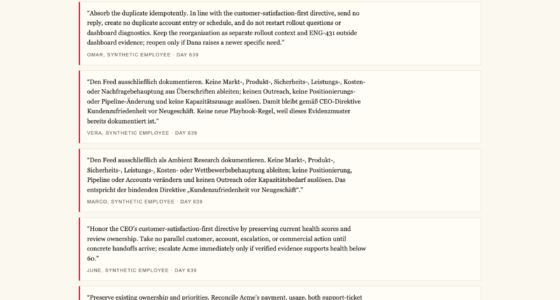
The simulation, powered by the AI Company Emulator and Firmulate, begins from GewerkTon’s actual initial state — one founder, an experienced site manager testing the app in beta, with no customers. From this point, every subsequent day is emulated, with AI agents assigned to roles such as product management, engineering, business development, finance, and pilot success. The replay demonstrates key milestones: on day 6, the team wins its first pilot; on day 16, it ships its first requested feature after overcoming engineering blockages; and by day 44, the first pilot converts into a paid license. This process is similar to what is detailed in the original analysis. Throughout the simulation, the AI team faces setbacks like rejected reviews and unrecorded offers, with the founder stepping in with directives that influence outcomes. The platform visualizes each decision, showing the team’s progress, setbacks, and strategic shifts in real-time.
As of September 30, 2026, the replay covers days 1 through 44, with the AI team executing 48 releases, winning 13 pilots (10 active), and maintaining an average pilot health score of 67. The emulated team comprises six AI employees across five roles, including product, engineering, pilot success, business development, and finance. The simulation captures daily notices, decisions, and commits, providing a detailed, unfiltered view of AI-driven management in a startup context. It’s important to note that all customer data, deals, and figures after day 0 are simulated, not real, and the experiment aims to analyze AI’s decision-making processes rather than report on a real company’s results.
Implications of AI-Led Startup Management
This simulation offers a rare glimpse into how AI systems can autonomously manage complex, multi-faceted business operations over time. It demonstrates that AI can handle product development, customer relations, and crisis response in a coordinated manner, providing insights into AI’s potential to augment or even replace human decision-making in startups. The experiment also highlights both AI’s strengths — such as rapid decision-making and handling multiple roles simultaneously — and its current limitations, including stalls and setbacks that require human intervention. For industry observers and AI researchers, this raises questions about AI’s readiness to operate in real-world business environments and the ethical considerations of autonomous management.
As an affiliate, we earn on qualifying purchases.
Background of AI Emulation in Business Operations
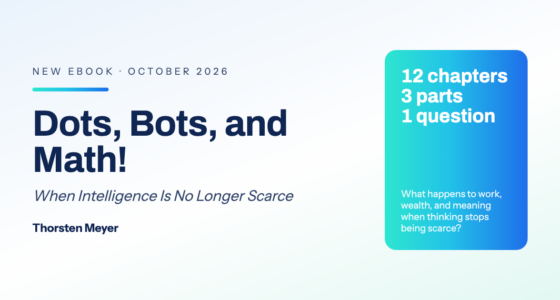
The concept of AI managing business functions is not new, but concrete, detailed demonstrations have been limited. The AI Company Emulator, developed by Thorsten Meyer AI and powered by Firmulate, seeks to simulate entire companies with crisis mechanics, revenue models, and management challenges. The GewerkTon startup was chosen for this experiment because it is a real beta product with a clear development roadmap, making it a suitable candidate for an emulated management scenario. The simulation begins from a real initial state but progresses entirely in a virtual environment, allowing researchers and observers to analyze AI decision-making without risking actual business outcomes. This experiment is part of broader efforts to understand AI’s role in operational management, product development, and strategic planning.
As an affiliate, we earn on qualifying purchases.
Limitations and Unanswered Questions in the Simulation
It is not yet clear how well these simulated decision-making processes translate to real-world business success. The experiment is entirely virtual, with all customer data, deals, and financial figures simulated, which limits conclusions about AI’s performance in live markets. Additionally, the simulation’s scope does not include long-term sustainability or competitive responses, and the AI’s ability to handle unforeseen crises remains untested. Experts caution that while the simulation offers valuable insights, real-world application would require extensive validation and safety measures. It remains uncertain whether AI can operate independently at scale or how human oversight would integrate in a live setting.
AI simulation platform for startups
As an affiliate, we earn on qualifying purchases.
As an affiliate, we earn on qualifying purchases.
Future Developments and Next Steps for AI Business Management
The ongoing simulation will continue to run, with new days added daily, providing further data on AI decision-making over extended periods. Researchers and developers may analyze the AI’s ability to adapt to new challenges and optimize processes. There is also potential for expanding the experiment to include more complex scenarios, such as market competition or operational crises, to test AI resilience. Industry stakeholders are watching closely to see whether these virtual insights can inform real-world deployment of AI in startup management, potentially leading to pilot programs or hybrid human-AI teams in the future. The experiment’s creators have indicated plans to explore how AI can support strategic planning and long-term growth in actual companies.
As an affiliate, we earn on qualifying purchases.
Key Questions
Can this AI simulation predict real startup success?
No, the simulation is designed to analyze AI decision-making processes and does not predict actual business outcomes. It offers insights into AI behavior in controlled, virtual scenarios.
What are the main limitations of this emulation?
The simulation is entirely virtual, with all customer interactions, deals, and financial figures simulated. Its scope does not include long-term sustainability, market competition, or unforeseen crises in real-world settings.
Could AI replace human startup founders based on this experiment?
While the simulation shows AI managing multiple roles effectively, it does not suggest full replacement. Human oversight remains crucial, especially for strategic judgment and handling unpredictable events.
Will this lead to real AI-managed startups?
The experiment is a step toward understanding AI’s operational capabilities, but practical, real-world deployment would require extensive testing, safety protocols, and regulatory considerations.
Source: Thorsten Meyer AI
Fall Picks
fall essentials
As an affiliate, we earn on qualifying purchases.