

High-yield savings accounts can help keep cash accessible while earning interest, but the right choice depends on more than a headline rate. My best overall pick is The High-Yield Cash Guide (2026 Edition), which focuses directly on choosing savings accounts and CDs. For first-time savers, Getting Started with High-Yield Savings Accounts takes a beginner-friendly angle, while High-Yield Savings, CDs, and Money Market Accounts compares several cash options. These titles are guides rather than bank accounts, so none can confirm a provider’s current rate, fees, or deposit protections for you. Keep reading for my full comparison and a practical checklist for evaluating accounts before you move your money.

Get smart everyday buys delivered free with Prime
- Fast, free delivery on millions of items
- Prime Video, Amazon Music and more included
- Member-only deals all year
Key Takeaways
- The High-Yield Cash Guide (2026 Edition) stands out because it centers on choosing savings accounts and CDs, while several other titles take a broader investing or wealth-building approach.
- Beginner-focused titles address different barriers: Getting Started with High-Yield Savings Accounts focuses on banking fears, while High-Yield Savings, CDs, and Money Market Accounts widens the comparison to other cash products.
- Several titles are not account recommendations: books about investing, passive income, and Roth IRAs may offer context, but readers still need to verify actual bank terms independently.
- Rate claims in titles are not current account offers: the reference to a 4% yield in Dividend Growth Investing vs. High-Yield Savings Accounts should not be treated as a live rate or guaranteed return.
- The best match depends on the question you need answered: choose a focused cash-selection guide for account comparisons, or a broader title when you also want saving and investing context.
| Best Savings Accounts for April 2025 |  | Best for a Dated Rate Snapshot | Format: Not specified | Topic: Savings accounts and interest rates | Coverage period: April 2025 | VIEW LATEST PRICE | See Our Full Breakdown |
| What Your Bank Doesn’t Tell You: How to Use High-Yield Savings Accounts, Roth IRAs, 401(k)s, HSAs, and Other Smart Accounts to Build Long-Term Wealth |  | Best for a Broader Wealth-Planning View | Format: Book | Series: The Long-Term Wealth Series | Book number: 5 | VIEW LATEST PRICE | See Our Full Breakdown |
| Building Wealth Fast with High-Yield Savings |  | Best for a Savings-First Wealth Introduction | Format: Not specified | Primary topic: High-yield savings | Stated themes: Financial security and wealth accumulation | VIEW LATEST PRICE | See Our Full Breakdown |
| Dividend Growth Investing vs. High-Yield Savings Accounts: How to Get a 4% Yield |  | Best for Comparing Savings with Dividend Investing | Format: Book | Topics: Dividend growth investing and high-yield savings accounts | Stated yield target: 4% | VIEW LATEST PRICE | See Our Full Breakdown |
| High-Yield Savings Accounts vs. Standard Savings Accounts: We Should All Love Yield (Massive Passive Income Books Book 176) |  | Best for Comparing Savings Account Types | Format: Book | Series: Massive Passive Income Books | Book number: 176 | VIEW LATEST PRICE | See Our Full Breakdown |
| Getting Started with High-Yield Savings Accounts: Overcoming Your Banking Fears |  | Best for Addressing Banking Concerns | Format: Not specified | Subject: High-yield savings accounts | Intended audience: Diverse entrepreneurs | VIEW LATEST PRICE | See Our Full Breakdown |
| Investing for Interest 6: My Favorite High-Yield Savings Account |  | Best for a Personal-Preference Perspective | Format: Not specified | Subject: High-yield savings accounts | Stated approach: Author’s favorite account | VIEW LATEST PRICE | See Our Full Breakdown |
| The High-Yield Cash Guide (2026 Edition): How to Choose Savings Accounts and CDs | 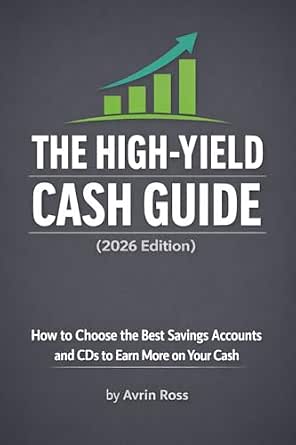 | Best for Comparing Savings Accounts and CDs | Format: Not specified | Edition: 2026 Edition (as stated in title) | Subject: High-yield cash options | VIEW LATEST PRICE | See Our Full Breakdown |
| My Three Favorite High-Yield Savings Accounts: Get Paid While You Save |  | Best for a Shortlist of Savings Accounts | Format: Book | Subject: High-yield savings accounts | Stated account count: Three favorite accounts | VIEW LATEST PRICE | See Our Full Breakdown |
| High-Yield Savings, CDs, and Money Market Accounts: The Complete Beginner’s Guide (Money Guide Series Book 69) |  | Best for Beginners Comparing Cash Account Types | Format: Not specified | Audience: Beginners | Products covered: High-yield savings accounts, CDs, and money market accounts | VIEW LATEST PRICE | See Our Full Breakdown |
| high yield savings account | Format | ASIN | Series |
|---|---|---|---|
| Best Savings Accounts for Apri | Not specified | B0F39J621K | — |
| What Your Bank Doesn’t Tell Yo | Book | B0HCWWTLLB | The Long-Term Wealth Series |
| Building Wealth Fast with High | Not specified | B0CK3Q8DTM | — |
| Dividend Growth Investing vs. | Book | B0FFHJ9ZV4 | — |
| High-Yield Savings Accounts vs | Book | B0F1TYHNDD | Massive Passive Income Books |
| Getting Started with High-Yiel | Not specified | B0C47181PY | Diverse Entrepreneurs |
| Investing for Interest 6: My F | Not specified | B09TTS59L7 | — |
| The High-Yield Cash Guide | Not specified | B0GPBXWTL6 | Not specified |
| My Three Favorite High-Yield S | Book | B0DG2KJY9Y | Not specified |
| High-Yield Savings | Not specified | B0HKFL5N6C | Money Guide Series |
More Details on Our Top Picks
Best Savings Accounts for April 2025
This title is the most time-specific option here: it covers savings accounts and interest rates for April 2025. That may help readers looking for a period-specific overview, but the supplied information gives no account terms, rate figures, methodology, or update schedule. Compared with The High-Yield Cash Guide (2026 Edition), this title is explicitly tied to an earlier month, so it is a weaker fit for choosing an account today. I would treat it as background reading, not as a current-rate comparison or a substitute for checking a bank’s live disclosures. Its narrow date label is also its main limitation: without details about coverage, readers cannot tell how useful the discussion will be for their own account search.
Pros:- Identifies a specific month for its rate discussion
- Focuses directly on savings accounts and interest rates
- May serve as a dated reference point when studying rate coverage
Cons:- No account names, rate figures, or terms are provided
- The April 2025 focus may be outdated for current account decisions
- No update schedule or comparison method is specified
Best for: Readers researching how savings account rates were presented in April 2025, rather than shoppers seeking current account recommendations.
Not ideal for: People choosing an account now who need current rates, eligibility rules, fees, or withdrawal terms; none are supplied here.
- Format:Not specified
- Topic:Savings accounts and interest rates
- Coverage period:April 2025
- Account terms:Not provided
- Rate figures:Not provided
- ASIN:B0F39J621K
Our verdict“Choose this only for a historical April 2025 rate overview, not for selecting a high-yield savings account today.”
What Your Bank Doesn’t Tell You: How to Use High-Yield Savings Accounts, Roth IRAs, 401(k)s, HSAs, and Other Smart Accounts to Build Long-Term Wealth
This book places high-yield savings accounts alongside Roth IRAs, 401(k)s, and HSAs, making it the broadest wealth-planning option in this group. That wider scope can help readers think about where savings fit among different account types, rather than treating yield as the only goal. Compared with High-Yield Savings Accounts vs. Standard Savings Accounts, it promises a wider account mix, but the supplied details do not show how much space it gives to savings accounts or whether it explains current account terms. The tradeoff is clear: readers get a potentially useful framework for long-term planning, but not a documented bank-by-bank comparison. I would choose it for cross-account context and pair it with current provider disclosures before opening an account.
Pros:- Covers high-yield savings alongside Roth IRAs, 401(k)s, and HSAs
- Frames account choices around long-term wealth building
- May help readers compare the roles of several financial account types
Cons:- Specific chapter content and depth are not provided
- No current bank terms or account-by-account comparisons are specified
- Its broad scope may offer less detail on savings accounts than a focused guide
Best for: Readers who want to understand how cash savings may fit alongside retirement and health savings accounts in a broader financial plan.
Not ideal for: Shoppers focused only on comparing current high-yield savings account rates, fees, access rules, or institutions.
- Format:Book
- Series:The Long-Term Wealth Series
- Book number:5
- Topics:High-yield savings accounts, Roth IRAs, 401(k)s, and HSAs
- Stated focus:Building long-term wealth through financial accounts
- Specific account terms:Not provided
- ASIN:B0HCWWTLLB
Our verdict“Pick this for a broad account-planning perspective, but use a dedicated current source for savings account terms.”
Building Wealth Fast with High-Yield Savings
The title puts high-yield savings at the center of its wealth-building message, which makes this the most savings-focused pick alongside Best Savings Accounts for April 2025. Its description connects savings with financial security and wealth accumulation, a useful framing for readers deciding what cash reserves can do. But the available details do not explain the strategies, account criteria, or meaning of “fast,” so I would not treat the title as evidence of a specific outcome or a reliable growth plan. Compared with What Your Bank Doesn’t Tell You, this appears narrower and more directly about savings, while offering less documented detail about other account types. It may suit a reader seeking an introductory prompt, but account decisions still call for verified, current terms.
Pros:- Keeps high-yield savings at the center of its subject
- Connects savings with financial security and wealth accumulation
- Offers a narrower savings focus than the multi-account wealth book
Cons:- No specific strategies or account details are supplied
- The title’s claim of building wealth fast is not supported by provided evidence
- No rate, fee, or access comparisons are specified
Best for: New savers who want a savings-centered introduction to the role high-yield accounts can play in financial security.
Not ideal for: Readers seeking documented advice on specific banks, rates, fees, withdrawal limits, or a detailed wealth-building method.
- Format:Not specified
- Primary topic:High-yield savings
- Stated themes:Financial security and wealth accumulation
- Account terms:Not provided
- Rate details:Not provided
- ASIN:B0CK3Q8DTM
Our verdict“Consider it as a savings-focused introduction, but do not rely on it for specific account recommendations or promised results.”
Dividend Growth Investing vs. High-Yield Savings Accounts: How to Get a 4% Yield
This book’s distinguishing feature is its comparison of dividend growth investing with high-yield savings, anchored to a stated 4% yield target. That framing could help readers ask whether they want cash-account savings or exposure to an investment approach, rather than comparing savings accounts alone. Against High-Yield Savings Accounts vs. Standard Savings Accounts, it offers a broader contrast between saving and investing, but the supplied description does not explain how the target is calculated or whether it refers to a guaranteed, current, or historical yield. That uncertainty matters: a yield target should not be read as a promised result, and the two approaches may carry different risks and access conditions. I would choose this for its comparison topic, not as a source of verified account rates.
Pros:- Directly compares dividend growth investing with high-yield savings
- Uses a stated 4% yield target to frame the discussion
- Can prompt readers to distinguish savings from investment income
Cons:- The basis and timing of the 4% target are not described
- No account names, rates, or terms are provided
- The available information does not explain investment risks or access differences
Best for: Readers weighing cash savings against dividend-growth investing who want a discussion framed around a specific yield target.
Not ideal for: People who need verified current savings account rates, a clear risk analysis, or a guaranteed way to earn a particular yield.
- Format:Book
- Topics:Dividend growth investing and high-yield savings accounts
- Stated yield target:4%
- Yield target basis:Not specified
- Account terms:Not provided
- ASIN:B0FFHJ9ZV4
Our verdict“Choose this for a savings-versus-investing comparison, not as proof that either approach will deliver a 4% yield.”
High-Yield Savings Accounts vs. Standard Savings Accounts: We Should All Love Yield (Massive Passive Income Books Book 176)
This is the most direct choice for readers deciding between a high-yield account and a standard savings account. Its stated comparison focus is more targeted than What Your Bank Doesn’t Tell You, which spans retirement and health accounts, and less investment-oriented than the dividend book. The description says it covers ways to maximize passive income, but gives no examples of rates, fees, access rules, or account criteria. That leaves a practical gap: the comparison may help frame the choice, yet readers cannot tell from the supplied details whether it addresses the terms that shape real account value. Its place as Book 176 in the Massive Passive Income Books series identifies a series context, but does not establish how much material is devoted to this specific topic.
Pros:- Directly compares high-yield and standard savings accounts
- Focuses on the potential income difference between account types
- Provides a more targeted savings comparison than the broader wealth-planning title
Cons:- No specific rates, fees, or access terms are supplied
- The depth and examples in the comparison are not described
- Series placement does not clarify how much content is devoted to savings accounts
Best for: Savers choosing between a high-yield and standard savings account who want a focused comparison of the two account types.
Not ideal for: Readers who need current bank-specific rates, detailed account terms, or a broader guide to retirement and investment accounts.
- Format:Book
- Series:Massive Passive Income Books
- Book number:176
- Topics:High-yield savings accounts and standard savings accounts
- Stated focus:Comparing account types and maximizing passive income
- Account terms:Not provided
- ASIN:B0F1TYHNDD
Our verdict“Choose this for a focused account-type comparison, then verify current rates and terms directly with providers.”
Getting Started with High-Yield Savings Accounts: Overcoming Your Banking Fears
This guide has the clearest audience in this group: diverse entrepreneurs who want to learn about high-yield savings while working through concerns about banking. That focus may make it more approachable than Investing for Interest 6: My Favorite High-Yield Savings Account, whose description gives no particular reader or concern to guide the choice. The tradeoff is limited detail in the available information: I can confirm its subject and intended audience, but not its specific advice, account comparisons, or coverage of rates and fees. It fits readers who want a dedicated introduction centered on banking confidence, rather than a broader guide to cash products like The High-Yield Cash Guide (2026 Edition). Buyers seeking concrete account recommendations should check the book’s contents before relying on it for that purpose.
Pros:- Dedicated focus on high-yield savings accounts
- Addresses common banking concerns rather than assuming readers are already comfortable with banks
- Identifies diverse entrepreneurs as its intended audience
Cons:- Available description does not specify account comparisons or practical selection criteria
- No information is provided about coverage of rates, fees, access, or deposit protections
Best for: Diverse entrepreneurs who want an introductory discussion of high-yield savings alongside common banking concerns.
Not ideal for: Readers seeking verified account-by-account comparisons, rate guidance, or detailed advice on fees, since those contents are not specified.
- Format:Not specified
- Subject:High-yield savings accounts
- Intended audience:Diverse entrepreneurs
- Stated focus:Addressing common banking concerns
- Series:Diverse Entrepreneurs
- Book number:130
- ASIN:B0C47181PY
Our verdict“Choose this guide if banking concerns are a barrier to learning about high-yield savings, but verify its contents if you need specific account-selection advice.”
Investing for Interest 6: My Favorite High-Yield Savings Account
The title signals a focused, personal-preference approach to high-yield savings, making this a possible fit for readers who want one author’s perspective rather than a survey of cash products. That narrow framing sets it apart from The High-Yield Cash Guide (2026 Edition), which explicitly covers both savings accounts and CDs. The drawback is that the available description gives no details about the author’s selection criteria, account features, or whether the material compares multiple options. I would treat “my favorite” as a viewpoint, not proof that an account will suit every saver: rates and terms can change, and a reader’s access needs may differ. Compared with the audience-specific Getting Started with High-Yield Savings Accounts, this book offers no stated focus on banking concerns or a particular type of reader.
Pros:- Directly centers high-yield savings accounts
- The title promises a focused personal perspective rather than a broad investing survey
- Part of the Investing for Interest series, as indicated by its title
Cons:- Available information does not explain how the featured account was chosen
- No details are provided about account comparisons, rates, fees, or access rules
- A personal favorite may not match every reader’s savings needs
Best for: Readers who prefer a focused, author-led perspective on high-yield savings and are comfortable checking current account terms independently.
Not ideal for: Readers who need a documented comparison of multiple accounts, current terms, or guidance across savings accounts and CDs.
- Format:Not specified
- Subject:High-yield savings accounts
- Stated approach:Author’s favorite account
- Series information:Investing for Interest 6 (as stated in title)
- Account count:Not specified
- Publication details:Not provided
- ASIN:B09TTS59L7
Our verdict“Pick this for a narrowly focused personal viewpoint, not as a substitute for checking current account terms or comparing several options.”
The High-Yield Cash Guide (2026 Edition): How to Choose Savings Accounts and CDs
This is the broadest cash-selection guide in this batch: its stated scope covers savings accounts and CDs, giving readers a way to weigh accessible savings against money set aside for a fixed term. That makes it a more direct fit for comparing cash options than My Three Favorite High-Yield Savings Accounts, which focuses on three savings accounts. The 2026 edition label may appeal to readers seeking a current-framed guide, but the available product data does not confirm when its information was researched or how often account details are updated. It also does not specify its comparison criteria, discussion of withdrawal restrictions, or treatment of rates and fees. Readers who only want help understanding one savings account may find the added CD scope less relevant.
Pros:- Covers both high-yield savings accounts and CDs
- Explicitly frames the book around choosing between cash products
- 2026 edition is identified in the title
Cons:- Available information does not specify comparison criteria or account recommendations
- No details confirm how current its rates, fees, or account terms are
- CD coverage may be unnecessary for readers focused solely on accessible savings
Best for: Savers deciding whether to keep cash accessible in a high-yield savings account or place some of it in a CD.
Not ideal for: Readers seeking only a simple introduction to savings accounts or verified, up-to-date account terms and recommendations.
- Format:Not specified
- Edition:2026 Edition (as stated in title)
- Subject:High-yield cash options
- Products covered:Savings accounts and CDs
- Stated purpose:How to choose savings accounts and CDs
- Series:Not specified
- ASIN:B0GPBXWTL6
Our verdict“Choose this if you are weighing savings-account access against CD terms, while checking the book’s contents for the depth and freshness of its comparisons.”
My Three Favorite High-Yield Savings Accounts: Get Paid While You Save
The promise here is a shortlist: the book centers on three high-yield savings accounts and the idea of earning interest while saving. That narrower scope may help readers who want a starting point for comparison, unlike The High-Yield Cash Guide (2026 Edition), which also takes in CDs. Still, the available description does not name the accounts, explain why they were selected, or say whether their terms are current. A list of favorites is useful only when readers can judge the criteria behind it and check changing rates, fees, and access rules themselves. Compared with Investing for Interest 6: My Favorite High-Yield Savings Account, this title signals three options rather than one, but it provides no further detail on how deeply those options are compared.
Pros:- Specifically focuses on high-yield savings accounts
- Signals a defined shortlist of three accounts
- Connects account choice with earning interest while saving
- Identifies the format as a book
Cons:- The available description does not name the three accounts
- No information is provided about selection criteria or comparison depth
- Current rates, fees, and account requirements are not specified
Best for: Readers who want a compact starting shortlist of high-yield savings accounts and plan to verify current account terms before opening one.
Not ideal for: Savers who need transparent selection criteria, detailed product comparisons, or confirmed current rates and fees.
- Format:Book
- Subject:High-yield savings accounts
- Stated account count:Three favorite accounts
- Stated aim:Earn interest while saving
- Series:Not specified
- Publication details:Not provided
- ASIN:B0DG2KJY9Y
Our verdict“Use this as a possible shortlist starter if you will independently confirm each account’s current terms and fit.”
High-Yield Savings, CDs, and Money Market Accounts: The Complete Beginner’s Guide (Money Guide Series Book 69)
This title covers three places a beginner might keep cash: high-yield savings accounts, CDs, and money market accounts. Its broad scope gives it a different role from My Three Favorite High-Yield Savings Accounts, which signals a shorter focus on savings accounts alone. That range can help readers identify the tradeoff between access and product type, but the available description does not say how the guide explains withdrawal rules, account features, or selection criteria. Nor does it establish that specific rates or terms are current. The “complete beginner’s guide” framing makes this the clearest entry-level option in the batch, though readers wanting a concise recommendation on savings accounts may prefer a narrower title such as Investing for Interest 6.
Pros:- Covers high-yield savings accounts, CDs, and money market accounts
- Explicitly aimed at beginners
- Places several cash account types within one guide
- Identified as part of the Money Guide Series
Cons:- Available description does not detail account-selection criteria or comparison methods
- No information confirms coverage of current rates, fees, or withdrawal terms
- Its broad scope may be more than readers need for a savings-account-only decision
Best for: New savers who want an introduction to savings accounts, CDs, and money market accounts before deciding where to keep cash.
Not ideal for: Readers who already understand cash account basics or want a focused, current comparison of specific high-yield savings accounts.
- Format:Not specified
- Audience:Beginners
- Products covered:High-yield savings accounts, CDs, and money market accounts
- Series:Money Guide Series
- Book number:69
- Stated guide type:Beginner’s guide
- ASIN:B0HKFL5N6C
Our verdict“Choose this as a starting point if you are new to cash account types, but look for a narrower source if you need current savings-account comparisons.”

How We Picked
I ranked these entries by how directly their stated topic serves someone choosing a high-yield savings account. I gave more weight to titles focused on comparing savings accounts, CDs, or other cash options, and less weight to books centered on long-term investing or general wealth-building. I also considered the likely reader fit suggested by each title, including whether it speaks to beginners, cautious savers, or people weighing several account types.
These entries are books and guides, not deposit accounts. Their titles do not establish current interest rates, fees, withdrawal rules, bank availability, or deposit insurance, so I did not treat them as proof of an account’s quality or present-day terms. The ranking reflects subject relevance and decision-making usefulness suggested by the information provided, not a claim that I reviewed each book’s full contents. Readers should use any guide as a starting point, then check account disclosures and official bank information before opening an account.
| high yield savings account | Format | Series |
|---|---|---|
| Best Savings Accounts for Apri | Not specified | — |
| What Your Bank Doesn’t Tell Yo | Book | The Long-Term Wealth Series |
| Building Wealth Fast with High | Not specified | — |
| Dividend Growth Investing vs. | Book | — |
| High-Yield Savings Accounts vs | Book | Massive Passive Income Books |
| Getting Started with High-Yiel | Not specified | Diverse Entrepreneurs |
| Investing for Interest 6: My F | Not specified | — |
| The High-Yield Cash Guide | Not specified | Not specified |
| My Three Favorite High-Yield S | Book | Not specified |
| High-Yield Savings | Not specified | Money Guide Series |
Factors to Consider When Choosing High Yield Savings Accounts
Use a guide to sharpen your questions, not to substitute for checking an account’s current terms. I would compare the account itself against the way I expect to use my cash, then use books in this roundup for context on saving, CDs, and beginner concerns.
Compare Rates Without Treating Them as Promises
A high advertised annual percentage yield can change, so a guide or title mentioning a particular yield is not evidence that the same offer is available now. Check the bank’s current rate page and account disclosures on the day you apply. Ask whether the rate applies to the full balance or only a limited amount, and whether eligibility conditions apply. A small rate difference may matter less than access, fees, or the time you plan to keep the money deposited. Avoid choosing an account based on a past rate quoted in a book or article. For a like-for-like comparison, note each account’s APY, rate conditions, and date checked.
Match Access to the Job Your Cash Must Do
Emergency savings and money set aside for a planned expense need dependable access, while cash you will not need soon may fit a fixed-term product. Review transfer times, withdrawal methods, minimum balance rules, and any transaction limits disclosed by the institution. A savings account can feel convenient, but a transfer may not be immediate when you need funds at another bank. CDs can impose early-withdrawal penalties, so they are not interchangeable with savings accounts even when their stated rates look appealing. Decide how much cash needs to stay readily available before moving any portion into a less flexible option. This distinction helps prevent the common mistake of locking away money meant for emergencies.
Check Fees, Minimums, and Balance Rules
Fees can eat into the interest earned, especially when an account has a maintenance charge or conditions for waiving it. Look for minimum opening deposits, minimum balances, and any restrictions tied to earning the advertised APY. A low entry requirement can suit someone starting with a modest balance, while a higher threshold may rule out an otherwise appealing option. Read the fee schedule rather than relying on a short promotional summary. Also check whether the account’s terms change at different balance tiers. Compare the likely net benefit for your own balance, not just the headline yield.
Verify Deposit Protection and Provider Details
Before depositing cash, identify the bank that legally holds the account and confirm its deposit-protection status through the relevant official source. A financial app or brand may partner with a separate bank, so the name on the app may not be the institution holding your deposits. Check how coverage applies across accounts held at the same bank and whether any limits or ownership categories affect your situation. Guides can help explain the questions to ask, but they cannot confirm a provider’s current status for you. Save the account agreement and disclosures after opening the account. This extra check can matter more than a small difference in APY.
Choose a Guide That Matches Your Decision
Not every title in this roundup is a direct account-selection manual. The High-Yield Cash Guide is the closest fit for comparing savings accounts with CDs, while beginner titles may help readers who feel uncertain about online banking. Books about Roth IRAs, dividend investing, or passive income address wider financial choices and should not be treated as substitutes for account research. Before buying or borrowing a guide, check its publication date and whether its material reflects current rules and products. Use broad investing discussions to clarify your goals, then return to account disclosures for operational details. This keeps general financial education separate from a bank’s binding terms.
Think About the Whole Cash Plan, Not One Account
Some savers benefit from separating everyday spending money, emergency reserves, and cash with a known future use. That can make it easier to balance immediate access against the terms of CDs or other savings products. Avoid opening several accounts simply to chase small rate differences if extra logins and transfers would make your finances harder to manage. Consider how you will track balances, move money, and keep records at tax time. A broader guide may help frame these choices, but the right setup depends on your cash needs and comfort with managing multiple accounts. Start with a simple plan and add complexity only when it solves a clear problem.
Frequently Asked Questions
Are these ten high-yield savings accounts I can open?
No. The list contains books and informational guides, not bank accounts or applications. Their titles can help you identify topics to research, but they do not provide a live account offer or verify a bank’s current terms. To open an account, compare providers directly and review their official disclosures. Confirm the APY, fees, access rules, and deposit-protection details before applying.
Which title is the best starting point if I want to compare savings accounts and CDs?
The High-Yield Cash Guide (2026 Edition) is the clearest starting point based on its stated focus on choosing savings accounts and CDs. Its title signals a cash-selection scope rather than a broad investing discussion. Still, the date in a title does not guarantee that every rate or rule remains current. Use it to shape your comparison, then confirm details with each provider before making a decision.
Should I choose a savings account or a CD for money I might need soon?
If you may need the money soon, prioritize access and check how long transfers take before considering a CD. CDs can restrict withdrawals or charge a penalty for taking funds out early, so their terms may not suit emergency savings. A savings account generally offers more flexibility, though withdrawal and transfer rules still vary by provider. You could keep near-term cash accessible and consider a CD only for money with a clear time horizon. Compare the actual account agreement rather than relying on a guide’s general description.
Can I rely on the yield mentioned in a book title as the rate I will earn?
No. A yield mentioned in a title, including the 4% reference in Dividend Growth Investing vs. High-Yield Savings Accounts, is not a current offer or a promise of future returns. Savings APYs can change, and the applicable rate may depend on account conditions or balance tiers. Check the provider’s current rate and disclosures when you apply. If the title discusses investing, remember that investment returns and deposit-account interest carry different risks and protections.
What should I verify before moving savings to an online bank?
Check which bank holds the deposits, whether it has the relevant deposit protection, and how coverage applies to your existing accounts there. Review the fee schedule, minimums, transfer methods, expected transfer times, and customer-support options. Confirm that the APY is available to you and note any conditions for keeping it. Consider testing the transfer process with a small amount before moving a large balance. Save the account agreement and confirmation records so you can refer to the terms later.
Conclusion
Best overall: I would start with The High-Yield Cash Guide (2026 Edition) because its stated focus most closely matches choosing savings accounts and CDs. Best value: for a focused decision without broad investing detours, I would choose that same cash-selection title as the most directly relevant option in this lineup. Best for beginners: Getting Started with High-Yield Savings Accounts: Overcoming Your Banking Fears is the clearest match for readers who need help feeling comfortable with the process. Best for a broader cash comparison: pick High-Yield Savings, CDs, and Money Market Accounts if you are deciding among several types of cash products. Best for wider financial context: titles covering wealth-building, retirement accounts, or dividend investing may suit readers exploring more than savings alone. None of these books is a bank account; before depositing money, verify current rates, fees, access terms, and deposit protection directly with the provider.