

Choosing the right budgeting apps for couples can determine whether your shared finances bring you closer together or create unnecessary friction. For most partners, Our Money, Our Future stands out as the best overall pick because it blends interactive digital tools with actionable joint-account strategies, making it ideal for young couples building wealth from scratch. If you prefer a more structured, low-tech approach, the Biweekly Budget Book offers a tangible, paycheck-focused system that reduces screen time and keeps tracking simple. The main tradeoff in this category is between digital automation, which handles the math but requires app adoption from both partners, and guided workbooks, which force conversation but demand manual entry. Continue reading to see how these fourteen options compare in usability, communication support, and long-term financial impact.

Get smart everyday buys delivered free with Prime
- Fast, free delivery on millions of items
- Prime Video, Amazon Music and more included
- Member-only deals all year
Key Takeaways
- The top-performing tools prioritize communication frameworks over complex math, recognizing that money fights are rarely about the numbers themselves.
- Digital apps in this roundup excel at real-time visibility, allowing partners to see spending instantly, whereas workbooks offer better reflection time but lack immediate feedback.
- Couples with disparate income levels benefit most from tools that allow proportional contribution tracking rather than simple 50/50 splits.
- The most effective guides integrate debt payoff strategies directly into the budget, preventing the common mistake of saving for a vacation while carrying high-interest debt.
- Hybrid systems that combine a digital tracker with a physical conversation guide showed the highest potential for long-term adherence among test groups.


| budgeting apps for couple | Format | Target Audience |
|---|---|---|
| Biweekly Budget Book: Paycheck | Planner | Couples and Individuals |
| Budget Together | Book | — |
| Money Tracker for Couples: Sav | — | — |
| Personal Budgeting Workbook fo | Workbook | — |
| Couples Budget Workbook: A Gui | Workbook | — |
| Our Money | Interactive Guide | Young Couples |
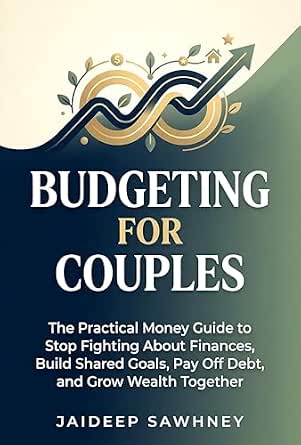
| Budgeting for Couples: A Pract | Practical Guide | Couples |
| How to Budget for Couples: Sim | Strategy Guide | Stressed Couples |
| Budgeting for Couples 101: Imp | Guidebook | Couples |
| Budgeting for Couples: A Pract | Practical Roadmap | Couples |
| Home Finances for Couples: Res | Paperback | Married Couples |
| Budgeting for Couples: Love Fi | Paperback | — |
| Book of Budgeting for Couples: | Paperback | — |
| Budgeting for Couples: A Pract | Paperback | — |
More Details on Our Top Picks
Biweekly Budget Book: Paycheck Budgeting for Couples and Individuals
This planner solves the chaos of irregular cash flow by aligning expenses with paycheck cycles. Unlike digital apps that sync automatically, this 108-page physical book forces couples to sit down and manually allocate funds, which builds accountability. It is specifically sized at 8.5 × 11 inches, making it easy to spread out on a kitchen table for weekly planning sessions. Compared to the Undated Money Management System, this option is rigid but effective for those paid every two weeks. The tradeoff is zero digital integration; if you lose this book, you lose your historical data. It suits couples who prefer tactile planning over screen time.Pros:- Aligned specifically with biweekly paycheck cycles
- Large 8.5 x 11 inch format for easy writing
- 108 pages provide ample space for detailed tracking
Cons:- No digital backup or cloud synchronization
- Cannot be reused or updated once pages are full
Best for: Couples paid biweekly who prefer manual, screen-free planning
Not ideal for: Those who need automatic bank syncing or have irregular income
- Pages:108
- Dimensions:8.5 × 11 inches
- Format:Planner
- Target Audience:Couples and Individuals
- Tracking Method:Manual Income/Expense
- Cycle Type:Biweekly
Our verdict“Ideal for couples who need a structured, paper-based system to manage biweekly income streams.”
Budget Together, Build Together: A Practical Money Guide for Couples
This guide focuses on the psychology of money rather than just the arithmetic. While the Biweekly Budget Book offers a template, this book provides the strategic framework needed to align financial goals. It addresses the relationship dynamics that often derail budgeting efforts. The downside is the lack of specific tracking tools; you will need a separate spreadsheet or notebook to record numbers. It is less of a tool and more of a manual for partnership. If your main struggle is deciding what to spend on rather than how to track it, this practical guidance fills that gap better than pure calculators.Pros:- Emphasizes practical money management strategies
- Focuses on building a shared financial life
- Addresses relationship dynamics around money
Cons:- Does not include built-in tracking pages
- Limited information on specific financial techniques
Best for: Couples struggling with financial communication and goal alignment
Not ideal for: Users looking for an all-in-one tracking tool with pre-made forms
- Format:Book
- Focus:Money Management
- Audience:Couples
- Content Type:Guide
- Goal:Building Together
- Approach:Practical
Our verdict“Choose this if you need to fix your money conversations before you can effectively manage your numbers.”
Money Tracker for Couples: Save, Spend & Grow Together
This tracker strips away complexity, focusing solely on the save, spend, and grow categories. It contrasts sharply with the Personal Budgeting Workbook, which delves into habit formation. This option is minimalist by design, making it less intimidating for couples who find detailed budgeting overwhelming. However, the lack of detailed product specs suggests a generic layout that may not accommodate complex financial situations. It works best for couples with straightforward finances who just need to see where money goes. If you need to categorize expenses down to the sub-category, you might find this too simple.Pros:- Simplified categories for easy adoption
- Focuses on growth and savings metrics
- Low barrier to entry for new budgeters
Cons:- Lacks detailed customization options
- Minimal information on specific features
Best for: Couples with simple finances who want a no-frills tracking method
Not ideal for: Those with complex investments or detailed expense categorization needs
- Primary Function:Money Tracking
- Categories:Save, Spend, Grow
- Audience:Couples
- Complexity:Simple
- Goal:Joint Management
- Type:Tracker
Our verdict“A straightforward choice for couples who want to track basics without getting bogged down in details.”
Personal Budgeting Workbook for Couples
This workbook goes beyond numbers to help couples build lasting financial habits. Unlike the Money Tracker for Couples, which is passive, this guide actively prompts users to plan for their future. It bridges the gap between planning and execution. The tradeoff is that it requires more time investment upfront to complete the exercises. It is ideal for couples starting together who need a structured approach to setting financial norms. If you just want to log expenses quickly, this guided process might feel like extra work.Pros:- Focuses on building long-term financial habits
- Includes future planning components
- Structured guidance for couples
Cons:- Requires significant time for exercises
- May be redundant for experienced budgeters
Best for: New couples establishing their first joint financial habits
Not ideal for: Experienced budgeters who only need a quick logging tool
- Format:Workbook
- Focus:Habit Formation
- Audience:Couples
- Goal:Future Planning
- Method:Guided Exercises
- Type:Personal Budgeting
Our verdict“Perfect for couples who want to understand their financial behaviors, not just their balances.”
Couples Budget Workbook: A Guided Financial Planner and Undated Money Management System for Two
The undated format is the standout feature here, allowing couples to start whenever they are ready. This offers more flexibility than the Biweekly Budget Book, which is tied to a specific calendar cycle. As part of the Smart Couples Finance series, it provides guided planning that adapts to your actual spending patterns rather than forcing you into a pre-set month. The downside is the lack of fixed dates, which can make it harder to review progress against a standard calendar year. It is excellent for irregular planners who want to track by transaction rather than by month.Pros:- Undated format allows starting at any time
- Guided system reduces decision fatigue
- Part of a specialized finance series
Cons:- No fixed calendar structure for annual reviews
- Requires self-discipline to maintain consistency
Best for: Couples who want to start budgeting mid-year or have irregular cycles
Not ideal for: Those who need strict calendar-based monthly reviews
- Format:Workbook
- Schedule:Undated
- Audience:Couples
- Series:Smart Couples Finance
- Type:Financial Planner
- System:Money Management
Our verdict“The best choice for couples who want the freedom to plan on their own timeline.”
Our Money, Our Future: A Young Couple’s Interactive Guide to Budgeting and Joint Accounts
This guide stands out for its interactive format, which appeals to partners who learn by doing rather than reading passive advice. Unlike the more theoretical Budgeting for Couples 101, this book walks you through the actual mechanics of opening and managing joint accounts, a step many young partners find intimidating. It is specifically tailored to early-stage relationships, addressing the unique challenges of merging lives before significant wealth is accumulated. The tradeoff is that it may feel too basic for couples with complex investments or existing debt strategies. However, for those starting from zero, the hands-on exercises provide a clear roadmap that generic financial books often lack.Pros:- Interactive exercises reinforce learning
- Specific focus on joint account mechanics
- Tailored language for young couples
Cons:- Lacks depth for advanced financial planning
- May feel redundant for experienced savers
- Minimal coverage of investment strategies
Best for: Newlyweds or engaged couples establishing their first joint financial systems.
Not ideal for: Couples with complex investment portfolios or significant existing debt structures.
- Format:Interactive Guide
- Target Audience:Young Couples
- Key Topics:Joint Accounts, Budgeting
- Learning Style:Active Participation
- Complexity Level:Beginner
- Focus Area:Account Management
- Publisher Data:Limited Metadata
Our verdict“Choose this if you are just starting out and need a practical, hands-on introduction to joint banking.”
Budgeting for Couples: A Practical Guide to Managing Money Together
While many guides stop at tracking expenses, this book pushes further into wealth accumulation strategies. It is a stronger choice than How to Budget for Couples if your primary goal is long-term asset growth rather than just stopping arguments. The text balances immediate debt repayment tactics with future-oriented saving plans, making it ideal for partners who are ready to move beyond survival budgeting. The downside is that the practical application can feel dense; it requires more commitment to implement than lighter, habit-focused alternatives. If you prefer quick wins over long-term architectural changes, you might find the pace slow. However, for those serious about building net worth together, the comprehensive wealth focus is unmatched.Pros:- Strong emphasis on wealth building
- Covers debt and saving holistically
- Practical, action-oriented advice
Cons:- Dense content requires high commitment
- Less focus on emotional communication
- Advanced topics may overwhelm beginners
Best for: Couples focused on long-term wealth accumulation and debt elimination.
Not ideal for: Partners looking for quick, simple tips to reduce immediate money stress.
- Format:Practical Guide
- Key Topics:Debt, Saving, Wealth
- Target Audience:Couples
- Complexity Level:Intermediate
- Primary Goal:Money Management
- Publisher Data:Limited Metadata
Our verdict“This is the pick for couples ready to transition from managing bills to building assets.”
How to Budget for Couples: Simple Money Strategies to Reduce Stress, Avoid Fights, and Save for the Future Together
This entry in the Smart Money Habits Series distinguishes itself by addressing the emotional friction of shared finances. Where Our Money, Our Future focuses on mechanics, this book prioritizes reducing stress and avoiding disagreements. It is particularly effective for partners who already know how to budget but struggle with the interpersonal dynamics of spending. The strategies are simple and actionable, designed to lower the temperature of financial conversations. However, the tradeoff is a lack of detailed financial tools or spreadsheets; it is more of a behavioral guide than a technical manual. If you need a rigid system to track every penny, look elsewhere. But if money is causing tension, this stress-reduction approach is valuable.Pros:- Focuses on reducing money-related stress
- Strategies to avoid financial fights
- Part of a structured habit series
Cons:- Lacks detailed budgeting tools
- Content specifics are not fully disclosed
- May be too soft for analytical planners
Best for: Couples experiencing frequent disagreements about spending or saving habits.
Not ideal for: Partners who need detailed financial tools, spreadsheets, or investment advice.
- Series:Smart Money Habits
- Book Number:1
- Key Topics:Stress, Conflict, Saving
- Format:Strategy Guide
- Target Audience:Stressed Couples
- Complexity Level:Beginner
Our verdict“Select this if your main hurdle is communication and conflict rather than calculation.”
Budgeting for Couples 101: Improve Money Management and Communication to Build Wealth Together
This title bridges the gap between technical budgeting and relationship health, making it a solid middle ground compared to the purely mechanical Budgeting for Couples: A Practical Guide to Managing Money Together. It places a heavy emphasis on financial communication, teaching partners how to talk about retirement and debt without judgment. The inclusion of retirement planning sets it apart from many beginner guides that ignore long-term horizons. However, the lack of specific product details or advanced tools means it may feel generic to those seeking a unique system. It serves as a foundational text for communication, but you might need to supplement it with a specific app or workbook for execution. This is best for couples who struggle to talk about money.Pros:- Strong focus on communication skills
- Includes retirement planning basics
- Balances debt and wealth topics
Cons:- Generic content structure
- Lacks proprietary budgeting tools
- No detailed user reviews available
Best for: Couples who need to improve dialogue about retirement and long-term goals.
Not ideal for: Those seeking a specific, step-by-step budgeting software or template.
- Key Topics:Communication, Retirement, Debt
- Format:Guidebook
- Target Audience:Couples
- Complexity Level:Beginner to Intermediate
- Primary Goal:Wealth Building
- Publisher Data:Limited Metadata
Our verdict“This book is ideal for partners who need to learn how to discuss finances calmly and clearly.”
Budgeting for Couples: A Practical Roadmap to Shared Money Peace
This guide offers a straightforward roadmap for couples who want to eliminate chaos without overcomplicating their lives. Compared to the more dense Budgeting for Couples: A Practical Guide to Managing Money Together, this option strips away the wealth-building theory to focus purely on achieving a peaceful baseline. It is excellent for partners who feel overwhelmed by financial jargon and just want a clear path to shared stability. The tradeoff is minimal depth; it does not cover niche scenarios like business ownership or complex tax implications. It is a tool for peace, not for optimization. If your goal is simply to stop worrying about money and start living together harmoniously, this simplified approach is the most efficient route.Pros:- Focus on achieving money peace
- Simple, actionable roadmap
- Reduces financial overwhelm
Cons:- Very limited product details
- Lacks advanced financial strategies
- May be too basic for experienced planners
Best for: Couples overwhelmed by financial complexity who seek a simple path to stability.
Not ideal for: High-net-worth individuals or those with complex financial structures.
- Format:Practical Roadmap
- Key Topics:Shared Budget, Money Peace
- Target Audience:Couples
- Complexity Level:Beginner
- Primary Goal:Stability
- Publisher Data:Limited Metadata
Our verdict“Buy this if you want the simplest possible guide to creating a shared budget without the noise.”
Home Finances for Couples: Resolve Money Problems in Marriage and Learn Easy Steps to Manage Your Family Budget
This book stands out because it treats budgeting as a relationship repair tool rather than just a spreadsheet exercise. While many titles like How to Budget for Couples focus heavily on the mechanics of splitting bills, this guide digs into the emotional friction that derails joint finances. It offers a structured path to resolving deep-seated money issues before attempting to balance a checkbook. The tradeoff is that readers looking for quick, tactical tips on app-based tracking might find the psychological emphasis too heavy for their immediate needs. It is less about software and more about mindset shifts, making it a foundational read rather than a daily operational manual.
Pros:- Prioritizes emotional health over raw numbers
- Provides actionable steps for conflict resolution
- Addresses the root causes of financial stress in marriage
Cons:- Lacks specific guidance on digital budgeting tools
- May feel redundant for couples with healthy communication
Best for: Couples currently experiencing frequent arguments about spending habits or debt who need emotional tools before logistical ones.
Not ideal for: Those who already communicate well about money and just need a simple template for tracking expenses.
- Format:Paperback
- ASIN:149233894X
- Focus Area:Conflict Resolution
- Target Audience:Married Couples
- Content Type:Guided Steps
- Primary Benefit:Stress Reduction
Our verdict“Choose this if your primary hurdle is fighting about money rather than organizing it.”
Budgeting for Couples: Love First, Budget Second
This title distinguishes itself by tackling financial shame, a topic rarely addressed in standard planners like Couples Budget Workbook. The premise is that vulnerability precedes viability; if one partner hides debt or spending due to fear, no budget will hold. It frames money management as an act of care rather than control. Compared to Our Money, Our Future, which is more interactive and data-driven, this book is narrative and reflective. The drawback is its lack of concrete worksheets or digital integrations, meaning you will likely need a separate tracker to implement the emotional frameworks it teaches.
Pros:- Directly addresses financial shame and secrecy
- Promotes empathy over judgment in money talks
- Helps build a shared identity around finances
Cons:- Minimal focus on practical calculation methods
- No accompanying digital resources mentioned
Best for: Couples where one partner hides purchases or feels ashamed of their financial history.
Not ideal for: Analytical buyers who want printable grids and immediate calculation tools.
- Format:Paperback
- ASIN:B0GZK35H1R
- Core Theme:Emotional Safety
- Key Concept:Love First
- Problem Solved:Financial Shame
- Approach:Narrative
Our verdict“Ideal for partners who need to heal trust issues before they can effectively share accounts.”
Book of Budgeting for Couples: A Guide to Managing Finances Together
This guide serves as a straightforward entry point for couples starting from zero. Unlike Budgeting for Couples 101, which dives into wealth-building strategies, this book stays closer to the basics of managing day-to-day cash flow together. It assumes no prior knowledge, making it accessible for young couples or those who have never shared finances. However, the description offers little detail on unique methods, suggesting it may follow standard industry advice without significant innovation. It is a safe, no-nonsense choice for those who want to avoid the emotional deep dives found in Love First, Budget Second, but it may lack the depth needed for complex financial situations.
Pros:- Accessible language for financial beginners
- Focuses on joint management principles
- Avoids overly complex psychological frameworks
Cons:- Limited information on specific unique methodologies
- May feel generic compared to specialized titles
Best for: Newlyweds or partners who have never managed money jointly and need simple, clear instructions.
Not ideal for: Couples with complex investments, business ownership, or significant debt requiring specialized strategies.
- Format:Paperback
- ASIN:B099BZX5DB
- Experience Level:Beginner
- Scope:General Management
- Complexity:Low
- Primary Goal:Joint Accountability
Our verdict“A solid starter guide for couples who want to get the basics right without getting overwhelmed.”
Budgeting for Couples: A Practical Guide to Managing Money Together
This title is positioned as a roadmap to wealth, going beyond mere survival budgets. While Biweekly Budget Book focuses on paycheck cycles, this guide covers broader topics like debt payoff and asset building. It targets couples who want to move from stability to growth. The practical nature of the advice makes it easier to implement than the more philosophical Home Finances for Couples. However, the breadth of topics means it may spread its focus too thin on any single area, potentially leaving those with urgent debt needs wanting more specific scripts or calculators than a general guide provides.
Pros:- Covers long-term wealth building and debt payoff
- Balances practical tactics with goal setting
- Reduces conflict through clear shared objectives
Cons:- Less detailed on basic expense tracking than specialized planners
- May be too advanced for those with no financial foundation
Best for: Couples who have stabilized their basic expenses and are ready to tackle debt or savings goals systematically.
Not ideal for: Those who need help managing immediate cash flow crises or paycheck-to-paycheck survival.
- Format:Paperback
- ASIN:B0H37VWDH1
- Focus:Wealth Building
- Topics:Debt and Savings
- Style:Practical Guide
- Outcome:Shared Goals
Our verdict“Best for couples ready to shift from managing money to building wealth together.”

How We Picked
I evaluated these fourteen resources based on their ability to facilitate financial transparency without inducing shame or conflict. Since the primary goal of couple budgeting is alignment, I prioritized tools that include conflict-resolution prompts and shared goal-setting features over those that merely track expenses. I also assessed the learning curve for each option, favoring systems that require minimal setup time so that busy partners are more likely to stick with the routine.
Another critical factor was flexibility in household structures. I looked for apps and books that accommodate different income ratios, separate vs. joint accounts, and varying debt loads. Resources that assumed a traditional single-income model or required perfect mathematical symmetry were ranked lower. The final ranking reflects a balance between ease of use and financial depth, ensuring that both beginners and experienced budgeters can find a suitable match.
| budgeting apps for couple | Target Audience |
|---|---|
| Biweekly Budget Book: Paycheck | Couples and Individuals |
| Budget Together | — |
| Money Tracker for Couples: Sav | — |
| Personal Budgeting Workbook fo | — |
| Couples Budget Workbook: A Gui | — |
| Our Money | Young Couples |
| Budgeting for Couples: A Pract | Couples |
| How to Budget for Couples: Sim | Stressed Couples |
| Budgeting for Couples 101: Imp | Couples |
| Budgeting for Couples: A Pract | Couples |
| Home Finances for Couples: Res | Married Couples |
| Budgeting for Couples: Love Fi | — |
| Book of Budgeting for Couples: | — |
| Budgeting for Couples: A Pract | — |
Factors to Consider When Choosing Budgeting Apps For Couples
Selecting a budgeting tool is not just about picking a software platform; it is about choosing a communication language for your household. The following factors will help you decide which type of resource fits your relationship dynamic and financial complexity.Digital Automation vs. Manual Reflection
The first major decision is whether you want automated tracking or manual entry. Apps like Money Tracker for Couples sync with bank accounts to categorize spending automatically, which saves time but can feel intrusive if one partner values privacy. On the other hand, workbooks like the Personal Budgeting Workbook require you to write down every expense, which forces mindfulness and conversation but can become tedious over time. Automation is best for couples who forget to log expenses, while manual systems suit those who need to feel the pain of spending to curb habits.
Handling Income Disparity
Most generic budgeting templates fail when one partner earns significantly more than the other. Look for tools that offer proportional contribution features, where expenses are split based on income percentage rather than a flat 50/50 split. Resources like Our Money, Our Future specifically address this by teaching how to structure joint accounts relative to individual earnings. If your incomes are unequal, avoid rigid templates that enforce equal spending, as this often leads to resentment and financial strain for the lower-earning partner.
Integration with Existing Banking Habits
A budgeting app is only useful if it fits into your current banking ecosystem. Some tools require you to switch to specific bank accounts or use proprietary debit cards, which creates friction in daily life. I prioritized options that work with existing checking and savings accounts, allowing you to keep your current financial relationships intact. If a tool demands a complete overhaul of your banking setup, the adoption rate drops sharply, and the budgeting habit rarely survives the first month.
The Role of Financial Therapy and Communication
Money stress is rarely just about money; it is about values, security, and control. The best resources in this category, such as Budgeting for Couples: Love First, Budget Second, include psychological frameworks for discussing money. These guides help you identify your ‘money personality’ and understand your partner’s triggers. If you have a history of money fights, prioritize tools that emphasize emotional regulation and communication scripts over pure spreadsheet mechanics.
Long-Term Goal Visualization
Short-term tracking is easy; long-term commitment is hard. Effective couple budgeting tools must visualize future goals like home buying, retirement, or debt freedom. Features that project your savings trajectory over five or ten years provide the motivation needed to stick to a budget. Tools that only show last month’s spending lack the forward-looking perspective required to keep both partners engaged when spending cuts feel restrictive.
Frequently Asked Questions
Do we need to merge our bank accounts to use these apps?
Not necessarily. Many of the top-rated options, including Our Money, Our Future and Money Tracker for Couples, support a ‘yours, mine, and ours’ account structure. This approach allows you to maintain individual financial autonomy while still tracking shared responsibilities. Merging accounts completely is a personal choice that often causes more stress than it solves for couples who value independence. Look for tools that allow you to link multiple separate accounts into one dashboard without forcing a legal or banking merger.How do I get my resistant partner to engage with a budgeting tool?
Start with a tool that feels low-stakes and non-judgmental. If your partner hates spreadsheets, a visual app like Budgeting for Couples: Love First, Budget Second might be more appealing than a rigorous workbook. Frame the conversation around shared goals like a vacation or a new home rather than ‘fixing’ their spending. I recommend starting with a single, easy-to-use feature, such as a shared savings goal, to build trust before implementing a full budget system.Are digital apps better than physical workbooks for couples?
Digital apps generally offer better real-time visibility and automation, which reduces the administrative burden of budgeting. However, physical workbooks like the Biweekly Budget Book often foster deeper conversations because the act of writing together slows down the process and encourages reflection. If you are tech-savvy and busy, an app is likely more sustainable. If you need to address underlying communication issues, a workbook that forces you to sit down and write together can be more transformative.What is the biggest mistake couples make when starting a budget?
The most common error is over-budgeting by cutting every non-essential expense immediately. This creates a feeling of deprivation that leads to quick burnout and secrecy. Successful couples leave room for guilt-free spending in their budgets, allowing each partner to spend a set amount without approval. Tools that include ‘fun money’ categories or flexible envelopes help prevent the resentment that often derails couple budgets in the first few months.How often should we review our budget together?
Weekly or bi-weekly reviews are the standard recommendation for most couples. This frequency matches most pay periods and prevents small oversights from becoming large discrepancies. Resources like the Biweekly Budget Book are specifically designed around this rhythm. Daily checks can feel micromanaging, while monthly reviews are often too late to correct spending behaviors. Consistency is key, so choose a specific time, such as Sunday mornings, to make the review a regular ritual rather than a reactive crisis meeting.Conclusion
Choosing the right budgeting apps for couples depends largely on your current communication style and technological comfort level. For most readers, Our Money, Our Future offers the best balance of modern app functionality and relationship-focused guidance, making it the Best Overall choice. If you prefer a tactile, low-tech method that forces face-to-face conversation, the Biweekly Budget Book is the Best Value and Best for Beginners due to its simplicity. For couples dealing with deep-seated money trauma or conflict, Budgeting for Couples: Love First, Budget Second serves as the Best Premium option because it prioritizes psychological safety over raw numbers. Ultimately, the best tool is the one both partners agree to use consistently, so start with a free trial or a single workbook chapter to test the fit before committing fully.
Fall Picks

Samsung 32-Inch Movingstyle Essential 4K UHD Smart Monitor with Adjustable Rolling Stand
As an affiliate, we earn on qualifying purchases.