Personal finance books for teens vary in focus: some cover everyday money habits, while others concentrate on investing, visual explanations, or exercises. I’d make How to Money: Your Visual Guide to the Basics of Finance my best overall pick for its approachable visual format, with Humble Math: Money and Financial Literacy standing out for hands-on consumer math and The Motley Fool Investment Guide for Teens for readers drawn to investing. The main tradeoff is between broad, easy-to-read guidance and targeted practice that builds a particular skill. A book that suits a teen’s interests and reading habits is more likely to be useful than one that tries to cover everything at once. Read on for my full breakdown of all 15 options and how to choose among them.

Get smart everyday buys delivered free with Prime
- Fast, free delivery on millions of items
- Prime Video, Amazon Music and more included
- Member-only deals all year
Key Takeaways
- How to Money is the roundup’s best overall fit for teens who benefit from visual explanations, while its format may feel less suited to readers who want a traditional, text-led reference.
- Humble Math stands apart by practicing consumer math; it can build confidence with calculations, but it is not a substitute for a broad guide to money decisions.
- The Motley Fool Investment Guide for Teens and A Teenager’s Guide to Investing in the Stock Market focus more narrowly on investing, so they make better supplements than first books for many teens.
- Several titles promise broad coverage of budgeting, saving, and investing; compare their teaching style and practical exercises rather than assuming similar titles offer the same learning experience.
- The Personal Finance for Teens Workbook is the clearest choice for learners who want structured practice, while readers seeking explanation and context may prefer a guidebook.
| Master Personal Finance for Teens |  | Best Overall for Practical Life Scenarios | Audience: Teenagers | Topics: Budgeting, investing, and saving | Life scenarios: Education expenses, emergency funds, and everyday financial decisions | VIEW LATEST PRICE | See Our Full Breakdown |
| The Ultimate Personal Finance Guide for Teens |  | Best for a Straightforward Money-Management Introduction | Audience: Teens | Topic: Personal finance and money management | Stated aim: Build financial skills and support informed choices | VIEW LATEST PRICE | See Our Full Breakdown |
| Personal Finance for Teens and Young Adults: Budgeting, Saving, and Investing |  | Best for Teens Planning Beyond High School | Format: Book | Intended audience: Teens and young adults | Topics: Budgeting, saving, and investing | VIEW LATEST PRICE | See Our Full Breakdown |
| Money Skills and Personal Finance for Teens Made Easy |  | Best for Step-by-Step Learning | Audience: Teens | Topics: Budgeting, saving, and investing | Approach: Step-by-step guide | VIEW LATEST PRICE | See Our Full Breakdown |
| Personal Finance for Teens: The Independence Blueprint |  | Best for Teens Interested in Earning and Side Hustles | Target audience: Teens | Topics: Income, expenses, side hustling, saving, investing, and budgeting | Stated approach: Practical strategies | VIEW LATEST PRICE | See Our Full Breakdown |
| The Infographic Guide to Personal Finance: A Visual Reference for Everything You Need to Know | 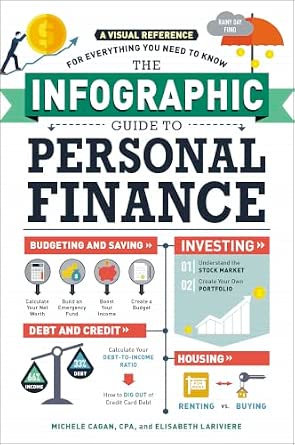 | Best Visual Reference | Series: Infographic Guide | Format: Book | Subject: Personal finance | VIEW LATEST PRICE | See Our Full Breakdown |
| How to Money: Your Visual Guide to the Basics of Finance |  | Best for Visual Beginners | Format: Not specified | Subject: Finance | Focus: Basics of finance | VIEW LATEST PRICE | See Our Full Breakdown |
| The Definitive Guide to Personal Finance for Teens and Young Adults |  | Best for Broad Teen Foundations | Format: Not specified | Audience: Teens and young adults | Topics: Personal finance, money management, and basic investment strategies | VIEW LATEST PRICE | See Our Full Breakdown |
| The Motley Fool Investment Guide for Teens: 8 Steps to Having More Money Than Your Parents Ever Dreamed Of |  | Best for Teen Investing | Format: Book | Audience: Teens | Focus: Investing and wealth building | VIEW LATEST PRICE | See Our Full Breakdown |
| Personal Finance for Teenagers: Money Management Skills for Earning, Saving, and Investing |  | Best for Hands-On Learning | Format: Book | Audience: Teenagers | Topics: Earning, saving, and investing | VIEW LATEST PRICE | See Our Full Breakdown |
| Personal Finance For Teens: The Ultimate Guide To Transforming Your Financial Game At A Young Age |  | Best for Early Wealth-Building Habits | ASIN: 1964737338 | Target audience: Teens | Topic: Personal finance | VIEW LATEST PRICE | See Our Full Breakdown |
| Money Skills for Teens: A Beginner’s Guide to Budgeting, Saving, and Investing |  | Best for Beginner-Friendly Money Basics | ASIN: 1915833094 | Audience: Teens | Level: Beginner | VIEW LATEST PRICE | See Our Full Breakdown |
| A Teenager’s Guide to Investing in the Stock Market: Invest Hard Now | Play Hard Later (Invest Now Play Later Series) |  | Best for Teen Stock-Market Beginners | ASIN: B08PXJZG2K | Audience: Teenagers | Series: Invest Now Play Later | VIEW LATEST PRICE | See Our Full Breakdown |
| Humble Math: Money and Financial Literacy (U.S. Edition) – Consumer Math for Ages 12+ |  | Best for Consumer-Math Practice | ASIN: 1635783933 | ISBN: 1635783933 | Edition: U.S. Edition | VIEW LATEST PRICE | See Our Full Breakdown |
| Personal Finance for Teens Workbook: American Edition |  | Best for Hands-On Learners | ASIN: 1738943747 | Audience: Teens | Format: Workbook | VIEW LATEST PRICE | See Our Full Breakdown |
| personal finance books for teen | Audience | Format | ASIN | Topics |
|---|---|---|---|---|
| Master Personal Finance for Te | Teenagers | Book | B0DBSJ969N | Budgeting, investing, and saving |
| The Ultimate Personal Finance | Teens | Book | B0D1G3QC28 | — |
| Personal Finance for Teens and | — | Book | B0GRJ2Q36X | Budgeting, saving, and investing |
| Money Skills and Personal Fina | Teens | Book | B0DWLDKVM2 | Budgeting, saving, and investing |
| Personal Finance for Teens: Th | — | Book | B0CXM421V1 | Income, expenses, side hustling, saving, investing, and budgeting |
| The Infographic Guide to Perso | Not specified | Book | — | — |
| How to Money: Your Visual Guid | Not specified | Not specified | — | Not specified |
| The Definitive Guide to Person | Teens and young adults | Not specified | — | Personal finance, money management, and basic investment strategies |
| The Motley Fool Investment Gui | Teens | Book | — | — |
| Personal Finance for Teenagers | Teenagers | Book | — | Earning, saving, and investing |
| Personal Finance For Teens: Th | — | — | 1964737338 | — |
| Money Skills for Teens: A Begi | Teens | — | 1915833094 | — |
| A Teenager’s Guide to Investin | Teenagers | — | B08PXJZG2K | — |
| Humble Math: Money and Financi | — | — | 1635783933 | Banking, investing, loans, and business basics |
| Personal Finance for Teens Wor | Teens | Workbook | 1738943747 | — |
More Details on Our Top Picks
Master Personal Finance for Teens
Master Personal Finance for Teens earns the broadest role in this group because its guidance connects core money skills to situations teenagers may face, including education expenses and emergency savings. That makes it a more scenario-focused choice than The Ultimate Personal Finance Guide for Teens, whose available description offers fewer specifics about its coverage. Budgeting, investing, and saving appear together, giving readers a useful starting framework rather than a single-topic lesson. The tradeoff is breadth: readers seeking detailed investment instruction may find the coverage introductory, and some plans—such as education costs—may require a parent or guardian to put into practice. I’d pick it for a teen who wants a practical overview tied to near-term decisions, not a technical investing manual.
Pros:- Written specifically for teen readers
- Brings budgeting, saving, and investing into one guide
- Addresses education expenses and emergency funds
- Connects financial skills to everyday decisions
Cons:- Broad coverage may leave advanced investing topics underdeveloped
- Some strategies may require parental involvement to put into practice
Best for: Teens who want one practical introduction to budgeting, saving, and investing that also addresses education costs and emergency funds
Not ideal for: Independent readers seeking advanced investment instruction or a guide that can be applied without adult help for financial decisions
- Audience:Teenagers
- Topics:Budgeting, investing, and saving
- Life scenarios:Education expenses, emergency funds, and everyday financial decisions
- Format:Book
- ASIN:B0DBSJ969N
- Approach:Practical guidance for financial decision-making
Our verdict“Choose this for a teen who wants a wide-ranging, scenario-based introduction to everyday money decisions rather than advanced investment detail.”
The Ultimate Personal Finance Guide for Teens
The Ultimate Personal Finance Guide for Teens has a clear audience and a broad purpose: helping teenagers build money-management skills and make informed choices. That straightforward framing may suit readers who want a general starting point, while Master Personal Finance for Teens gives buyers more specific reasons to choose it, including coverage of education expenses and emergency funds. The limitation here is the sparse product information: the available description does not identify particular subjects, exercises, or teaching methods beyond personal finance and money management. I would treat this as a possible introductory pick, not assume it offers a particular budgeting system or investing depth. It makes most sense when a teen needs a teen-focused overview and the buyer is comfortable with limited detail about the book’s contents.
Pros:- Explicitly aimed at teen readers
- Centers on money management
- Sets out a goal of helping young readers make informed choices
Cons:- Available description gives no detail about specific topics or chapters
- No listed teaching format or practical exercises to help buyers judge its fit
Best for: Teens beginning to learn money management who want a guide explicitly aimed at their age group
Not ideal for: Buyers who need confirmed coverage of investing, saving, budgeting exercises, or specific financial situations before choosing
- Audience:Teens
- Topic:Personal finance and money management
- Stated aim:Build financial skills and support informed choices
- Format:Book
- ASIN:B0D1G3QC28
- Content detail supplied:No further guide contents specified
Our verdict“Pick this only if a broadly described, teen-focused money-management guide is enough and specific content details are not a priority.”
Personal Finance for Teens and Young Adults: Budgeting, Saving, and Investing
Personal Finance for Teens and Young Adults stands apart by naming both teenagers and young adults as its intended readers. That wider audience may help a teen connect current habits—budgeting and saving—with the longer-term goal of financial independence. Its stated topics also make the scope clearer than The Ultimate Personal Finance Guide for Teens, whose available details don’t specify particular subjects. The tradeoff is that a book meant to span two age groups may feel less tailored to a younger teen than Money Skills and Personal Finance for Teens Made Easy, which emphasizes a step-by-step approach for teen readers. The description does not provide chapter details or a teaching method, so I’d choose it for its stated topic mix and broad age range, not for unlisted features.
Pros:- Names budgeting, saving, and investing as core topics
- Addresses both teens and young adults
- Focuses on practical money skills and financial independence
Cons:- The broad age range may be less tailored to younger teen readers
- Available information does not specify the teaching method or chapter-level content
Best for: Older teens and young adults who want a shared introduction to budgeting, saving, and investing as they work toward independence
Not ideal for: Younger teens who need a clearly step-by-step teaching approach or buyers who want details about exercises and chapter structure
- Format:Book
- Intended audience:Teens and young adults
- Topics:Budgeting, saving, and investing
- Stated focus:Practical money skills
- Goal:Financial independence
- ASIN:B0GRJ2Q36X
Our verdict“Choose this for an older teen who wants core money topics framed around the move toward financial independence.”
Money Skills and Personal Finance for Teens Made Easy
Money Skills and Personal Finance for Teens Made Easy is the most clearly structured choice in this batch: its step-by-step approach is designed to help teens build habits across budgeting, saving, and investing. That gives it a different appeal from Personal Finance for Teens and Young Adults, which covers the same core topics but is also aimed at young adults and does not specify a stepwise format in the supplied details. The emphasis on lasting habits may suit a reader who benefits from moving through skills in sequence. The tradeoff is that product information is limited; no exercises, chapter plan, or examples are described, so buyers can’t tell how the step-by-step promise works in practice. I’d favor it for a teen who wants a guided foundation over a broader age-range framing.
Pros:- Uses a step-by-step approach for teen readers
- Covers budgeting, saving, and investing
- Emphasizes building lasting money habits
Cons:- Available details do not explain how the step-by-step format is delivered
- No specific exercises or advanced-topic coverage are described
Best for: Teens who learn best from material presented as a sequence of money skills and want a foundation in budgeting, saving, and investing
Not ideal for: Buyers seeking confirmed workbook activities, detailed chapter information, or advanced investment coverage
- Audience:Teens
- Topics:Budgeting, saving, and investing
- Approach:Step-by-step guide
- Stated focus:Building smart money habits
- Long-term aim:A foundation for financial independence
- Format:Book
- ASIN:B0DWLDKVM2
Our verdict“Choose this for a teen who wants core money skills presented as a guided sequence, while accepting that the exact lesson format is unspecified.”
Personal Finance for Teens: The Independence Blueprint
Personal Finance for Teens: The Independence Blueprint gives earning a more prominent place than the other entries here: its stated coverage includes income, expenses, and side hustling alongside budgeting, saving, and investing. That makes it a stronger match for a teen who is already thinking about a part-time job or earning independently than Master Personal Finance for Teens, which is described more through education costs, emergency funds, and everyday financial decisions. The practical, independence-focused framing is appealing, but the listed cons point to real limits: investment coverage may not satisfy readers looking for advanced strategy, and advice about earning or investing can age as conditions change. I’d choose it for action-oriented money basics, not as a lasting technical reference.
Pros:- Tailored specifically to teenagers
- Includes income, expenses, and side hustling
- Pairs earning topics with budgeting, saving, and investing
- Frames practical skills around financial independence
Cons:- May not provide enough detail for advanced investment learners
- Specific earning and financial advice may become outdated as economic conditions change
Best for: Teens exploring part-time income or side hustles who want to connect earning with budgeting, saving, and investing
Not ideal for: Readers seeking advanced investment strategies or a reference guaranteed to stay current as economic conditions change
- Target audience:Teens
- Topics:Income, expenses, side hustling, saving, investing, and budgeting
- Stated approach:Practical strategies
- Goal:Financial independence
- Format:Book
- ASIN:B0CXM421V1
Our verdict“Choose this for a teen who wants to connect side-hustle income with everyday money decisions, rather than study advanced investing.”
The Infographic Guide to Personal Finance: A Visual Reference for Everything You Need to Know
Visual learners who want a broad reference may find this a more approachable starting point than a text-led guide. Its infographics present personal finance topics at a glance, which can help teens connect unfamiliar terms and ideas without working through long explanations. Compared with How to Money, this book is positioned as a reference across a range of topics rather than a guide focused specifically on finance basics. That breadth is useful for dipping into subjects as questions come up, but the supplied description does not confirm teen-specific examples, exercises, or a step-by-step learning path. It also does not identify which topics receive the most detail. I’d choose it for a teen who learns through visual summaries, not as the only resource for someone needing guided practice with everyday money decisions.
Pros:- Uses infographics to present personal finance topics visually
- Covers a range of personal finance topics as a reference
- Visual summaries may make unfamiliar subjects easier to scan
Cons:- The product information does not establish that its examples are tailored to teens
- No hands-on activities or step-by-step learning structure are specified
- The available description does not show how deeply individual topics are covered
Best for: Visual learners who want to browse personal finance topics in infographic form and use the book as a reference.
Not ideal for: Teens who need age-specific scenarios, hands-on exercises, or a clearly sequenced introduction, since those features are not identified in the product information.
- Series:Infographic Guide
- Format:Book
- Subject:Personal finance
- Presentation:Infographics
- Intended use:Visual reference
- Audience:Not specified
Our verdict“Choose this as a visual, browseable reference for a teen who prefers infographics to extended explanations.”
How to Money: Your Visual Guide to the Basics of Finance
New learners who want a visual introduction may prefer this guide’s focus on finance basics over a broader reference. The title identifies it as a visual guide, making it a plausible fit for teens who find financial terms easier to approach through visual presentation. Compared with The Infographic Guide to Personal Finance, which is described as a reference covering a range of topics, How to Money is framed around the basics. That narrower promise can make it a clearer first step, though the available product information does not specify its particular topics, activities, or age range. I would not assume it includes teen-focused examples or practice exercises. It stands out for a beginner-friendly visual premise, but buyers seeking confirmed coverage of investing, earning, or budgeting should check the book’s contents before choosing it.
Pros:- Explicitly presented as a visual guide
- Focuses on the basics of finance rather than promising advanced material
- Its introductory framing may suit readers starting from scratch
Cons:- The available product data does not specify which finance topics it covers
- No teen-specific examples or activities are confirmed
- The description provides no details about structure or depth
Best for: Teens beginning to learn about money who prefer a visual introduction and do not need a confirmed teen-specific curriculum.
Not ideal for: Readers who want verified coverage of particular topics, age-targeted examples, or hands-on activities, since the supplied description gives no further details.
- Format:Not specified
- Subject:Finance
- Focus:Basics of finance
- Presentation:Visual guide
- Audience:Not specified
- Topics:Not specified
Our verdict“Pick this for a visual first look at finance basics, but verify the contents if your teen needs specific lessons or activities.”
The Definitive Guide to Personal Finance for Teens and Young Adults
Teen and young adult readers seeking a general foundation are the clear audience here: the guide is explicitly aimed at them and covers money management habits alongside basic investing strategies. That makes it broader than The Motley Fool Investment Guide for Teens, which centers on an eight-step approach to investing and wealth building. This book makes more sense for someone who wants everyday money habits and an introduction to investing in the same resource. Its focus on simple habits can also be a limitation: readers who already know the basics or want detailed guidance for complex financial choices may find the treatment too introductory. The description does not mention activities or a visual format, either. I’d place it ahead of a narrowly investment-focused guide for a teen starting with general money management, but not for an experienced young investor.
Pros:- Specifically targets teens and young adults
- Covers foundational money management habits
- Introduces basic investment strategies for beginners
Cons:- May feel too basic to readers with prior financial knowledge
- Simple-habit focus may not address complex financial situations in depth
- The product description does not specify activities or other learning aids
Best for: Teens and young adults who want a starter guide combining everyday money management habits with basic investing.
Not ideal for: Readers with existing finance knowledge or those seeking in-depth treatment of complicated financial decisions.
- Format:Not specified
- Audience:Teens and young adults
- Topics:Personal finance, money management, and basic investment strategies
- Money management focus:Simple foundational habits
- Investment level:Basic strategies
- Series:Not specified
Our verdict“Choose this for a teen who needs broad money-management foundations before moving into more detailed investing material.”
The Motley Fool Investment Guide for Teens: 8 Steps to Having More Money Than Your Parents Ever Dreamed Of
Teens especially curious about investing get a more focused path here than in general money guides. Its eight-step structure is designed to simplify investment concepts and encourage young readers to start building wealth early. Compared with The Definitive Guide to Personal Finance for Teens and Young Adults, this book puts investing at the center rather than pairing it with broader money-management habits. That focus is a strength for a teen ready to learn how investing works, but it may leave readers looking for a wider introduction to everyday finances wanting more. The advice is also tied to investment ideas that can date, so readers should treat specific recommendations as material to verify rather than timeless instructions. I’d choose it for an investment-minded teen, not as a complete substitute for a broad personal finance primer.
Pros:- Simplifies investment concepts for a teen audience
- Uses a structured eight-step approach
- Encourages early attention to wealth-building habits
Cons:- Investment focus may leave everyday personal finance topics less covered
- Specific investment advice may become outdated
- The introductory approach may not satisfy experienced investors
Best for: Teens ready for a structured, introductory guide to investing and early wealth-building concepts.
Not ideal for: Teens who first need broad coverage of everyday money management, or experienced investors looking for advanced analysis.
- Format:Book
- Audience:Teens
- Focus:Investing and wealth building
- Structure:Eight steps
- Approach:Simplifies investment concepts
- Series:Not specified
Our verdict“Choose this for an investment-curious teen who wants a structured starting point, not a broad guide to every money topic.”
Personal Finance for Teenagers: Money Management Skills for Earning, Saving, and Investing
Teens who learn by doing have a clear reason to choose this guide: its description includes hands-on activities alongside earning, saving, and investing. That practical element sets it apart from The Definitive Guide to Personal Finance for Teens and Young Adults, which covers foundational habits and basic investment strategies but does not specify activities. The topic mix also gives this book a wider everyday-money frame than The Motley Fool Investment Guide for Teens, which concentrates on investing. The tradeoff is that the supplied details do not explain what the activities involve or how deeply each topic is covered. I’d favor it for a teen who wants to engage with several core money subjects, while a reader looking for a detailed investing sequence may get more from the Motley Fool guide.
Pros:- Designed specifically as a personal finance guide for teenagers
- Covers earning, saving, and investing
- Includes hands-on activities to support active learning
- Part of The Teen Advantage Series
Cons:- The available description does not explain the activities or their scope
- Depth of coverage for each topic is not specified
- May be less suitable than a dedicated investing guide for readers focused on investment strategy
Best for: Teenagers who want to work through earning, saving, and investing topics with hands-on activities.
Not ideal for: Readers seeking detailed investment instruction or a clearly documented activity format, since the product information does not describe either in depth.
- Format:Book
- Audience:Teenagers
- Topics:Earning, saving, and investing
- Learning approach:Hands-on activities
- Series:The Teen Advantage Series
- Subject:Personal finance
Our verdict“Choose this for a teen who wants a practical introduction across earning, saving, and investing rather than an investing-only guide.”
Personal Finance For Teens: The Ultimate Guide To Transforming Your Financial Game At A Young Age
Learning, earning, and investing give this guide a broader focus than Money Skills for Teens, whose stated scope centers on budgeting, saving, and investing. That wider lens may appeal to teenagers who want to connect everyday money choices with longer-term wealth building. Its teen-specific audience also makes it a more direct fit than Humble Math, which presents financial literacy through consumer math for ages 12 and up.
The tradeoff is limited detail in the available description: it does not identify specific exercises, examples, or how deeply it explains investing. I would choose it for a young reader seeking a broad introduction, not for someone who already wants advanced financial concepts or a clearly documented step-by-step curriculum.
Pros:- Designed specifically for a teenage audience.
- Connects earning, learning, and investing rather than focusing on only one money skill.
- Introduces wealth-building habits early.
Cons:- The description does not spell out the book’s specific lessons, examples, or activities.
- May not provide enough depth for readers ready for advanced financial concepts.
Best for: Teenagers who want an age-focused introduction linking earning money, everyday financial habits, and early investing.
Not ideal for: Teens seeking advanced investing instruction or readers who need a clearly described set of lessons and exercises before choosing.
- ASIN:1964737338
- Target audience:Teens
- Topic:Personal finance
- Core focus:Learning, earning, and investing
- Financial emphasis:Building wealth at a young age
- Approach:Practical financial literacy strategies
Our verdict“Choose this guide for a broad, teen-focused introduction to earning and building wealth, but look elsewhere for documented exercises or advanced investing detail.”
Money Skills for Teens: A Beginner’s Guide to Budgeting, Saving, and Investing
Budgeting, saving, and investing make this the clearest starting point in this group for a teenager who wants the main personal-finance pillars in one beginner guide. Compared with A Teenager’s Guide to Investing in the Stock Market, it is less narrowly centered on stocks; that wider subject mix suits readers who need to learn how money works before concentrating on investing.
The description is brief, so I cannot tell whether the book includes worksheets, examples, or detailed instructions. That makes it harder to judge how engaging or practical its lessons are than Humble Math, which explicitly identifies consumer math and several covered topics. I would pick this for a straightforward introduction, but not for a teen seeking a hands-on workbook or a distinct investing curriculum.
Pros:- Clearly identified beginner-level approach.
- Covers budgeting and saving alongside investing.
- Provides a broader starting point than a book devoted mainly to stock investing.
Cons:- The description gives no detail about examples, exercises, or teaching format.
- The listed scope may be too introductory for teens who already know basic money management.
Best for: Teenagers new to personal finance who want an introductory guide covering budgeting, saving, and investing together.
Not ideal for: Readers looking for specified practice activities, detailed topic coverage, or a focused stock-market guide.
- ASIN:1915833094
- Audience:Teens
- Level:Beginner
- Format description:Guide
- Topic:Personal finance
- Listed subjects:Budgeting, saving, and investing
Our verdict“Pick this as a simple first guide to budgeting, saving, and investing, but choose a more clearly detailed resource if you want activities or deeper coverage.”
A Teenager’s Guide to Investing in the Stock Market: Invest Hard Now | Play Hard Later (Invest Now Play Later Series)
Stock-market fundamentals and practical starting steps set this book apart from Money Skills for Teens, which covers budgeting and saving alongside investing rather than centering the market. Its teen-friendly explanations and real-world examples may help a young reader connect investing ideas to familiar situations, while its long-term framing pairs financial responsibility with room to enjoy life now.
That focus is also its main limitation: a teen who still needs a grounding in budgets and day-to-day money management may want a broader entry point, such as Personal Finance For Teens: The Ultimate Guide to Transforming Your Financial Game at a Young Age. The description also flags a mainly U.S.-market perspective and limited advanced strategy coverage. I would choose this for a curious beginner interested specifically in stocks, not as a complete personal-finance curriculum.
Pros:- Uses a teen-friendly tone to introduce stock-market fundamentals.
- Offers practical steps for getting started with investing.
- Uses real-world examples to make concepts relatable.
- Encourages long-term financial habits while acknowledging balance.
Cons:- Focuses mainly on basic U.S. market concepts, limiting its global perspective.
- May not cover advanced investment strategies in depth.
- Its stock-market emphasis leaves broader money-management topics less central.
Best for: Teenagers who already want to learn how stock-market investing works and prefer accessible explanations with practical starting guidance.
Not ideal for: Teens who first need broad lessons in budgeting and saving, readers seeking advanced strategies, or those wanting a global market perspective.
- ASIN:B08PXJZG2K
- Audience:Teenagers
- Series:Invest Now Play Later
- Topic:Stock-market investing
- Level:Introductory
- Approach:Clear explanations and actionable strategies
- Examples:Real-world examples
- Market focus:Primarily U.S. markets
Our verdict“Choose this for an approachable first look at stock investing, but start with a broader finance guide if budgeting and saving are still unfamiliar.”
Humble Math: Money and Financial Literacy (U.S. Edition) – Consumer Math for Ages 12+
Consumer math across banking, investing, loans, and business basics gives Humble Math a more explicitly practical scope than Money Skills for Teens, which is described through budgeting, saving, and investing. Its stated audience of ages 12 and up also makes it a fit for younger learners who are ready to connect financial topics with everyday math. Compared with the stock-focused A Teenager’s Guide to Investing in the Stock Market, it spreads attention across a wider set of money decisions.
The U.S. edition is a real boundary for families outside that system, and the consumer-math framing may not suit a teen who prefers conversational guidance over math-centered learning. I would choose it when practical calculations and varied financial topics matter more than a dedicated investing narrative.
Pros:- Covers banking, investing, loans, and business basics.
- Designed for learners aged 12 and older.
- Links financial literacy with practical consumer math.
- Offers broader topic coverage than a stock-market-only introduction.
Cons:- The U.S. edition may not match financial systems in other countries.
- Its math-centered approach may not appeal to teens seeking a more conversational guide.
Best for: U.S.-based learners aged 12 and up who benefit from connecting money topics with consumer math and practical financial decisions.
Not ideal for: International readers or teens who want a primarily narrative, stock-investing-focused guide rather than consumer-math coverage.
- ASIN:1635783933
- ISBN:1635783933
- Edition:U.S. Edition
- Target age:12+
- Subject:Money and financial literacy
- Approach:Consumer math
- Topics:Banking, investing, loans, and business basics
Our verdict“Choose Humble Math for U.S.-focused consumer-math practice across several money topics, but skip it if you need a non-U.S. or mainly narrative resource.”
Personal Finance for Teens Workbook: American Edition
Workbook format is the distinguishing point here: it may suit a teen who learns by writing through material rather than only reading explanations. That makes it a different kind of option from Money Skills for Teens, which is presented as a beginner’s guide, and from Humble Math, whose listed scope names specific consumer-math subjects. The American Edition signals a U.S. orientation, but the available description does not identify which financial topics or activities the workbook contains.
That lack of detail is the main tradeoff. I would not choose it over a guide with clearly listed lessons when a teen needs a particular topic such as investing or loans. It makes more sense for families specifically seeking a workbook format and willing to verify the contents before relying on it as a full personal-finance course.
Pros:- Workbook format supports hands-on learning.
- Designed for teen readers.
- American Edition indicates a U.S.-oriented version.
Cons:- The available description does not name the financial topics covered.
- No specific activity types or teaching features are provided.
- Its value as a complete guide is difficult to judge without further content details.
Best for: Teenagers who prefer a workbook-style learning resource and families seeking a personal-finance title identified for teen readers.
Not ideal for: Buyers who need confirmed coverage of budgeting, investing, banking, or specific exercises before selecting a book.
- ASIN:1738943747
- Audience:Teens
- Format:Workbook
- Edition:American Edition
- Topic:Personal finance
- Specific topics listed:Not provided
Our verdict“Choose this if a teen specifically wants workbook-style learning, but favor a guide with disclosed topics when you need dependable subject coverage.”

How We Picked
I compared these 15 books by how directly they address a teen reader, how clearly they cover everyday decisions such as budgeting and saving, and whether their format supports independent learning. I also looked at the differences between broad introductions, visual guides, investing-focused titles, consumer-math resources, and workbooks. Those distinctions matter because a teen who wants to manage earnings may need a different starting point from one curious about stocks or one who learns best by solving problems.
The order prioritizes approachable, broadly useful learning before narrower or more specialized material. A focused book can rank highly for its intended reader without serving as the best first purchase for every teen. Since titles alone cannot establish depth or teaching quality, I avoid treating similar-sounding claims as proof of equivalent coverage; readers should check the contents, sample pages, and edition details before choosing. I weigh practical fit and clarity above ambitious promises to cover every money topic.
| personal finance books for teen | Audience | Format |
|---|---|---|
| Master Personal Finance for Te | Teenagers | Book |
| The Ultimate Personal Finance | Teens | Book |
| Personal Finance for Teens and | — | Book |
| Money Skills and Personal Fina | Teens | Book |
| Personal Finance for Teens: Th | — | Book |
| The Infographic Guide to Perso | Not specified | Book |
| How to Money: Your Visual Guid | Not specified | Not specified |
| The Definitive Guide to Person | Teens and young adults | Not specified |
| The Motley Fool Investment Gui | Teens | Book |
| Personal Finance for Teenagers | Teenagers | Book |
| Personal Finance For Teens: Th | — | — |
| Money Skills for Teens: A Begi | Teens | — |
| A Teenager’s Guide to Investin | Teenagers | — |
| Humble Math: Money and Financi | — | — |
| Personal Finance for Teens Wor | Teens | Workbook |
Factors to Consider When Choosing Personal Finance Books For Teens
Choosing a finance book for a teen is less about finding the title with the biggest promises and more about matching its format and scope to the reader. These questions can help you avoid a book that looks suitable but does not fit the teen’s goals, reading style, or need for practice.
Start With the Money Decision They Face Now
Think about what prompted the search: a first paycheck, saving for a goal, questions about investing, or a desire to understand everyday spending. A broad introduction can supply useful context, but it may not give enough depth for a teen with a specific question. Choosing a stock-market title just because investing sounds exciting can leave basic budgeting unexplained. On the other hand, a general guide may feel slow to someone already ready to study investing. Match the first book to a current question, then add a focused resource if interest grows. This keeps the choice relevant without asking one book to do every job.
Match the Format to the Teen’s Reading Habits
Visual books can make unfamiliar ideas easier to approach, especially for readers who prefer diagrams and short sections to long explanations. A conventional guide may give more room for connected explanations, while a workbook asks the reader to stop and apply concepts. A common mistake is buying the format an adult prefers rather than the one the teen will actually read. Check a sample page or contents list to see whether the layout feels clear rather than crowded. Short, inviting sections can help with independent reading, but they may not provide the depth a motivated learner wants. Choose for sustained use, not shelf appeal.
Separate Explanation From Practice
Some books explain financial concepts; others ask readers to work through calculations or decisions. A teen who understands an idea but struggles to apply it may benefit from exercises, while a teen starting from scratch may need clear teaching before practice. Do not assume that a workbook will explain every answer in enough detail, or that a standard guide will provide meaningful activities. For a gift, consider whether the teen is likely to complete exercises without someone prompting them. If practice is the main goal, check that activities suit the reader’s age and current math confidence. Combining an explanatory book with a small amount of real-life discussion can bridge the gap.
Check How Narrow the Topic Is
Books centered on investing can hold a teen’s attention, but they cover only part of personal finance. Before choosing one as a first book, ask whether the reader already knows the basics of saving, spending, and risk. A specialized title works well when curiosity is strong and the reader wants to pursue that subject. It may be a poor fit when the goal is a rounded introduction to managing money. Similarly, consumer-math material may strengthen calculation skills without discussing every financial decision in depth. A focused book is not a weakness; the mismatch happens when its scope does not fit the purpose.
Look for Age, Edition, and Regional Fit
Personal finance rules and examples can depend on location, and a teen’s age affects which topics feel immediately useful. Check whether the book identifies a U.S. edition or uses examples that match the reader’s country. Also consider whether the material speaks to middle-school readers, older teens, or young adults; a book that spans a wide age range may suit some families but feel too basic or advanced to others. A newer publication date does not automatically make a book more suitable. Scan the contents and sample material for topics the teen can use now. This simple check can prevent a mismatch that a broad title alone will not reveal.
Frequently Asked Questions
Which book should I choose as a teen’s first personal finance book?
For a teen who wants a broad, approachable start, How to Money is the roundup’s best overall choice because its visual presentation can make core ideas easier to follow. If the teen prefers calculations and concrete exercises, Humble Math may be a better entry point, though it emphasizes consumer math rather than every area of finance. A first book does not need to cover all financial topics. Consider what the teen is curious about and how they like to learn before choosing. For a reader with a strong investing interest, a focused investing book can work, but it may leave everyday money basics for later.
Should I buy a broad finance guide or an investing book?
Choose a broad guide when the teen needs a foundation in everyday money decisions, including spending and saving. An investing book makes more sense when the reader already has basic financial context and wants to learn about the stock market specifically. Starting with investment material alone can make finance seem narrower than it is and may leave practical money habits unaddressed. A teen with strong interest in stocks does not need to wait to explore that topic, but pairing the specialized book with a general introduction can round out the learning. Let the reader’s immediate question guide the choice.
Is a workbook a better choice than a regular book?
A workbook is a strong choice when the teen learns by doing and is willing to complete activities. It can prompt active practice in a way that a text-led guide may not. A regular book is often a better fit for a reader who wants explanations first or prefers to read without stopping for exercises. Check whether the workbook offers enough instruction to make the tasks understandable; practice without context can frustrate a beginner. If you are unsure, consider whether the teen usually enjoys worksheets and self-directed projects. The best format is the one they are likely to use.
Can one book teach budgeting, saving, and investing well?
A broad teen finance book may introduce all three, but an introduction is not the same as detailed instruction in each subject. A teen who only needs a starting framework may be well served by one overview. Someone preparing to manage a paycheck or study investing may need a second resource with more focused practice. Check the contents and sample pages to see how much space each topic receives instead of relying on a title’s list of subjects. It is reasonable to build a small reading path over time rather than expect one book to answer every question. Start with the skill the teen will use soonest.
What should I check before buying a finance book for a younger teen?
Check the stated age range, reading level, examples, and how much prior knowledge the book assumes. Younger readers may benefit from clear visuals, short explanations, and guided practice, while older teens may want more detail and independence. Look at sample pages to judge whether the language feels accessible without talking down to the reader. Confirm that regional references match the family’s location, especially if the book discusses financial systems or accounts. A title that includes “teens” may still target a broad age span, so the contents matter more than the label alone.
Conclusion
For a broad, accessible starting point, I recommend How to Money as the best overall pick; its visual approach gives it an edge for teens who prefer clear, engaging layouts. For best value in learning-by-doing, Humble Math is a practical choice when consumer math is the main need, though it has a narrower scope. The best premium-style choice for a reader seeking focused investment guidance is The Motley Fool Investment Guide for Teens, while it is less suitable as a complete first finance book. For beginners who want a workbook format, Personal Finance for Teens Workbook: American Edition offers structured practice; teens who would rather read explanations should choose a guide instead. If the specific goal is stock-market learning, compare that title with A Teenager’s Guide to Investing in the Stock Market and choose by the teen’s preferred style. The best pick is the one that fits the reader’s current question and learning habits, not simply the broadest title.
Evergreen bestsellers Picks

iRobot Roomba 105 Combo Robot Vacuum and Mop with AutoEmpty Dock

Dyson Cyclone V10 Origin Cordless Vacuum

Roborock Q7 M5+ Robot Vacuum and Mop with Self-Emptying Dock
As an affiliate, we earn on qualifying purchases.