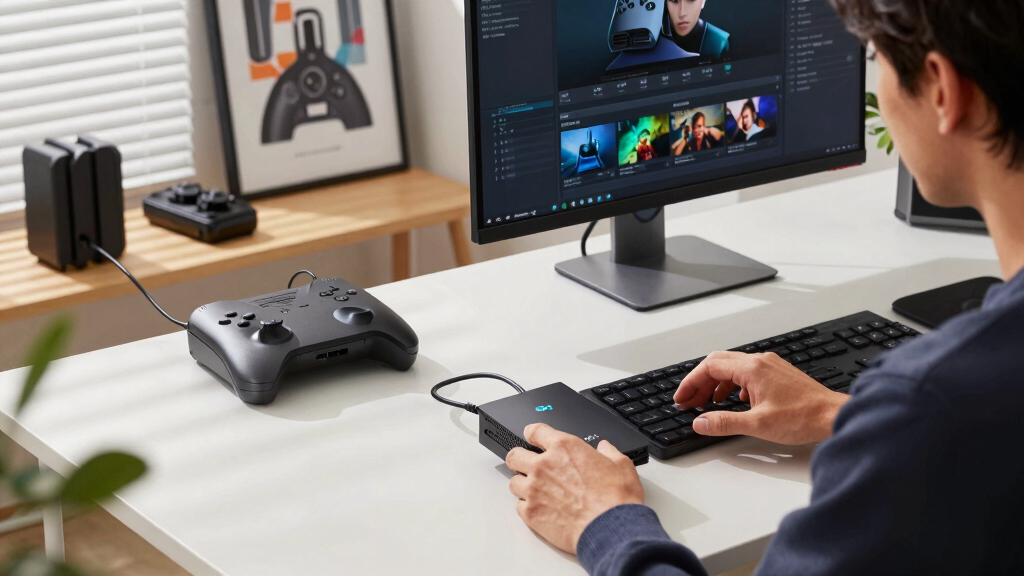

Finding the best 4K capture cards for YouTube streamers involves balancing quality, latency, compatibility, and price. The Elgato 4K X stands out as the overall top pick for its ultra-low latency and high resolution support, ideal for serious streamers. The AVerMedia 4K Live Gamer Ultra S offers robust features for professional-quality recordings, while the Guermok Video Capture Card provides a budget-friendly option for casual streamers. Each choice reflects different priorities—whether that’s top-tier performance or value for money. Keep reading to see how these options compare and find the best fit for your streaming setup.
Key Takeaways
- High-end models like the Elgato 4K X excel in ultra-low latency and resolution support, perfect for professional streaming.
- Budget options like the Guermok provide solid 4K performance with fewer advanced features, suitable for beginners.
- Compatibility with HDMI 2.1 and VRR is increasingly common at higher price points, enhancing smooth gameplay capture.
- Ease of use and plug-and-play features are critical for newcomers, but advanced users may prioritize customization and low latency.
- Tradeoffs often involve balancing resolution, latency, and price; premium options deliver top performance but cost more.


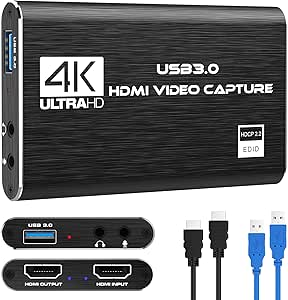


More Details on Our Top Picks
Elgato 4K S – External Capture Card for PS5, Xbox Series X/S, Switch 2, PC, Mac, iPad | 4K60, 1440p120, or 1080p240 Passthrough and Capture, HDR10, VRR, USB-C, Near-Zero Latency
This option stands out for its ability to handle multiple high-resolution pass-throughs with minimal latency, making it ideal for professional streamers and serious gamers. Compared to the 4K HDMI Capture Card USB 3.0, it offers better HDR10 support and more flexible resolutions, but at a higher price point. Its near-zero latency and HDR capabilities ensure crisp, vibrant gameplay and recording, especially on Windows systems. The device’s plug-and-play nature across Mac, PC, and iPad streamlines setup, though its size and cost might deter casual users. This pick makes the most sense for those who prioritize top-tier image quality and seamless multi-device compatibility. Pros: Excellent HDR support, versatile resolution options, near-zero latency, cross-platform compatibility.
Cons: Higher price, slightly larger size, requires compatible hardware for HDR.
Verdict: Designed for content creators demanding the best quality and performance across multiple platforms, with few compromises.
Specs: Input: HDMI 2.0; Passthrough Resolutions: up to 2160p60; Capture Resolutions: up to 1080p60; HDR10 support; VRR support; Dimensions: 112 x 72 x 18 mm; Weight: 90 g; System Requirements: Windows 11, macOS 13, iPadOS.Pros:- Exceptional HDR10 support
- Multiple high-resolution passthrough options
- Near-zero latency for live streaming
- Cross-platform compatibility
Cons:- Premium price point
- Larger physical size
- Requires compatible hardware for HDR features
Best for: Professional YouTubers and streamers who need high-quality 4K60 capture with HDR and minimal latency.
Not ideal for: Casual gamers or beginners who prioritize affordability over advanced features.
- Video Input:HDMI 2.0
- Passthrough Resolutions:up to 2160p60
- Capture Resolutions:up to 1080p60
- HDR Support:HDR10
- VRR Support:Yes
- Dimensions:112 x 72 x 18 mm
- Weight:90 g
- System Compatibility:Windows 11, macOS 13, iPadOS
Bottom line: Ideal for serious content creators seeking professional-grade quality and versatile device support.
4K HDMI Capture Card USB 3.0 – 1080P 60FPS Gaming & Streaming Video Capture Card with HDMI Loop-Out, Plug & Play, Low-Latency Recording for PS5/PS4/Xbox/Switch/OBS/PC/Mac
This pick makes the most sense for beginner streamers who want reliable 1080p60 performance at a wallet-friendly price. Compared with the Elgato 4K S, it offers simpler plug-and-play setup without HDR support, but provides excellent low-latency performance for standard HD streaming. Its HDMI loop-out allows for smooth gameplay viewing without lag, ideal for casual or new streamers on a budget. While it doesn’t push 4K recording, it’s compatible with most gaming devices and streaming software, making it a practical choice for those starting out. It’s a strong contender for those who want a straightforward, reliable device without extra bells and whistles. Pros: Easy to set up, low latency, HDMI loop-out, broad device compatibility.
Cons: Limited to 1080p60 recording, no HDR support, basic feature set.
Verdict: Perfect for new streamers who want dependable HD capture without breaking the bank.
Specs: Input: HDMI, USB 3.0; Video Resolution: 1080p60; Compatibility: Windows, macOS; Size: 3 x 2 x 1 inches; Weight: 0.21 kg; Plug-and-play: Yes; Supports HDMI loop-out.Pros:- Affordable price
- Plug-and-play simplicity
- Low latency for gaming
- HDMI loop-out feature
Cons:- Limited to 1080p60
- No HDR support
- Basic feature set
Best for: Beginners and budget-conscious streamers looking for easy setup and solid HD quality.
Not ideal for: Advanced content creators or those aiming for 4K HDR recording and higher resolutions.
- Video Input:HDMI
- Video Resolution:1080p60
- Compatibility:Windows, macOS
- Dimensions:3 x 2 x 1 inches
- Weight:0.21 kg
- Features:HDMI loop-out
Bottom line: A reliable, straightforward choice for newcomers wanting dependable HD streaming.
Elgato 4K X – Capture Up to 4K144 with Ultra-Low Latency on PS5|Pro, Xbox Series X|S, Nintendo Switch 2, OBS and More, HDMI 2.1, VRR, HDR10, USB 3.2 Gen 2, for Streaming & Recording, PC|Mac|iPad
This model is better suited to gamers and streamers aiming for the highest quality at ultra-fast frame rates, supporting up to 4K144 and 240fps in 1080p. Compared to the Elgato 4K S, it offers higher frame-rate capture, HDMI 2.1 support, and VRR passthrough, ensuring smooth, tear-free gameplay. Its ultra-low latency and compatibility with platforms like OBS and Twitch make it ideal for those who want pro-level streaming with the latest tech. However, its advanced capabilities come at a premium price and require high-end hardware to fully leverage the 4K144 support. This pick is perfect for dedicated gamers or content creators pushing the envelope with high-resolution, high-frame-rate content. Pros: Supports up to 4K144, HDMI 2.1, VRR passthrough, ultra-low latency.
Cons: Pricey investment, hardware demanding, overkill for casual users.
Verdict: A top choice for high-end gamers and streamers who need the latest in resolution and frame rate support.
Specs: Input: HDMI 2.1; Max Capture: 4K144; Frame Rate: up to 240fps at 1080p; Support: VRR, HDR10; Connectivity: USB 3.2 Gen 2; Compatibility: Windows, Mac, iPad.Pros:- Supports 4K144 at high FPS
- HDMI 2.1 compatibility
- VRR and HDR10 support
- Ultra-low latency
Cons:- High cost
- Requires powerful hardware
- Overkill for standard 1080p streaming
Best for: High-performance gamers and professional streamers focused on 4K144 or high FPS content.
Not ideal for: Casual gamers or creators on a budget who don’t need ultra-high frame rates or 4K144 support.
- Video Input:HDMI 2.1
- Max Capture Resolution:4K144
- Frame Rate:up to 240fps at 1080p
- Support:VRR, HDR10
- Connectivity:USB 3.2 Gen 2
- Compatibility:Windows, Mac, iPad
Bottom line: Best suited for those demanding cutting-edge resolution and frame rate performance in streaming and recording.
Capture Card Nintendo Switch, 4K HDMI Video Capture Card, 1080P 60FPS, HDMI to USB 3.0 Capture Card for Streaming Work with Camera/Xbox/PS4/PS5/PC/OBS
This device makes a strong case for portable streaming setups, offering reliable 1080p60 capture from a compact form factor. Compared to the Elgato 4K S, it sacrifices some resolution and HDR features for size and portability, but maintains solid low-latency performance. Its HDMI loop-out and plug-and-play design are perfect for traveling streamers or those with limited space. While it does not support 4K recording, it is compatible with many devices like Switch, PS4, and Xbox, and works well with OBS and other streaming software. Its small footprint makes it an excellent choice for content creators who need mobility without sacrificing core streaming capabilities. Pros: Small size, easy setup, low latency, broad device compatibility.
Cons: Limited to 1080p60, no HDR support, basic feature set.
Verdict: Ideal for mobile streamers who need a reliable, portable HD capture solution.
Specs: Input: HDMI; Video Resolution: 1080p60; Compatibility: Windows, Mac; Size: Very compact; Support: HDMI loop-out, plug-and-play, no external power.Pros:- Highly portable
- Plug-and-play setup
- Low latency
- Broad device support
Cons:- Limited to 1080p60
- No HDR
- Basic feature set
Best for: Traveling streamers and content creators needing a lightweight, portable capture device.
Not ideal for: Those seeking 4K HDR capabilities or high-end streaming features for stationary setups.
- Video Input:HDMI
- Video Resolution:1080p60
- Compatibility:Windows, Mac
- Size:Very small
- Features:HDMI loop-out, plug-and-play
- Power:USB 3.0
Bottom line: A compact, reliable choice for on-the-go streaming with minimal setup fuss.
4K Capture Card for Streaming, USB 3.1 Video Capture Device for Streaming and Recording, Support HDR/VRR with Low Latency for PS5, Xbox, Nintendo Switch in OBS, Compatible with PC/Mac
This model is better suited to streamers and content creators who want a flexible, high-resolution device capable of handling multiple devices and formats. Compared to the Elgato 4K X, it offers broad device compatibility and HDR/VRR support, but lacks some of the ultra-low latency and high frame-rate options of the premium models. Its plug-and-play design supports 4K60 HDR and 1080p240 recording, making it suitable for professional-quality streams. The inclusion of 3.5mm microphone input is a plus for live commentary. However, its HDCP restrictions mean it cannot record protected content, and it may require disabling HDCP on PlayStation systems. This pick is ideal for content creators needing versatile, high-quality capture across multiple platforms. Pros: Supports HDR and VRR, broad device compatibility, 4K60 support, microphone input.
Cons: Cannot record protected content, no high frame-rate 4K recording, HDCP restrictions.
Verdict: Perfect for versatile streaming setups that include multiple devices and formats, with professional-quality features.
Specs: Input: HDMI; Video Resolution: up to 4K60; HDR/VRR support; Microphone input: 3.5mm; Compatibility: Windows, Mac; Size: Compact; Support: HDCP restrictions apply.Pros:- Supports HDR/VRR
- Versatile device compatibility
- 4K60 recording capability
- Built-in microphone input
Cons:- HDCP restrictions
- No 4K120 or high FPS 4K recording
- Disables HDCP on consoles needed
Best for: Content creators and streamers seeking a versatile, high-resolution capture device for multiple systems and formats.
Not ideal for: Streamers requiring 4K60 HDR recording with uncompressed high FPS or those recording protected content.
- Video Input:HDMI
- Maximum Resolution:4K60
- Support:HDR, VRR
- Microphone Input:3.5mm
- Compatibility:Windows, Mac
- Size:Compact
Bottom line: Ideal for creators needing flexible, high-quality capture from various devices in a compact form.
acer USB 3.0 Video Capture Card, HDMI Capture Card for Streaming with 4K Loop-Out & USB A/C | 1080P 60Hz HD | Video Audio Game Capture for PS5/PS4/Switch2/Xbox/Camera/PC/Mac – Black
This Acer USB 3.0 Capture Card stands out for its straightforward plug-and-play design, making it ideal for newcomers and on-the-go streamers. Its inclusion of 4K input with 1080P@60Hz output ensures clear visuals while maintaining minimal latency, comparable to more advanced options like the AVerMedia 4K HDMI Capture Card. Unlike higher-end cards, it lacks HDR or VRR support, which means slightly less smooth gameplay for demanding gamers. Its built-in microphone-in makes commentary easy without extra gear, but the absence of 4K recording limits its appeal for those wanting full 4K capture. Overall, this makes most sense for streamers prioritizing simplicity and compatibility over high-end features.
Pros:- No driver installation required, plug-and-play simplicity
- Supports 4K input for future-proofing
- Built-in mic-in for easy commentary
Cons:- Limited to 1080P@60Hz recording, not true 4K recording
- Lacks HDR and VRR support for high-end gaming
Best for: Beginner streamers and educators who need reliable, portable HD capture with simple setup.
Not ideal for: Professional gamers or content creators seeking 4K recording and advanced features like HDR or VRR.
- Hardware Interface:HDMI, USB 3.0 Type A, USB-C
- Video Capture Resolution:1080p, 720p
- Operating System:Linux, Windows, macOS
- Special Features:4K input, Mic-in, Plug and Play
- Compatibility:Gaming consoles, DSLR, PC, Mac
- Minimum System Requirements:USB 3.0 port
Bottom line: Ideal for entry-level users who want a reliable, easy-to-use capture device without complex features.
AVerMedia 4K HDMI Capture Card, USB Game Capture Card for Streaming and Recording with True Low Latency on PS5/Pro, Xbox, Switch 2, PC on Twitch, OBS, for Win11, Mac-GC553Pro Live Gamer Ultra S Black
This AVerMedia Live Gamer Ultra S makes a compelling case for serious streamers and gamers with its true 4K60 HDR/VRR pass-through, allowing high-quality gameplay without lag. Compared with the Guermok Video Capture Card, it offers more professional features like HDR10 and VRR, making it suitable for demanding titles and high-end setups. Its ultra-low latency ensures real-time gameplay, a critical factor for competitive streaming. The device supports ultra-wide resolutions and RGB 24 color depth, delivering crisp, uncompressed images. However, its higher price point and slightly larger form factor make it less portable for mobile use. This card is best suited for those building a dedicated streaming studio who prioritize top-tier quality and features.
Pros:- Supports 4K60 HDR/VRR pass-through for smooth gameplay
- Ultra-low latency for real-time streaming
- Supports ultra-wide resolutions and RGB 24 for high-quality visuals
Cons:- Higher cost compared to basic 4K capture options
- Larger size reduces portability
Best for: Professional streamers and gamers who need high-fidelity 4K60 HDR pass-through and reliable performance.
Not ideal for: Casual streamers or those on a tight budget who do not require HDR or ultra-high resolutions.
- Hardware Interface:USB 3.2 Gen 2
- Video Capture Resolution:up to 4K60
- Special Features:HDR10, VRR, Ultra-Low Latency
- Supported Resolutions:3440×1440, 2560×1080, 1080p
- Compatibility:Windows 10/11, Mac
- Minimum System Requirements:USB 3.2 port
Bottom line: Designed for professionals seeking high-end features and uncompromising video quality in streaming setups.
Guermok Video Capture Card, 4K USB3.0 HDMI to USB C Capture Card for Streaming, 1080P 60FPS, Compatible with iPad Mac OS Windows, Quest 3, OBS, PS5/4, Switch2/1, Xbox, Camera (Silver)
The Guermok Video Capture Card excels as a lightweight, portable option for users who need 4K input with 1080P@60FPS output, especially when mobility is key. Its USB 3.0 interface makes it compatible across a broad range of devices—PC, Mac, iPad, and gaming consoles—without fuss. While it supports 4K@30Hz input, it only records or streams at 1080P@60Hz, which may disappoint those wanting full 4K recording. Its aluminum build offers good heat dissipation, making it reliable for extended use. Compared to the AVerMedia Ultra S, it lacks HDR and VRR support, limiting its appeal for high-end gaming. This pick suits streamers who want a simple, affordable device with decent performance and portability.
Pros:- Lightweight and portable for outdoor use
- Supports 4K input at 30Hz, compatible with many devices
- Good heat dissipation with aluminum alloy casing
Cons:- Limited to 1080P@60Hz recording, not true 4K recording
- Lacks HDR and VRR support for high-quality gaming
Best for: Content creators and gamers needing a portable, easy-to-use device for 1080P streaming with occasional 4K input.
Not ideal for: High-end streamers or professionals requiring advanced features like HDR or 4K60 recording.
- Hardware Interface:USB 3.0
- Video Capture Resolution:1080p, 4K@30Hz input
- Output Resolution:1080p@60Hz
- Compatibility:Windows, Mac, iPad, Quest 3
- Build Material:Aluminum alloy
- Minimum System Requirements:USB 3.0 port
Bottom line: Best suited for budget-conscious users who need a compact, versatile capture device for streaming on the go.

How We Picked
These capture cards were evaluated primarily on performance, latency, resolution support, build quality, and compatibility with popular streaming platforms like OBS and Streamlabs. Ease of setup and user interface were also important, especially for beginners. We compared features like HDMI version support, HDR capability, and VRR to ensure each product offers real-world value for YouTube streamers. The rankings favor models that deliver reliable 4K quality with minimal delay, balancing price against performance to recommend options suitable for different levels of streaming experience.Factors to Consider When Choosing Best 4K Capture Cards For YouTube Streamers
Choosing the right 4K capture card involves understanding your streaming needs and technical setup. Not all capture cards are created equal, and selecting one that aligns with your hardware, budget, and streaming goals is essential. In this guide, I’ll cover key factors to consider, helping you avoid common pitfalls and make an informed decision that enhances your streaming quality.Performance and Latency
For YouTube streamers, low latency is crucial to prevent lag between gameplay and broadcast. High-performance capture cards support 4K at 60Hz with ultra-low latency, ensuring your viewers see real-time gameplay without delays. Be wary of models that advertise 4K support but introduce noticeable lag, which can disrupt gameplay and frustrate viewers. Investing in a card with proven low latency improves both your streaming experience and audience engagement.
Compatibility and Connectivity
Ensuring your capture card supports the right connections and standards is vital. HDMI 2.1 support allows higher bandwidth for 4K at 120Hz or VRR, offering smoother gameplay capture. Compatibility with your PC, Mac, or console is equally important—check whether the device supports your hardware’s HDMI version and whether it’s plug-and-play or requires additional setup. A mismatch here can cause frustration or limit your streaming options.
Resolution and Frame Rate Support
Most YouTubers aiming for 4K want a capture card that reliably captures at 4K 60FPS, but some models also support higher frame rates or HDR for enhanced picture quality. Be cautious if a device claims 4K support but only captures at lower frame rates, which can impact the smoothness of gameplay. Decide whether your priority is raw resolution or higher frame rates for fast-paced games, and choose a device that matches those needs.
Ease of Use and Setup
Streamers new to capture cards should prioritize models with straightforward setup and user-friendly interfaces. Plug-and-play devices reduce technical headaches, allowing you to focus more on content creation. Conversely, advanced users might prefer customizable options or software with more control over encoding and streaming settings. Balancing ease of use with feature depth ensures a smoother streaming experience over the long term.
Price and Value
The best capture card for you hinges on your budget. Premium models deliver superior performance and future-proof features like HDMI 2.1 and HDR, but they come at a higher cost. Budget options can suffice for 1080p or casual 4K streaming but may lack some advanced features. Consider your streaming goals and how much you’re willing to invest—sometimes spending more yields significant gains in quality and reliability, especially for professional streaming setups.
Frequently Asked Questions
Can I stream in 4K with a USB 3.0 capture card?
Yes, many USB 3.0 capture cards support 4K resolution, but there are limits. While they can handle 4K at 30 or 60Hz, some might struggle with higher frame rates or HDR due to bandwidth constraints. It’s important to verify the specific model’s capabilities and ensure your PC’s USB port supports high-speed data transfer. For seamless 4K streaming, a well-supported USB 3.0 or higher interface is recommended, but keep in mind that latency and quality can vary based on hardware and software setup.
Is HDMI 2.1 necessary for streaming in 4K?
HDMI 2.1 is not strictly necessary, but it provides benefits like higher bandwidth and support for 4K at 120Hz or VRR, which can improve the quality and smoothness of gameplay capture. Most current 4K capture cards support HDMI 2.0, which is sufficient for 4K 60Hz streaming. If you want the latest features and plan to future-proof your setup, an HDMI 2.1-compatible device is worth considering, especially for high-end gaming and professional use.
How important is HDR support in a capture card?
HDR support can significantly enhance the visual quality of your streams if your content and display devices support it. It allows you to capture and showcase a broader color range and better contrast, making your videos more vibrant. However, HDR support often comes at a higher price and requires hardware that can handle the extra data and processing. For most streamers focused on gameplay, HDR is a nice bonus rather than a necessity, but if you’re producing high-quality content with cinematic visuals, it’s worth considering.
What is the main difference between external and internal capture cards?
External capture cards connect via USB and offer plug-and-play convenience, making them ideal for streamers who want quick setup and portability. Internal cards install directly into your PC’s PCIe slot, often delivering lower latency, potentially higher quality, and better integration with high-end systems. External options are generally more flexible and easier to upgrade, while internal cards are preferred for professional setups demanding maximum performance and minimal delay.
Should I prioritize 4K support or higher frame rates for streaming?
The choice depends on your content and gaming style. If your goal is crisp, detailed visuals, 4K support is essential. However, for fast-paced games where smooth movement is key, higher frame rates like 120Hz at 4K can provide a better experience. Many streamers opt for a balance—such as 4K at 60Hz—to deliver high-quality visuals without sacrificing too much performance. Consider your hardware capabilities, audience preferences, and streaming goals when making this decision.
Conclusion
For most YouTube streamers, the Elgato 4K X offers the best mix of performance and ease of use, making it the ideal choice for serious content creators. The AVerMedia 4K Live Gamer Ultra S is a strong pick for those seeking professional-grade features without an exorbitant price. Beginners or casual streamers will find the Guermok Video Capture Card provides reliable 4K support at a budget-friendly price. If you’re a high-end streamer or professional content creator, investing in premium models with HDMI 2.1 and HDR support can future-proof your setup. Consider your technical needs and budget to choose the device that best elevates your streaming game.