

StockRank is the only option here described as an active market-analysis tool, while The Little Book of Robo Investing takes the clearest beginner-friendly approach to learning about passive investing. For readers who want more explanation of how automated systems handle risk and investor behavior, Robo-Advisors Explained is the more analytical pick. Those options serve different needs: one offers trading signals, while the others are books that teach concepts rather than manage money.

Get smart everyday buys delivered free with Prime
- Fast, free delivery on millions of items
- Prime Video, Amazon Music and more included
- Member-only deals all year
That distinction shapes my ranking. These four listings do not form a like-for-like set of automated investing apps: only StockRank is presented as a functioning investing assistant, and the available details do not confirm that it places trades or manages a portfolio. The remaining products are educational books, not apps. I rank them by how directly their described purpose helps a buyer choose or understand automated investing, while calling out the gap between learning about automation and actually automating investments.
Key Takeaways
- StockRank is the only listed tool, and its stated output is buy, sell, or hold recommendations—not confirmed automatic trade execution or portfolio management.
- The Little Book of Robo Investing is the simplest learning option for readers seeking a concise introduction to passive investing, but it may not satisfy advanced investors.
- Robo-Advisors Explained focuses more on system design, risk, and investor behavior, making it a better match for analytical readers than people seeking a quick app recommendation.
- Copy Trading 101 covers a different automation model: following other investors’ trades rather than relying on a robo-advisor to manage a diversified portfolio.
- None of the four listings establishes a complete robo-advisor service, so buyers who need automatic deposits, rebalancing, or managed portfolios should verify those features elsewhere.
| StockRank: AI-guided Investing Assistant |  | Best for AI-generated stock signals | Product type: AI-guided investing assistant | Primary function: Stock market analysis | Stated output: Buy, sell, or hold recommendations | VIEW LATEST PRICE | See Our Full Breakdown |
| The Little Book of Robo Investing: How to Make Money While You Sleep |  | Best beginner-friendly introduction | Product type: Educational book | Subject: Robo-investing and passive strategies | Stated audience: Readers seeking a simple introduction | VIEW LATEST PRICE | See Our Full Breakdown |
| Robo-Advisors Explained: How Automated Investing Systems Manage Money, Risk, and Behavior |  | Best for understanding robo-advisor mechanics | Product type: Educational book | Subject: Robo-advisors and automated investing systems | Coverage: Money management, risk, and investor behavior | VIEW LATEST PRICE | See Our Full Breakdown |
| Copy Trading 101: A Beginner’s Guide to Automated Investing | 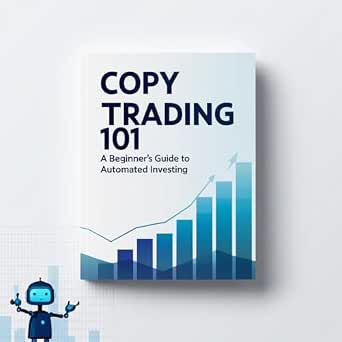 | Best for learning about copy trading | Product type: Beginner educational guide | Subject: Copy trading and automated investing | Core concept: Replicating trades made by other investors | VIEW LATEST PRICE | See Our Full Breakdown |
| automated investing app | Product type | Subject | Stated audience | Series |
|---|---|---|---|---|
| StockRank: AI-guided Investing | AI-guided investing assistant | — | — | — |
| The Little Book of Robo Invest | Educational book | Robo-investing and passive strategies | Readers seeking a simple introduction | Little Books. Big Profits |
| Robo-Advisors Explained: How A | Educational book | Robo-advisors and automated investing systems | Readers exploring automated investing systems | AI & Personal Finance Book 3 |
| Copy Trading 101: A Beginner’s | Beginner educational guide | Copy trading and automated investing | Beginners | — |
More Details on Our Top Picks
StockRank: AI-guided Investing Assistant
StockRank takes the most direct, tool-like role in this group. Its description says it analyzes stock markets and produces buy, sell, or hold recommendations. That makes it more relevant to someone seeking active decision support than the three books, which explain investing approaches but do not provide market signals. The practical appeal is clear: a user can receive a directional prompt rather than interpret market information entirely alone.
Still, I would not read “AI-guided” as proof of hands-off investing. The supplied details do not say that StockRank connects to a brokerage, places orders, rebalances a portfolio, or tailors suggestions to a user’s goals and risk tolerance. Compared with a conventional robo-advisor, which is generally expected to manage a portfolio according to a plan, this listing sounds closer to a signal generator. Buyers need to distinguish an automated recommendation from an automated investment process.
The biggest limitation is the evidence gap. No performance record or independent accuracy information is provided, and the description does not explain how predictions are formed, how often signals update, or how the tool handles volatile market conditions. That makes the recommendations something to evaluate critically, not instructions to follow unquestioningly. The listing also gives no pricing information, so buyers cannot judge total cost from the supplied details.
I rank StockRank first because it is the only option described as an investing tool rather than educational reading. It is still a qualified pick: the available facts support market analysis and recommendations, but not the broader promise of automatic portfolio management. Readers who want foundational explanations should choose one of the books instead; readers seeking a complete robo-advisor should verify whether this assistant offers account integration, execution, and risk controls before relying on it.
Pros:- Provides automated stock-market analysis.
- Offers specific buy, sell, or hold recommendations.
- Uses AI-based stock movement predictions, according to its description.
- More directly tool-oriented than the three educational books in this lineup.
Cons:- No verified accuracy or performance information is provided.
- The supplied details do not confirm brokerage integration, order execution, or portfolio management.
- Pricing, account requirements, and risk controls are not specified.
Best for: Investors who want AI-generated buy, sell, or hold prompts as a possible input to their own stock decisions.
Not ideal for: People who want verified investment performance, automatic trade execution, or a managed, diversified portfolio without having to make decisions themselves.
- Product type:AI-guided investing assistant
- Primary function:Stock market analysis
- Stated output:Buy, sell, or hold recommendations
- Prediction approach:AI-based stock movement predictions, per description
- Trade execution:Not specified
- Portfolio management:Not specified
- Performance verification:No accuracy or performance data supplied
- Pricing information:Not supplied
Our verdict“StockRank is the closest fit to an automated investing tool in this comparison, but its signals should not be mistaken for a proven, fully managed robo-advisor.”
The Little Book of Robo Investing: How to Make Money While You Sleep
This book is the most approachable learning choice in the lineup. Its description emphasizes simple explanations of robo-investing, passive strategies, and building wealth with less day-to-day effort. That focus gives it a clearer entry point than Robo-Advisors Explained, whose remit includes risk management and investor behavior, and Copy Trading 101, which narrows in on copying other traders.
For a reader still trying to understand what “automated investing” can mean, the passive-investing angle is useful. Automation can support a long-term plan, but it does not remove the need to choose an approach, understand risk, or check whether a platform fits personal circumstances. A concise introduction may help a new investor learn the vocabulary before comparing actual services. The title’s promise of making money while sleeping should be understood as a theme of passive investing, not a guarantee of returns.
Its tradeoff is breadth and depth. The provided description says the book is concise and easy to read, but also notes that it may not offer enough detail for advanced investors and has limited platform recommendations. Compared with StockRank, it will not generate current stock calls. Compared with Robo-Advisors Explained, it appears less focused on the mechanics of risk and behavior. It is a learning resource, not an app, a portfolio manager, or a source of live investing instructions.
I place it ahead of the other books for readers who need a low-friction introduction, while keeping StockRank above it because StockRank is at least described as software. Anyone who already understands basic index investing or wants a detailed evaluation of specific platforms may find this guide too general. I would choose it to build a foundation, then research a real service’s account features, investment approach, and costs separately.
Pros:- Presents robo-investing as an accessible topic for beginners.
- Focuses on passive investing and reduced day-to-day involvement.
- Described as concise and easy to read.
- Offers a different, simpler entry point than the risk-focused Robo-Advisors Explained.
Cons:- May not provide enough depth for advanced investors.
- Specific platform recommendations are limited.
- It explains investing concepts but does not automate investments.
Best for: New investors who want a readable introduction to robo-investing and passive investment ideas before choosing a platform.
Not ideal for: Experienced investors seeking advanced portfolio analysis, current platform comparisons, live signals, or detailed technical guidance.
- Product type:Educational book
- Subject:Robo-investing and passive strategies
- Stated audience:Readers seeking a simple introduction
- Approach:Concise explanation of automated investing
- Series:Little Books. Big Profits
- Platform coverage:Limited specific recommendations, per description
- Advanced detail:May be limited for experienced investors
- App or service functionality:None stated; educational resource
Our verdict“Choose this book for an uncomplicated introduction to passive robo-investing, not for live platform selection or investment management.”
Robo-Advisors Explained: How Automated Investing Systems Manage Money, Risk, and Behavior
Robo-Advisors Explained is the most systems-focused book in this group. Its stated subject reaches beyond the basic idea of passive investing to include how automated systems manage money, address risk, and shape investor behavior. That gives it a different job from The Little Book of Robo Investing, which is presented as a simpler, more concise starting point. Readers who want to understand why a robo-advisor may make particular portfolio decisions may prefer this broader framing.
The behavior angle is particularly relevant to automation. A platform can make routine investing easier, but investor choices still affect outcomes: users may change settings, react to losses, or stop contributions. A guide that examines both system design and investor behavior can help readers ask better questions before handing decisions to software. It may also be a more useful companion for comparing services than a book centered mainly on passive-investing simplicity.
The main drawback is uncertainty about its detail and accessibility. The supplied information describes the subject but does not list chapters, examples, platform comparisons, or the level of technical language. The description also warns that it may be too technical for absolute beginners. Unlike StockRank, this book cannot analyze a live market or issue stock recommendations; unlike Copy Trading 101, it is not specifically about mirroring individual traders.
I rank it below The Little Book of Robo Investing for a broad beginner audience, but above Copy Trading 101 for readers interested in robo-advisors as a category. Its wider focus on risk and money management better matches buyers comparing automated portfolio services. Still, it is a learning resource, not an app, and the limited listing details mean readers should check the available edition information and contents before choosing it for a particular research need.
Pros:- Covers automated money management and risk, not just passive-investing basics.
- Includes investor behavior as part of the subject.
- Offers a more analytical contrast to The Little Book of Robo Investing.
- Belongs to the AI & Personal Finance book series.
Cons:- May be too technical for readers with no investing background.
- Specific chapter contents and platform examples are not provided.
- It explains systems but does not provide an investing app or manage a portfolio.
Best for: Readers who want to understand how robo-advisors handle portfolio management, risk, and investor behavior before selecting a service.
Not ideal for: Absolute beginners seeking a very simple primer, or investors who want software that executes trades rather than a book about investing systems.
- Product type:Educational book
- Subject:Robo-advisors and automated investing systems
- Coverage:Money management, risk, and investor behavior
- Series:AI & Personal Finance Book 3
- Format:Book
- Stated audience:Readers exploring automated investing systems
- Beginner accessibility:May be too technical for absolute beginners
- Detailed contents:Not specified in the supplied information
Our verdict“This is the strongest educational fit for readers researching robo-advisor mechanics, provided they are comfortable with potentially technical material.”
Copy Trading 101: A Beginner’s Guide to Automated Investing
Copy Trading 101 focuses on a specific kind of automation: following the trades of other investors. That makes it the most targeted beginner guide here. Rather than presenting general robo-advisor portfolio management like Robo-Advisors Explained, it introduces the idea of replicating experienced investors’ decisions. Readers curious about social or copy-trading features may find that distinction useful when sorting through products that all use the label “automated investing.”
Copying trades can feel more tangible than selecting a diversified portfolio, but it introduces a different set of questions. A buyer needs to understand how the copied investor is selected, whether trades are mirrored proportionally, what happens when that investor changes strategy, and how risk is controlled. The supplied description says the book offers fundamentals, strategies, and insights, but does not provide technical detail on those mechanics. I would treat it as a starting point for questions, not as a complete due-diligence guide.
Compared with The Little Book of Robo Investing, this book has a narrower subject and is less suited to someone who simply wants to learn about passive, long-term portfolio investing. Compared with StockRank, it discusses a method rather than supplying current market analysis. Its beginner orientation is an advantage for newcomers, but the stated lack of depth for experienced traders limits its value to readers already familiar with trading systems.
I rank it fourth because the topic is narrower and the available product details are sparse. It can still be the right pick for a beginner who specifically wants to understand copy trading, but it should not be confused with a traditional robo-advisor. Anyone comparing actual services should check how copied trades work, what risks the platform discloses, and whether the approach suits their goals. The book itself does not automate trades or verify the success of any strategy.
Pros:- Focuses specifically on copy trading rather than treating all automation as the same.
- Designed as an introductory guide for beginners.
- Explains the basic idea of replicating experienced investors’ trades.
- Can help readers distinguish copy trading from conventional robo-advisor management.
Cons:- May lack depth for experienced traders.
- The supplied details do not specify technical coverage or practical examples.
- It is a book, not a platform that copies trades.
Best for: Beginners curious about how copy trading works and how automated platforms can replicate another investor’s trades.
Not ideal for: Readers seeking broad robo-advisor education, advanced trading analysis, or an app that executes copied trades.
- Product type:Beginner educational guide
- Subject:Copy trading and automated investing
- Core concept:Replicating trades made by other investors
- Stated audience:Beginners
- Strategy coverage:Strategies and insights, details not specified
- Technical information:Not provided in the supplied description
- Advanced trader suitability:May lack depth for experienced traders
- App or trade-copying functionality:None stated; educational resource
Our verdict“Choose Copy Trading 101 only if copying other investors is the specific automation model you want to understand.”

How We Picked
I ranked these options by how clearly they serve a buyer searching for automated investing apps, not by claims I cannot substantiate. The supplied information describes one AI-guided stock analysis tool and three books. I do not treat a book about automation as an app, nor do I equate stock recommendations with a managed portfolio. That separation matters: buyers looking to put investing on autopilot need to know whether a product teaches, suggests, or actually executes investment decisions.
For StockRank, I weighed the stated market analysis and buy, sell, or hold recommendations against the lack of information about execution, portfolio construction, account connections, risk controls, and verified performance. The tool ranks first because it is the only listing presented as software that analyzes markets, but its role remains narrower than a confirmed robo-advisor. The recommendations are not evidence of predictive accuracy, and I cannot infer that trades happen automatically.
For the books, I compared their stated audience and emphasis. The Little Book of Robo Investing places simplicity and passive strategies at the center, which makes it the easiest starting point for a beginner. Robo-Advisors Explained covers money management, risk, and behavior, giving it a broader and more analytical brief, though the available details do not establish its chapter-level depth. Copy Trading 101 is specific to replicating other investors’ trades; that is useful for understanding one form of automation, but it is not the same as learning how a conventional robo-advisor builds and maintains a portfolio.
I also treat missing information as a meaningful limitation. No verified accuracy data, platform compatibility, account requirements, fee structure, or update schedule was supplied for StockRank. The books likewise lack confirmed publication details beyond the supplied descriptions and series or format information. My ranking therefore reflects the stated use cases and transparency of the provided details—not a claim that any product has proven investment results. Readers should confirm current availability, features, and suitability before acting on investing recommendations.
| automated investing app | Product type | Subject | Stated audience | Series |
|---|---|---|---|---|
| StockRank: AI-guided Investing | AI-guided investing assistant | — | — | — |
| The Little Book of Robo Invest | Educational book | Robo-investing and passive strategies | Readers seeking a simple introduction | Little Books. Big Profits |
| Robo-Advisors Explained: How A | Educational book | Robo-advisors and automated investing systems | Readers exploring automated investing systems | AI & Personal Finance Book 3 |
| Copy Trading 101: A Beginner’s | Beginner educational guide | Copy trading and automated investing | Beginners | — |
Factors to Consider When Choosing Automated Investing Apps
Before choosing, I would separate three meanings that often get grouped under automated investing: software that recommends actions, a robo-advisor that manages a portfolio, and a book that teaches either approach. This lineup contains one described analysis tool and three educational books. Your first decision is whether you need a tool to act on, a service to manage money, or background knowledge to help you compare services.
Decide whether you need a tool or a learning resource
StockRank is the only listing described as software. It analyzes stock markets and offers buy, sell, or hold recommendations. The books cannot supply live signals, connect to an account, or manage investments. They may help you understand concepts, but they are not substitutes for a service that actually handles recurring contributions or portfolio upkeep.
If your goal is to learn before investing, choose by topic and reading level. The Little Book of Robo Investing is positioned as concise and accessible; Robo-Advisors Explained has a wider focus on risk and behavior; Copy Trading 101 narrows the subject to following other investors. If you need an app today, none of the books fulfills that need, and StockRank’s supplied details do not establish full account management.
Separate recommendations from automatic portfolio management
A buy, sell, or hold signal is a suggestion. It does not by itself tell you whether the software can place orders, determine how much to invest, diversify holdings, or rebalance when markets move. I would check those points before treating any stock assistant as a hands-off investing solution. StockRank’s description confirms recommendations, but leaves execution and portfolio features unspecified.
A robo-advisor usually implies a broader process: understanding a user’s goals and risk profile, selecting investments, and maintaining a portfolio under stated rules. The books can explain those ideas, especially Robo-Advisors Explained, but reading about a process does not make it available in a product. Buyers should look for direct confirmation of each service feature rather than infer it from an AI label.
Match the investing model to your comfort with risk
Active stock signals and copy trading are not the same as passive portfolio investing. StockRank’s stated recommendations concern stock movements, while Copy Trading 101 covers replicating other investors. Both approaches can leave users exposed to choices about individual trades or the person being copied. A broadly diversified, long-term portfolio follows a different logic and may be a better fit for investors who do not want to monitor trading decisions closely.
Ask yourself how involved you want to remain. If you want to learn about passive approaches, The Little Book of Robo Investing is the clearest match in this group. If you want to study how systems treat risk and behavior, Robo-Advisors Explained is more directly relevant. If you prefer active trading and accept the need to scrutinize signals or copied strategies, investigate the relevant platform’s controls and disclosures before committing.
Check evidence, costs, and account details
Automation does not remove the need to inspect a product. For a tool such as StockRank, look for a clear explanation of its methodology, how often recommendations update, performance reporting, risk limits, and whether recommendations are personalized. The supplied information does not establish any of these details, nor does it provide pricing. A buyer cannot judge the full service from the description alone.
For a managed investing service, examine account eligibility, investment choices, ongoing service charges, withdrawal rules, tax features where applicable, and what happens when a portfolio drifts from its target. Those details are not supplied for these products. For a book, check the contents and edition information to see whether its treatment matches your knowledge level and whether its examples remain useful for your research.
Treat copy trading as its own category
Copy trading automates the replication of another person’s trades; a robo-advisor typically follows a portfolio process rather than simply mirroring a named trader. Copy Trading 101 introduces the former, while Robo-Advisors Explained is aimed at the broader automated-management model. I would not assume lessons from one apply fully to the other.
Before using a copy-trading service, investigate how the platform selects traders, how losses and position sizes are handled, and whether copied trades can be paused or stopped. Also ask how the strategy might behave when market conditions change. The book’s description does not confirm that it answers each of these questions, so readers should view it as an introduction rather than a technical manual.
Choose by the question you need answered
If your question is “Can a tool give me stock-market prompts?”, StockRank is the closest match, with the caveat that its accuracy and execution features are not established here. If it is “How does passive robo-investing work?”, The Little Book of Robo Investing has the most accessible stated purpose. If it is “How do automated advisors handle money, risk, and investor behavior?”, Robo-Advisors Explained offers the best subject fit, though it may be too technical for a complete beginner. If you want to understand trade replication, choose Copy Trading 101.
That question-first approach prevents a common mismatch: buying a book when you need a functioning service, or choosing a signal tool when you want a diversified portfolio maintained automatically. I would also confirm that any live service is available for your location and account type, and read its own disclosures before acting on investment prompts.
Frequently Asked Questions
Which option in this roundup is an actual investing tool?
StockRank is the only product described as a software tool. The listing says it analyzes the stock market and provides buy, sell, or hold recommendations. It does not confirm brokerage integration, automatic order placement, recurring deposits, or portfolio rebalancing. The other three products are books about robo-investing, automated systems, or copy trading, so none of them manages money directly.
Does StockRank automatically buy and sell investments?
The supplied description confirms recommendations, but does not say that StockRank executes trades or connects to a brokerage account. A recommendation is different from an automatic transaction: the user may still need to assess the signal and place any order themselves. I would check the current product details for execution, account access, and risk-control features before treating it as hands-off software.
Which book is the best starting point for a new investor?
The Little Book of Robo Investing is the clearest beginner starting point based on its stated focus on simple explanations, passive strategies, and concise reading. Copy Trading 101 is also designed for beginners, but it addresses the narrower subject of replicating other investors’ trades. Readers who want a broader discussion of risk and system behavior may prefer Robo-Advisors Explained, though its description warns that it may be too technical for absolute beginners.
Is copy trading the same as using a robo-advisor?
No. Copy trading aims to replicate trades made by another investor, while a robo-advisor generally refers to an automated process for managing a portfolio according to a chosen plan. Both involve automation, but their decision sources and risks differ. Copy Trading 101 introduces trade replication; Robo-Advisors Explained is the more relevant book for understanding automated money management and risk across robo-advisor systems.
Can these products guarantee investment returns?
No guaranteed returns are established by the supplied product information, and investment outcomes can vary. StockRank’s AI-based predictions are not accompanied by verified accuracy or performance data here. The books are educational resources and do not promise that following their ideas will produce a particular result. I would treat signals and strategies as material for research, not as assurances of gains.
Conclusion
For buyers seeking the closest thing to an investing tool in this lineup, StockRank is the practical match because it is the only listing described as analyzing markets and issuing stock recommendations. I would choose it only if I am comfortable checking its accuracy, execution capabilities, and risk controls independently; the provided details do not establish a managed portfolio.
For a new investor who wants an accessible explanation, I would choose The Little Book of Robo Investing. Readers who want to study how automated systems handle risk and investor behavior should look at Robo-Advisors Explained, while people specifically curious about replicating other traders’ decisions should pick Copy Trading 101. If your priority is automatic deposits, diversified portfolio management, and rebalancing, none of these four listings confirms that complete service, so I would verify those features with a dedicated robo-advisor before opening an account.