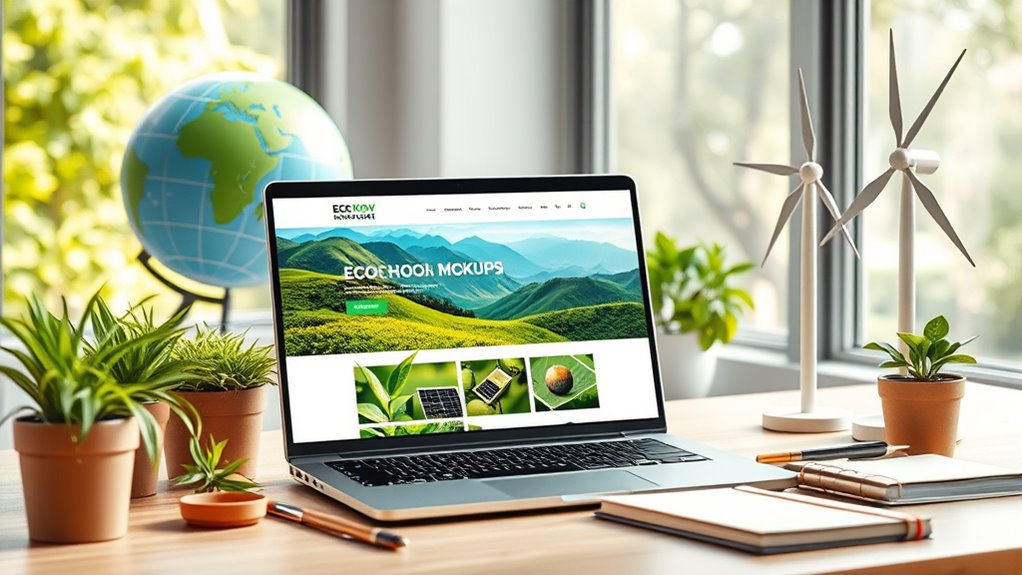

To create an eco-friendly website, choose sustainable hosting that uses renewable energy sources and prioritizes energy efficiency, like optimized data centers and green providers. Design your site with minimalist layouts, optimized images, and efficient coding to reduce server load and data transfer. Focus on fast load times and resource conservation to lower environmental impact. Incorporating eco-conscious practices and offsetting residual emissions can further support sustainability efforts—continue to explore how these strategies work together for a greener internet.

Get smart everyday buys delivered free with Prime
- Fast, free delivery on millions of items
- Prime Video, Amazon Music and more included
- Member-only deals all year
Key Takeaways
- Choose green hosting providers that utilize renewable energy sources for data centers.
- Optimize website design by reducing images, simplifying layouts, and minimizing data transfer for energy efficiency.
- Implement caching and efficient coding practices to lower resource consumption and improve load times.
- Use sustainable color schemes, fonts, and minimalist layouts to reduce processing power and energy use.
- Support carbon offset programs to compensate for residual emissions and promote overall eco-friendly digital practices.

Have you ever wondered how your website’s design and hosting choices can impact the environment? It’s a question worth asking, especially as digital activities consume significant energy. When you opt for green hosting, you’re actively reducing your carbon footprint. Green hosting providers use renewable energy sources like wind, solar, or hydro power to run their data centers. This shift away from fossil fuels means less harmful emissions and a smaller environmental impact. Choosing a hosting provider committed to sustainability isn’t just about supporting eco-friendly businesses—it’s about making a tangible difference. Sustainable design further enhances this effort. By designing your website with energy efficiency in mind, you help lower the server load, reduce data transfer, and cut down on unnecessary resource use. For instance, you can optimize images so they load faster, minimizing energy consumption during browsing. Simplifying your website’s layout and avoiding overly complex graphics also reduces the processing power needed to display your site, making it more sustainable. Every element you choose, from fonts to color schemes, can contribute to a more eco-friendly digital presence. Additionally, implementing best practices like caching and efficient coding ensures that your website uses fewer resources over time. These adjustments not only make your site more environmentally friendly but also improve user experience through faster load times. When focusing on sustainable design, consider how your site’s structure affects energy use. Minimalist designs with streamlined content reduce the amount of data transferred and stored, further decreasing environmental impact. It’s about being intentional with every decision, from hosting to layout, ensuring your website aligns with your values for sustainability. You can also offset your website’s carbon footprint by supporting renewable energy projects or investing in carbon offset programs. These efforts complement your green hosting and sustainable design choices, creating a thorough approach to eco-friendliness. Remember, the goal isn’t just to make your website look good or function well—it’s to do so responsibly. Small adjustments, like choosing eco-conscious hosting providers and designing for efficiency, add up. They demonstrate that your digital presence can have a positive environmental impact. As more people become aware of the importance of sustainability, your commitment to green hosting and sustainable design sets a precedent. It shows you care about the planet, inspiring others to follow suit. So, by making these conscious decisions, you help foster a greener internet—one website at a time—while delivering a better experience for your visitors. Incorporating environmentally friendly technologies can further optimize your site’s sustainability efforts.
Frequently Asked Questions
How Can I Measure My Website’s Carbon Footprint Accurately?
You can measure your website’s carbon footprint accurately through carbon footprint analysis tools that assess your site’s energy consumption metrics. These tools analyze server data, traffic levels, and hosting energy use, giving you a clear picture of your environmental impact. Regularly tracking these metrics helps you identify areas to improve, ensuring your website remains eco-friendly and aligns with sustainable hosting practices.
Are There Specific Eco-Friendly Website Hosting Certifications to Look For?
You should look for eco certifications like Green Seal or LEED, which indicate environmentally responsible hosting practices. Hosting standards such as CarbonNeutral or ENERGY STAR also show your provider commits to reducing environmental impact. These certifications guarantee your website is hosted on servers that prioritize renewable energy use and energy efficiency, helping you meet sustainability goals and demonstrate your commitment to eco-friendly practices to visitors and customers alike.
What Are the Cost Differences Between Green and Traditional Hosting Services?
Think of green hosting as planting a seed in a garden of renewable energy; it often costs 20-30% more than traditional hosting. The cost comparison shows that eco-friendly services invest in renewable energy, which can increase expenses but benefits the planet. While your wallet might feel a pinch upfront, you’re cultivating a sustainable future. Over time, the positive environmental impact makes this investment truly worth it.
How Can Sustainable Design Improve Website Performance and User Engagement?
Sustainable design improves your website’s performance and user engagement by using energy-efficient layouts that load faster and consume less power. You create a better experience with user-centric aesthetics, making navigation intuitive and visually appealing. These practices boost user satisfaction and retention, while reducing environmental impact. By prioritizing eco-friendly design, you demonstrate your commitment to sustainability, encouraging visitors to stay longer and engage more deeply with your content.
What Are the Best Practices for Minimizing Data Transfer and Energy Use?
Think of your website as a lean, green machine. To minimize data transfer and energy use, you should optimize images and compress content, making everything lighter and faster. Use image optimization tools to reduce file sizes without sacrificing quality, and implement content compression techniques like gzip. These best practices cut down on server load and bandwidth, helping your site run more efficiently while saving energy—making your digital footprint smaller and greener.
Conclusion
Building an eco-friendly website is like planting a tree—you nurture it now, and it benefits future generations. Just as a single tree can absorb tons of carbon, choosing sustainable hosting and design reduces your digital footprint. Remember, every small step counts. When you make eco-conscious choices online, you’re helping create a greener, healthier planet. So, start today—your website can be a beacon of sustainability, inspiring others to follow suit and grow a greener digital world.
Halloween Picks
halloween
As an affiliate, we earn on qualifying purchases.