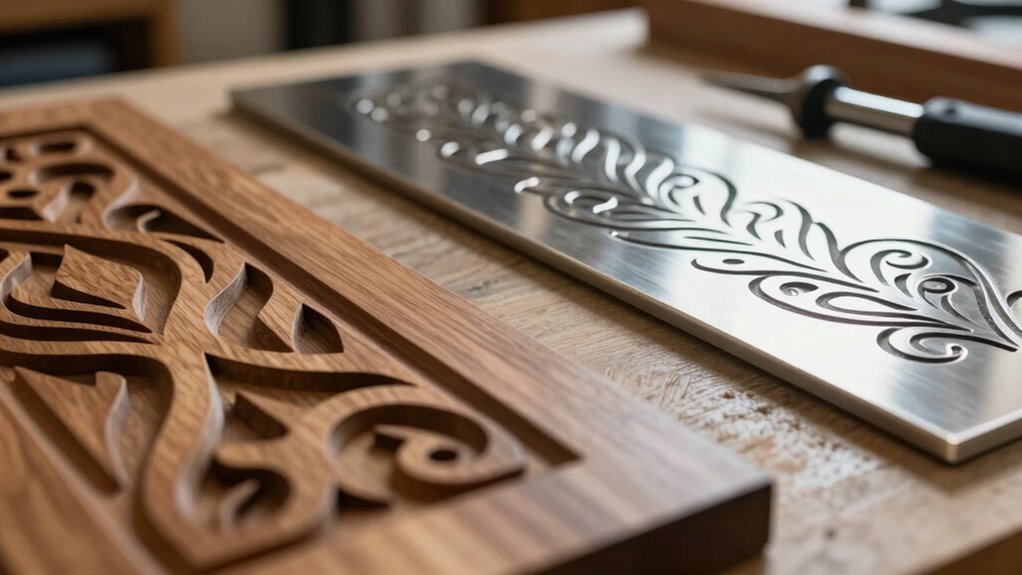

Choosing between CNC and laser depends on your product’s material, complexity, and production needs. If you require intricate designs, detailed finishes, or work with thin materials like acrylic or paper, laser cutting is ideal due to its precision and speed. For more durable, complex shapes, and larger, thicker materials, CNC provides versatility and control. Considering your project’s goals will help you pick the best tool, and staying informed will guide you toward the right choice.

Get smart everyday buys delivered free with Prime
- Fast, free delivery on millions of items
- Prime Video, Amazon Music and more included
- Member-only deals all year
Key Takeaways
- Choose CNC for complex, durable shapes and thick materials requiring high precision and textured finishes.
- Opt for laser cutting for intricate, decorative designs on thin, flat materials with quick turnaround needs.
- Consider CNC for large-volume production and detailed textures, while laser is better for small runs and prototypes.
- Match CNC with projects needing tight tolerances, multi-material versatility, and substantial material removal.
- Use laser cutting for delicate, detailed, or layered flat designs with minimal material waste.
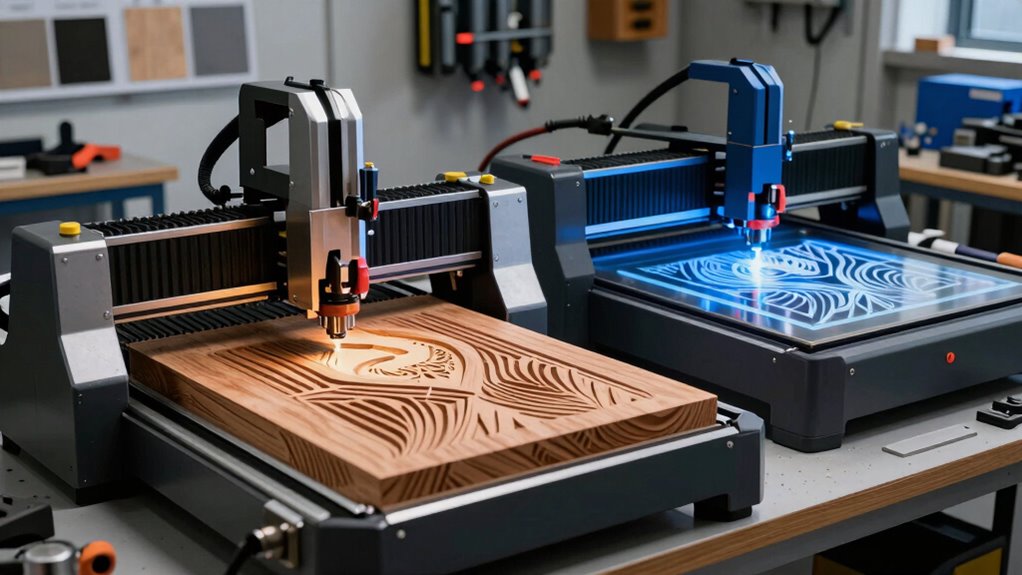
Choosing the right manufacturing tool can considerably influence your product’s final look and quality. When deciding between CNC machining and laser cutting, you need to consider how each method aligns with your design goals, material choices, and budget. Both tools offer unique advantages, but understanding their strengths helps you select the best fit for your project.
CNC machining is known for its material versatility. It can work with a broad range of materials, including metals, plastics, woods, and composites. If your project involves complex, three-dimensional shapes or requires tight tolerances, CNC is often the better choice. Its ability to handle thicker and more durable materials makes it suitable for manufacturing parts that need strength and durability. Additionally, CNC machines can produce detailed, precise finishes that closely match your design specifications. This versatility extends to the types of finishes and textures you can apply, giving you more control over the final appearance of your product. The material versatility of CNC is a key factor in projects requiring diverse material properties. Furthermore, CNC machining often results in minimal material waste due to its subtractive process, which can be advantageous for cost management.
On the other hand, laser cutting excels in precision and speed, especially for simpler, flat designs. It’s highly effective for creating intricate patterns, detailed engravings, or clean cuts in thin materials. Laser technology offers a quick turnaround, making it ideal for prototypes or small-batch productions. When it comes to material versatility, laser cutting is more limited—it works best with materials like acrylic, wood, paper, and certain metals, but it isn’t suitable for thicker or harder materials that require substantial cutting power. If your project demands fine detail and sharp edges, laser cutting can deliver exceptional results with minimal post-processing. Additionally, laser cutting’s precision and speed make it a popular choice for projects requiring rapid turnaround times. Its ability to produce detailed designs quickly makes it especially suitable for custom or decorative items. For projects involving complex, multi-layered designs, laser cutting can often achieve these with less effort compared to traditional methods.
Cost comparison plays a significant role in your decision. Typically, CNC machining can be more expensive upfront due to the cost of equipment and setup, especially for complex parts or larger quantities. However, for high-volume production, CNC can become more economical on a per-part basis because of its durability and ability to handle multiple materials. Laser cutting often has lower initial setup costs and faster processing times, making it a cost-effective solution for smaller runs, quick prototyping, or projects with tight deadlines. Yet, for thicker or more durable materials, laser cutting may require additional finishing steps or multiple passes, impacting overall costs. When evaluating costs, consider not just the initial investment but also the long-term expenses related to material waste and finishing processes. Additionally, the choice between CNC and laser can influence the overall production efficiency, especially when considering project timelines and scalability.
CNC machine for metal and plastic
As an affiliate, we earn on qualifying purchases.
As an affiliate, we earn on qualifying purchases.
Frequently Asked Questions
What Are the Cost Differences Between CNC and Laser Tools?
You’ll find CNC machines generally have higher upfront costs but offer greater tool versatility, allowing you to work with various materials. Laser tools usually cost less initially and excel in cutting speed, making them ideal for quick, detailed work. However, laser equipment may require more maintenance over time. Your choice depends on your specific product needs, balancing initial investment with long-term efficiency and the types of materials you plan to cut.
How Does Material Thickness Affect Tool Choice?
Think of material thickness as a gateway to your creative journey. When choosing between CNC and laser, consider that thicker materials symbolize greater material versatility but also pose thickness limitations. CNC machines excel with thicker, more robust materials, carving through them with strength, while lasers shine with precision on thinner sheets. Your decision hinges on matching the tool’s capabilities to your project’s material needs, balancing versatility and limitations for ideal results.
Which Tool Offers Better Precision for Intricate Designs?
Laser cutters offer better precision for intricate designs due to their fine, focused beams, making them ideal for detailed work. They excel in design versatility, allowing you to create complex patterns with smooth edges. Plus, laser tools are compatible with a wide range of materials, from wood to acrylic. CNC machines are versatile too but typically excel in larger, less detailed cuts. For intricate designs, laser technology provides the edge you need.
Are There Environmental Impacts Associated With Each Tool?
Yes, both tools have environmental impacts, mainly related to energy consumption. Laser machines often use more energy due to high-powered beams, which can increase electricity use and carbon footprint. CNC machines generally consume less energy but may produce waste from cutting materials. To minimize environmental impacts, you can choose energy-efficient models and optimize your processes, reducing waste and energy use regardless of the tool you select.
What Maintenance Is Required for CNC and Laser Equipment?
You might think CNC and laser tools need minimal maintenance, but that’s a myth. CNC machines require regular lubrication, tool changes, and calibration to guarantee tool longevity and precision. Laser equipment needs cleaning lenses, aligning optical components, and updating software. Both demand consistent calibration to keep them operating at peak performance. Proper maintenance extends their lifespan and prevents costly breakdowns, so stay proactive to maximize your investment and production quality.
laser cutter for acrylic and wood
As an affiliate, we earn on qualifying purchases.
As an affiliate, we earn on qualifying purchases.
Conclusion
Ultimately, choosing between CNC and laser depends on your product’s style and your specific needs. Both tools have their strengths, but don’t put all your eggs in one basket—consider what suits your project best. If you want precision and versatility, CNC might be your go-to. For intricate designs and quick cuts, laser could be the better fit. Remember, sometimes you’ve got to think outside the box to find the perfect match for your creative vision.
As an affiliate, we earn on qualifying purchases.
As an affiliate, we earn on qualifying purchases.
Halloween Picks
halloween
As an affiliate, we earn on qualifying purchases.