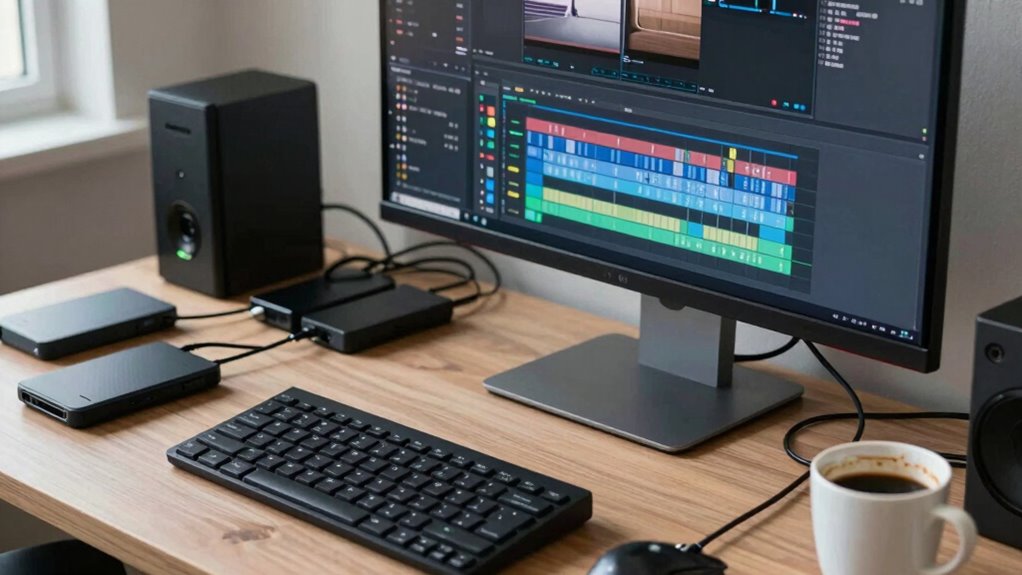

Choosing a slow storage setup, like relying solely on traditional HDDs or neglecting to upgrade to faster SSDs, kills your video editing speed. This creates bottlenecks when handling large files, delays rendering, and hampers overall workflow. Properly pairing high-speed SSDs with ample storage options keeps projects smooth and responsive. To avoid these costly mistakes and optimize your setup, keep exploring — better options are just ahead.
Key Takeaways
- Choosing only HDDs for storage causes slow data access, significantly impacting editing speed and workflow efficiency.
- Skipping SSDs or opting for low-speed interfaces like SATA instead of NVMe limits data transfer rates.
- Overlooking expansion options prevents future upgrades, leading to bottlenecks with increasing video file sizes.
- Ignoring proper drive setup and organization results in slower access and reduced productivity.
- Failing to prioritize high-speed data transfer interfaces and redundancy increases editing delays and risks data loss.
Why Fast Storage Is a Must for Video Editing

If you’re serious about video editing, fast storage isn’t just a luxury—it’s essential. You need quick read/write speeds to handle large files smoothly, avoiding frustrating delays. Fast storage solutions also improve your workflow by reducing rendering and export times. Incorporate data redundancy to protect your projects from data loss, ensuring your hard work stays safe even if something fails. Storage virtualization plays a key role here, allowing you to efficiently manage multiple storage devices as a unified system, boosting performance and flexibility. This setup minimizes bottlenecks and maximizes speed, keeping your editing process seamless. Investing in high-speed storage with data redundancy and virtualization isn’t just about speed; it’s about reliability, so you can focus on your creativity without technical hiccups.
Avoid These Common Storage Mistakes to Speed Up Your Workflow
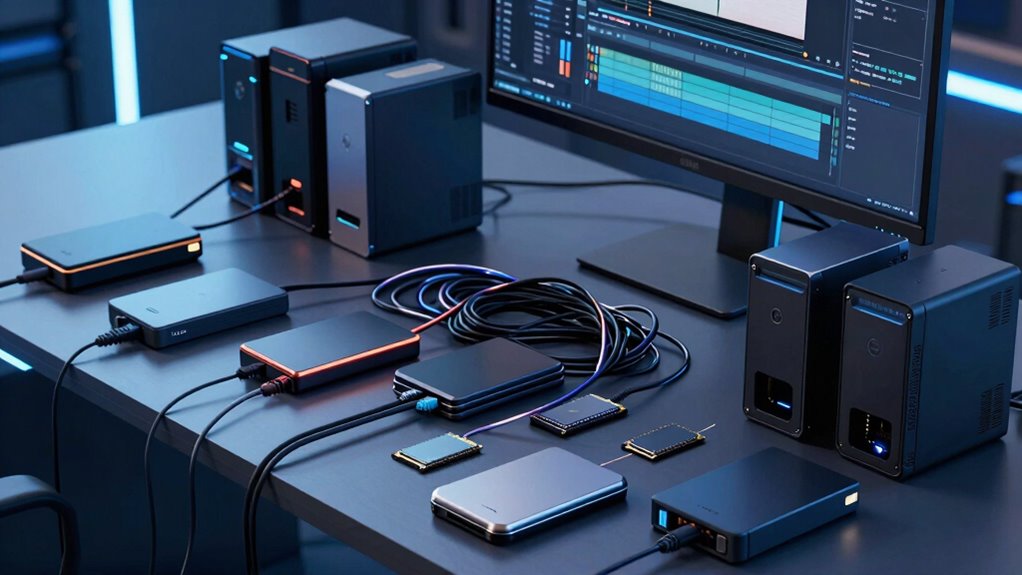
One of the biggest storage mistakes you can make is neglecting to plan your setup properly, which leads to bottlenecks and slowdowns. Avoid rushing into storage choices without considering how data flows or implementing backup strategies. Use cloud backup to safeguard your projects and prevent data loss, especially after crashes. Also, don’t overlook data encryption; it keeps your work secure without sacrificing speed.
| Mistake | Solution |
|---|---|
| Ignoring backup options | Implement cloud backup immediately |
| Skipping data security | Use data encryption for sensitive files |
| Overloading drives | Distribute files across multiple drives |
| Not optimizing storage space | Regularly clean and organize data |
| Forgetting future needs | Plan for expansion and speed upgrades |
Proper storage planning keeps your workflow smooth and secure.
Which Storage Type Is Best for Your Video Projects?
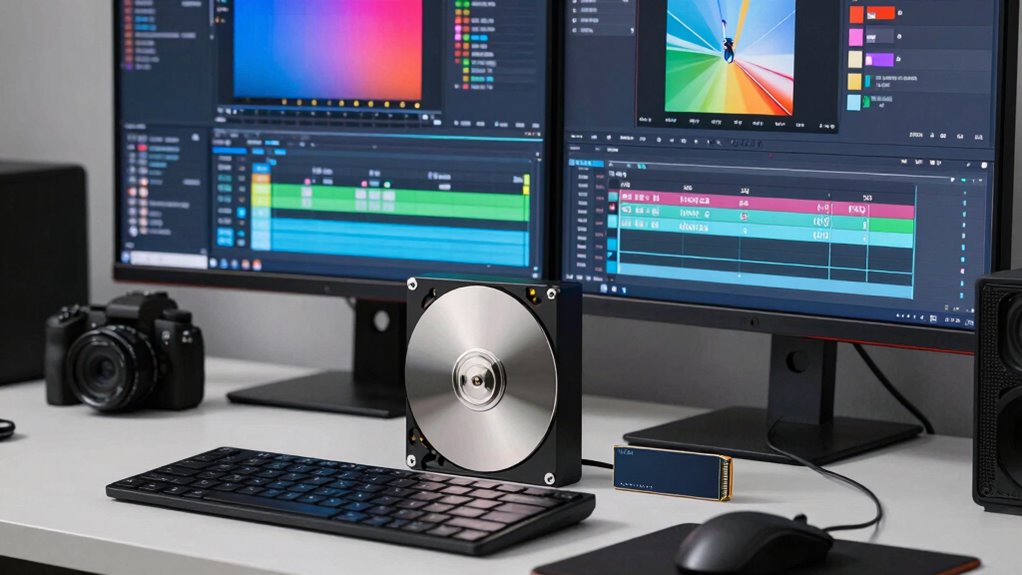
Choosing the right storage type for your video projects depends on balancing speed, capacity, and security. If speed is your priority, SSDs offer rapid data transfer, reducing rendering times and minimizing workflow bottlenecks. For large projects needing extensive storage, HDDs provide cost-effective capacity. When considering video storage security, local drives give you full control over your data, but cloud storage benefits shine in backup and remote access, protecting against hardware failures. Color accuracy is also important for visual consistency across devices, especially when reviewing footage. Cloud storage also facilitates collaboration, making it easier to share files securely. Additionally, understanding storage types can help you make more informed decisions tailored to your workflow and budget. Selecting your storage based on your specific needs, balancing speed with security, and considering data redundancy ensures both high performance and data safety. Moreover, being aware of storage management practices can optimize your workflow and prolong the lifespan of your drives. Proper maintenance practices further ensure your storage solutions remain reliable over time.
How to Set Up Your Storage for Peak Editing Performance

Setting up your storage properly is key to maximizing your editing efficiency. Start by organizing your primary drive for speed, using SSDs for your active projects to reduce load times. Keep your raw footage and completed projects on separate drives to prevent bottlenecks. Enable data encryption on sensitive files to protect your work from unauthorized access. Incorporate a reliable cloud backup solution to automatically save your projects and footage, guaranteeing data safety in case of hardware failure. Regularly check your storage setup to optimize performance, deleting unnecessary files and defragmenting drives if needed. This setup minimizes lag and crashes, keeping your workflow smooth. Proper storage configuration, combined with cloud backup and data encryption, ensures your editing process remains fast, secure, and resilient. Additionally, understanding the importance of performance parts can help in creating a supportive environment that fosters resilience and adaptability during demanding editing sessions. Ensuring your hardware components are compatible and optimized can further enhance your editing speed and overall efficiency.
Budget-Friendly Storage Options for Video Editors
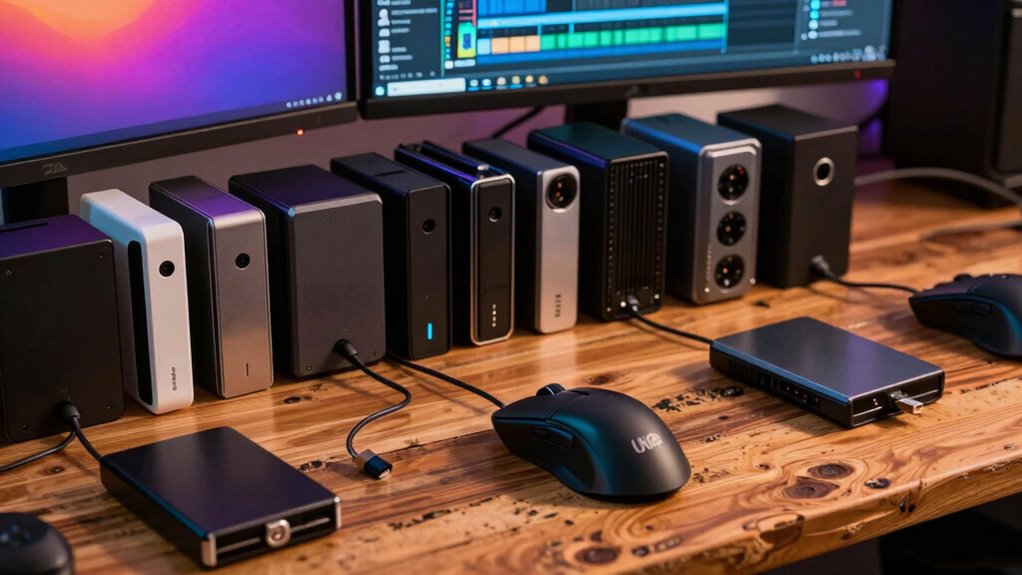
If you’re working with a tight budget, external drives offer a flexible way to expand your storage without breaking the bank. Upgrading to SSDs can considerably speed up your workflow, making editing smoother and more efficient. Combining these options helps you save money while maintaining good performance for your video projects. Additionally, gear maintenance ensures your equipment stays in optimal condition, preventing unnecessary slowdowns during editing sessions. To get the most out of your storage solutions, consider exploring a free tool to transform text capitalization styles, which can help you create clear and professional documentation for your editing setup. Regularly monitoring your storage health using enterprise USB backups can also help you prevent data loss and ensure your project files are always secure. Understanding time zones can assist in coordinating projects with team members across different regions, streamlining your workflow. Incorporating smart home safety tips into your workspace, like proper cable management and secure storage, can further enhance your editing environment’s safety and efficiency.
External Drives for Flexibility
External drives offer a cost-effective way to expand your storage without breaking the bank, making them an ideal choice for video editors working on a budget. They provide flexibility, allowing you to move projects easily or create backups. Consider these options:
- Use portable enclosures for quick access and transport, perfect for editing on the go.
- Connect multiple drives to diversify storage, keeping active projects separate from archived files.
- Pair external drives with cloud backups to guarantee data safety without relying solely on physical storage.
- Incorporate natural pool designs and landscaping to create an inspiring workspace environment, boosting creativity and productivity. Transparency in cookie usage and data handling ensures you’re aware of how your information is managed. Additionally, understanding rebalancing strategies can help you optimize your storage setup over time. This is especially important when dealing with high-capacity external drives that can be expanded or reconfigured as needed.
This setup helps you avoid clutter and manage large files efficiently. External drives give you the freedom to expand your storage capacity without a costly upgrade, while cloud backups add a layer of security. They’re a practical, budget-friendly solution for flexible, reliable editing workflows.
SSDs for Faster Workflow
While external drives are great for expanding storage and maintaining flexibility, upgrading to SSDs can greatly boost your editing speed. SSDs offer faster read/write speeds, reducing rendering and transfer times, which keeps your workflow smooth. For budget-friendly options, consider NVMe drives if your system supports them, or SATA SSDs for a more affordable upgrade. Pairing SSDs with cloud backups guarantees your projects stay safe without sacrificing speed. Hardware upgrades like installing an SSD can be more cost-effective than constantly expanding storage via external drives. Plus, SSDs minimize bottlenecks during high-resolution editing, enabling you to work more efficiently. Incorporating projector install and cabling solutions like proper hardware placement can further optimize your editing setup. Investing in SSDs now can save you time and frustration, making your entire editing process more responsive and productive.
Future-Proof Your Storage to Handle Growing Video Files
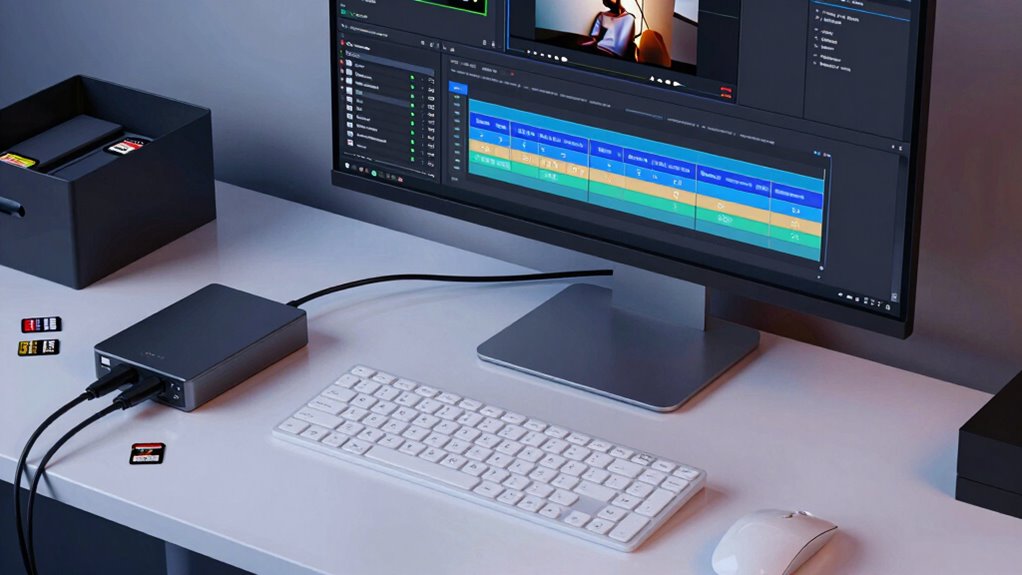
To keep up with your growing video files, choose storage options that are easily expandable. Prioritize high-speed data transfer to guarantee smooth editing and rendering. This way, your setup remains future-proof and ready for increased demands. Additionally, consider implementing weatherproof tool storage to protect your equipment from environmental damage during outdoor shoots. Incorporating soundproofing solutions can also help create a quieter workspace, minimizing distractions and enhancing productivity. Being aware of ear wax odor and other environmental factors can help maintain a comfortable workspace environment. Also, proper filter sizing/flow in your storage setup can optimize data handling and prevent bottlenecks during intensive editing sessions.
Expandable Storage Options
Are you prepared for the inevitable growth of your video files? To keep editing smooth, choose a desktop with expandable storage options. First, look for expandables bays—these let you add or swap out drives easily, extending your system’s lifespan. Second, consider cloud backups as a flexible, off-site solution for your growing library, ensuring data safety without clutter. Third, check if your desktop supports multiple drive configurations, allowing you to scale storage as needed. By prioritizing expandability, you avoid bottlenecks and future upgrades that slow down your workflow. Investing in a system with these features means your storage can grow alongside your projects, keeping your editing speed sharp and your data secure.
High-Speed Data Transfer
As video files continue to grow in size and complexity, ensuring your storage system can transfer data quickly becomes essential. High-speed data transfer minimizes editing delays and keeps your workflow smooth. Look for interfaces like USB 3.2, Thunderbolt 3 or 4, and NVMe SSDs, which offer rapid transfer rates. Future-proof your setup by considering storage redundancy features, such as RAID configurations, to protect against data loss. Additionally, prioritize security with data encryption, ensuring your valuable footage stays safe from unauthorized access during transfers. A fast, reliable storage system not only accelerates your editing process but also safeguards your projects, making it easier to handle larger files without slowing down your work. Investing in high-speed transfer capabilities is key to maintaining a competitive edge.
Frequently Asked Questions
How Does Storage Speed Directly Impact Rendering Times?
Storage speed directly impacts rendering times because faster data transfer speeds mean your system can read and write video files more quickly. Using an SSD boosts rendering efficiency, reducing wait times. Keep in mind, frequent data access can affect SSD lifespan, but the speed gains outweigh this concern for editing tasks. Upgrading to a high-speed SSD guarantees smoother, faster rendering, saving you time and boosting productivity.
Can External Drives Outperform Internal SSDS for Editing?
External drives can outperform internal SSDs if they use fast interfaces like Thunderbolt or USB 3.2, much like a swift courier delivering data swiftly. However, consider that cloud backups and data encryption add layers of security and accessibility. While external drives may offer portability, internal SSDs often provide lower latency and faster read/write speeds, directly boosting editing efficiency. Choose based on your workflow needs, balancing speed, security, and convenience.
What Are the Signs of Storage Bottlenecks During Editing?
You notice storage bottlenecks during editing when your system slows down, rendering takes longer, or files freeze unexpectedly. If your storage capacity is nearly full, it hampers performance, and if data redundancy isn’t maintained, you risk data loss or corruption, further disrupting workflow. Keep an eye on these signs, and consider upgrading to faster drives or optimizing storage to guarantee smooth editing without interruptions.
How Often Should I Upgrade My Storage System?
You should upgrade your storage system every 2-3 years to keep up with your editing needs. Don’t worry about storage aesthetics—modern drives blend seamlessly into your setup. Regular upgrades help prevent bottlenecks and guarantee fast data transfer, especially when handling encrypted files. Staying current with storage technology also means your data remains secure, giving you peace of mind while maintaining peak editing speed.
Are RAID Configurations Worth the Extra Cost for Editing?
RAID configurations can be worth the extra cost if you need faster data access and improved redundancy for editing. While storage cost increases with RAID, the benefits include quicker rendering, smoother playback, and data safety during crashes. If your projects demand high performance and reliability, investing in RAID offers significant advantages. However, assess your budget and workflow needs to determine if the added expense aligns with your editing demands.
Conclusion
Investing in fast, reliable storage isn’t just a tip—it’s the secret weapon that keeps your editing smooth and your projects on time. Believe it or not, skimping on storage can secretly sabotage your workflow, making you slower and more frustrated. Think of it like fueling a race car with cheap gas—you won’t win. Upgrade smartly, stay ahead, and watch your editing speed soar as your creativity flows freely.