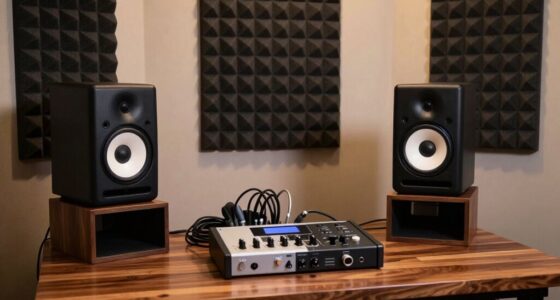

To make live scenes in a small studio feel more dynamic, experiment with lighting angles and camera movements. Position lights from different sides to create depth, shadows, and separation, and incorporate backlighting for a glow effect. Combine this with simple camera moves like panning or slow zooms to add energy and focus. These techniques will help your scenes look lively and engaging, and if you keep exploring, you’ll discover even more ways to elevate your visual storytelling.

Get smart everyday buys delivered free with Prime
- Fast, free delivery on millions of items
- Prime Video, Amazon Music and more included
- Member-only deals all year
Key Takeaways
- Use multiple lighting angles to create depth and prevent flatness in confined spaces.
- Incorporate camera movements like slow zooms or gentle pans to add energy.
- Combine lighting shifts with camera shifts for a dynamic, layered visual effect.
- Utilize backlighting to separate subjects from backgrounds, enhancing scene separation.
- Keep camera movements smooth and intentional to maintain focus and avoid distraction.
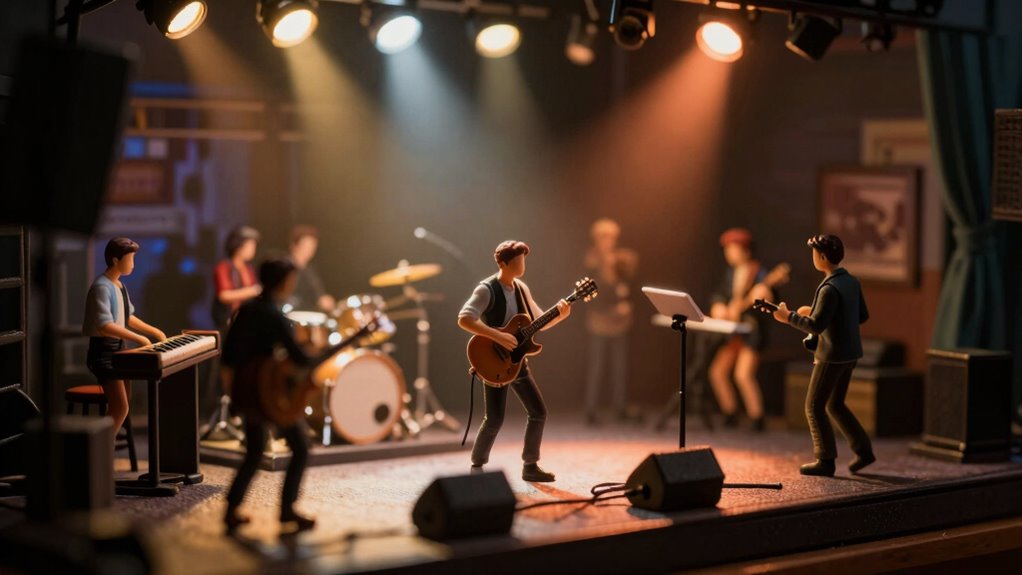
Creating dynamic live scenes in a small studio can seem challenging, but with a simple trick, you can make your setups more engaging and visually interesting. The secret lies in how you manipulate lighting angles and camera movement. These two elements, when used thoughtfully, transform a flat, static scene into a lively, compelling experience. You don’t need a lot of space or expensive equipment—just a strategic approach to how you position your lights and move your camera.
Start by playing with lighting angles. Instead of relying on a single, overhead light, experiment with placing lights at different angles around your subject. Side lighting, for example, adds depth and shadows, giving your scene a three-dimensional feel. Backlighting can create a glow around your subject, helping to separate them from the background. The more dynamic your lighting angles, the more visually stimulating your scene becomes. Keep in mind that the quality and color of your lights also matter—warm tones can evoke intimacy, while cooler tones can add energy. Changing these angles throughout your scene keeps the viewer’s eye engaged and prevents the scene from feeling flat or monotonous. Incorporating lighting manipulation techniques can further enhance the atmosphere and mood of your scene. Additionally, understanding lighting principles can guide you in achieving the desired visual effect.
Next, incorporate subtle camera movement to amplify the scene’s energy. You don’t need complex rigs; simple pan, tilt, or slow zooms can make a huge difference. As your scene unfolds, shift the camera’s position to highlight different aspects of your setup or to follow action. For example, a slow dolly-in towards your subject can create intimacy, while a gentle pan across the scene reveals new details and adds a sense of motion. Movements should be deliberate and smooth—jerky or sudden shifts can distract viewers. By integrating camera movement with changing lighting angles, you create a layered visual experience that feels alive and vibrant, even within a confined space. Utilizing visual storytelling techniques can further enhance the engagement and emotional impact of your scene.
As an affiliate, we earn on qualifying purchases.
Frequently Asked Questions
How Does Lighting Affect Scene Dynamism in Small Studios?
Lighting markedly boosts scene dynamism in small studios by emphasizing color contrast and shadow play. You can use bright, contrasting lights to highlight key elements, making scenes pop. Experimenting with shadows creates depth and intrigue, drawing viewers into the scene. By strategically adjusting light positions and intensities, you add movement and energy, making your scenes feel more lively and engaging despite limited space.
Can Sound Design Enhance the Perceived Movement in Live Scenes?
Sure, sound design can totally boost the illusion of movement. By layering sounds and adding ambient textures, you trick your audience into feeling the scene is alive and shifting. It’s like giving your scene a heartbeat or a whisper of wind that guides their focus. When you use dynamic sound layering, you make static actions feel fluid, transforming simple visuals into a lively, immersive experience.
What Camera Angles Best Showcase Dynamic Scenes?
To showcase dynamic scenes effectively, you should use camera movement like sweeping pans and quick zooms to add energy. Combine this with varied shot composition—close-ups for emotion, wide shots for scale—to keep viewers engaged. Dynamic angles, such as low or high shots, create a sense of movement and tension. By thoughtfully integrating camera movement with strategic shot composition, you make scenes feel more lively and immersive.
How Does Actor Blocking Influence Scene Energy?
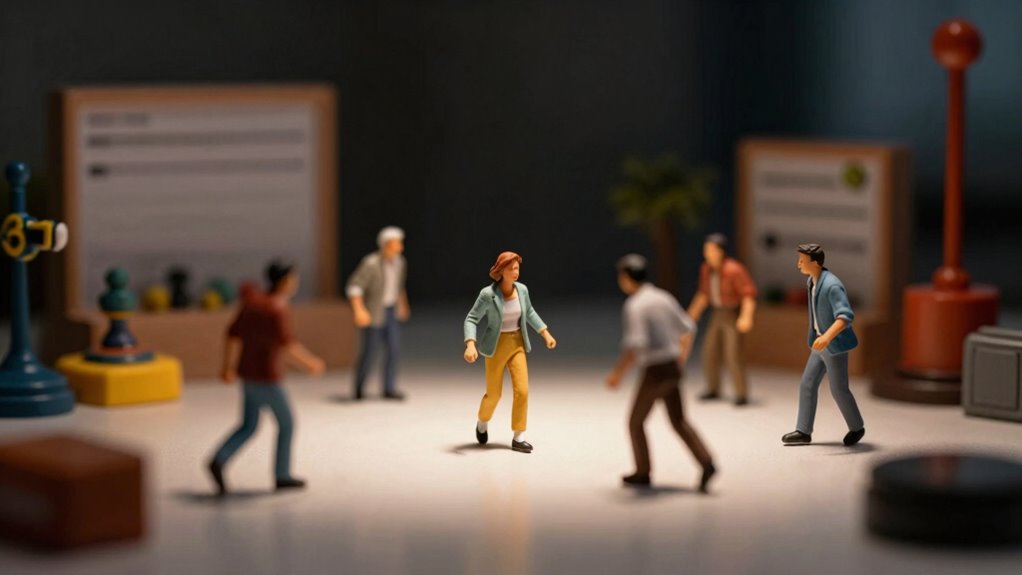
Think of actor blocking as the choreography of a ballet; it shapes scene energy like dancers in harmony. When you carefully plan character interaction and spatial awareness, the scene feels alive and dynamic. Movement creates tension and release, guiding the audience’s eye and emotions. Your blocking can turn a simple conversation into a powerful moment, emphasizing relationships and heightening energy—making viewers feel like they’re part of the action.
Are Special Effects Necessary for Making Scenes More Lively?
Special effects aren’t always necessary to make scenes lively. You can boost energy through props realism and costume authenticity, which immerse your audience in the story. Thoughtful use of these elements creates a believable environment, making scenes feel more vibrant and engaging. When combined with actor blocking, these details enhance the scene’s dynamism without relying on flashy effects, keeping the focus on genuine performances and believable settings.
As an affiliate, we earn on qualifying purchases.
Conclusion
By incorporating this simple studio trick, you’ll breathe new life into your live scenes, transforming them from static snapshots into vibrant, pulsating moments. Think of your setup as a canvas, where a small shift can turn a dull sketch into a masterpiece. With this technique, you’re not just capturing a scene—you’re inviting your viewers to step right into the heart of the action, making every moment feel as alive as a beating pulse in the life of your story.
As an affiliate, we earn on qualifying purchases.
As an affiliate, we earn on qualifying purchases.
Halloween Picks
halloween
As an affiliate, we earn on qualifying purchases.