

The best personal finance book for beginners is I Will Teach You to Be Rich, because it turns a vague goal into a concrete 6-week program that covers automation, debt, saving, and investing without lecturing you about lattes. Close behind are the Personal Finance QuickStart Guide, which is the gentlest entry point for stressed-out beginners, and the Infographic Guide to Personal Finance, which works better than any text-heavy competitor for visual learners. The main tradeoff in this category is depth versus actionability: thick reference books like Personal Finance For Dummies cover more ground but can overwhelm a newcomer, while slim, focused titles get you moving faster but skip topics like taxes and insurance. Price differences are small here, so your real decision comes down to how you learn best and how much time you can give the book. Keep reading for the full breakdown of all thirteen titles.

Get smart everyday buys delivered free with Prime
- Fast, free delivery on millions of items
- Prime Video, Amazon Music and more included
- Member-only deals all year
Key Takeaways
- Books built around a step-by-step program (I Will Teach You to Be Rich, Personal Finance QuickStart Guide) consistently outperformed reference-style encyclopedias for raw beginners, because readers actually finished them.
- The three For Dummies titles overlap heavily; Financial Literacy Essentials For Dummies is the right pick unless you specifically want the full-length Personal Finance For Dummies reference.
- Age-targeted titles (Money Skills for Teens, Get a Financial Life, How to Adult) beat general books for their intended audience because the examples, income levels, and debt scenarios actually match the reader’s life.
- Own Your Payday and The Ultimate Guide to Personal Finance share a debt-first focus, but they split on tone: one is a spending-behavior reset, the other a broad debt-to-freedom roadmap.
- Visual and ultra-short formats (The Infographic Guide) are best used as a first book or a companion, not a standalone plan — none of them include worksheets or a sustained program.
| Own Your Payday: How to Stop Living Paycheck to Paycheck, Control Your Spending, and Build Real Savings |  | Best for Breaking the Paycheck-to-Paycheck Cycle | Format: Paperback / eBook | Audience Level: Beginner | Primary Focus: Spending control and savings building | VIEW LATEST PRICE | See Our Full Breakdown |
| Budgeting For Dummies |  | Best for Building Your First Budget | Format: Paperback / eBook | Publisher Series: For Dummies | Audience Level: Beginner | VIEW LATEST PRICE | See Our Full Breakdown |
| Financial Literacy for Young Adults: How to Manage, Save, and Invest Money |  | Best for Young Adults Starting From Zero | Format: Paperback / eBook | Audience Level: Beginner / Young adult | Primary Focus: Money management, saving, investing | VIEW LATEST PRICE | See Our Full Breakdown |
| The Infographic Guide to Personal Finance: A Visual Reference for Everything You Need to Know | 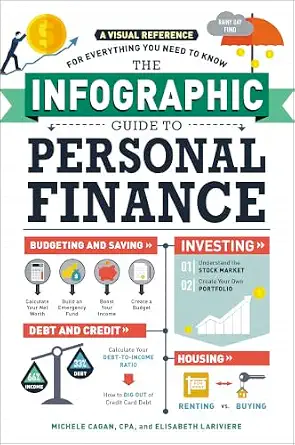 | Best Visual Learners’ Pick | Format: Paperback | Audience Level: Beginner | Primary Focus: Visual overview of personal finance | VIEW LATEST PRICE | See Our Full Breakdown |
| Financial Literacy Essentials For Dummies |  | Best Value Starter Primer | Format: Paperback / eBook | Publisher Series: For Dummies (Essentials) | Audience Level: Beginner | VIEW LATEST PRICE | See Our Full Breakdown |
| How to Adult: Personal Finance for the Real World |  | Best for Fresh Graduates | Format: Paperback / Kindle | Audience: Young adults and beginners | Core Topics: Budgeting, financial planning, everyday money management | VIEW LATEST PRICE | See Our Full Breakdown |
| Personal Finance QuickStart Guide |  | Best for Anxious Beginners | Format: Paperback / Kindle / Audiobook | Audience: Complete beginners | Core Topics: Financial stress, budgeting, wealth building, financial freedom | VIEW LATEST PRICE | See Our Full Breakdown |
| I Will Teach You to Be Rich (Second Edition) |  | Best Action Plan | Format: Paperback / Kindle / Audiobook | Edition: Second Edition | Audience: Beginners ready to take action | VIEW LATEST PRICE | See Our Full Breakdown |
| The Ultimate Guide to Personal Finance: From Debt to Financial Freedom |  | Best for Debt Payoff | Format: Paperback / Kindle | Audience: Beginners focused on debt reduction | Core Topics: Debt management, budgeting, financial independence | VIEW LATEST PRICE | See Our Full Breakdown |
| Money Skills for Teens: A Beginner’s Guide to Budgeting, Saving, and Investing |  | Best for Teens | Format: Paperback | Audience: Teenagers | Core Topics: Budgeting, saving, investing basics | VIEW LATEST PRICE | See Our Full Breakdown |
| Personal Finance 101: From Saving and Investing to Taxes and Loans, an Essential Primer on Personal Finance |  | Best All-Around Primer | Format: Paperback | Publisher: Adams Media | Series: Adams 101 | VIEW LATEST PRICE | See Our Full Breakdown |
| Get a Financial Life: Personal Finance in Your Twenties and Thirties |  | Best for Young Adults | Format: Paperback | Publisher: Simon & Schuster | Target Audience: Adults in their 20s and 30s | VIEW LATEST PRICE | See Our Full Breakdown |
| Personal Finance For Dummies |  | Best Reference-Style Guide | Format: Paperback | Publisher: For Dummies | Series: For Dummies | VIEW LATEST PRICE | See Our Full Breakdown |
| personal finance books for beginner | Format | Approach | Core Topics |
|---|---|---|---|
| Own Your Payday: How to Stop L | Paperback / eBook | Step-by-step roadmap | Budgeting, spending habits, emergency savings |
| Budgeting For Dummies | Paperback / eBook | Instructional tutorial | — |
| Financial Literacy for Young A | Paperback / eBook | Concept-by-concept overview | Budgeting, saving, investing fundamentals |
| The Infographic Guide to Perso | Paperback | Visual reference guide | Budgeting, saving, credit, investing, financial planning |
| Financial Literacy Essentials | Paperback / eBook | Condensed primer | Budgeting, saving, investing, debt management |
| How to Adult: Personal Finance | Paperback / Kindle | Practical, real-world guidance | Budgeting, financial planning, everyday money management |
| Personal Finance QuickStart Gu | Paperback / Kindle / Audiobook | Simplified, step-oriented introduction | Financial stress, budgeting, wealth building, financial freedom |
| I Will Teach You to Be Rich | Paperback / Kindle / Audiobook | Structured 6-week program | Automation, credit, banking, investing, guilt-free money management |
| The Ultimate Guide to Personal | Paperback / Kindle | Broad end-to-end guide | Debt management, budgeting, financial independence |
| Money Skills for Teens: A Begi | Paperback | Introductory guide with simple language | Budgeting, saving, investing basics |
| Personal Finance 101: From Sav | Paperback | — | — |
| Get a Financial Life: Personal | Paperback | — | — |
| Personal Finance For Dummies | Paperback | — | — |
More Details on Our Top Picks
Own Your Payday: How to Stop Living Paycheck to Paycheck, Control Your Spending, and Build Real Savings
Most beginner finance books assume you have money left over each month. Own Your Payday takes the opposite starting point, and that difference shapes the entire read. Where Budgeting For Dummies teaches you how to build a budget framework, this pick is built around spending control and habit change for people whose margin is already razor-thin. The roadmap format translates into a concrete outcome: readers finish with a step-by-step sequence rather than a pile of concepts to sort through themselves. The tradeoff is real, though. Compared with The Infographic Guide to Personal Finance, there are no visual aids, and unlike I Will Teach You to Be Rich, there are no worksheets or program tools included — it is prose-driven guidance. Anyone past the survival stage of money management will find the content too elementary.
Pros:- Directly addresses the paycheck-to-paycheck problem most beginner books skip
- Practical spending-control strategies rather than abstract theory
- Clear roadmap format that sequences action steps
- Written for true beginners without jargon
Cons:- No worksheets, tools, or supplementary resources included
- Content is basic for anyone with existing savings habits
- Narrow focus means investing and retirement topics get little coverage
Best for: Beginners living paycheck to paycheck who need spending-control strategies before anything else
Not ideal for: Readers with stable savings who want investing depth — the content stays at foundational level
- Format:Paperback / eBook
- Audience Level:Beginner
- Primary Focus:Spending control and savings building
- Core Topics:Budgeting, spending habits, emergency savings
- Includes Tools/Worksheets:No
- Visual Elements:Minimal
- Approach:Step-by-step roadmap
Our verdict“If your financial problem is that the month outlasts the money, this is the most targeted starting point in the lineup.”
Budgeting For Dummies
This option stands out for doing one thing thoroughly instead of five things thinly. While Financial Literacy Essentials For Dummies skims across the whole personal finance landscape, Budgeting For Dummies stays locked on the mechanics of building and maintaining a budget, which makes it the better fit for someone whose immediate problem is cash-flow chaos. The plain-English, brand-standard format means concepts land quickly, and the practical tips translate into a working budget within a few chapters. The tradeoff is breadth. Compared with Personal Finance QuickStart Guide, which covers wealth building and financial freedom alongside budgeting, this book stops at the household ledger. There are also no digital resources or downloadable templates, so readers who want spreadsheets or app integration will need to source those separately.
Pros:- Deep, focused coverage of budgeting mechanics rather than surface-level breadth
- Trusted Dummies format with plain-English explanations
- Practical tips that produce a usable budget quickly
- Forgiving tone for readers with no financial background
Cons:- Limited to budgeting — investing, taxes, and retirement get minimal treatment
- No digital resources, templates, or online companions
- Advanced readers will outgrow it within months
Best for: Complete beginners who have never built a budget and want a single-skill deep tutorial
Not ideal for: Readers who already budget and want investing or debt-payoff strategy — the scope ends at budgeting
- Format:Paperback / eBook
- Publisher Series:For Dummies
- Audience Level:Beginner
- Primary Focus:Budget creation and money management
- Includes Digital Resources:No
- Visual Elements:Some charts and callout boxes
- Approach:Instructional tutorial
Our verdict“The narrowest book on this list, and better for it — pick this when budgeting itself is the skill you need to build.”
Financial Literacy for Young Adults: How to Manage, Save, and Invest Money
Where Get a Financial Life targets twenty- and thirtysomethings with career momentum, Financial Literacy for Young Adults writes for readers encountering money concepts for the first time — first jobs, first bank decisions, first savings goals. That framing makes it more approachable than Personal Finance 101, which reads more like a classroom primer. The book earns its spot by simplifying investing concepts that most beginner titles either over-explain or skip, and by framing every lesson around financial independence rather than just avoiding mistakes. The honest weakness: it is a shorter, lighter treatment than the Dummies titles, and there is little visibility into content depth before buying. Readers who want a structured, week-by-week program like I Will Teach You to Be Rich will find this looser and less prescriptive.
Pros:- Covers managing, saving, and investing together rather than just budgeting
- Simplifies investing for readers with zero background
- Independence-focused framing that motivates rather than lectures
- Accessible price point and easy entry for first-time readers
Cons:- Limited published detail on length and content depth
- Less structured than program-based alternatives
- Advanced or mid-level readers will find it too basic
Best for: Teens and young adults opening their first accounts who want managing, saving, and investing covered in one simple pass
Not ideal for: Readers wanting structured programs or in-depth investing strategy — this stays at the overview level
- Format:Paperback / eBook
- Audience Level:Beginner / Young adult
- Primary Focus:Money management, saving, investing
- Core Topics:Budgeting, saving, investing fundamentals
- Includes Tools/Worksheets:No
- Visual Elements:Minimal
- Approach:Concept-by-concept overview
Our verdict“A sensible first finance book for a young reader, as long as expectations match its overview-level depth.”
The Infographic Guide to Personal Finance: A Visual Reference for Everything You Need to Know
This is the only book in the lineup where format does the heavy lifting. Compared with Financial Literacy Essentials For Dummies, which covers similar ground in dense prose, The Infographic Guide to Personal Finance delivers every topic — budgeting, credit, investing, taxes — through charts, illustrations, and visual layouts that make retention genuinely easier. That makes it the best option for readers who abandon traditional finance books by chapter two, and it doubles as a quick-reference shelf tool you revisit rather than read once. The tradeoff is depth: complex topics like investing strategy and retirement planning get compressed to fit a page, where The Ultimate Guide to Personal Finance or I Will Teach You to Be Rich devote chapters to them. Treat this as an on-ramp or companion, not a substitute for a full course in personal finance.
Pros:- Infographic format makes concepts stick for visual learners
- Broad coverage of budgeting, investing, credit, and planning in one volume
- Works as a reusable quick reference, not just a one-time read
- Low intimidation factor for readers put off by dense finance text
Cons:- Each topic is compressed — not enough depth to act on alone
- Cannot replace detailed advice on investing or debt strategy
- Reference style offers less narrative motivation than story-driven books
Best for: Visual learners and reluctant readers who want finance concepts explained through graphics they can absorb quickly
Not ideal for: Readers wanting step-by-step action plans or detailed strategy — visuals compress topics at the expense of depth
- Format:Paperback
- Audience Level:Beginner
- Primary Focus:Visual overview of personal finance
- Core Topics:Budgeting, saving, credit, investing, financial planning
- Visual Elements:Full-color infographics throughout
- Includes Tools/Worksheets:No
- Approach:Visual reference guide
Our verdict“The fastest way to see the whole personal finance landscape at a glance, ideal as a first book or desk reference rather than your only one.”
Financial Literacy Essentials For Dummies
Think of this as the condensed version of Personal Finance For Dummies — the full series’ core lessons on budgeting, saving, investing, and debt distilled into a shorter, cheaper package. That positioning is exactly why it earns a spot: compared with Budgeting For Dummies, it trades single-topic depth for breadth, giving a reader who does not yet know which money problem to tackle first a map of the whole territory. The accessible language keeps the barrier to entry low, and the practical tips translate into immediate small wins. The costs of condensation are real. Each topic gets a shallow treatment, there are no supplementary materials or digital extras, and readers who commit to the journey will want to graduate to a fuller book like Personal Finance QuickStart Guide within months.
Pros:- Broad coverage of budgeting, saving, investing, and debt in one compact volume
- Lower price and shorter length than full-length Dummies titles
- Beginner-friendly language with no assumed knowledge
- Good springboard for identifying which money topic to pursue next
Cons:- Condensed format means every topic stays surface-level
- No digital or supplementary materials included
- Quickly outgrown by readers who want actionable detail
Best for: Budget-conscious beginners who want all the finance basics surveyed in one affordable, quick read
Not ideal for: Readers ready to implement detailed strategies — the essentials format stops short of actionable depth
- Format:Paperback / eBook
- Publisher Series:For Dummies (Essentials)
- Audience Level:Beginner
- Primary Focus:Core financial literacy concepts
- Core Topics:Budgeting, saving, investing, debt management
- Includes Digital Resources:No
- Approach:Condensed primer
Our verdict“The cheapest credible on-ramp into personal finance in this lineup — buy it to find your footing, then upgrade to a deeper title.”
How to Adult: Personal Finance for the Real World
How to Adult fills a specific gap that most general finance books skip: the awkward early period when rent, insurance, and bills arrive all at once for the first time. Where Personal Finance 101 reads like a reference primer, this book reads like a field manual for someone freshly out of school with no financial safety net.
The practical, plain-language tone works in its favor, though the simplicity has a ceiling. Compared with I Will Teach You to Be Rich, it offers no structured program — just guidance — and its investing section is thin, so readers ready to grow wealth will outgrow it fast.
Pros:- Practical, easy-to-understand advice for everyday money decisions
- Directly addresses the young-adult transition to financial independence
- Covers the core essentials: budgeting, planning, and day-to-day management
- Approachable tone that never assumes prior finance knowledge
Cons:- Lacks detailed advanced financial strategies
- Limited information on investment options
- No structured program or step-by-step plan to follow
Best for: Recent graduates and young adults handling bills, budgeting, and financial planning on their own for the first time
Not ideal for: Readers who already budget and want investing depth or advanced strategy — this book stops at the fundamentals
- Format:Paperback / Kindle
- Audience:Young adults and beginners
- Core Topics:Budgeting, financial planning, everyday money management
- Approach:Practical, real-world guidance
- Depth Level:Beginner to intermediate fundamentals
- Investing Coverage:Limited
Our verdict“This pick makes the most sense for someone who just left home and needs the basics handled fast — not for building a long-term wealth strategy.”
Personal Finance QuickStart Guide
What separates the QuickStart Guide from a denser option like The Ultimate Guide to Personal Finance is its focus on emotional relief, not just information. It frames money management around eliminating financial stress, which matters for readers who freeze when facing spreadsheets or jargon.
The tradeoff is depth. It moves fast through each topic and skips the advanced techniques and supporting tools that books like Budgeting For Dummies pair with worksheets. Readers who want a slower, example-heavy walkthrough may find it too compressed.
Pros:- Easy-to-understand guidance written specifically for beginners
- Centers stress reduction as a goal, not just wealth accumulation
- Practical strategies for building toward financial independence
- Fast read that respects a beginner’s limited time and attention
Cons:- Lacks detailed advanced financial techniques
- No specific tools, worksheets, or digital resources included
- Coverage of individual topics can feel rushed
Best for: Stressed-out beginners who feel overwhelmed by money and want a calm, simplified on-ramp to financial basics
Not ideal for: Detail-oriented readers who want workbooks, calculators, or advanced wealth-building technique — the coverage here is intentionally light
- Format:Paperback / Kindle / Audiobook
- Audience:Complete beginners
- Core Topics:Financial stress, budgeting, wealth building, financial freedom
- Approach:Simplified, step-oriented introduction
- Depth Level:Beginner fundamentals
- Includes Tools:No
Our verdict“This one suits anxious first-timers who need reassurance and momentum more than exhaustive detail.”
I Will Teach You to Be Rich (Second Edition)
Most beginner books explain concepts; I Will Teach You to Be Rich makes you do something about them within a defined six-week program. That structure is its edge over looser guides like How to Adult — there are weekly tasks, specific account recommendations, and a guilt-free philosophy that removes the shame spiral many money books create.
The second edition updates the material for modern banking and investing, but the prescriptive style won’t suit everyone. Readers who prefer to understand theory before acting may find the pace aggressive, and its American-centric advice limits usefulness abroad.
Pros:- Clear, actionable 6-week program with concrete weekly tasks
- Guilt-free tone that reduces shame around past money mistakes
- Second edition includes updated advice on modern accounts and investing
- Covers automation so good habits continue without willpower
Cons:- Prescriptive approach leaves little room for alternate strategies
- Heavily tailored to the U.S. financial system
- Specific topic depth is sacrificed in favor of program momentum
Best for: Motivated beginners who want a deadline-driven, week-by-week system rather than passive reading
Not ideal for: Readers outside the U.S. or those who want theory-first education before taking action on accounts and automation
- Format:Paperback / Kindle / Audiobook
- Edition:Second Edition
- Audience:Beginners ready to take action
- Core Topics:Automation, credit, banking, investing, guilt-free money management
- Approach:Structured 6-week program
- Region:U.S.-focused
Our verdict“The strongest choice for beginners who want to be told exactly what to do each week — weaker for readers wanting a flexible reference.”
The Ultimate Guide to Personal Finance: From Debt to Financial Freedom
Of the books in this lineup, this one gives debt management the most direct treatment, tracing a path from owing money to financial independence. Where the Personal Finance QuickStart Guide compresses topics for speed, this guide spreads out across the full personal finance landscape, which helps readers buried under multiple debt types.
The downside of that breadth is abstraction — it lacks the case studies and worked examples that make Budgeting For Dummies feel grounded, and the sparse publication details make it harder to judge how current the advice is. Readers wanting hand-holding will need to fill gaps themselves.
Pros:- Broad coverage spanning debt, saving, and financial independence
- Practical strategies specifically for managing and eliminating debt
- Logical progression from crisis management to long-term freedom
- Accessible enough for readers starting from a difficult financial position
Cons:- Lacks detailed examples or case studies to illustrate strategies
- No specific edition or publication date provided
- Breadth means some topics get shallow treatment
Best for: Debt-heavy beginners who want a wide-coverage roadmap from payoff to financial freedom
Not ideal for: Readers who learn best from real-world examples and case studies, or who want verified, dated editions of advice
- Format:Paperback / Kindle
- Audience:Beginners focused on debt reduction
- Core Topics:Debt management, budgeting, financial independence
- Approach:Broad end-to-end guide
- Includes Case Studies:No
- Depth Level:Beginner to intermediate
Our verdict“This model is better suited to someone prioritizing debt payoff over investment depth — skimpy on examples, generous on scope.”
Money Skills for Teens: A Beginner’s Guide to Budgeting, Saving, and Investing
Most beginner finance books assume a paycheck and rent; Money Skills for Teens starts earlier, teaching budgeting, saving, and investing before bad habits form. Compared with Financial Literacy for Young Adults, which targets post-graduation readers, this one uses language and examples a teenager can act on with allowance or first-job income.
The early-start focus is also its limitation. Advanced investment strategy is absent, and unlike options with worksheets or companion apps, it ships with no digital resources. Parents wanting a fuller curriculum will need to supplement it.
Pros:- Comprehensive financial education pitched at a teen reading level
- Introduces investing early, before habits solidify
- Covers the foundational trio of budgeting, saving, and investing
- Language and examples match teen income realities
Cons:- Lacks detailed or advanced investment strategies
- No accompanying digital resources, worksheets, or tools
- Irrelevant for adults managing real bills and debt
Best for: Teenagers (and parents buying for them) who want a first money book tied to allowance, first jobs, and pre-adult habits
Not ideal for: Adults or older students — the content skews young and skips the taxes, loans, and career-stage topics grown-up beginners need
- Format:Paperback
- Audience:Teenagers
- Core Topics:Budgeting, saving, investing basics
- Approach:Introductory guide with simple language
- Includes Digital Resources:No
- Depth Level:Absolute beginner
Our verdict“Compared with every other pick here, this stands out as the one written for readers who haven’t left home yet — adults should skip it.”
Personal Finance 101: From Saving and Investing to Taxes and Loans, an Essential Primer on Personal Finance
Personal Finance 101 earns its place as the most balanced starting point in this lineup because it treats finance as a connected system rather than a collection of tips. Where Budgeting For Dummies narrows in on one skill, this book strings together saving, investing, taxes, and loans so a reader can see how a decision in one area ripples into another. That breadth is what makes it a strong default first purchase for someone who wants a single book instead of three. The tradeoff is depth: unlike I Will Teach You to Be Rich, which pushes a concrete six-week action plan, this one explains concepts well but leaves the doing to you. There are no worksheets or exercises, so readers who need structure may stall after finishing it.
Pros:- Covers the full spread of beginner topics — saving, investing, taxes, and loans — in one volume
- Explanations stay clear and jargon-free for readers starting from zero
- Connects related topics so readers understand tradeoffs, not isolated definitions
- Short enough to finish without feeling like a textbook commitment
Cons:- Stops at the surface on advanced strategies like tax optimization or portfolio construction
- No practical exercises, worksheets, or action checklists to apply the material
Best for: Complete beginners who want one readable book that explains how all the pieces of personal finance fit together
Not ideal for: Readers who want step-by-step action plans or exercises — this is a primer, not a workbook
- Format:Paperback
- Publisher:Adams Media
- Series:Adams 101
- Topics Covered:Saving, investing, taxes, loans, credit
- Experience Level:Beginner
- Includes Exercises:No
Our verdict“If you want a single, well-organized introduction that explains the whole landscape before you specialize, this is the book to buy first.”
Get a Financial Life: Personal Finance in Your Twenties and Thirties
Most beginner finance books address a generic reader; Get a Financial Life is built around a specific life stage, and that focus pays off. It tackles the questions that actually confront people in their twenties and thirties — first salaries, student debt, renting versus buying — with advice calibrated to tight budgets. Compared with Financial Literacy for Young Adults, which covers similar ground in a more introductory tone, this book feels like advice from someone who understands the real constraints of early-career finances. Its weakness mirrors its strength: because it skews toward foundational decisions, the investing chapters stay thin, so readers ready to build a serious portfolio will outgrow it — Personal Finance 101 serves that later stage better. It also presumes American financial institutions, which limits its usefulness abroad.
Pros:- Advice is tailored to the actual financial decisions of your twenties and thirties
- Addresses debt management and budgeting with realistic, small-dollar scenarios
- Accessible tone that never assumes prior financial knowledge
- Regularly updated edition reflects current financial realities
Cons:- Investing guidance is light on strategy and portfolio specifics
- Framed around the U.S. financial system, limiting relevance for international readers
Best for: Recent grads and early-career professionals dealing with first jobs, student loans, and thin savings
Not ideal for: Mid-career readers or those past the debt-and-first-job stage — the framing will feel too elementary
- Format:Paperback
- Publisher:Simon & Schuster
- Target Audience:Adults in their 20s and 30s
- Topics Covered:Budgeting, saving, investing, debt management, insurance
- Experience Level:Beginner
- Region Focus:United States
Our verdict“If you’re under 35 and building your financial life from scratch, this targeted guide beats broader generalist books hands down.”
Personal Finance For Dummies
The For Dummies franchise has survived on one promise: explain anything without intimidating anyone, and Personal Finance For Dummies delivers on it. Its real strength is reference-style organization — you can jump to the chapter on credit scores or retirement accounts without reading cover to cover, something narrative-driven picks like The Ultimate Guide to Personal Finance: From Debt to Financial Freedom don’t allow. Compared with Financial Literacy Essentials For Dummies, this full edition goes deeper on each topic, making it the better one-and-done purchase if you only buy one Dummies title. The cost of that encyclopedic sweep is momentum: motivation is thin, and readers who need a push to act may find I Will Teach You to Be Rich‘s program format more effective. It also stays safely mainstream, skipping aggressive or advanced strategies entirely.
Pros:- Modular, well-indexed structure lets readers find any topic in seconds
- Friendly, jargon-free explanations assume zero prior knowledge
- Broad coverage spanning budgeting, saving, investing, and debt in one volume
- Established franchise with a long track record of reader trust
Cons:- Sticks to basic strategies and avoids anything advanced or opinionated
- Reference format lacks the narrative momentum that turns reading into action
Best for: Readers who want a dip-in reference to look up specific topics as financial questions arise
Not ideal for: Readers seeking motivation or a structured program — the reference format won’t drive action on its own
- Format:Paperback
- Publisher:For Dummies
- Series:For Dummies
- Structure:Modular, reference-style chapters
- Topics Covered:Budgeting, saving, investing, debt, credit, retirement
- Experience Level:Beginner
Our verdict“This is the book to keep on the shelf and consult whenever a money question comes up — ideal as a reference, less so as a motivational read.”

How We Picked
I judged every title against four questions a beginner would actually ask. First, can a newcomer finish it? Books that assume prior knowledge or stretch past 400 pages of theory lost points, because the biggest failure mode in this category is abandoning the book before changing any behavior. Second, does it produce action? I favored titles with concrete systems, scripts, worksheets, or week-by-week programs over books that explain concepts but leave the reader to design their own plan. Third, I weighed coverage breadth — a beginner ideally gets budgeting, debt, credit, saving, and at least an intro to investing in one place, though depth sometimes had to be sacrificed for accessibility. Finally, I considered tone and audience fit, since a guilt-heavy or jargon-heavy voice can sink an otherwise excellent book.
The ranking reflects a deliberate order: program-driven books first, because they generate results fastest, followed by audience-specific titles that trade breadth for relevance, then visual and quick-reference formats, with the big reference books placed lower for beginners despite their quality — they simply serve better as second books than first ones. Where two titles cover the same niche, I ranked the one with clearer structure and more current advice higher, and I flagged overlapping picks so you don’t buy two books that do the same job.
| personal finance books for beginner | Format |
|---|---|
| Own Your Payday: How to Stop L | Paperback / eBook |
| Budgeting For Dummies | Paperback / eBook |
| Financial Literacy for Young A | Paperback / eBook |
| The Infographic Guide to Perso | Paperback |
| Financial Literacy Essentials | Paperback / eBook |
| How to Adult: Personal Finance | Paperback / Kindle |
| Personal Finance QuickStart Gu | Paperback / Kindle / Audiobook |
| I Will Teach You to Be Rich | Paperback / Kindle / Audiobook |
| The Ultimate Guide to Personal | Paperback / Kindle |
| Money Skills for Teens: A Begi | Paperback |
| Personal Finance 101: From Sav | Paperback |
| Get a Financial Life: Personal | Paperback |
| Personal Finance For Dummies | Paperback |
Factors to Consider When Choosing Personal Finance Books For Beginners
Before picking a title, it helps to understand how these books differ in approach, because the wrong format can kill your momentum before you learn anything.Program Books vs. Reference Books
The single biggest distinction in this category is structure. Program books, like I Will Teach You to Be Rich, walk you through a sequence of steps over a set timeframe — you finish the book with accounts opened and systems running. Reference books, like Personal Finance For Dummies, organize knowledge by topic so you can look things up as needed. Beginners often buy a reference book expecting a program, get bored by chapter three, and quit. My advice: start with a program book to build momentum, then add a reference title once you have specific questions. Buying both at once is a common mistake that usually means reading neither.
Match the Book to Your Life Stage
A book written for a teen with a first job will waste your time if you’re 32 with a mortgage and student loans, and vice versa. The examples an author uses — entry-level wages versus salaried income, first credit card versus refinancing decisions — determine whether the advice feels relevant or abstract. Age-targeted titles in this roundup exist precisely because general books tend to average their examples toward a mid-career reader. If you’re under 25, a life-stage title will feel like it was written about you; if you’re older, skip them entirely and go general. The mistake to avoid is buying a book because it’s popular rather than because it matches your situation.
Your Specific Starting Problem Matters More Than Ratings
Beginners don’t all start from the same place. If your problem is paycheck-to-paycheck spending, a spending-behavior book will help more than an investing-heavy one, even if the latter is objectively better written. If you’re fine with money but overwhelmed by jargon, a primer like Personal Finance 101 targets your actual gap. And if debt is the emergency, debt-first titles should outrank wealth-building titles regardless of fame. Before buying, name your single biggest money problem in one sentence — the book that answers that sentence directly is almost always the right purchase.
Format and Length: Finishing Beats Coverage
A 400-page book you abandon teaches less than a 150-page book you complete. Shorter, visual, or workbook-style formats carry real advantages for beginners with limited time or attention, even though they cover fewer topics. That coverage gap is fixable later — a second book can fill it — but lost momentum is rarely recoverable. Be honest about your reading habits: if you’ve bought personal finance books before and never finished them, choose the shortest credible option this time. Infographic and quick-read formats exist for exactly this reader, and treating them as a legitimate first step rather than a compromise is the smarter play.
Publication Date and Advice Currency
Personal finance fundamentals — spend less than you earn, avoid high-interest debt, invest early — don’t expire, but the specific mechanics around them do. Older editions can reference obsolete interest rates, deprecated apps, tax rules that have changed, or retirement account limits that no longer apply. Second editions, like the updated I Will Teach You to Be Rich, are usually revised precisely to fix this. When comparing two similar books, the newer edition or print date generally wins, especially for anything touching taxes, student loans, or investing platforms. Timeless principles from an older book are fine; timeless instructions are not.
Price Is Almost Never the Deciding Factor
Most titles in this category sit within a few dollars of each other, and used copies cost even less, so optimizing for price usually means optimizing for the wrong thing. A slightly cheaper book that doesn’t match your learning style is a total loss; a pricier one you actually finish pays for itself with a single avoided fee or one automated savings habit. The one legitimate price question is whether you need multiple books at all — for most beginners, one well-chosen program book plus free online resources for gaps beats a stack of five titles. Spend your decision energy on fit, not cost.
Frequently Asked Questions
Should I start with one book or buy several from this list?
One, and only one to start. The most common failure pattern I saw across these titles is beginners buying three or four books, skimming each, and implementing nothing. Pick the single book that matches your biggest money problem and your reading style, finish it, and act on it for at least a month. If you then hit a topic it didn’t cover — say, it skipped taxes or insurance — add a reference-style book like Personal Finance For Dummies as a second purchase. Multiple books only help once you have a working system and specific gaps to fill.
Do I need a book at all, or can I learn this from free content online?
Free content can absolutely cover the same material, but it has two structural weaknesses for beginners. First, it arrives in fragments — a video about investing here, an article about budgeting there — with no guaranteed sequence, so you end up with knowledge gaps you don’t know you have. Second, it’s usually optimized for engagement rather than behavior change, while a good book forces you through a complete arc. If you’re highly self-directed and already know what you don’t know, free content works. If you’re starting from zero and want a proven path, a structured book is the more reliable route.
Which book should I choose if I’m living paycheck to paycheck?
Own Your Payday targets that exact situation, and it beats the broader titles here because it treats the problem as a spending-behavior cycle rather than a knowledge gap. Wealth-building books like I Will Teach You to Be Rich assume you have money left over each month to automate, which isn’t true yet if you’re paycheck to paycheck. The right sequence is to fix cash flow first with a spending-focused book, build a small buffer, and only then move to a program about investing and systems. Jumping straight to an investing book when you’re broke tends to produce guilt, not progress.
Are the For Dummies books in this list redundant with each other?
Partially, yes, and you only need one. Financial Literacy Essentials For Dummies is a condensed version designed for absolute beginners who want the fastest possible overview, while Personal Finance For Dummies is the full-length reference with far more detail. Budgeting For Dummies narrows to a single topic rather than duplicating either. My rule: choose the Essentials version if this is your first money book ever, choose the full version if you want something you’ll keep on the shelf for years, and choose the budgeting one only if budgeting specifically is your weak point. Buying two of the three is wasted money for most readers.
Is a personal finance book written years ago still worth reading?
It depends on what the book teaches. Core principles — emergency funds, compound interest, debt avoidance, index investing — are timeless, and an older book explaining them well remains useful. What ages poorly is anything mechanical: specific apps, interest rate assumptions, tax brackets, retirement contribution limits, and student loan rules. In this roundup, the titles that have been revised recently, like the second edition of I Will Teach You to Be Rich, have an edge for exactly this reason. If you do read an older book, treat the principles as durable and verify any specific numbers or tool recommendations against current sources before acting on them.
Conclusion
For the best overall pick, I recommend I Will Teach You to Be Rich — its 6-week program produces real financial systems faster than anything else on this list, provided you have income to manage. For best value, the Personal Finance QuickStart Guide delivers nearly the same beginner scaffolding at a lower commitment of time and money. The best choice for true beginners — people who feel anxious just opening a banking app — is Financial Literacy Essentials For Dummies, the gentlest on-ramp in the lineup. For specific needs: choose Own Your Payday if you’re stuck living paycheck to paycheck, Money Skills for Teens or Get a Financial Life if you want life-stage-matched advice, and the Infographic Guide if you learn visually. Finally, if you want a premium, keep-forever reference rather than a first book, the full Personal Finance For Dummies earns its shelf space. Whatever you pick, the deciding factor isn’t the book — it’s finishing the one you choose.
Halloween Picks
halloween
As an affiliate, we earn on qualifying purchases.