
The best personal finance book for investors depends on where you are in your journey: The Psychology of Money stands out as the best overall pick because it teaches the behavioral foundation that determines long-term investing success, regardless of strategy. For readers who want a concrete, low-effort plan, The Simple Path to Wealth delivers a complete roadmap to financial independence, while The Intelligent Investor remains the definitive choice for anyone serious about value investing. The main tradeoff in this category is depth versus accessibility — the classics demand patience and prior context, while modern beginner guides sacrifice nuance for actionability. Some books focus on portfolio mechanics, others on mindset or niche situations like high-income professions. Read on for the full breakdown of all 15 titles and which one fits your goals, budget, and experience level.

Get smart everyday buys delivered free — and shop member deals
- Fast, free delivery on millions of items
- Access to Prime Big Deal Days deals on October 6–7
- Prime Video, Amazon Music and more included
Key Takeaways
- Behavioral finance books like The Psychology of Money ranked highest because mindset errors cost investors more than strategy errors — strategy can be copied, discipline cannot.
- Several books in this lineup overlap heavily in content; The Index Card, Personal Finance QuickStart Guide, and Finance for Beginners cover nearly identical ground, so buying more than one is usually wasted money.
- The most expensive-feeling investment of time, The Intelligent Investor, rewards patient readers with the deepest framework, but beginners who start there often quit before page 100.
- Niche titles like The White Coat Investor and The Lifestyle Investor only earn their spot for specific readers — high-income professionals and cash-flow seekers — and underdeliver for everyone else.
- Age and career-stage targeting matters more in this category than in most: Personal Finance For Your 20’s and Building Wealth with Method serve narrow audiences that general books serve better.




| personal finance books for investor | Format | ASIN | Experience Level |
|---|---|---|---|
| The Lifestyle Investor: The 10 | Book | B08RLMP6BF | Intermediate to Advanced |
| How to Invest $50-$5,000 | Book | 0061935166 | Beginner |
| The Little Book of Common Sens | Book | 1119404509 | Beginner to Intermediate |
| The Intelligent Investor | Book | B0CT46H252 | Intermediate to Advanced |
| The Index Card: Why Personal F | Book | 0143130528 | Beginner |
| The Richest Man In Babylon | Book | — | Beginner to intermediate |
| Personal Finance For Your 20’s | Book | — | Complete beginner |
| The Simple Path to Wealth: You | Book | — | Beginner to intermediate |
| Investing 101: From Stocks and | Book | — | Beginner |
| Personal Finance QuickStart Gu | Book | — | Complete beginner |
| The White Coat Investor: A Doc | Book | 0991433106 | — |
| Building Wealth with Method: T | Book | B0HK3M7P1W | — |
| The Psychology of Money: Timel | Book | 0857197681 | — |
| Finance for Beginners: 101 Con | Book | B0H14HGBNC | — |
| The Dumb Investor: How the Eve | Book | B0GX2TKGZ1 | — |
More Details on Our Top Picks
The Lifestyle Investor: The 10 Commandments of Cash Flow Investing for Passive Income and Financial Freedom (Updated and Expanded Edition)
Most investing books in this roundup, like The Little Book of Common Sense Investing, focus on market returns through index funds. The Lifestyle Investor takes a different path entirely: it organizes cash flow investing into ten commandments that readers can apply to income-producing assets rather than pure portfolio growth. This pick makes the most sense for investors who already have capital and want their money working for monthly income, not just long-term appreciation. The 2024 updated edition adds expanded content that reflects current market conditions, which gives it an edge over older classics like The Intelligent Investor that haven’t been reworked for today’s environment. The tradeoff is real, though: it assumes a level of sophistication and available capital that true beginners simply don’t have yet.
Pros:- Ten clear, actionable commandments readers can apply directly
- Focuses on passive income rather than market speculation
- Updated and expanded 2024 edition reflects current conditions
- Structured framework makes a complex strategy feel approachable
Cons:- Assumes readers already have capital to deploy
- Cash flow strategies involve more hands-on work than index investing
- Less useful for readers still building their first savings
Best for: Intermediate to advanced investors with existing capital who want income-focused strategies instead of pure growth investing
Not ideal for: Beginners with small portfolios, since cash flow strategies typically require meaningful starting capital
- ASIN:B08RLMP6BF
- Edition:Updated and Expanded Edition (April 2024)
- Format:Book
- Primary Topic:Cash Flow Investing
- Structure:10 Core Principles
- Target Outcome:Passive Income and Financial Freedom
- Experience Level:Intermediate to Advanced
Our verdict“Choose this if you have capital and want income streams, not if you’re still saving your first $5,000.”
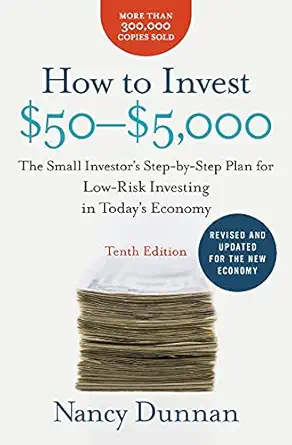
How to Invest $50-$5,000, 10th Edition: The Small Investor’s Step-by-Step Plan for Low-Risk Investing in Today’s Economy
Where The Lifestyle Investor assumes you have capital to deploy, this book starts from the opposite premise: what if you only have $50 to $5,000? That framing is rare in investing literature, and it fills a genuine gap. The step-by-step structure walks first-time investors through exactly where to put modest amounts with low-risk strategies, updated in this 10th edition for the current economy. Compared with The Index Card, which covers broad personal finance rules, this book goes deeper on the mechanics of actually placing your money — account types, entry points, and realistic expectations for small sums. The tradeoff is scope: it won’t teach you advanced portfolio theory or wealth preservation at scale, and experienced investors will find the pace slow. This is a doorway book, and a good one.
Pros:- Specifically written for people with $50 to $5,000 to invest
- Genuinely step-by-step, leaving little room for confusion
- Low-risk focus suits cautious first-timers
- 10th edition updated for today’s economy
Cons:- Content ceiling is low — quickly outgrown once your portfolio grows
- Little coverage of advanced strategies or asset classes
Best for: First-time investors with small amounts to invest who want exact, low-risk instructions rather than theory
Not ideal for: Investors managing six-figure portfolios who need strategy, not starter mechanics
- ASIN:0061935166
- Edition:10th Edition
- Format:Book
- Target Capital Range:$50 to $5,000
- Risk Approach:Low-Risk Strategies
- Structure:Step-by-Step Plan
- Experience Level:Beginner
Our verdict“The right first book if your investing budget is small and your risk tolerance is lower.”
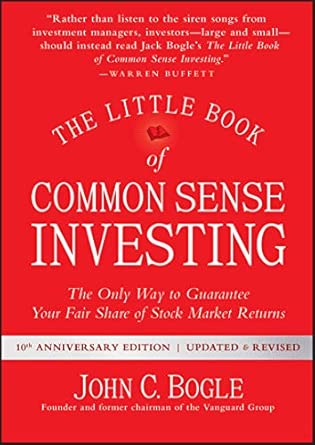
The Little Book of Common Sense Investing: The Only Way to Guarantee Your Fair Share of Stock Market Returns
If I had to hand one book to an investor deciding how to approach the market for the next thirty years, this would be a leading candidate. Its core argument — that low-cost index investing captures your fair share of market returns — is delivered with a clarity few competitors match. Compared with The Intelligent Investor, which demands serious study of value analysis, this book asks almost nothing of the reader beyond discipline. It pairs naturally with The Simple Path to Wealth from the same roundup, but stands alone as the more focused argument for passive indexing. The tradeoff is repetition: the book makes its case, then makes it again, and readers wanting tactical advice on picking individual stocks or timing entries will find nothing here. That’s the point — but know what you’re buying.
Pros:- Widely respected case for low-cost index investing
- Simple enough for beginners, rigorous enough for skeptics
- Long-term orientation reduces decision fatigue
- Compact format makes the argument easy to absorb
Cons:- Repetitive — the central thesis gets restated many times
- No guidance on active investing, stock selection, or alternatives
Best for: Long-term investors who want a simple, defensible investing philosophy built on low-cost index funds
Not ideal for: Readers who want to pick stocks or learn active trading strategies
- ASIN:1119404509
- Format:Book
- Series:Little Book Series
- Primary Topic:Index Fund Investing
- Strategy:Low-Cost, Long-Term Passive Investing
- Experience Level:Beginner to Intermediate
- Length:Compact
Our verdict“The default recommendation for buy-and-hold investors who want market returns with minimal fuss.”
The Intelligent Investor, Third Edition: The Definitive Book on Value Investing
This is the heavyweight of the lineup. The Intelligent Investor remains the definitive text on value investing, teaching principles like margin of safety that have shaped generations of investors, including Warren Buffett. The third edition keeps the classic material relevant for a modern audience. But set it beside The Little Book of Common Sense Investing and the difference is stark: where that book argues you shouldn’t analyze stocks at all, this one demands you do it rigorously. The dense, prose-heavy style is the real tradeoff — this is study, not casual reading, and many readers abandon it halfway. It also offers little for someone who simply wants a passive portfolio. This option stands out as the intellectual foundation for active, analysis-driven investing; readers unwilling to put in the work should choose an easier entry point.
Pros:- Definitive, time-tested treatment of value investing
- Margin of safety concept protects against permanent losses
- Third edition modernizes the classic text
- Foundational for anyone pursuing analysis-driven investing
Cons:- Dense writing style challenges most beginners
- Requires sustained effort that casual readers won’t commit
- Offers little for purely passive index investors
Best for: Serious students of investing willing to work through dense material to master value analysis
Not ideal for: Casual readers and passive investors who want simple rules without deep study
- ASIN:B0CT46H252
- Edition:Third Edition
- Format:Book
- Primary Topic:Value Investing
- Key Concept:Margin of Safety
- Orientation:Long-Term, Analysis-Driven
- Experience Level:Intermediate to Advanced
- Reading Demands:High
Our verdict“Worth the effort only if you intend to analyze investments seriously; skip it if you want a quick read.”
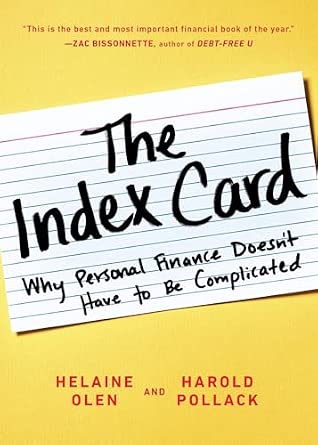
The Index Card: Why Personal Finance Doesn’t Have to Be Complicated
The Index Card wins on a simple promise: all the financial advice most people need fits on an index card. Compared with How to Invest $50-$5,000, which walks through specific investing mechanics, this book casts a wider net — saving, spending, debt, and investing — distilling each into simple, actionable rules. That breadth makes it the best true starting point in this roundup for someone whose finances aren’t yet organized enough to focus purely on investing. It’s also a faster, lighter read than The Intelligent Investor or even The Little Book of Common Sense Investing, which suits readers who want momentum, not coursework. The flip side: experienced investors will find almost nothing new, and anyone past the basics should move to a more specialized title quickly.
Pros:- Covers saving, spending, and investing in one short framework
- Genuinely accessible to readers with zero finance background
- Actionable rules rather than abstract theory
- Quick read that builds momentum for further learning
Cons:- Too basic for anyone with investing experience
- Investing coverage is shallow compared with dedicated titles in this roundup
Best for: Complete beginners who need their whole financial life — not just investing — organized with simple rules
Not ideal for: Experienced investors who will find the rules too basic to be useful
- ASIN:0143130528
- Format:Book
- Primary Topic:Personal Finance Fundamentals
- Approach:Simple Rules Framework
- Coverage:Saving, Spending, Debt, Investing
- Experience Level:Beginner
- Reading Demands:Low
Our verdict“The best first book on the shelf if you’re starting from zero — and the first one you’ll outgrow.”
The Richest Man In Babylon
The Richest Man In Babylon earns its place here as the most enduring entry in the entire lineup. Where The Psychology of Money explains the modern behavioral science behind money decisions, Babylon teaches the same discipline through parables set in ancient Mesopotamia — pay yourself first, avoid debt, let compounding work. The story-driven format makes lessons stick in a way that textbook-style primers like Investing 101 rarely manage.
The tradeoff is depth. Readers who want concrete instructions on asset allocation or index fund selection should head straight to The Simple Path to Wealth instead, because Babylon offers principles, not procedures. This pick makes the most sense for investors who want a mindset foundation before tackling technical books. It’s also short enough to finish in a weekend, which counts for something in a field full of 400-page tomes.
Pros:- Timeless wealth-building principles that don’t go stale with market cycles
- Parable format makes abstract concepts memorable and engaging
- Short and readable compared to dense technical investing books
- Accessible vocabulary — no finance background required
Cons:- No concrete guidance on modern vehicles like ETFs, index funds, or retirement accounts
- Ancient setting can feel dated to readers who want contemporary examples
- Themes overlap heavily with other behavioral finance titles, adding little new for advanced readers
Best for: Investors who want a motivational, story-based foundation in wealth-building principles before moving on to technical guides
Not ideal for: Readers seeking actionable, step-by-step investing instructions — the parables are inspirational, not procedural
- Format:Book
- Genre:Personal finance classic / parables
- Core Topic:Saving, wealth building, investing principles
- Teaching Style:Story-based parables set in ancient Babylon
- Experience Level:Beginner to intermediate
- Reading Commitment:Short, weekend-readable length
- Series:Standalone title
Our verdict“A mindset-first classic best read before the technical picks on this list, not as a substitute for them.”
Personal Finance For Your 20’s: Your 20’s Your Wealth
Most books in this roundup are written for a general audience, which means twenty-somethings often have to translate advice about mortgages and college funds into their own reality. Personal Finance For Your 20’s skips that translation step by addressing first salaries, early saving habits, and building confidence from zero. Compared with the Personal Finance QuickStart Guide, which covers similar fundamentals for all ages, this one wins on relevance — the examples and strategies assume a reader starting from scratch with time as their biggest asset.
The tradeoff is narrowness. Once you’re past the early-career stage, or once you’ve mastered budgeting basics and want actual portfolio construction, Investing 101 or The Simple Path to Wealth will take you further. This option stands out as an on-ramp book, not a destination, and buyers should expect to outgrow it within a few years.
Pros:- Age-targeted content that speaks directly to twenty-something financial realities
- Focuses on practical, real-world money management rather than theory
- Emphasizes building confidence, which helps hesitant first-time investors actually start
- Frames long-horizon wealth building around the reader’s biggest advantage: time
Cons:- Limited depth on investing mechanics — it’s a starting point, not a full system
- Narrow audience makes it a poor library-building choice for households
- Less established than comparable classics, so fewer supporting resources and communities exist around it
Best for: Twenty-somethings with their first real income who want age-specific guidance on starting from zero
Not ideal for: Readers over 30 or anyone past the budgeting-basics stage — the content skews heavily toward early-career situations
- Format:Book
- Topic:Personal finance / money management
- Target Audience:Young adults in their 20s
- Core Focus:Money fundamentals, confidence building, early wealth creation
- Experience Level:Complete beginner
- Approach:Practical, real-world strategies
- Series:Standalone title
Our verdict“A purpose-built on-ramp for young investors that will be outgrown quickly but fills its niche well.”
The Simple Path to Wealth: Your Road Map to Financial Independence and a Rich, Free Life
Where The Richest Man In Babylon inspires and Investing 101 educates, The Simple Path to Wealth actually hands you a complete financial independence plan — what to buy, what to avoid, and how much you need to accumulate before work becomes optional. Its core argument, that a simple index-based approach beats most active strategies, puts it in direct conversation with The Little Book of Common Sense Investing elsewhere in this roundup, but with a friendlier, more conversational delivery aimed at people who find Bogle’s prose dry.
The tradeoff is conviction. The advice is pointed and opinionated, which is a strength if you want a clear road map and a drawback if you prefer balanced coverage of alternatives. Readers with sophisticated needs — tax optimization across complex accounts, alternative assets — will find it thin compared to something like The Lifestyle Investor. For the median investor, though, simplicity is the point.
Pros:- Provides an actual end-to-end plan rather than scattered concepts
- Conversational tone makes index investing approachable for non-finance readers
- Strong focus on the ‘how much is enough’ math behind financial independence
- Encourages a low-maintenance portfolio that fits busy lifestyles
Cons:- Opinionated single-strategy approach leaves little room for alternative viewpoints
- Light on advanced topics like tax planning and alternative investments
- US-centric assumptions about accounts and investing vehicles may not translate abroad
Best for: Working professionals who want a single, opinionated plan for reaching financial independence without managing a complicated portfolio
Not ideal for: Advanced investors who want balanced treatment of multiple strategies or coverage of alternatives like real estate and cash flow investing
- Format:Book
- Core Topic:Financial independence and wealth building
- Investing Approach:Simple, index-based portfolio strategy
- Experience Level:Beginner to intermediate
- Primary Outcome:Road map to financial independence
- Tone:Conversational, direct, opinionated
- Series:Standalone title
Our verdict“The clearest single-volume plan in this roundup for anyone whose goal is early financial independence through simple investing.”
Investing 101: From Stocks and Bonds to ETFs and IPOs, an Essential Primer on Building a Profitable Portfolio (Adams 101 Series)
Investing 101 fills a gap the other picks leave open: it’s a structured reference covering the full vocabulary of investing — stocks, bonds, ETFs, IPOs — organized so you can look things up rather than read cover to cover. Where Personal Finance For Your 20’s teaches habits and The Simple Path to Wealth teaches one strategy, this book teaches the building blocks themselves, which matters when you’re trying to understand what you actually own in a brokerage account.
The tradeoff is that breadth costs depth and conviction. It explains what an IPO is without taking a position on whether you should buy one, so readers who want a recommended path will find it bloodless compared to Collins’s book. It’s also too elementary for anyone who already knows the difference between a mutual fund and an ETF. As a dictionary-style companion to a strategy book, though, this model is hard to beat.
Pros:- Broad coverage of foundational instruments from stocks and bonds to ETFs and IPOs
- Clear, accessible language suited to readers with zero finance background
- Organized for reference use, making it easy to revisit specific concepts
- Part of a recognized series with a consistent, digestible format
Cons:- Too basic for anyone already familiar with core investing concepts
- Explains options without guiding decisions — little help choosing a strategy
- Reference format makes cover-to-cover reading less engaging than narrative picks like Babylon
Best for: New investors who want a lookup-style reference that explains investing terms and instruments clearly before committing to a strategy
Not ideal for: Experienced investors or anyone seeking a specific recommended portfolio — the coverage is deliberately neutral and introductory
- Format:Book
- Series:Adams 101
- Core Topics:Stocks, bonds, ETFs, IPOs, portfolio building
- Experience Level:Beginner
- Structure:Reference-style primer with topical organization
- Tone:Neutral, educational, non-prescriptive
- Best Use:Companion reference alongside strategy-focused books
Our verdict“The best second book on this list — buy it alongside a strategy title when you need terms explained, not instead of one.”
Personal Finance QuickStart Guide: A Beginner’s Guide to Financial Freedom
The Personal Finance QuickStart Guide positions itself as the broadest first step in this roundup — budgeting, debt, saving, and investing basics rolled into one beginner-friendly package aimed at reducing money stress. Compared with Personal Finance For Your 20’s, it covers similar ground but for any age reader, which makes it the safer gift or household pick when you don’t know exactly where the reader stands financially. Its philosophy — that personal finance doesn’t need to be complicated — echoes The Index Card elsewhere in this lineup, but in a more structured course-like format.
The compromise is the classic one: breadth over depth. Its investing chapters won’t replace The Simple Path to Wealth, and readers who already budget confidently will find the first half repetitive. If your money anxiety centers on getting organized rather than optimizing a portfolio, though, this is the most sensible starting point on the list.
Pros:- Covers the full personal finance stack — budgeting, saving, debt, and investing — in one volume
- Beginner-friendly structure that reduces overwhelm for stressed first-timers
- Age-agnostic content works for readers from students to mid-career switchers
- Course-like progression builds skills in a logical order rather than assuming prior knowledge
Cons:- Investing sections are introductory only — you’ll need a dedicated book for portfolio strategy
- Readers with solid money habits will find early chapters repetitive
- Broad scope means no single topic gets the depth of specialized picks on this list
Best for: Readers of any age who feel disorganized or anxious about money and want one structured guide to cover budgeting, debt, and investing basics
Not ideal for: Readers who already have budgeting and debt under control and want dedicated investing depth — this spreads itself thin
- Format:Book
- Core Topics:Budgeting, saving, debt management, investing basics
- Target Audience:Beginners of any age
- Experience Level:Complete beginner
- Structure:QuickStart, course-style progression
- Primary Outcome:Reduced financial stress and a path to financial freedom
- Series:QuickStart Guide series
Our verdict“The most sensible single first purchase for a disorganized beginner, provided a dedicated investing book follows it.”
The White Coat Investor: A Doctor’s Guide to Personal Finance and Investing (The White Coat Investor Series)
Built for physicians and other high-income medical professionals, this guide connects investing decisions with concerns such as student loans, retirement accounts, and asset protection. That focus gives it a more tailored role than The Index Card, whose appeal is the simplicity of broadly applicable money rules. Readers facing medical-school debt alongside a high income may find the combination especially relevant. The tradeoff is its professional focus: many examples and priorities may fit less well for investors in other fields. It also covers several areas of personal finance, so readers seeking a narrow, technical investing manual may prefer a more specialized title. I’d rank it as the strongest fit for medical professionals, rather than as a universal starting point for every investor.
Pros:- Addresses financial concerns specific to physicians and other high-income medical professionals
- Covers student loans, retirement accounts, investing, and asset protection
- Combines investing with broader personal finance topics relevant to medical careers
Cons:- Its medical-profession focus may make examples less applicable to other readers
- Its broad subject range may not satisfy readers looking for an in-depth guide to one investing strategy
Best for: Physicians and other medical professionals balancing student loans, high earnings, investing, and asset protection
Not ideal for: Readers outside medicine who want financial guidance closely tailored to their own profession, or experienced investors seeking a specialized technical text
- Format:Book
- Series:The White Coat Investor Series
- Primary audience:Physicians and high-income medical professionals
- Topics:Student loans, retirement accounts, asset protection, investing
- ASIN:0991433106
- Author:Not specified in the supplied product data
Our verdict“Choose this guide if you work in medicine and want investing advice alongside guidance on loans, retirement accounts, and asset protection.”
Building Wealth with Method: The Principles of Personal Finance Explained in a Simple and Concrete Way (Italian Edition)
This title’s clearest distinction is its Italian-language presentation and stated aim of explaining personal finance in a simple, concrete way. That may suit Italian-speaking readers who want accessible grounding before turning to investing books such as The Little Book of Common Sense Investing, which has a more explicit focus on investment approach. The supplied information does not describe its specific methods, examples, or level of investment coverage, so I would not choose it when those details are essential to the decision. Its language also sharply narrows its audience. For readers comfortable in Italian who want a straightforward introduction to wealth-building principles, it fills a different role from English-language titles in this roundup; for everyone else, its accessibility is limited by language and sparse detail.
Pros:- Explains personal finance principles in a simple, concrete style according to the supplied description
- Offers an Italian-language option for readers who prefer to learn in Italian
- Focuses on wealth-building principles rather than claiming to be a technical investment manual
Cons:- Italian-only language limits access for readers who do not read Italian
- The supplied product information does not detail its specific strategies, examples, or investment coverage
Best for: Italian-speaking readers looking for an accessible introduction to personal finance and wealth-building principles
Not ideal for: Readers who need an English-language book or want detailed, documented information about investment methods before choosing
- Format:Book
- Language:Italian
- Edition:Italian Edition
- Focus:Personal finance and wealth-building principles
- Approach:Simple and concrete explanations, according to the supplied description
- ASIN:B0HK3M7P1W
Our verdict“Consider it if you read Italian and want an accessible personal finance introduction, but seek more detailed source information before buying for specific investing guidance.”
The Psychology of Money: Timeless Lessons on Wealth, Greed, and Happiness
Morgan Housel’s book centers on how behavior and emotion shape financial choices, using stories to make its lessons accessible across different income levels. For investors who understand basic concepts but struggle with patience, risk, or the role money plays in their lives, that emphasis can complement more strategy-driven titles. Compared with The Little Book of Common Sense Investing, it gives less direct instruction on how to build a portfolio; its value is in the decisions and habits around investing. That makes it approachable, but also a poor substitute for technical guidance. Readers looking for detailed formulas or step-by-step portfolio instructions may find its treatment too general. I’d choose it to think more clearly about money behavior, not to learn a complete investing system.
Pros:- Uses engaging stories to explain behavioral ideas about money
- Discusses lessons intended to apply across income levels
- Focuses on mindset and behavior, areas that technical investing guides may give less attention
Cons:- Provides little actionable or technical investment instruction
- Readers seeking detailed methods may find its concepts too general or simple
Best for: New and experienced investors who want to reflect on how emotions, expectations, and habits affect their financial decisions
Not ideal for: Readers looking for detailed portfolio construction, technical investing methods, or step-by-step money instructions
- Format:Book
- Author:Morgan Housel
- Topics:Personal finance, behavioral psychology, wealth
- Approach:Stories and lessons about financial behavior
- Investment focus:Mindset and behavior rather than technical formulas, according to the supplied description
- ASIN:0857197681
Our verdict“Choose it to strengthen your thinking about money and investing behavior, and pair it with a more technical book if you need portfolio guidance.”
Finance for Beginners: 101 Concepts: Everything You Need to Understand Personal Finance, Investing, and Money Management
101 discrete concepts give this book a reference-style role for people starting from scratch with personal finance, investing, and money management. That breadth may help a new investor build basic vocabulary before tackling a more focused title such as The Little Book of Common Sense Investing. The tradeoff is depth: a broad collection of introductory topics may not give experienced readers the detail they need to evaluate a particular strategy. The supplied description also does not name the concepts or explain how they are taught, which makes it hard to judge its treatment of any one subject in advance. I’d pick it as a starting point for learners who want wide foundational coverage, not as a replacement for specialized investing guidance.
Pros:- Covers personal finance, investing, and money management in one beginner-oriented guide
- Organizes its scope around 101 concepts, which can support topic-by-topic learning
- Aims to establish a financial foundation before readers move to more specialized investing books
Cons:- May be too basic for readers who already understand foundational finance
- The supplied description does not identify the concepts or explain the depth of coverage
Best for: Readers new to money management and investing who want a broad introduction organized around individual concepts
Not ideal for: Investors who already know basic finance concepts or want detailed analysis of particular investing strategies
- Format:Book
- Intended level:Beginner
- Concepts covered:101
- Topics:Personal finance, investing, money management
- Organization:Discrete concepts
- ASIN:B0H14HGBNC
Our verdict“Choose it for a broad first pass through finance and investing concepts; move to a specialized guide when you need more depth.”
The Dumb Investor: How the Everyday Investor Can Beat the Pros
The title puts the everyday investor at the center and promises guidance on competing with professional investors. That premise distinguishes it from The Intelligent Investor, which is identified in this roundup as a value-investing text: this book’s stated appeal is ordinary investors taking on the pros, while the details of its method are not supplied. That missing information is a real limitation for buyers who want to compare strategies or assess how the advice translates into decisions. The available description also does not establish how much technical instruction the book provides. I’d treat it as a potentially relevant perspective for self-directed investors, but choose a better-documented investing guide if you need a clearly described framework before committing.
Pros:- Addresses everyday investors directly
- Frames its subject around how individuals might compete with professionals
- May appeal to self-directed readers looking for an individual-investor perspective
Cons:- The supplied product information does not describe its strategies or supporting examples
- The level of practical and technical investing instruction is not specified
Best for: Self-directed individual investors curious about guidance aimed at competing with professional investors
Not ideal for: Readers who need a clearly documented investing method, specific strategy details, or a confirmed level of technical depth
- Format:Book
- Intended audience:Everyday investors
- Stated subject:How everyday investors can beat professional investors
- Specific strategy details:Not provided in the supplied product data
- ASIN:B0GX2TKGZ1
- Author:Not specified in the supplied product data
Our verdict“Consider it if you want an everyday-investor perspective, but favor a more fully described guide when you need a defined investment method.”

How We Picked
I evaluated each book through one specific lens: how well it helps someone who wants to invest their own money, not just budget or get out of debt. That meant judging titles on four factors. First, actionable investing guidance — does the reader finish the book knowing what to actually do with their portfolio, or only feeling inspired? Second, timelessness: books padded with references to current market conditions age badly, while principle-driven texts stay useful for decades. Third, accessibility relative to depth: a dense classic that nobody finishes is worth less than a simpler book a reader will act on. Fourth, audience fit — several titles are excellent for a narrow reader and mediocre for everyone else, and I weighted them accordingly rather than ranking them on universal appeal alone.
The ranking logic follows a simple principle: books that combine a durable philosophy with steps a real investor can execute rank above books that only do one of the two. That is why mindset-plus-framework titles like The Psychology of Money and The Simple Path to Wealth sit near the top, the proven classic The Intelligent Investor holds its ground despite its difficulty, and overlapping beginner primers spread across the middle and lower tiers depending on how much unique value each one adds beyond the others.
| personal finance books for investor | Experience Level |
|---|---|
| The Lifestyle Investor: The 10 | Intermediate to Advanced |
| How to Invest $50-$5,000 | Beginner |
| The Little Book of Common Sens | Beginner to Intermediate |
| The Intelligent Investor | Intermediate to Advanced |
| The Index Card: Why Personal F | Beginner |
| The Richest Man In Babylon | Beginner to intermediate |
| Personal Finance For Your 20’s | Complete beginner |
| The Simple Path to Wealth: You | Beginner to intermediate |
| Investing 101: From Stocks and | Beginner |
| Personal Finance QuickStart Gu | Complete beginner |
| The White Coat Investor: A Doc | — |
| Building Wealth with Method: T | — |
| The Psychology of Money: Timel | — |
| Finance for Beginners: 101 Con | — |
| The Dumb Investor: How the Eve | — |
Factors to Consider When Choosing Personal Finance Books For Investors
Before picking a title from this roundup, it helps to understand what actually separates a book that changes your financial trajectory from one that sits half-finished on a shelf. These are the factors I would weigh before buying any personal finance book aimed at investors.Match the Book to Your Experience Level
The single most common mistake buyers make in this category is starting with the classics. The Intelligent Investor and The Little Book of Common Sense Investing are excellent, but they assume comfort with terms like equity risk premium and expense ratios. A reader who has never opened a brokerage account will stall early and conclude investing is too complicated — the opposite of what the book intends. A better sequence is to start with a primer like Investing 101 or Finance for Beginners, then graduate to philosophy-heavy titles once the vocabulary is familiar. Buying above your level does not accelerate learning; it usually ends the journey. Conversely, experienced investors wasting money on beginner primers will find nothing new, so honestly calibrate before checkout.
Philosophy Books vs. How-To Books
Every book in this roundup falls somewhere on a spectrum between mindset and mechanics, and most buyers need one of each rather than two of the same. The Psychology of Money and The Richest Man In Babylon change how you think about wealth but will not tell you which fund to buy. How to Invest $50-$5,000 gives exact steps but little help when panic hits during a market crash. The tradeoff is real: mindset books stay relevant forever, while how-to books can go stale as products and tax rules change — always check that a mechanics-heavy book is a recent edition. My advice is to pair one title from each end of the spectrum rather than expecting a single book to do both jobs well.
Beware of Overlapping Content
Personal finance publishing is crowded with books covering the same eight lessons: spend less than you earn, avoid high-interest debt, build an emergency fund, buy index funds, avoid market timing, diversify, keep fees low, and stay the course. The Index Card, Personal Finance QuickStart Guide, and Finance for Beginners all teach essentially this curriculum in different packaging. Buying several of them adds cost without adding knowledge. Before purchasing multiple titles, read the table of contents — if two books promise the same outcomes for the same audience, pick the one whose writing style clicks and move on. The exception is when a book adds a distinct angle, like The White Coat Investor does for student debt and practice ownership.
Check Edition Dates and Currency of Advice
Investing advice is unusually sensitive to publication date. Tax rules, available account types, fund products, and market structure all shift, and a book written a decade ago may recommend approaches that no longer make sense or omit tools that now dominate. This is why I favored updated and expanded editions in this roundup — a tenth edition like How to Invest $50-$5,000 signals the author has maintained the material. Timeless philosophy books get a pass on this criterion because their lessons do not depend on current products. One caution: a book about a specific strategy, such as the cash-flow approach in The Lifestyle Investor, deserves extra scrutiny in fast-moving markets, since case studies can reflect conditions that no longer exist.
Consider Your Income and Career Situation
Some of the strongest books in this category are written for specific financial situations, and their value collapses outside that context. The White Coat Investor is genuinely excellent for physicians, dentists, and other high earners with large student loans — and largely irrelevant to a teacher with a modest 401(k). Personal Finance For Your 20’s speaks to early-career readers whose biggest lever is savings rate, not portfolio optimization. The Lifestyle Investor targets readers with capital to deploy into cash-flowing assets. Before buying, ask whether the author’s assumed reader resembles you in income, debt load, and risk capacity. A brilliant book aimed at someone else is a mediocre book for you.
Format and Readability Affect Whether You Finish
A book only works if you finish it, and format matters more than buyers expect. Dense 500-page texts like The Intelligent Investor work better in print, where flipping back to earlier chapters is easy, and many readers find the commentary editions essential for bridging older language to modern markets. Shorter narrative-driven books like The Richest Man In Babylon and The Psychology of Money translate well to audio, which is worth considering if your reading time is limited. Also note language editions — Building Wealth with Method in its Italian edition serves Italian-speaking readers but adds friction for everyone else. Be honest about your reading habits: an ambitious classic you abandon beats nothing, but a modest book you complete beats both.
Frequently Asked Questions
Should I start with The Intelligent Investor if I’m new to investing?
Probably not, even though it appears high in this roundup. The Intelligent Investor assumes familiarity with financial vocabulary and builds its argument slowly, which causes many beginners to abandon it within the first few chapters. A better entry point is Investing 101 or Personal Finance QuickStart Guide, which teach the vocabulary and basic structures first. Once you understand what a bond, index fund, and expense ratio are, the value-investing framework in The Intelligent Investor becomes far more digestible and genuinely rewarding. Think of it as a second or third book, not a first.
Do I need multiple books from this list, or will one be enough?
For most readers, two well-chosen books cover everything: one on behavior and one on mechanics. The Psychology of Money paired with The Simple Path to Wealth is a strong combination because the first explains why investors fail and the second explains exactly what to do about it. Buying five overlapping beginner guides adds cost and mental clutter without new insight, since most cover the same core lessons in different packaging. Where a third book earns its place is for a niche situation — for example, The White Coat Investor if you are a high-income medical professional. Resist the collector instinct; the goal is executed knowledge, not shelf volume.
Are the classic books like The Richest Man In Babylon still relevant in 2026?
Yes, but with a caveat about what they actually teach. The Richest Man In Babylon delivers timeless lessons on saving, living below your means, and making money work for you — principles unchanged by modern markets. What it does not offer is practical guidance on index funds, retirement accounts, or modern portfolio construction, simply because those did not exist when it was written. Readers who expect step-by-step investing instructions will be disappointed. Treat it as a mindset book to pair with a modern mechanics book, and it holds up well; treat it as your only investing manual and you will be left guessing what to actually buy.
Which book is best if I only have small amounts to invest each month?
How to Invest $50-$5,000 was written specifically for this situation and addresses the psychological and practical hurdles of investing small, regular amounts. Most general investing books quietly assume you already have a meaningful portfolio to manage, which can make small-dollar investors feel the advice does not apply to them. This title focuses on building the habit first and scaling later, which matches how most people actually build wealth. The Simple Path to Wealth is a strong companion once the habit is established, since its core message — that consistent index investing beats cleverness — applies at every portfolio size.
Is The Psychology of Money actually an investing book, or just a general money book?
It sits closer to the investing side than most buyers expect, but it works differently than a how-to book. The Psychology of Money argues that investment outcomes are driven more by behavior — patience, ego, risk tolerance, and the ability to stay invested during downturns — than by picking the right strategy. That makes it the highest-leverage read for investors who already know what they should do but fail to do it, which describes a large share of do-it-yourself investors. If you need portfolio mechanics, buy a mechanics book alongside it. As a standalone title, it earns the top spot in this roundup because behavioral errors are the most expensive ones investors make.
Conclusion
For best overall, The Psychology of Money takes the top spot because it addresses the factor that determines investing success across every strategy: behavior. The best value pick is The Index Card, which compresses everything a beginning investor needs into a short, inexpensive package. For readers willing to make the biggest commitment, The Intelligent Investor is the best premium choice — not in price, but in the depth and durability of the framework it provides to patient readers. The best for beginners is a close call between Personal Finance QuickStart Guide and Investing 101; the former builds broader money habits, while the latter goes deeper on portfolio building, so choose based on whether your gap is finances generally or investing specifically. For specific needs: The White Coat Investor for high-income medical professionals, How to Invest $50-$5,000 for small-dollar investors building the habit, The Lifestyle Investor for cash-flow seekers with capital to deploy, and Personal Finance For Your 20’s for early-career readers. Whichever you choose, one finished and acted-upon book beats a shelf of unread classics — pick the title that matches your situation and start there.
Fall Picks
fall essentials
As an affiliate, we earn on qualifying purchases.