
Someone searching for high-yield CDs may be looking for an actual deposit account, but these five listings are books and financial guides, not CDs offered by banks. I rank them by how directly their described subject matter can help a reader understand CD decisions, while noting that the supplied listings do not provide interest rates, account terms, or enough detail to verify the depth of each book.

Get smart everyday buys delivered free with Prime
- Fast, free delivery on millions of items
- Prime Video, Amazon Music and more included
- Member-only deals all year
My leading pick for a first-time saver is High-Yield Savings, CDs, and Money Market Accounts: The Complete Beginner’s Guide, because its stated beginner focus covers three common cash options. Readers specifically exploring reinvestment may prefer It’s Time to Purchase a Certificate of Deposit; its title puts CD reinvestment at the center. For a broader comparison involving CD ladders and Series I bonds, the guide by that name has the clearest multi-strategy scope. The tradeoff is focus: the broadest title may help readers compare approaches, while a CD-specific guide may better match someone who wants to concentrate on one strategy.
I treat these as learning resources, not yield recommendations. None of the provided information identifies current CD rates, financial institutions, early-withdrawal penalties, deposit insurance, or a publication method for keeping advice current. Before opening an account, a reader will still need to verify those terms directly with a financial institution. My ranking reflects only the stated audience and topic, not unprovided content quality or financial outcomes.
Key Takeaways
- These five listings are books or guides about saving; none is a bank CD account or a source of a guaranteed yield.
- The Complete Beginner’s Guide is the clearest starting point for a new saver because its description covers savings accounts, CDs, and money market accounts.
- The reinvestment title is the most narrowly focused option for a reader researching what to do with CD proceeds at maturity.
- The CD Ladders vs. Series I Bonds guide has the broadest named strategy comparison, but its listing does not confirm how thoroughly it explains each approach.
- The 2026 Cash Guide is explicitly edition-labeled, yet readers should check for updates and verify all rates, terms, and protections with providers.
| High-Yield Savings, CDs, and Money Market Accounts: The Complete Beginner’s Guide |  | Best Overall for Beginners | Type: Beginner’s guide | Named subjects: High-yield savings accounts, CDs, and money market accounts | Stated audience: Beginners | VIEW LATEST PRICE | See Our Full Breakdown |
| It’s Time to Purchase a Certificate of Deposit: The Magic of High-Yield CD Reinvestment |  | Best for CD Reinvestment | Type: Book about CDs | Named subject: Certificate-of-deposit reinvestment | High-yield CD focus: Stated in the title and description | VIEW LATEST PRICE | See Our Full Breakdown |
| High-Yield Savings vs. CD Ladders vs. Series I Bonds: How to Save Your Way to Success |  | Best for Comparing Saving Strategies | Type: Savings strategy guide | Named options: High-yield savings, CD ladders, and Series I bonds | CD approach: Ladder strategy | VIEW LATEST PRICE | See Our Full Breakdown |
| The High-Yield Cash Guide (2026 Edition): Choosing Savings Accounts and CDs | 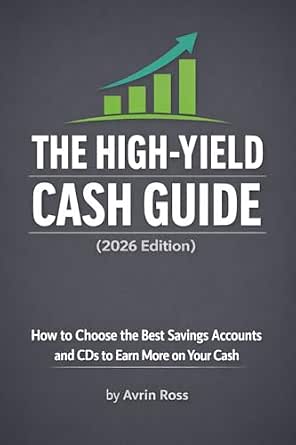 | Best Edition-Labeled Cash Overview | Type: Cash guide | Edition: 2026 Edition | Named subjects: Savings accounts and CDs | VIEW LATEST PRICE | See Our Full Breakdown |
| Emergency Ready, Income Growing: Maximizing CDs for Security and Passive Returns |  | Best for Linking CDs to Cash Reserves | Type: CD planning guide | Named themes: Financial security and passive returns | CD focus: Using CDs to support security and income | VIEW LATEST PRICE | See Our Full Breakdown |
| high yield CD | Type | Author or credentials | ASIN | Stated audience |
|---|---|---|---|---|
| High-Yield Savings | Beginner’s guide | Not provided | — | Beginners |
| It’s Time to Purchase a Certif | Book about CDs | Not provided | B0CN1GB538 | — |
| High-Yield Savings vs. CD Ladd | Savings strategy guide | Not provided | B0BFV26NP5 | Not specified |
| The High-Yield Cash Guide | Cash guide | Not provided | B0GPBXWTL6 | — |
| Emergency Ready | CD planning guide | Not provided | B0G3LWPHP9 | Not specified |
More Details on Our Top Picks
High-Yield Savings, CDs, and Money Market Accounts: The Complete Beginner’s Guide
This is my highest-ranked entry because it identifies both its beginner audience and its three-product scope: high-yield savings accounts, CDs, and money market accounts. That combination fits the common first decision behind a CD search: whether to lock up cash for a term or keep it in an account designed for easier access. Rather than presenting CDs as an automatic answer, the stated coverage gives a newcomer a reason to compare alternatives.
Compared with It’s Time to Purchase a Certificate of Deposit, this guide appears broader and more introductory, while the latter is explicitly centered on CD reinvestment. That makes this book the safer first stop for someone still learning the basic categories, but a less direct choice for a reader who already understands savings products and wants to focus on maturing CDs. The listing calls it part of the Money Guide Series and records “Book: 69”; it does not clarify what that number means, so I would not use it to infer length or format.
The chief limitation is that the supplied description gives no chapter details, author information, current-rate data, or explanation of how it handles account terms. Its title suggests a useful comparison, but it cannot stand in for checking live bank offers. I would choose it for orientation and vocabulary, then compare actual APYs, access rules, minimums, and penalties with providers. Readers looking for a specialist guide or a guaranteed high yield should skip it; the listing promises neither.
Pros:- Explicitly aimed at beginners.
- Covers CDs alongside savings and money market accounts.
- Supports an initial comparison of liquidity and commitment choices.
- Identified as part of the Money Guide Series.
Cons:- The listing provides no chapter, author, or methodology details.
- No current APYs, bank terms, or deposit protections are specified.
- The “Book: 69” spec is unexplained and does not establish length or format.
Best for: First-time savers who want an introductory comparison of CDs, high-yield savings accounts, and money market accounts before choosing where cash belongs.
Not ideal for: Readers who already know the differences among cash accounts and want a detailed CD-ladder plan, verified current rates, or a specific bank product.
- Type:Beginner’s guide
- Named subjects:High-yield savings accounts, CDs, and money market accounts
- Stated audience:Beginners
- Series:Money Guide Series
- Book field:69; meaning not specified in the listing
- CD rates provided:Not stated
- Author or credentials:Not provided
- Account terms:Not provided
Our verdict“I rank this first for its clear beginner audience and broad cash-account scope, but readers must verify every live CD rate and term elsewhere.”
It’s Time to Purchase a Certificate of Deposit: The Magic of High-Yield CD Reinvestment
This title earns its place for readers who have moved past basic definitions and want to think about reinvesting CD proceeds. Its stated subject is unusually specific among these five: the description directly identifies certificate-of-deposit reinvestment and high-yield CDs. For a saver deciding what to do when a term ends, that focus is more closely aligned with the next-step question than the broad beginner guide or the general cash-selection book.
The narrower topic is also its main tradeoff. The listing does not say whether the book covers reinvestment timing, ladder construction, renewal defaults, changing rates, or liquidity needs. I can identify the intended subject from its title, but cannot verify a practical framework or the depth of the advice. Compared with High-Yield Savings vs. CD Ladders vs. Series I Bonds, this appears more CD-centered and less suited to a reader weighing bonds or liquid savings as alternatives. Compared with the beginner title, it assumes a more specific interest rather than advertising an introduction to several account types.
The product data supplies only the ASIN and no publication date, author details, format, or account examples. I would treat this as a targeted reading option, not as current rate research. A reinvestment decision depends on the maturity date, available terms, penalties, and access needs; readers should confirm those details with the bank or credit union holding their money. If the goal is to find a live high-yield CD offer, this listing does not provide one.
Pros:- The title directly addresses CD reinvestment.
- Its subject is more focused than the general cash guide.
- Suitable for readers considering what to do with CD proceeds.
- Clearly connects reinvestment with high-yield CDs.
Cons:- The listing gives no further description of the book’s content.
- No publication date, author information, or format is specified.
- It does not state whether rate comparisons or practical examples are included.
Best for: CD holders who understand the basics and want a resource specifically identified as covering high-yield CD reinvestment.
Not ideal for: New savers seeking a broad account comparison, or anyone expecting current bank offers, detailed account terms, or a confirmed reinvestment method from the sparse listing.
- Type:Book about CDs
- Named subject:Certificate-of-deposit reinvestment
- High-yield CD focus:Stated in the title and description
- Audience:Not specified
- Author or credentials:Not provided
- Publication date:Not provided
- Account examples:Not specified
- ASIN:B0CN1GB538
Our verdict“I recommend this as the most targeted title for reinvestment research, while treating its unreported contents and all current rates as matters to verify.”
High-Yield Savings vs. CD Ladders vs. Series I Bonds: How to Save Your Way to Success
This guide stands out for setting up a three-way comparison among high-yield savings, CD ladders, and Series I bonds. That wider frame can help a saver who is not yet certain that a single CD is the right place for every dollar. A ladder, a liquid savings account, and a bond can serve different roles, so the title signals a useful decision path for readers balancing access, timing, and a fixed-term commitment.
Its scope is broader than It’s Time to Purchase a Certificate of Deposit, which focuses on CD reinvestment, and less explicitly beginner-oriented than the Complete Beginner’s Guide. This makes the ladder-and-bond title a better match for someone already comparing strategies, but potentially a less direct first read for a newcomer who needs definitions of basic cash accounts. The listing does not state how the book weighs the options or whether it discusses practical restrictions, so the title alone cannot establish the quality or completeness of its comparison.
That gap matters because these products are not interchangeable. A reader needs to verify current CD terms, withdrawal rules, and insurance status with the institution, and check the applicable terms for any bond or savings alternative. No rates, examples, author credentials, or publication details appear in the supplied information. I would use this title to frame questions about liquidity versus term planning, not as a current recommendation or substitute for provider disclosures. Its value is the named comparison; its weakness is the lack of supporting detail in the listing.
Pros:- Names three distinct savings approaches for comparison.
- Includes CD ladders rather than focusing only on a single CD.
- Brings Series I bonds into a cash-planning discussion.
- Can help readers think beyond a single account choice.
Cons:- The listing provides no explanation of the comparison method.
- No author, publication date, or detailed contents are supplied.
- No live yields, account restrictions, or bond terms are given.
Best for: Savers comparing a CD ladder with high-yield savings and Series I bonds, especially those deciding how to divide cash across different access and timing needs.
Not ideal for: Readers who want only a simple CD primer, an introductory guide with an explicit beginner audience, or verified current account and bond terms.
- Type:Savings strategy guide
- Named options:High-yield savings, CD ladders, and Series I bonds
- CD approach:Ladder strategy
- Stated audience:Not specified
- Author or credentials:Not provided
- Publication date:Not provided
- Current yields:Not provided
- ASIN:B0BFV26NP5
Our verdict“I place this third because its strategy comparison is distinctive, though the missing content details make it a less certain first read than the beginner guide.”
The High-Yield Cash Guide (2026 Edition): Choosing Savings Accounts and CDs
The 2026 Edition label makes this listing the clearest edition-specific entry in the group, and its stated purpose—choosing savings accounts and CDs—matches a reader comparing where to keep cash. The subject is broader than a CD-only handbook but more directly focused on choosing between cash accounts than the title about reinvestment. For someone weighing access against locking money into a term, that framing is relevant to the high-yield CD decision.
Compared with the Complete Beginner’s Guide, this book is not explicitly labeled for beginners and does not name money market accounts in its description. Compared with the CD-ladder and bond guide, it keeps attention on savings accounts and CDs rather than adding bonds or a named ladder strategy. That narrower cash focus may suit a reader who wants fewer alternatives, but the listing does not show whether it explains CD terms, account restrictions, or how to compare offers.
An edition year is a useful identifier, not proof that any rates in a book remain current. The supplied description gives no publication date beyond the edition label, author credentials, sample pages, or details about how often data is updated. Nor does it name a particular bank or account. I would regard it as a potentially relevant overview of cash-account choices, then confirm current APYs, term rules, minimums, penalties, and insurance directly with providers. Readers who want an explicitly beginner-directed guide may find the first-ranked book a clearer fit; readers seeking a specific reinvestment discussion may prefer the second.
Pros:- Covers choosing between savings accounts and CDs.
- Identifies itself as the 2026 Edition.
- Keeps the subject centered on earning more from cash.
- Offers a narrower cash focus than the bond-comparison title.
Cons:- No chapter list, author details, or update process is provided.
- The listing does not confirm that any rate information is current.
- The description does not identify coverage of money market accounts, ladders, or bonds.
Best for: Readers comparing savings accounts and CDs who prefer a cash-focused guide with a clearly labeled 2026 edition.
Not ideal for: People who need confirmed current rates, detailed coverage of CD ladders or bonds, or a beginner audience explicitly identified in the listing.
- Type:Cash guide
- Edition:2026 Edition
- Named subjects:Savings accounts and CDs
- Stated purpose:Choosing cash accounts
- Author or credentials:Not provided
- Current APYs:Not provided
- Update schedule:Not provided
- ASIN:B0GPBXWTL6
Our verdict“I see this as a focused cash-choice overview, but its edition label cannot replace direct checks of current CD offers and account rules.”
Emergency Ready, Income Growing: Maximizing CDs for Security and Passive Returns
This guide takes a different angle from the other titles: it describes using CDs to support financial security and passive returns. That framing may appeal to a reader thinking about CDs as one piece of a broader savings plan, particularly when organizing money for security rather than simply chasing the highest displayed rate. The title makes the intended connection between emergency readiness and CD use more visible than any other entry in this set.
Its position is fifth because the product description is especially general. It does not say how the book handles emergency cash access, whether it distinguishes liquid reserves from term deposits, or whether it offers a method for matching CD maturities to expected needs. Those are central questions for anyone combining emergency savings with CDs. By comparison, the Complete Beginner’s Guide names liquid savings and CDs together, while the ladder-and-bond title explicitly names a maturity strategy and alternatives. Their stated scopes make the decision framework easier to identify from the listing alone.
I would consider this title if its security-and-income framing matches the reader’s concern, but the sparse information calls for caution about expectations. There are no listed rates, account terms, author credentials, publication details, or examples. A CD may have early-withdrawal restrictions, so readers should not assume money designated for immediate emergencies will be readily available. Confirm access rules and keep appropriate liquid reserves based on personal needs. The book may prompt a useful planning question, but the supplied description cannot establish that it provides a detailed emergency-fund plan or a reliable current yield comparison.
Pros:- Connects CD use with financial security.
- Frames CDs as a possible source of passive returns.
- Offers a distinct planning angle among the five listings.
- May prompt readers to think about the purpose of their savings.
Cons:- The listing does not explain how emergency cash access is addressed.
- No author, publication date, or detailed contents are provided.
- No rates, penalties, or specific security strategy are described.
Best for: Readers interested in how CDs might fit into a broader financial-security and income plan, provided they verify the book’s scope before relying on it.
Not ideal for: Savers who need a clearly documented emergency-fund method, beginner account definitions, current rate comparisons, or detailed CD-ladder instructions.
- Type:CD planning guide
- Named themes:Financial security and passive returns
- CD focus:Using CDs to support security and income
- Stated audience:Not specified
- Emergency-fund method:Not specified
- Author or credentials:Not provided
- Rates and account terms:Not provided
- ASIN:B0G3LWPHP9
Our verdict“I rank this fifth because its planning theme is distinct, but the listing leaves the practical emergency-cash and CD guidance unclear.”

How We Picked
I ranked these entries by fit for a high-yield CD decision, not by account performance. The supplied product information describes books rather than deposit products, so there is no responsible basis for comparing APYs, minimum deposits, term lengths, compounding schedules, or withdrawal rules. I do not infer those features from a title or treat the word “high-yield” as a promise of a particular return.
My first ranking factor is how clearly the stated topic matches a reader’s task. A beginner choosing among cash options needs a different resource from someone examining CD reinvestment or comparing a ladder with bonds. I also value an explicit audience cue, such as “beginner,” and a stated scope broad enough to help a reader understand alternatives rather than treating a CD in isolation.
The listing data is sparse, so the ranking is necessarily provisional. Several entries provide no chapter list, author credentials, sample pages, publication date, or detail about the methods used. I use only the described subjects and listed specs; I do not claim that any title contains a particular worksheet, rate table, tax analysis, or step-by-step plan. Where product data is missing, I say so rather than filling in gaps.
Finally, I distinguish educational value from current account research. CD yields and bank terms can change, and an edition label alone does not establish that a book’s market information is current. Readers can use these guides to shape questions, then confirm the present APY, term, early-withdrawal penalty, renewal instructions, deposit-insurance eligibility, and other account conditions with the institution before committing cash.
| high yield CD | Type | Stated audience | ASIN |
|---|---|---|---|
| High-Yield Savings | Beginner’s guide | Beginners | — |
| It’s Time to Purchase a Certif | Book about CDs | — | B0CN1GB538 |
| High-Yield Savings vs. CD Ladd | Savings strategy guide | Not specified | B0BFV26NP5 |
| The High-Yield Cash Guide | Cash guide | — | B0GPBXWTL6 |
| Emergency Ready | CD planning guide | Not specified | B0G3LWPHP9 |
Factors to Consider When Choosing High Yield CDs
Because these are guides rather than CD accounts, choosing among them is a question of what you need to learn—not which one pays the most. I would start by identifying the decision in front of me: learning the basic account types, reinvesting a maturing CD, comparing a ladder with other savings approaches, or fitting CDs into a security plan. Then I would use the book as a starting point and verify any account facts with providers.
Choose a guide for the decision you need to make
A reader who is new to CDs may benefit most from The Complete Beginner’s Guide because the description names savings accounts, CDs, and money market accounts and explicitly targets beginners. Someone already holding a CD and thinking about what happens at maturity may prefer It’s Time to Purchase a Certificate of Deposit, whose stated focus is reinvestment. If the question is whether a ladder, a savings account, or a bond better fits a longer-term plan, the three-way comparison title is the most directly matched by name. The High-Yield Cash Guide offers another account-choice angle, while Emergency Ready, Income Growing frames CDs through security and passive income. These differences are clearer than any claim about quality, since the listings do not include sample content or detailed outlines.
Do not confuse a guide’s title with a live yield
The phrase high-yield in a book title does not provide an APY or guarantee a return. CD rates change, and two accounts with similar terms may differ in minimum deposit, compounding, payout options, renewal rules, or penalties for early withdrawal. The supplied descriptions do not give any of those account details. Before committing money, compare current disclosures from the issuing bank or credit union and make sure the listed rate applies to the amount and term you intend to use. If a guide includes rate examples, check their date and treat them as historical unless the provider confirms they remain available.
Balance term commitment with access to cash
A CD usually asks a saver to leave a deposit in place for a defined term, while a savings account is generally intended for more flexible access. That difference matters when the cash might be needed for an unexpected expense. A CD ladder can spread maturity dates across several deposits, but it does not eliminate the need to understand each CD’s rules or to keep accessible funds for nearer-term needs. The ladder-and-bond guide names this strategy comparison, and the beginner title names liquid account alternatives. Neither listing confirms exact instructions, so check withdrawal access, penalties, and applicable account terms before acting.
Check the details that the listings leave out
For every guide here, the available descriptions leave important information unspecified: the contents, author credentials, publication details, and whether advice is updated. The 2026 label on The High-Yield Cash Guide is a helpful edition marker, but it does not reveal an update schedule or establish that market data is current. I would inspect the book’s full listing for format and contents, then verify any important financial claim independently. The same care applies to claims about safety: confirm whether a deposit is eligible for applicable deposit insurance and understand who holds the account.
Use the book to build a comparison, not to outsource the choice
A useful next step is to write down when you may need the money, how much flexibility matters, and whether you want one maturity date or several. Then compare actual CD offers and savings alternatives using the same questions: term, APY, minimum opening deposit, compounding or payout method, early-withdrawal penalty, renewal process, and coverage. A guide can supply context or a vocabulary for the comparison; the institution’s current disclosures determine the account conditions. That approach keeps a reading recommendation separate from a financial product recommendation and avoids assuming that the book with the most appealing title will match your cash needs.
Frequently Asked Questions
Are any of these listings actual high-yield CD accounts?
No. The five products are described as books or guides about savings, CDs, reinvestment, ladders, or financial planning. None is identified as a bank or credit-union deposit account, and none supplies an APY, term, minimum deposit, or account-opening process. Readers looking for an actual CD should compare current offers directly from financial institutions and review the account disclosures before applying.
Which guide is the best starting point for someone new to CDs?
I rank High-Yield Savings, CDs, and Money Market Accounts: The Complete Beginner’s Guide first for a newcomer because its description explicitly targets beginners and covers three types of cash accounts. That wider introduction can help a reader understand why a CD’s term commitment differs from more accessible savings options. The listing does not provide a detailed chapter list, so a beginner should check the full book information and use provider materials to confirm current account rules.
Which title most directly addresses CD reinvestment?
It’s Time to Purchase a Certificate of Deposit: The Magic of High-Yield CD Reinvestment is the most directly matched by title and description. The supplied information identifies reinvestment as its subject, unlike the broader beginner and cash-choice guides. It does not specify whether it explains maturity dates, renewal settings, laddering, or current offers, so readers should not assume those details are included without checking the full listing.
Does the 2026 edition label mean the guide’s rates are current in 2027?
No. An edition label identifies the version, but the available listing does not state whether the book contains rates, when any figures were checked, or whether the content receives updates. CD yields and account terms can change. I would use The High-Yield Cash Guide for its stated savings-account and CD subject, then check current APYs, term lengths, penalties, minimums, and renewal rules with providers before choosing an account.
What should I verify before putting money into a CD?
Confirm the current APY and term, minimum deposit, how interest is paid or compounded, what happens at maturity, and the early-withdrawal penalty. Check whether the account and institution qualify for applicable deposit insurance, and decide whether the money can remain committed for the full term. If the cash may be needed for an emergency, compare it with an accessible savings option and keep liquidity needs in view. A book can help organize questions, but the provider’s current disclosures set the account terms.
Conclusion
My recommendation depends on the question you are trying to answer. New to CDs? Start with High-Yield Savings, CDs, and Money Market Accounts: The Complete Beginner’s Guide for its explicit beginner focus and three-account scope. Already holding a CD? Choose It’s Time to Purchase a Certificate of Deposit as the most directly targeted title for reinvestment. Comparing strategies? The guide on high-yield savings, CD ladders, and Series I bonds names the widest set of alternatives. Readers focused on choosing between savings accounts and CDs can look at the 2026 Cash Guide, while the security-minded reader may investigate Emergency Ready, Income Growing—with particular care to check how it handles access to emergency money.
None of these listings provides an actual high-yield CD offer, and the available descriptions do not establish current rates or detailed financial guidance. I would use the best-matched title to clarify the decision, then compare live account disclosures and confirm each term with the provider. That separation matters: a useful guide can inform your questions, but only current account terms can tell you what a particular CD will pay and how your deposit can be accessed.
Halloween Picks

DomKom 6 ft Halloween Inflatable Ghosts Roasting Marshmallows

Kalolary 12ft Halloween Witch Haunted House Inflatable Archway

10 ft Halloween Inflatable Archway with Built-in LEDs
As an affiliate, we earn on qualifying purchases.